

Interior Design Reflecting Identity: A Journey Between Creativity and Function in a Space Harmonizing Nature and Personality

Interior Design Reflecting the Client’s Personality
In the world of interior design, the relationship between the designer and the client is one of the pivotal elements that influence the success of a project. When a client comes with a clear desire to have their home reflect their personality and unique style, the challenge transforms into a genuine opportunity for the designer to explore new and innovative ways to express identity through architectural and decorative spaces.
A Case of an Interior Designer with a Unique Client
In this case, designer Clive Lonstein works with an exceptional client who represents a blend of arts and community leadership. She is both an active artist and philanthropist, in addition to managing a private investment company focused on women-led projects. This diversity in the client’s background gave the designer the chance to create a design that carries multiple meanings and reflects the variety in her personality.
Integrating Colors and Patterns as a Design Approach
Lonstein points out that the client’s passion for colors was the main driver behind adopting a multi-layered approach in the design, where different patterns and botanical elements were harmoniously combined. This style not only adds an aesthetic dimension to the space but also helps create an atmosphere full of life and warmth, enhancing the user experience and clearly reflecting their personal taste.
Harmony Between Design and the Natural Environment
The main house extends over a vast area of 15,000 square feet, complemented by a guest house measuring 2,000 square feet. These two structures form an integrated mosaic of design, art, and craftsmanship, seamlessly harmonizing with the surrounding greenery. This integration highlights the importance of respecting the natural site during the design process, where buildings are not viewed as separate elements but as part of a unified ecological system.
Light as a Fundamental Element in Design
The designer emphasizes that handling light was one of the core aspects of the project, with the space being crafted with a particular sensitivity to the quality of natural light. Understanding the movement of light and shadow through the spaces was a crucial step in selecting appropriate materials and colors. He also notes that the color palette was inspired by nature, utilizing warm tones saturated with sunlight, along with botanical touches that enhance the sense of vitality and harmony with the outdoor environment.
Blending Interior and Exterior in the Architectural Structure
One of the most important aspects of the project is the artisanal interaction between the interior and exterior, as explained by architect Arthur Chabon. He points out that inspiration from the surrounding landscapes led them to design shaded, tranquil spaces overlooking gardens abundant with light. Building materials were also chosen for their response to sunlight, further enhancing the sense of unity between the structure and the natural surroundings.

Furniture as a Mirror of the Client’s Identity
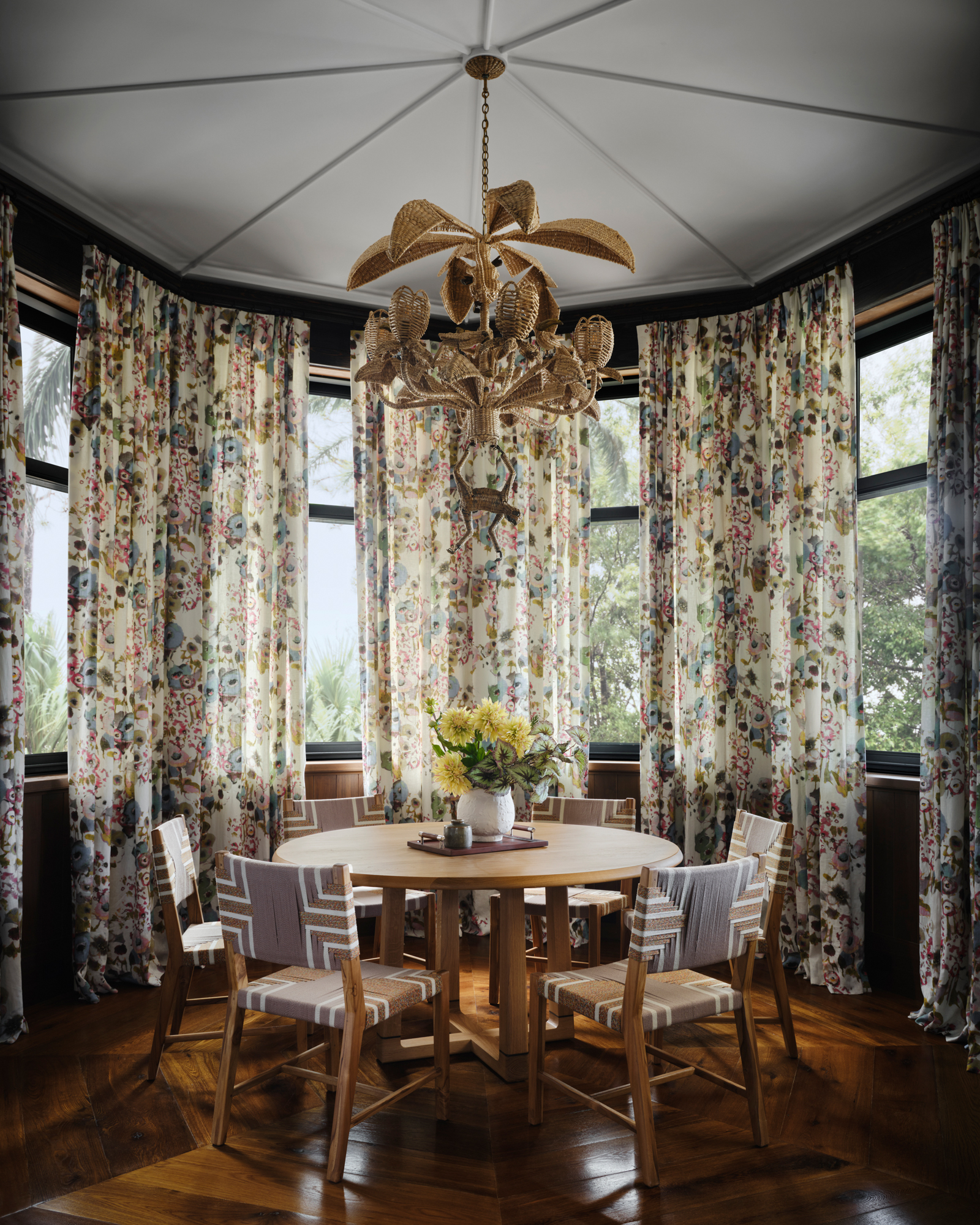
Designer Clive Lonstein points out that the furniture pieces were more than just functional elements; they were a clear expression of the client’s identity and artistic spirit. Moving beyond the familiar traditions of Bohemian design, the focus was on creating a unique experience for each space by introducing an “unusual” or unexpected piece that breaks symmetry in a deliberate way, adding a personal and distinctive character to the place.
The Dining Room: A Balance Between Tradition and Innovation
The dining room clearly embodies this approach, featuring a pink glass blown chandelier and side table edges covered with lemon-yellow glass mosaic. Additionally, a rattan dining table was chosen, designed to resemble carved citrus slices, while the upholstered chairs with tropical wall fabric complete the design in an integrated manner.
Design’s Connection to the Local Context
This room highlights the influence of natural materials, with terracotta flooring and coral stone walls providing a strong connection to the local context and surrounding environment. In contrast, the pink glass chandelier adds a playful, sculptural touch that breaks the monotony of the design, creating a balance between authenticity and innovation.


Blending Vintage and Modern Styles in the Kitchen
The kitchen features a unique coexistence between furniture pieces dating back to the 1950s, such as the orange lounge chairs designed by Guillerme and Chambron, and contemporary elements like the rattan chandelier signed by Mario Lopez Torres, known as “The Monkey.” This blend of old and new reflects a contemporary historical awareness and brings a distinctive vitality to the kitchen space.
A Calm Color Palette in the Living Area
The living area is characterized by a calm and comfortable atmosphere, dominated by shades of blue, gray, and sky blue, creating a serene ambiance. The space centers around a coffee table made of emerald green onyx, whose design symbolizes layered sediment formations representing local sands and landscapes, as Lonstein explains. The floral-upholstered sofa designed by Dedar complements this elegant scene, enhancing the balance between nature and luxury.
Bedrooms: A Haven of Peace and Comfort
The bedrooms exude an atmosphere of tranquility and calmness, achieved through neutral colors and luxurious textured fabrics. The Bahamian colonial architectural character is highlighted by custom-designed wooden panels, while ‘60s details such as Danish ceramic necklaces by Sejer Keramikfabrik and side tables with mirrors and lightning-inspired engravings add an artistic dimension enriching the scene. Soft pink curtains complete the natural harmony of the space.
Guest House: Revitalizing Energy with Bold Colors
In contrast to the main spaces, the guest house tends to express a playful and lively character through bold details such as mirrored wall panels in electric blue and a turquoise volcanic stone sink in the bathroom. These elements add a distinctive and daring touch that balances fun with luxury.

Balanced Attention Between Interior and Exterior
True to the Caribbean spirit of life, care was not limited to the interior design alone; the outdoor spaces received the same level of attention and precision. The balance between the inside and outside of the home reflects a design philosophy that integrates functional beauty with local cultural character.
Furniture Selection Combining Authenticity and Distinction
The outdoor areas feature furniture from Restoration Hardware, upholstered in Perennials fabric in a sea turquoise color, evoking the atmosphere of the sea and clear skies. This color choice is not only aesthetic but aims to create a sense of calm and harmony with the surrounding environment.
A Central Artistic Piece Expressing Cultural Identity
The large marble sculpture by artist Jaume Plensa, titled Whispers of Wellsys, forms the focal point outdoors, adding an artistic dimension and visual richness to the space, enhancing the interaction between visitors and the environment.
Thoughtful Diversity in Piece Selection
Designer Lonstein emphasizes that the furniture selection was not random but based on a desire to achieve a selective blend of unique pieces bearing a special character without excessive refinement or polish, giving the spaces a human and personal dimension that naturally and spontaneously reflects the client’s identity.


A Unique Blend of Spirituality and Logic in Design
Architect Arthur Chabon describes his clients as possessing a “fascinating and stimulating combination of deep spirituality and Midwestern sensibility, of romantic artistic expression and practical logic.” This balance between emotion and reason forms the foundation of their design approach, where design goes beyond aesthetics to emphasize functionality and user comfort.
Design Diversity with Tropical Influences
This unique blend is translated into a home that combines innovative design diversity with the beauty of the tropical environment, creating a space that feels “both carefully curated and simultaneously unexpected.” This balance between order and innovation makes the place a unique sensory experience that transcends tradition.

✦ ArchUp Editorial Insight
The project features a rich design experience that clearly reflects the client’s personality and artistic spirit. It excels in blending traditional elements with contemporary ones and shows meticulous attention to details such as the choice of natural materials and interaction with the surrounding environment. This diversity in the use of patterns and multiple colors creates a vibrant space and adds an aesthetic depth that enriches the user experience.
Moreover, the integration between interior and exterior stands out as one of the project’s key strengths, where the outdoor spaces enhance the overall scene through coordinated furniture pieces and contemporary sculptural art expressing cultural identity, giving the place a unique balance between nature and art.
However, some challenges or points may need reconsideration. First, some users might feel that the abundance of details and patterns could be distracting and reduce the sense of simplicity and comfort, especially given the diversity of layers and colors. The balance between luxury and warmth can sometimes turn into visual clutter that requires more simplification and organization.
Second, the design relies heavily on unique art pieces and decorations, which may complicate maintenance or future modifications and could pose a challenge if updating the spaces is desired without losing the original identity.
Also, the blend of colonial and ’60s styles with tropical influences may not suit all tastes, and some might perceive it as an inconsistent mix requiring further study to maintain visual coherence.
Finally, despite the clear emphasis on aesthetics, it is not sufficiently clear how functional and practical aspects of the spaces were addressed, such as ease of movement and storage, which are essential in any successful interior design.
Overall, the project offers a strong example of design that combines tradition and innovation with a clear personal character. Yet, the challenge remains in maintaining a visual and functional balance that satisfies all users, opening the door for future experiments that may achieve this balance more effectively.
Explore the Latest Architecture Exhibitions & Conferences
ArchUp offers daily updates on top global exhibitions, conferences, and professional art and design forums.
Follow key competitions, check results, and stay informed through the latest news worldwide.
ArchUp is your encyclopedic hub for discovering events and design-driven opportunities across the globe.


