28-Storey Liverpool Tower Wins Planning Approval at Waterfront Site

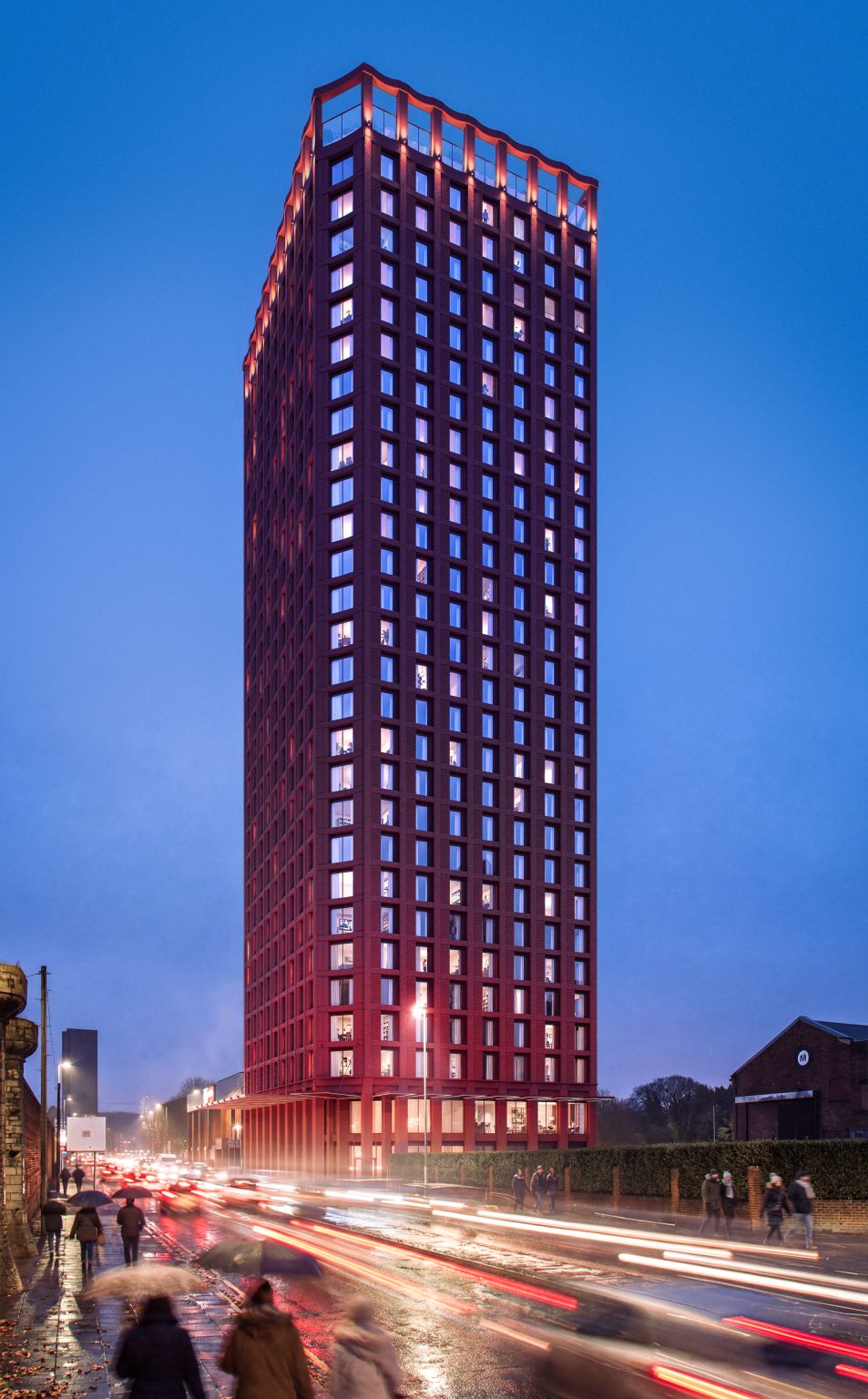
Liverpool has approved a striking 28-storey terracotta tower at King Edward Triangle. The decision marks a significant milestone for the city’s northern waterfront regeneration. Consequently, this project becomes the first phase of a massive £1 billion development scheme.
Project Overview
The approved Liverpool tower will rise at the corner of Waterloo Road and Galton Street. This location sits within an 8-acre site forming part of a larger waterfront masterplan. The tower features a distinctive terracotta facade that references the city’s industrial heritage.
Moreover, the residential structure contains 255 apartments. These include 127 one-bedroom units, 123 two-bedroom units, and 5 three-bedroom homes. The design aims to maximize waterfront views while creating a bold vertical presence.
Amenities and Interior Spaces
The development incorporates extensive shared facilities throughout the building. Residents will access a gymnasium and dedicated workspace areas. Additionally, the interior design includes communal lounges on multiple floors.
The rooftop level features an outdoor barbecue area with panoramic views. Therefore, the project balances private living spaces with community gathering zones.
Planning Committee Decision
The planning committee met on 17 February 2026 to review application 25F/1887. Members approved the scheme despite concerns from heritage bodies. However, objections focused on lighting impacts and green space provisions.
The news confirms no affordable housing contribution accompanies this approval. Meanwhile, financial contributions of approximately £650,000 for local improvements were also waived. Committee members determined overall benefits outweighed these concerns.
Broader Development Context
This Liverpool tower serves as the flagship phase for an ambitious urban planning vision. The complete scheme proposes over 1,000 apartments across multiple towers. Some structures may reach 60 storeys.
The project targets transformation of former industrial zones along the northern waterfront. Additionally, the development has secured full funding. Construction is expected to commence shortly following this announcement.
What This Means for Liverpool
This approval signals renewed confidence in Liverpool’s residential market. The terracotta architectural design introduces a warm material palette to the skyline. Furthermore, the development contributes to ongoing waterfront regeneration efforts.
Will this Liverpool tower set a new standard for the city’s future high-rise developments?
A Quick Architectural Snapshot
The 28-storey terracotta tower rises at King Edward Triangle on Waterloo Road. The structure contains 255 residential units across mixed configurations. Rooftop amenities and communal spaces complement private apartments. The site occupies part of an 8-acre waterfront location within the northern docklands regeneration zone.
✦ ArchUp Editorial Insight
A city seeking post-industrial relevance approves 255 units without affordable housing contributions. This pattern repeats across every UK waterfront regeneration zone. The sequence is predictable: declining industrial land values attract speculative assembly, heritage designations create perceived scarcity, and planning committees accept volume over equity under regeneration pressure.
The 28-storey terracotta form is not a design choice. It is the spatial product of maximum unit yield on a constrained footprint, wrapped in a material that signals contextual sensitivity without altering density logic. When heritage objections are overridden and financial contributions waived, the approval framework reveals its actual priority: construction velocity as economic stimulus.
Over 1,000 units across towers reaching 60 storeys, fully funded before ground is broken, confirms the operating model. The architecture is not the subject. The financing timeline is.
The built outcome is the logical result of regeneration policy that measures success in units delivered, not communities sustained.