

Locally Sourced Timber: From Environmental Strategy to Architectural Identity

Materials sourced locally represent a profound commitment to the principles of sustainable architecture, transforming from a mere technical choice into a cultural and ethical statement. While timber leads the list of such materials, its local use stands out as one of the most powerful tools for designers to express their responsibility towards the environment and society. This choice not only reduces the carbon emissions associated with material transportation but also extends to support local economies and establishes an organic relationship between the building and its local climate, resulting in superior environmental performance. Here, sustainability shifts from a slogan to a daily practice, with each piece of wood bearing witness to a short journey from the forest to the construction site, carrying with it the story and identity of the place.
Revitalizing Marginalized Materials: When Waste is Transformed into Artistic Pieces
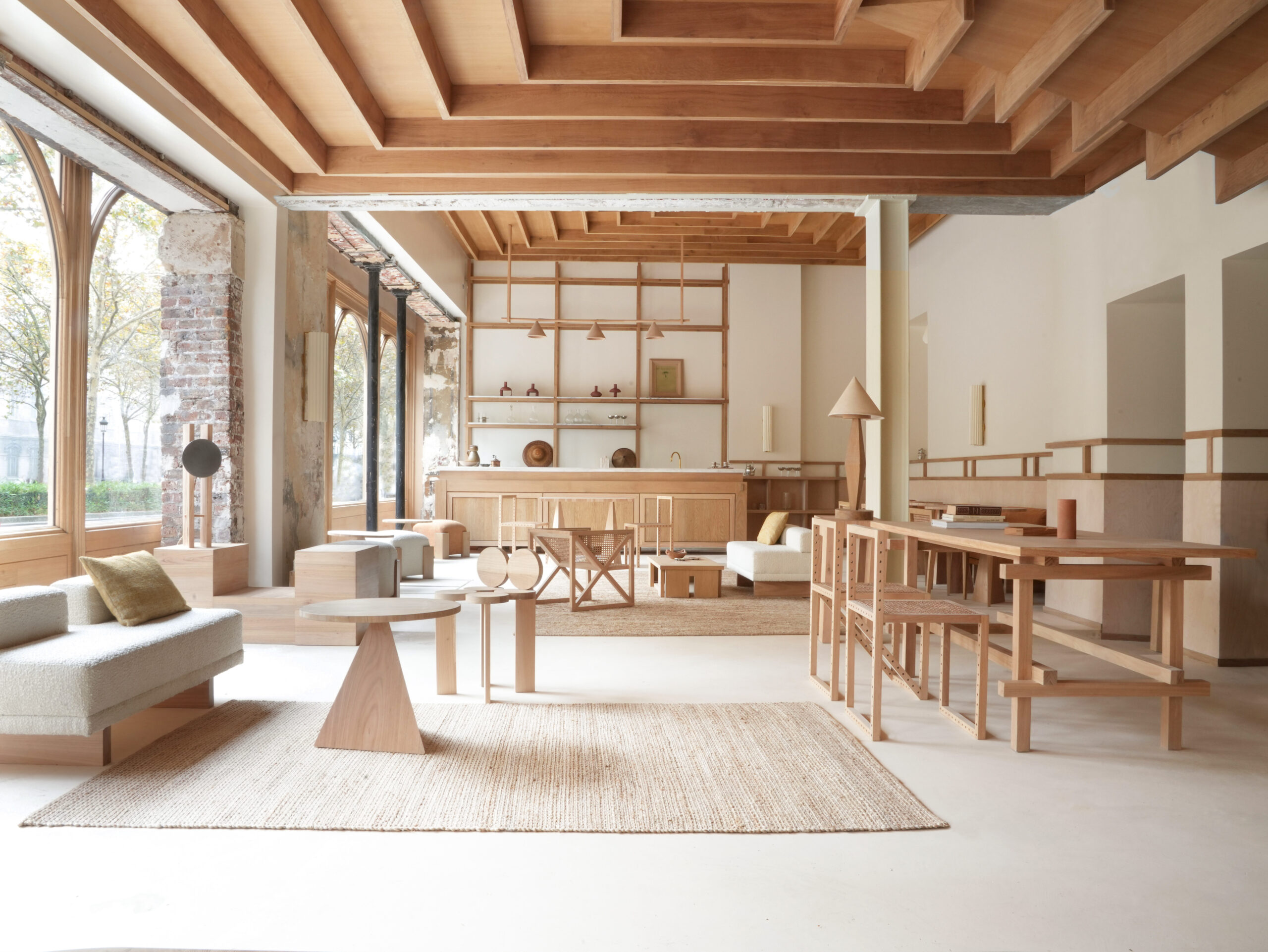
Elysée Montmartre Hotel / Policronica – Paris, France
The Elysée Montmartre Hotel project goes beyond traditional recycling to redefine the value of materials. The French studio “Policronica” not only chose locally sourced timber but went a step further by selecting a type of invasive wood (Eucalyptus) historically used primarily for papermaking, implying low economic and design value. The designers turned this challenge into an opportunity, handcrafting the vast majority of the hotel’s interior elements, including furniture and even the lighting system, on-site. This process not only nearly eliminated construction waste and transport emissions but also gave each piece a unique identity, suggesting that true sustainability lies in the creative vision that rediscovers the potential of available materials.
Architecture as a Living Organism: Organic Integration with the Natural Landscape
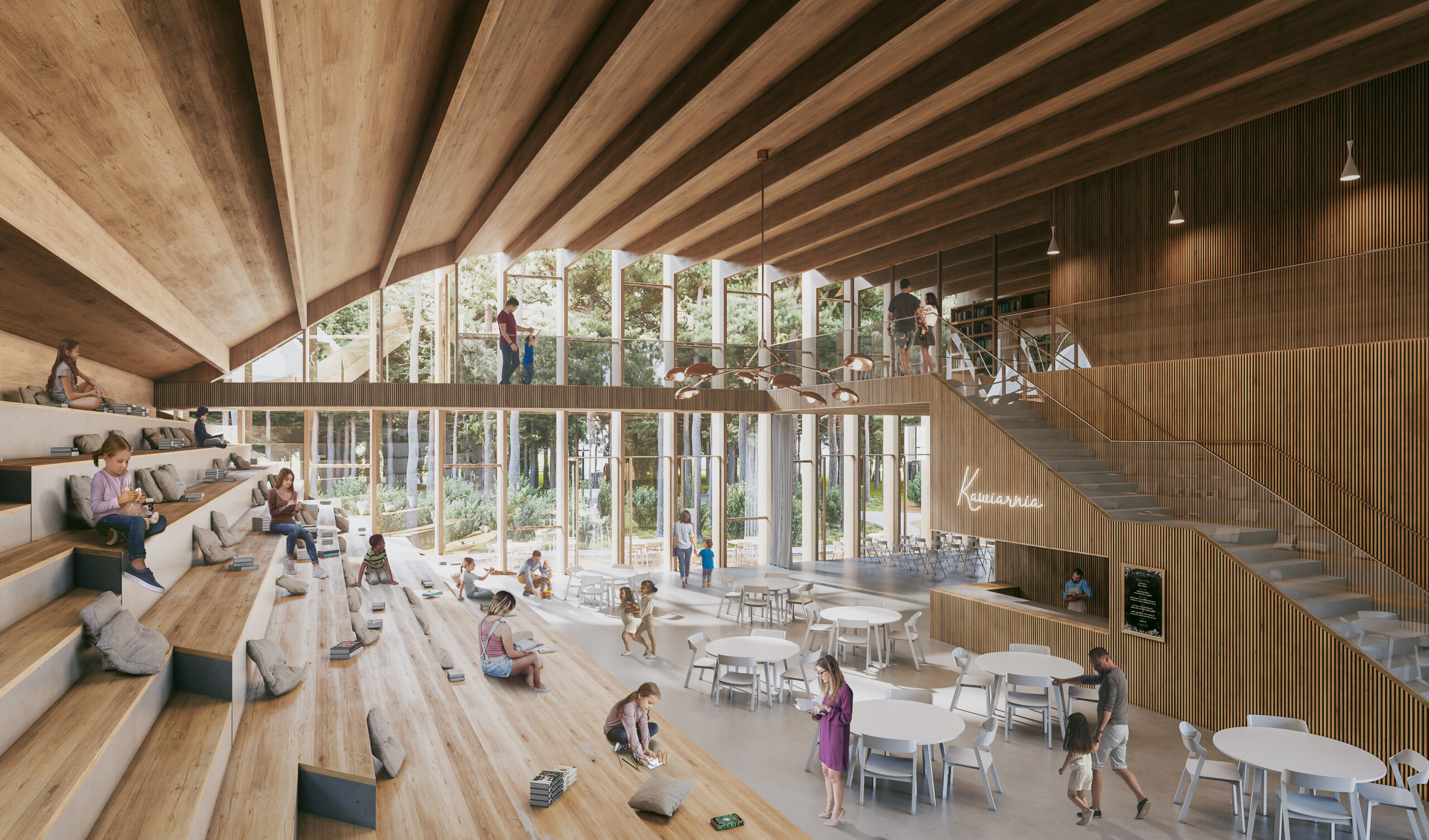
Gateway of Nature / Entropic – Józefów, Poland
The “Gateway of Nature” project in Poland presents a model of humble architecture that respects its site rather than dominating it. Studio “Entropic” did not cut down trees to make way for the building; instead, they designed the building to harmonize with the existing trees. Using modular timber cut from the surrounding forests, the two volumes (a library and a kindergarten) were arranged to mimic the natural rhythm of tree growth. This design not only creates spaces rich in natural light but also minimizes visual and environmental disruption to the site. Architecture appears here as a new living organism sprouting from the ground, rather than a foreign object imposed upon it, fostering a sense of belonging and security for the children and users.
Dialogue of Materials: Storytelling through Earth and Wood
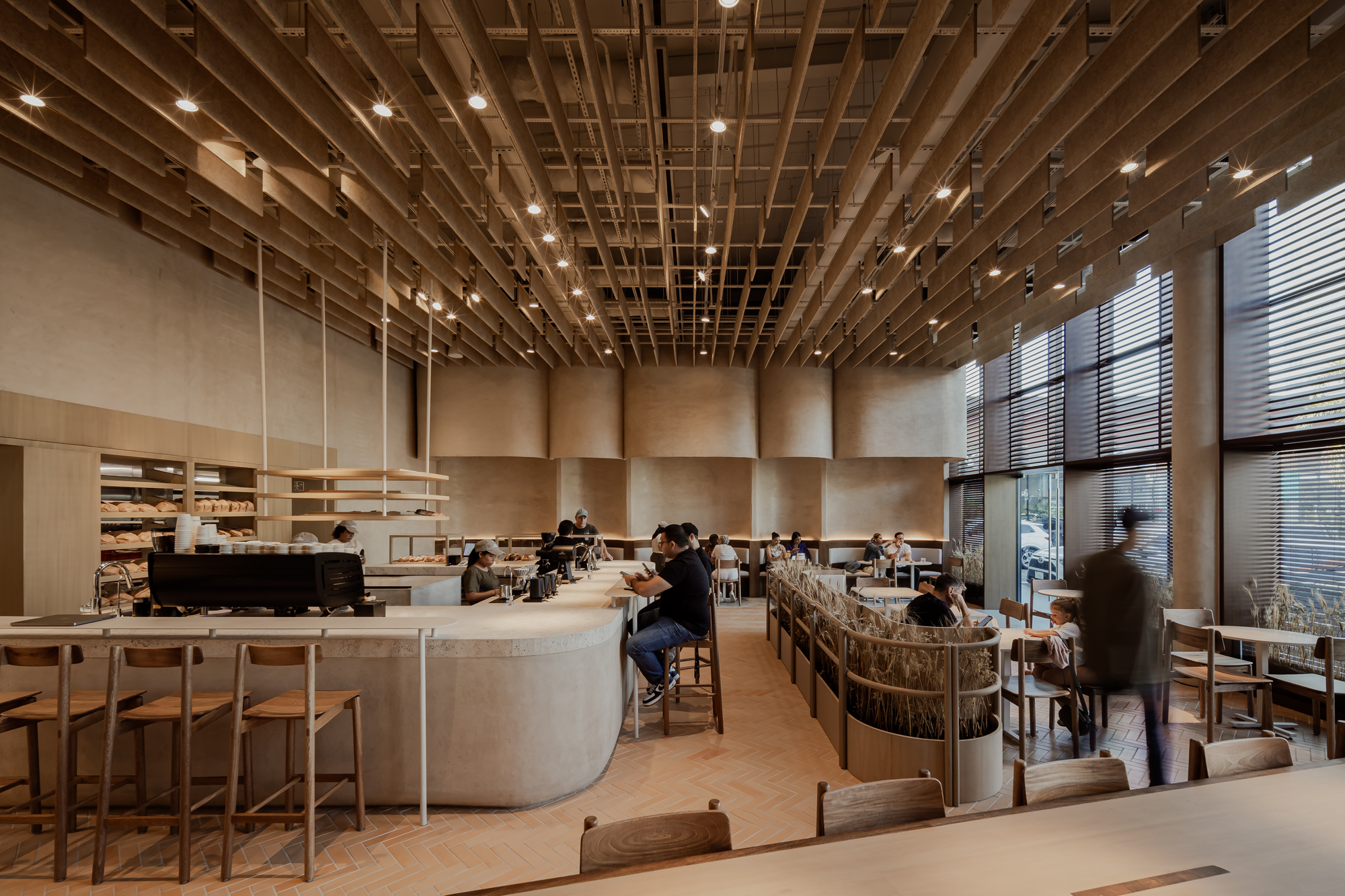
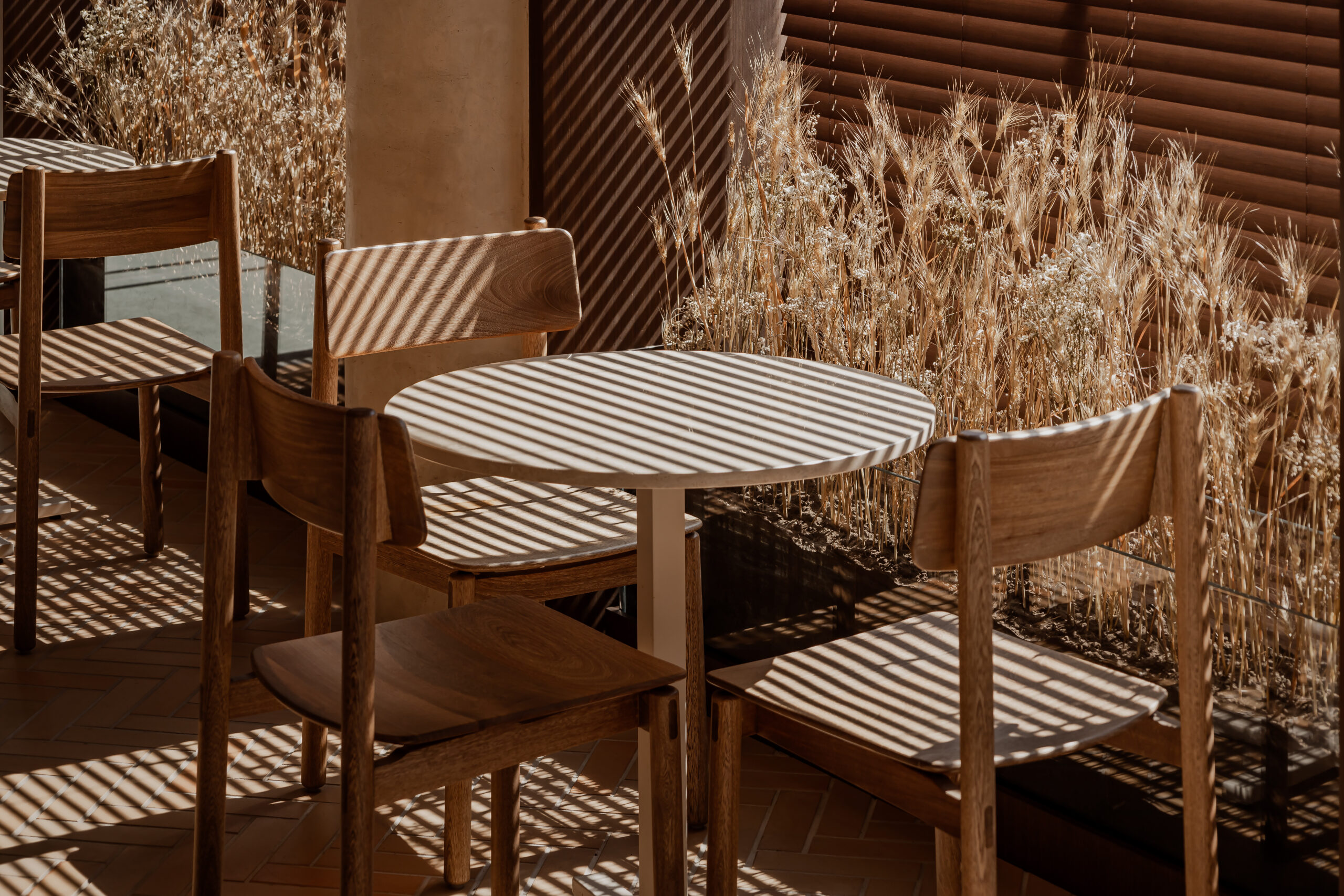
Krume Bäcker Bakery / Mallol – Panama City, Panama
In the Krume Bäcker bakery, the local timber serves not just an aesthetic or structural function but engages in a deep dialogue with another local material: rammed earth. This conversation between the two materials creates a unique visual and sensory identity for the place; the coolness and hardness of the earth contrast with the warmth and softness of the wood, creating a rich experience for the visitor. The wood was used to form display units, counters, and built-in furniture, while the earthen floors and walls formed the primary envelope. This blend not only reduces the project’s carbon footprint but also tells the story of the place’s primary materials, enhancing a sense of authenticity and roots.
Passive Cooling and Dual Environmental Responsibility
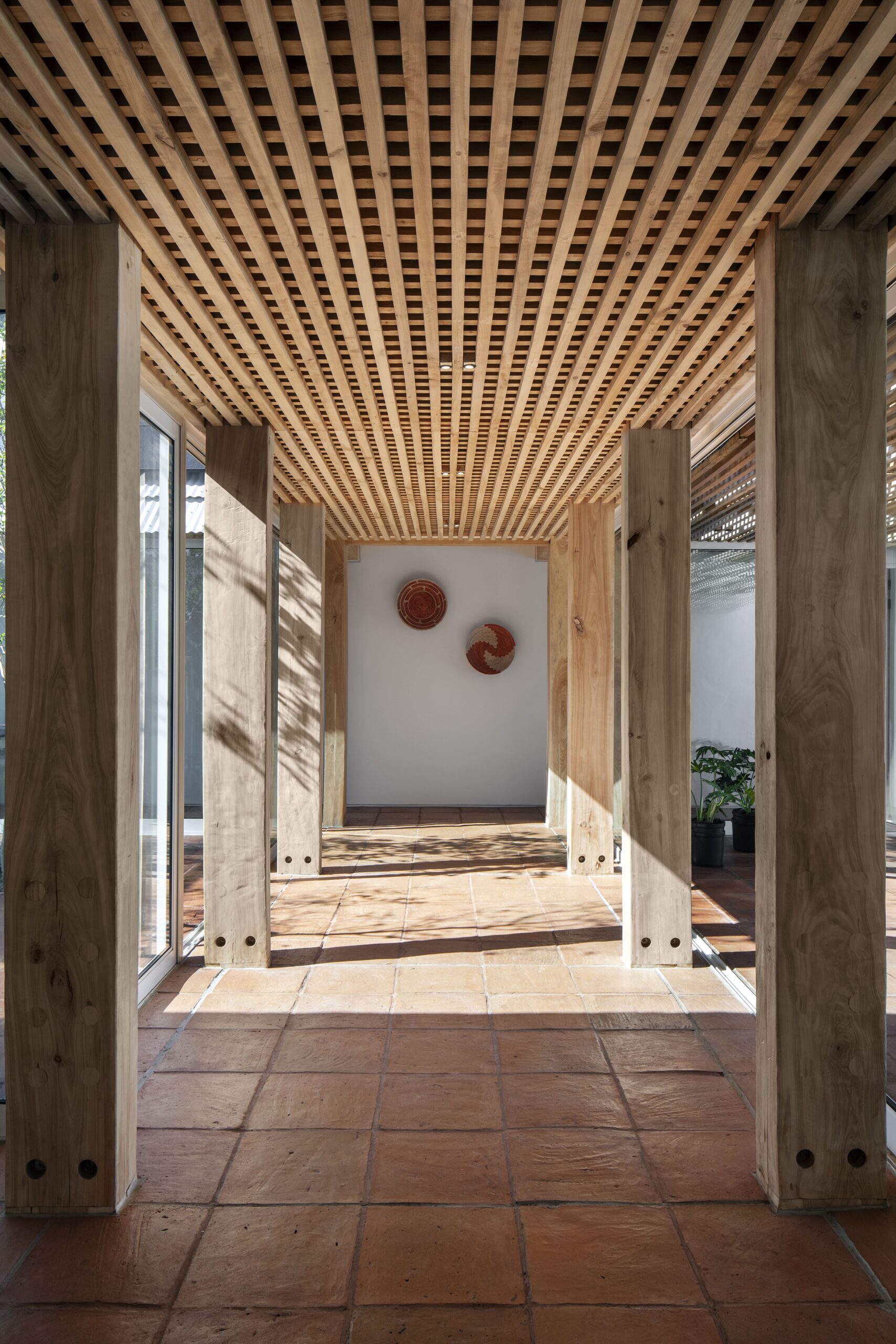
Umoya Boutique Hotel / Skreinstudios – Cape Town, South Africa
This project addresses sustainability on two levels: first, improving the environmental performance of the building itself, and second, contributing to solving a regional environmental problem. The designers used timber from locally harvested, fast-growing invasive species, achieving two goals: using a local, renewable building material, and helping to combat the spread of species that threaten local biodiversity. From a design perspective, using this timber for interior finishes and ceilings contributed to high passive climate control capacity, reducing reliance on mechanical cooling systems, while reinforcing the regional character of the hotel, which serves elderly guests on a healing journey.
Bamboo: From Traditional Material to a Hub for Community Learning
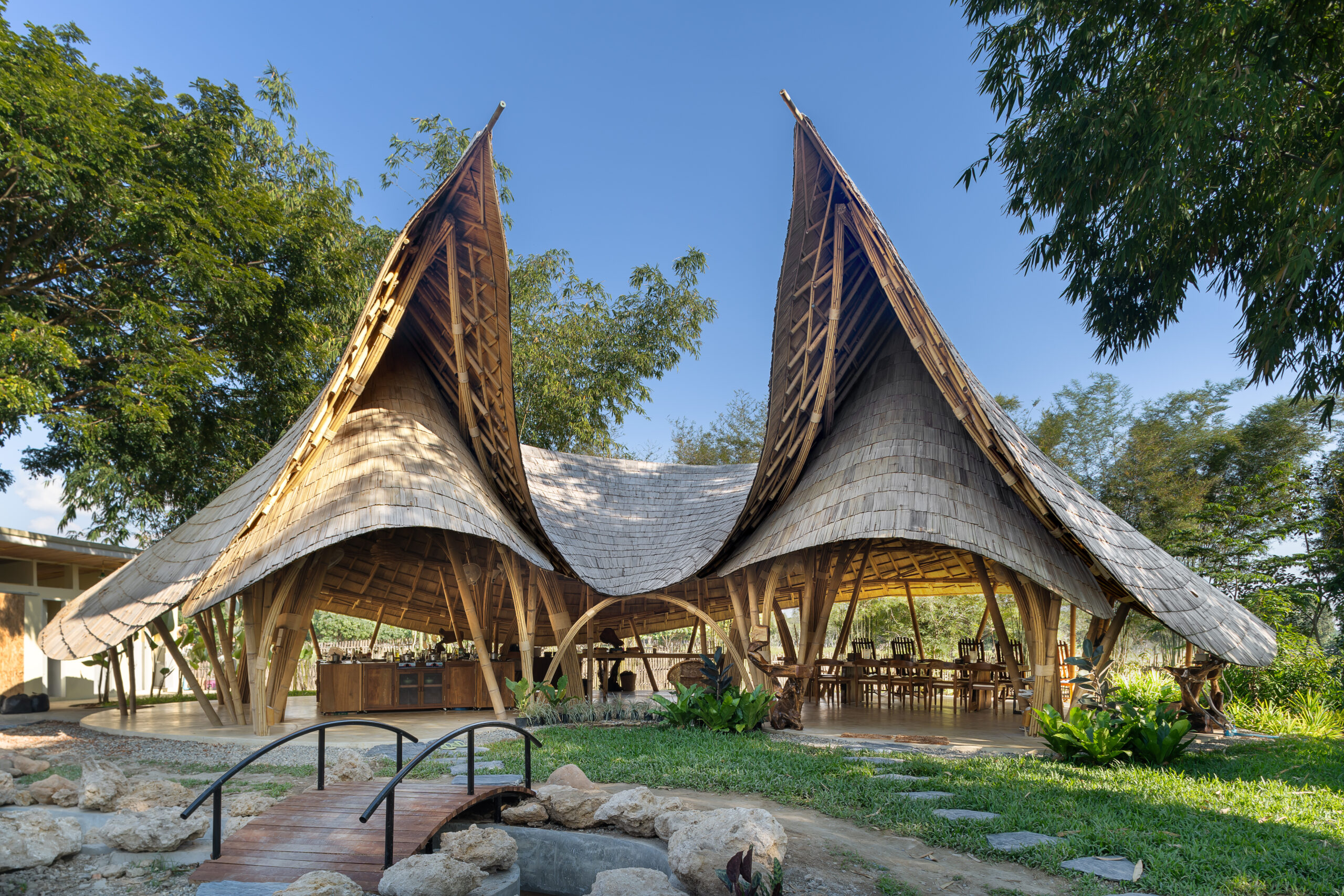
Tor @ Zab e Lee Cooking School / Life Architects – Chiang Mai, Thailand
This project reclaims a traditional material with a contemporary perspective, demonstrating how bamboo—with its rapid growth rate and structural strength—can be a star in sustainable architecture. The bamboo was harvested from within a 100-kilometer radius, but more important than reducing transport distance is its role as a “carbon sink,” absorbing large amounts of CO2 during growth. Crucially, the construction process itself was low-tech and semi-artisanal, making it a community educational workshop. Thus, the final product (the school) was not the only goal; the process itself was a lesson in sustainable construction and local craftsmanship for the community.
Sustainability on a Civic Scale: Transparency and Redefining Responsibility
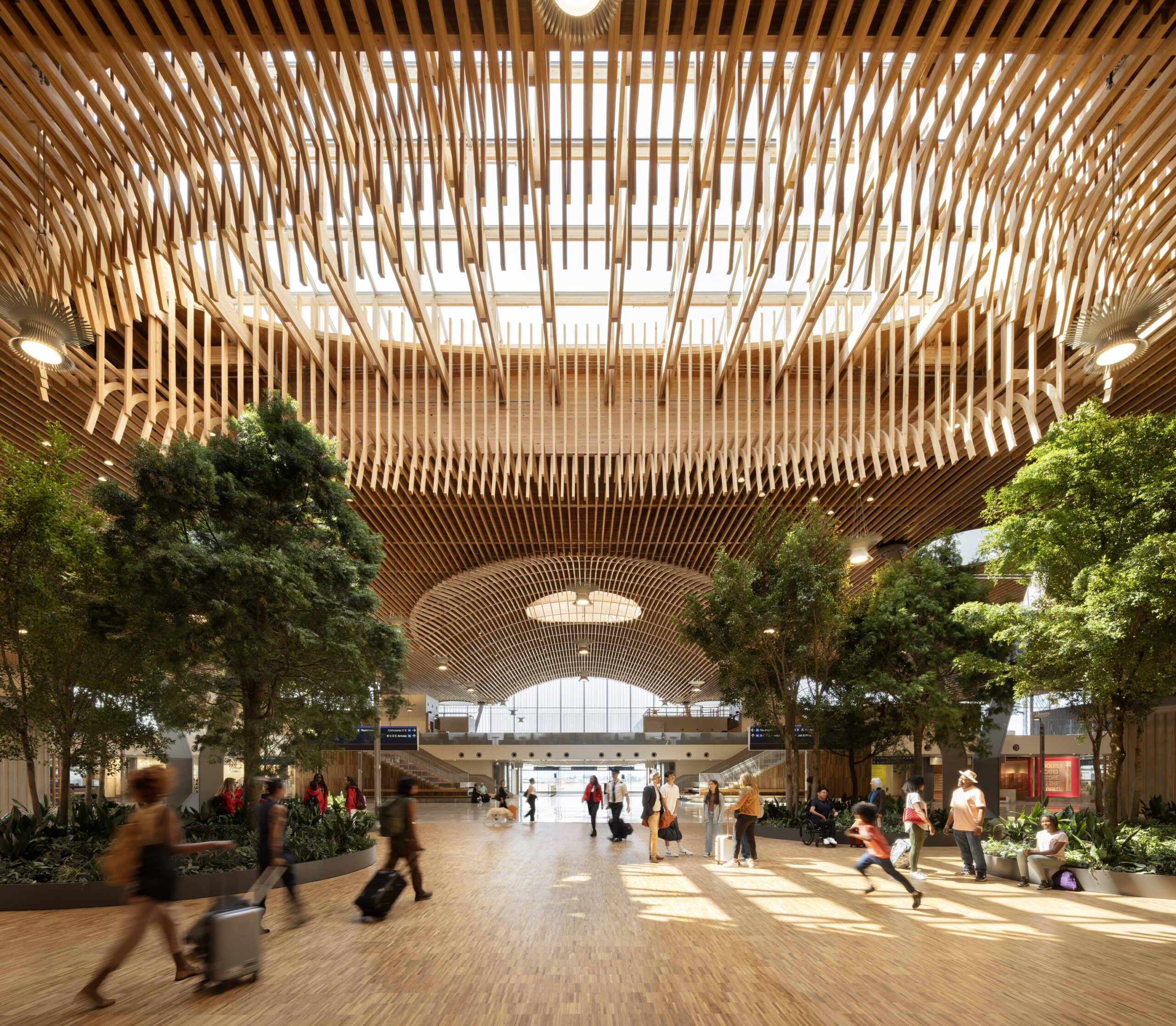
Portland International Airport Terminal / ZGF Architects – Portland, Oregon, USA
When it comes to a massive project like an international airport terminal, sustainability shifts from a design practice to a precise managerial and regulatory system. The Portland terminal project did not just buy timber locally; it built a completely transparent supply chain, tracing the origin of each piece of the over 2.6 million board feet of timber back to a specific forest. This action raises the bar for environmental accountability and sets a new standard for major civic projects. The roof, made of heavy glulam beams, not only provides structure and a majestic visual rhythm but also becomes tangible proof that it is possible to combine scale with environmental responsibility, enhancing regional pride by showcasing the wealth of local forests.
✦ ArchUp Editorial Vision insight
The article showcases six architectural models that adopt the use of locally sourced timber as a core sustainability strategy. It is notable that the focus on “locality” as a single metric for sustainability may obscure a comprehensive assessment of the material’s life cycle, including its processing methods and structural efficiency, which may not be optimal. In some projects, the aesthetic employment of wood seems disconnected from a genuine dialogue with its structural properties, limiting its potential as a load-bearing element. Furthermore, the reliance on “traceability” as the ultimate expression of responsibility raises questions about the priority of marketing transparency over tangible environmental efficiency. However, the fundamental value of these models lies in their embodiment of the principle of “contextuality,” where materials become a focal point for reviving regional craft practices long associated with the culture of the place.
Brought to you by the ArchUp Editorial Team
Inspiration starts here. Dive deeper into Architecture, Interior Design, Research, Cities, Design, and cutting-edge Projectson ArchUp.


