
Mathaba Project Initiates Formal Urban Renewal in Makkah

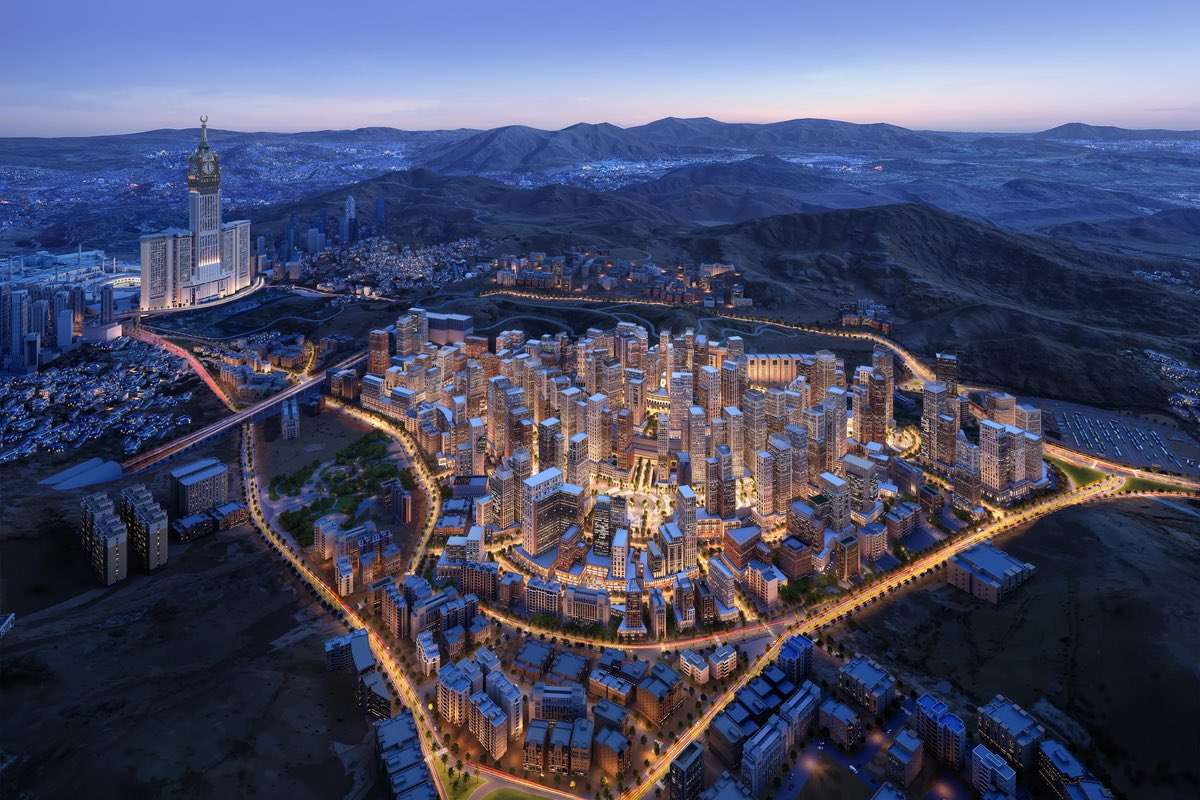
The Mathaba project establishes a new residential and service district in Makkah to replace unplanned informal settlements. This development spans 686,000 square meters and creates a structured environment capable of hosting 10 million visitors annually. The scheme marks the first approved master plan for developing disorganized neighborhoods in the city.
The project reorganizes the local urban planning by introducing 205 investment plots. These plots accommodate a mix of residential units and essential services to support the massive influx of visitors. By replacing irregular housing with a planned infrastructure, the intervention improves the efficiency of local logistics and safety standards.
The design focuses on high-capacity construction to meet the specific spiritual and seasonal demands of the region. The team integrates wide transit corridors and utility networks within the 686,000-square-meter footprint. These upgrades ensure that the district handles pedestrian and vehicular traffic more effectively than the previous informal layout.
Infrastructural Capacity and Service Integration
The intervention prioritizes investment readiness by subdividing the land into clearly defined service and housing parcels. Each plot connects to a centralized network of utilities, ensuring long-term operational stability. This approach allows for a diverse range of building types while maintaining a unified urban character across the entire site.
The team designed the district to function as a self-sustaining node within the city. The plan includes dedicated spaces for commercial activity that serve both permanent residents and the millions of annual visitors. By formalizing these spaces, the project stabilizes the local economy and provides a safer environment for public gatherings.
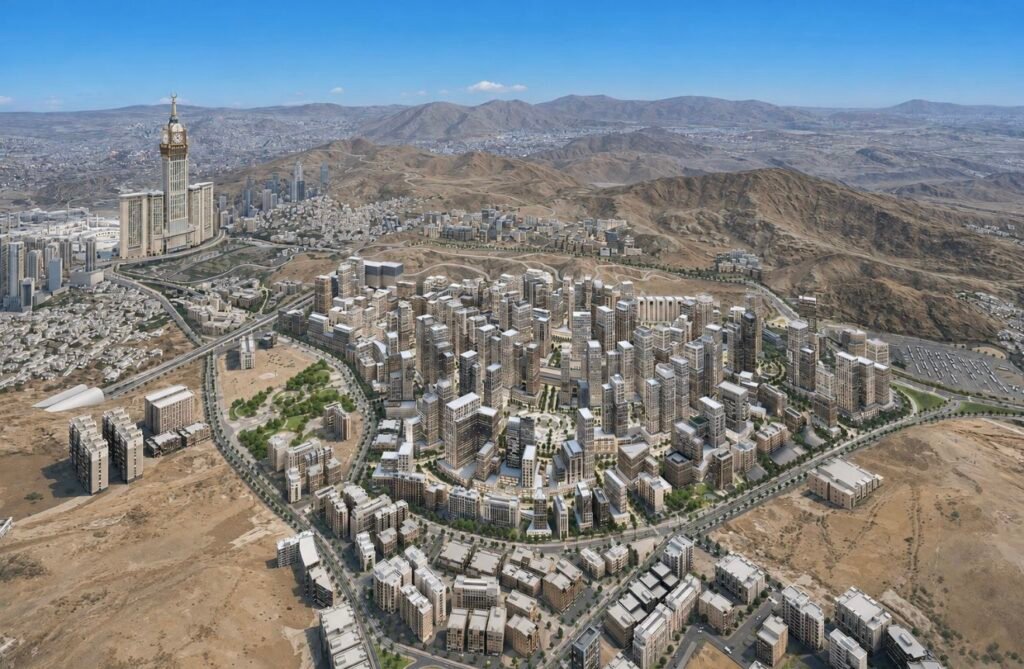
Current construction schedules focus on establishing the primary road networks and subterranean services. Once the team completes the core infrastructure, work will begin on the individual investment blocks. The transition from informal settlement to a regulated district represents a significant shift in the city’s approach to territorial management.
Urban Positioning and Programmatic Strategy
The project utilizes a rigorous grid to rectify the spatial fragmentation inherent in informal neighborhoods. By implementing a master plan across nearly 700,000 square meters, the design establishes a clear hierarchy of movement. The circulation logic separates high-volume visitor paths from localized residential zones, addressing the tension between global pilgrimage and local daily life. This programmatic intelligence relies on the systematic distribution of 205 investment plots, which act as catalysts for formal economic growth. The structural approach ensures that every new building adheres to modern safety and accessibility codes, creating a predictable and resilient urban fabric that can withstand the extreme load of 10 million annual users.
✦ ArchUp Editorial Insight
The Mathaba project demonstrates a significant pivot toward formalized urban planning in high-density religious hubs. By converting 686,000 square meters of informal sprawl into 205 regulated investment plots, the design prioritizes infrastructural legibility and safety. This systematic approach resolves the logistical bottlenecks that typically plague unplanned neighborhoods, providing a scalable model for modern pilgrimage architecture. However, the total eradication of informal settlements often risks erasing the organic social networks and micro-economies that sustain local communities. While the new master plan offers superior hygiene and traffic management, it imposes a top-down commercial logic that may alienate lower-income residents. The success of this intervention depends on whether the new service-oriented framework can replicate the social density of the neighborhoods it replaces without becoming a sterile investment vacuum.
Project Team: Thakher Development Company. Location: Makkah, Saudi Arabia.
Project Notes: This project represents the first approved master plan for informal neighborhood development in Makkah. Thakher Development serves as the primary developer for the 686,000-square-meter site.





sir I need Job for land surveyor. I have 17 years experience land surveyor. I am working building and bridge and box culverts and lay out and roads. I know instrument gps and total station and auto level.