The Studio That Was a Person

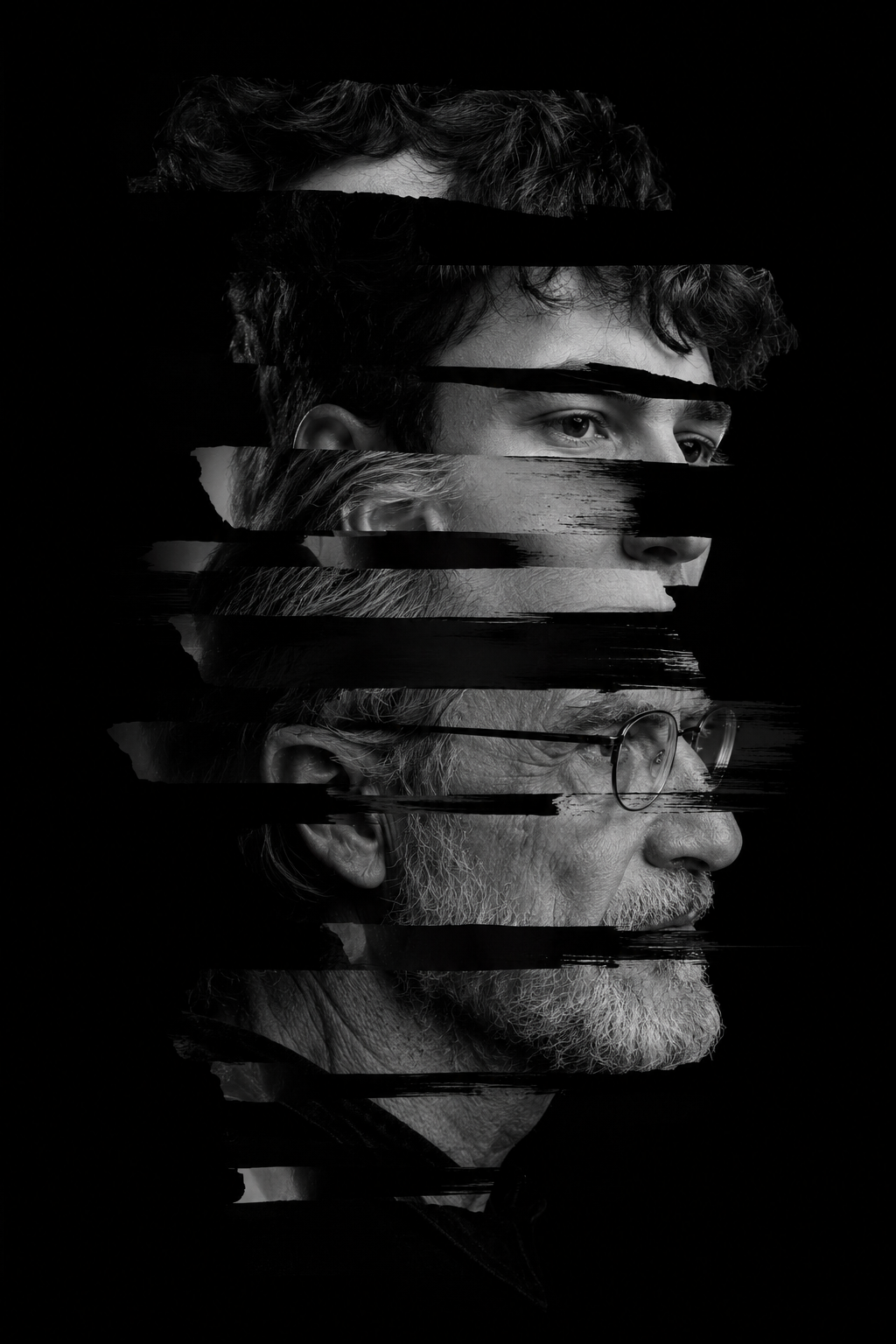
Design studios often function as extensions of a founder’s personal judgment and tacit knowledge rather than as formal organizations. This creates significant risks during succession, as the firm’s competitive advantage is stored in a single individual. Many design-led businesses fail because they lack a strategy for continuity.
Effective succession requires a long-term process involving joint work, professionalized governance, and a decentralized organizational structure. Successful transitions avoid replicating the founder’s style, instead integrating outside perspectives. Founders must eventually move into limited roles to allow the institution to survive independently of their personal presence.
Every design studio worth its name begins as a disguised autobiography. A client hires the firm, signs a contract with a company, receives an invoice from a legal entity, and believes throughout that they are dealing with an organization. They are not. They are dealing with one person’s eye, one person’s taste, one person’s thirty years of accumulated judgment about proportion and material and light, wearing the costume of an institution. The name on the door may be a company, but the thing being sold is a nervous system. This is the quiet truth of the design led business, and it produces the most difficult question any founder will ever face, a question most avoid until it is too late to answer well. What happens to a studio that is secretly a person, when the person leaves?
The question is not morbid and it is not optional. It arrives for every studio built around a vision, because visions are held by mortals, and the founder who cannot say the word succession is not protecting the firm but postponing its reckoning. The research on this moment is unusually direct about the stakes, calling founder succession the ultimate test of a firm’s sustainability, the single event that determines whether an enterprise was a business or merely an extended performance by its creator. And design firms fail this test more often than almost any other kind of company, for a reason that is worth stating plainly because it inverts everything the founder believes about their own success. The talent that built the studio is the same talent that threatens to bury it.
The Asset That Cannot Be Inherited

To see why, you have to understand what kind of asset a founder actually is. In most companies the founder’s role can be gradually routinized, broken into processes, documented, and handed to competent managers. The design studio resists this at the molecular level, because its competitive advantage is not a process. It is the founder’s tacit knowledge, the kind of knowing that lives in actions, routines, instincts, and values, and that cannot be written into a manual because the founder themselves cannot fully articulate it. Ask a great architect why a window belongs exactly there and not four inches over, and the honest answer is often a feeling refined by decades of practice, not a rule. That feeling is the firm’s entire product, and it is stored in a single skull. The architecture profession has built an entire economy on a form of knowledge specifically defined by its resistance to transfer.
This creates what the literature calls founder centrality, the degree to which one person dominates both the decisions and the cultural values of the organization, and in the most founder centric firms the effect is total. Researchers studying founder led enterprises found people who could not imagine the organization existing without its founder, employees who described the founder as bigger than the company itself. In design this is compounded by a phenomenon the branding scholars name founder based brand identity, a brand tied not to a family name or a logo but to the founder as a person, a Ferragamo, a Raspini, a name that is simultaneously a human being and a market asset. That identity is genuinely valuable, rare, and almost impossible to imitate, which is exactly why it is so dangerous. The most inimitable resource a firm owns is also the one it cannot inherit, because it walks out of the building every evening and will, one day, not walk back in.
And here the founder’s own psychology becomes the second threat, the one the research names founder syndrome, the difficulty founders have in leaving, in passing the mantle, in tolerating any deviation from their original vision. It rarely appears as open tyranny. It appears as a shadow. In studied cases, potential successors were found to be intimidated into paralysis, unwilling to step forward because they could not imagine filling the founder’s shoes, deterred less by any rule than by the sheer gravitational presence of the person still at the center. The founder’s charisma, the very force that attracted talent and clients during the growth years, curdles during succession into the thing that prevents anyone else from ever growing large enough to take over. The studio becomes a garden in which nothing can grow tall because a single tree takes all the light.
What the Numbers Say the Silence Costs
The economic consequences of this are not soft or speculative. The clearest quantitative window comes from event studies of sudden executive deaths, and the findings are sharp enough to be uncomfortable. When researchers examined the stock market’s reaction to founders dying, they found that markets distinguish ruthlessly between kinds of leaders. The interpretation the data supports is a double edged blade for any founder to hold. Markets can react against the loss of a genuinely irreplaceable decision maker, pricing in the disappearance of capital that cannot be replaced, and this is the key person risk that every design studio carries in concentrated form. The higher an individual’s decision making dominance, the more violent the disruption their sudden absence creates, which is a precise measure of exactly the vulnerability a vision led studio is built upon.
The cost of not planning is equally measurable. In the broader corporate record, firms that removed a leader without a planned succession forfeited on average close to two billion dollars in shareholder value compared with firms that planned carefully, and the best performing companies systematically drew their next leaders from a deliberately cultivated internal pipeline. Yet only about a third of large public companies regularly put succession on the board agenda at all, and the figures for founder led firms are worse still, with studies of family businesses finding that only around fifteen percent have a strong succession plan even when a large share fully intend to hand the business on. The pattern is a collective refusal to look at the one certainty every studio faces. The projects get planned to the millimeter and the decade, and the departure of the one person without whom none of those projects would exist is planned not at all. This is the blind spot that serious architectural research into practice keeps exposing, and that the profession keeps declining to look at, preferring the flattering questions of form to the uncomfortable one of continuity.
The creative record shows the same stakes in a different currency. In fashion, the arrival or departure of a single creative director has lifted a house from a quarter of a billion in sales to one and a half billion, and elsewhere doubled a company’s revenue within three years while simultaneously being accused of betraying everything the house stood for. That last case is the one design founders should study most closely, because it names the real trade at the heart of creative succession. A successor can grow the numbers and erode the meaning at the same time. Revenue and identity are not the same variable, and a transition can win one while losing the other, which is why measuring a succession only by its first years of income is a way of not seeing the damage until it is permanent.
The Investment Before the Harvest
There is another way to read the succession problem, and it is less defensive than the language of risk usually allows. A design studio in the middle years of its founder’s career may represent an extraordinary investment opportunity precisely because its most valuable institutional qualities have not yet been fully priced. An investor who enters at that stage is not simply buying revenue, a portfolio, or access to a famous name. They are buying a tree before it bears its most valuable fruit: the accumulated judgment of the founder, the clients who trust it, the younger leaders learning to carry it, and the organizational structure that can eventually separate the practice from the person who created it.
The condition, however, is that the investment must fund institutionalization rather than extraction. Capital used only to expand the founder’s personal output increases dependency and makes the central risk larger. Capital used to document the studio’s methods, build a second layer of leadership, formalize ownership, retain key staff, diversify client relationships, and create a succession pathway can convert personal reputation into durable enterprise value. The investor is not purchasing a finished tree. They are purchasing the chance to help cultivate an institution before the market fully recognizes what it can become.
That is why timing matters. Enter too late, and the investor pays a premium for a mature reputation while inheriting unresolved succession risk. Enter too early, and there may be no tested culture, stable client base, or repeatable economic model. The most interesting moment may be the middle of the founder’s career, when the studio has proved that its vision can attract work but still has enough time to build the structures that allow that vision to survive beyond its author. In that window, succession is not a cost imposed on the investment. It is the mechanism through which the investment becomes valuable.
How the Vision Survives Its Author
So what actually works? The evidence, drawn across family firms, luxury houses, and design practices, converges on a model that will feel counterintuitive to most founders, because it asks them to do the opposite of what built the studio. The first principle is that succession is a long process, not an event. The successful transitions in the record are never a handover ceremony. They are years of joint work in which the founder moves through a sequence of roles, supervising, then teaching, then protecting, then, crucially, introducing. That introducer role is the operational heart of client retention in a design practice, because clients in this field are loyal to a person, not a firm, and in documented cases clients simply refused to deal with anyone but the founder they trusted until the founder personally, gradually, over years, walked the successor into the relationship. A studio that has not staged these introductions has a client book its successor cannot open.
The second principle concerns the successor’s knowledge, and it corrects the most seductive mistake a founder can make. The instinct is to find a clone, someone who will replicate the style faithfully, and this instinct is fatal in both directions. A successor who only internalizes the founder’s tacit knowledge, who learns to imitate the eye without adding anything of their own, preserves the style and loses the vitality, and the firm freezes into a museum of its founder’s habits, unable to renew itself. The research is explicit that inherited tacit knowledge is important but not sufficient, that it must be combined with knowledge the successor acquired elsewhere, through education and outside experience, if the firm is to keep innovating rather than merely repeating. The goal is not a copy. The goal is someone shaped enough by the founder to carry the identity and independent enough to move it forward, and as one successor put it with hard won clarity, you never really step into somebody else’s shoes, and trying to become that person is the surest way to fail.
The third principle is the one that most offends the creative temperament and most reliably saves the firm. Formalization enables creative survival. The design founder tends to believe that structure is the enemy of creativity, that boards and processes and documented ownership transfers are the machinery of dull corporations, but the record shows the reverse. In case after case, the founder’s departure forced a professionalization that the studio had needed for years, converting a one or two person operation that had been quietly suffering into something clearer and more systematic that could actually endure. A strong board that can choose a successor independently of the founder’s wishes, formal ownership mechanisms, real financial planning, these are not the betrayal of the vision. They are the vessel that lets the vision outlive the visionary. The construction of that governance is itself a creative act, the design of the container that will hold everything the founder made.
There is a structural subtlety here that matters especially for the large studio, and it is the part your own question points toward. The biggest design practices are not single teams but federations, teams within teams, sometimes studios nested inside studios, each with its own leads and its own subculture. This architecture is, quietly, the most powerful succession instrument a firm can have, because it distributes the founder’s identity across many carriers rather than concentrating it in one. A studio built as a federation of capable sub studios has already begun the work of separating the vision from the person, growing a whole generation of leaders inside the culture rather than betting everything on a single anointed heir. The founder who builds this way is, whether they name it or not, practicing succession every day, and the cities full of firms that collapsed the moment their founder left are mostly firms that never allowed a second center of gravity to form. It is worth noticing how rarely this is celebrated. The news covers the founder’s next building and the design competition rewards the singular signature, while the quieter achievement, a studio engineered to outlast its author, goes almost entirely unremarked, though it is the only form of sustainability a practice can practice on itself.
The final principle is the hardest, and it is about the founder’s exit rather than the successor’s entry. The most successful departing founders neither cling nor vanish. They remain, in clearly bounded roles, as symbol, as safeguard, as occasional consultant, as the intermediary who keeps the oldest client relationships warm, without ever reasserting control over the decisions they have formally handed away. This is the discipline the founder syndrome makes nearly impossible, the ability to stay useful without staying in charge, and the studios that manage it are the ones whose founders understood that the last and greatest design of their career was not a building. It was the firm that would keep making buildings after they were gone.
So the conclusion is sharper than any advice about planning ahead. The founder of a design studio spends a career proving that they are irreplaceable, and that proof, if it fully succeeds, is a death sentence for the studio. The real measure of a visionary is not the work produced while they held the pen. It is whether anyone can still recognize the studio’s hand once the pen has been handed on, and that outcome is not decided in the founder’s final year. It is decided across all the years before, in whether they built a firm that expressed their vision or merely one that depended on their presence. The greatest architects design one last structure that never appears in their portfolio, the one that must stand precisely because they are no longer holding it up. Most never draw it, and their studios are buried with them. The few who do achieve the only immortality available to a maker, which is to become a style the world can keep using without them, a name that outlives the hand that signed it, a person who finally, successfully, became an institution.
✦ ArchUp Editorial Insight
The founder’s tacit knowledge is not a romantic concept — it is a precise liability category, and the article’s most structurally consequential contribution is its identification of founder centrality as simultaneously the firm’s primary competitive asset and its primary solvency risk, a condition that the profession has systematically declined to govern because the same cultural apparatus that celebrates the singular architectural vision — the monograph, the award, the competition, the interview — has a structural interest in maintaining the myth of irreplaceability that makes succession planning feel like a betrayal of the work rather than its logical completion. The fifteen percent of family businesses with a serious succession plan is not a failure of intention but of incentive: the founder who builds a studio engineered to outlast their own presence has, in effect, voluntarily deflated the asset whose inflation sustained their market position, because a practice that can function without its founder is worth less as a personality brand and more as an institution, and the profession’s entire valuation apparatus — the press coverage, the client relationship, the lecture invitation — rewards the former while the latter is what actually survives. The connection to what this archive identified in An Elegy for Architecture is structurally precise: in both cases, the knowledge that constitutes a practice’s irreplaceable value is stored in a single person’s accumulated decisions about what to keep, and when that person is gone — whether through departure, death, or the slow retreat of age — what remains is determined entirely by whether they understood, early enough and clearly enough, that the last and most consequential design of their career was not a building but the institution capable of remembering why the buildings were made the way they were.
Sources
- Bacq S, Janssen F, Noël C. What happens next? A qualitative study of founder succession in social enterprises. Journal of Small Business Management, 2017, 57(3), 820 to 844.
- Casprini E, Melanthiou Y, Pucci T, Zanni L. Managing founder based brand identity during succession. Journal of Brand Management, 2019, 27(1), 1 to 14.
- Casey JJ Jr, Russell JS. Ownership transfer of design engineering and construction firms. Journal of Management in Engineering, 1994, 10(2), 66 to 76.
- Johnson WB, Magee RP, Nagarajan NJ, Newman HA. An analysis of the stock price reaction to sudden executive deaths. Journal of Accounting and Economics, 1985, 7(1 to 3), 151 to 174.
- VanderPloeg AJ, Lee SE. The role of the creative director in sustaining the luxury brand. Fashion, Style and Popular Culture, 2018, 5(3), 343 to 358.
- Nandi R, Singh G, Talib P. Succession in family business: sharing the cognitive map. Paradigm, 2019, 23(1), 53 to 69.
- Letonja M, Duh M. Knowledge transfer in family businesses and its effects on the innovativeness of the next family generation. Knowledge Management Research and Practice, 2016, 14(2), 213 to 224.
- Duh M. Family business succession as knowledge creation process. Kybernetes, 2014, 43(5), 699 to 714.
- Schmidt S, Schreiber D, Bohnenberger MC, Pinheiro CMP. Strategic design in small creative industry firms. Creative Industries Journal, 2018, 11(3), 306 to 321.
- Cadieux L. Succession in small and medium sized family businesses: toward a typology of predecessor roles during and after instatement of the successor. Family Business Review, 2007, 20(2), 95 to 109.
- Chinowsky PS, Byrd MA. Strategic management in design firms. Journal of Professional Issues in Engineering Education and Practice, 2001, 127(1), 32 to 40.
- Berns KVD, Klarner P. A review of the CEO succession literature and a future research program. Academy of Management Perspectives, 2017, 31(2), 83 to 108.