Mayan Temple Complexes: The Harmony of Astronomy and Belief

Introduction
The ancient Maya civilization was remarkably advanced in its understanding of the world—especially the sky. Their temple complexes were far more than religious structures; they were precisely engineered masterpieces aligned with celestial movements. The seamless blend of spiritual rituals and astronomical knowledge gave these temples a unique character and central role in Maya society.
Astronomy at the Heart of Design
For the Maya, observing the sky wasn’t just a scientific pursuit—it was a way of life. They relied on the positions of the sun, moon, and stars to guide agriculture, mark seasonal changes, and set sacred dates in their calendars.
Temples aligned with the sky:
| Temple | Location | Celestial Alignment |
|---|---|---|
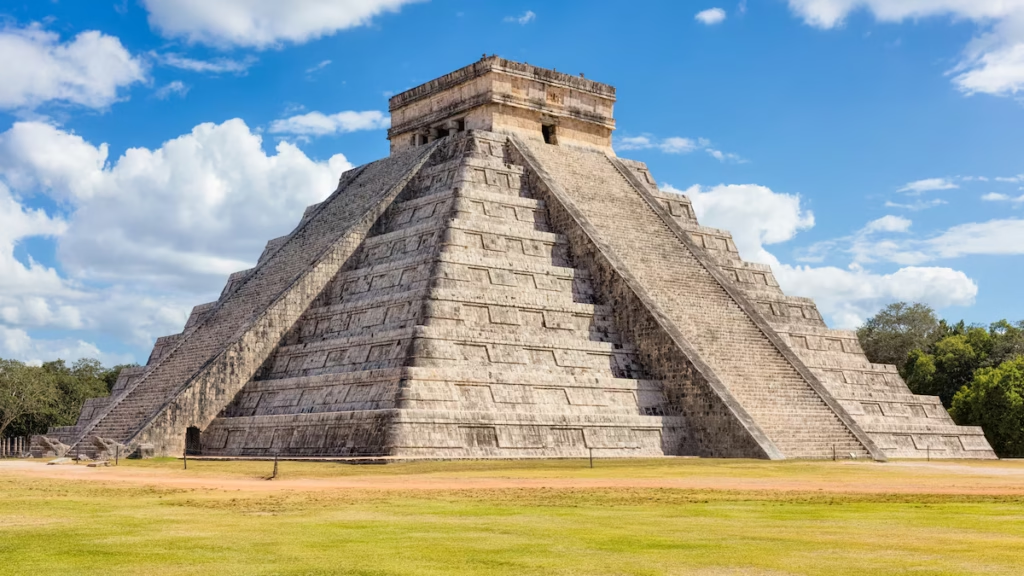
| Temple of Kukulkan | Chichén Itzá | Equinox sun alignment |
| El Caracol (The Observatory) | Chichén Itzá | Tracking Venus and lunar movements |
| Tikal Temples | Guatemala | Solar solstice alignment |
These structures were crafted with incredible precision, using light and shadow to create symbolic effects—such as the illusion of a serpent slithering down Kukulkan’s staircase during the equinox.
Rituals under the Stars
Mayan temples served as more than places of worship—they were celestial stages for performing sacred rituals timed to cosmic events. These included:
- Offerings to the gods.
- Blood rituals seen as spiritual purification.
- Seasonal festivals aligned with sacred calendars like the Tzolk’in.
High-ranking priests would climb to the tops of temples to conduct these ceremonies at sunrise or during specific planetary appearances, emphasizing the deep connection between the heavens and religious life.
Architecture in Sync with Nature
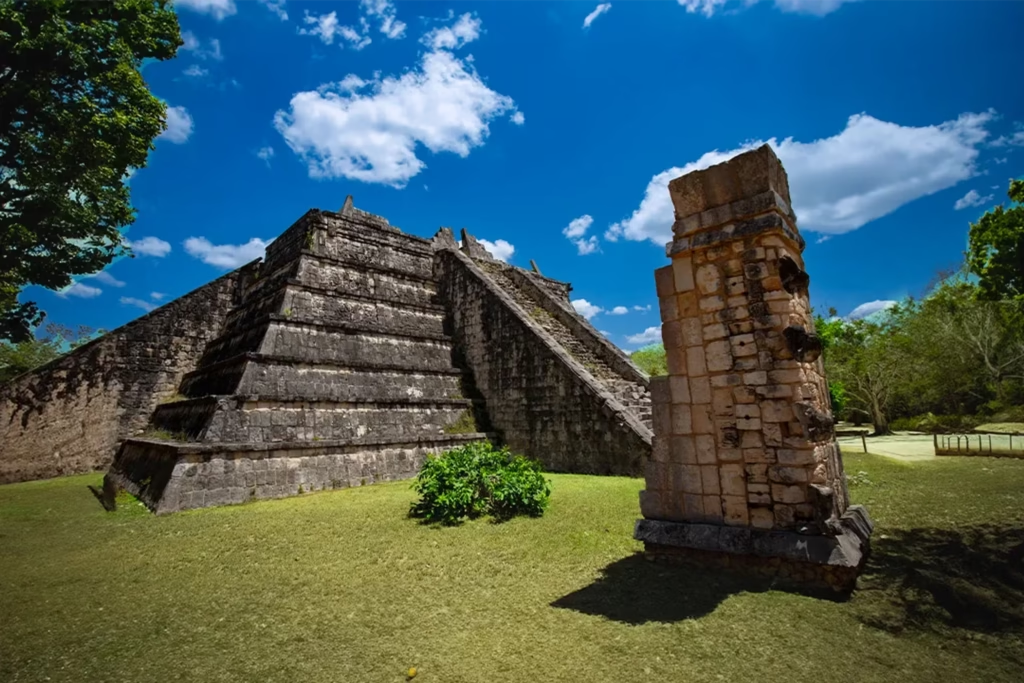
Temple locations weren’t chosen randomly—they were carefully positioned to harmonize with natural elements such as the terrain, solar paths, and prevailing winds. The architecture itself was rich with symbolism:
| Architectural Feature | Symbolic Meaning |
|---|---|
| Steep stairways | Ascension to the heavens |
| Carvings and symbols | Representations of gods and cosmic forces |
| Tiered elevations | Spiritual and societal hierarchy |
This synergy between architecture and nature shows the Maya were more than builders—they were thoughtful designers with a cosmic vision.
Temples at the Core of Society
Temples weren’t just spiritual centers—they were also hubs for leadership, education, and community life. In many Maya cities, temple complexes were built at the heart of urban design, serving as a physical and symbolic anchor. This layout reflected their belief in a well-ordered universe, where the cosmos, earth, and human life were intricately connected.
✦ ArchUp Editorial Insight
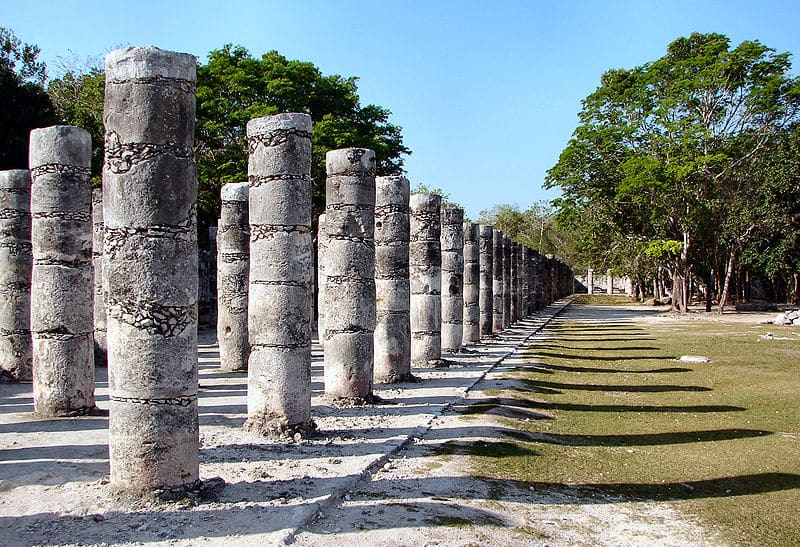
This article explores the intricate relationship between religious rituals and astronomy within Mayan temple complexes, revealing a sophisticated understanding of solar and stellar movement—particularly evident in structures like the Temple of Kukulkan at Chichén Itzá. The accompanying visuals highlight the spatial harmony between shadows, architectural angles, and natural surroundings, reflecting an impressive mastery of cosmological alignment. However, despite this architectural-astronomical synergy, the article lacks a deeper discussion of the temples’ functional roles in daily life or how their uses evolved over time. Nevertheless, the reading remains insightful, demonstrating how architecture served as a medium for expressing faith and cultural identity in a civilization far ahead of its time.
Explore the Latest Architecture Exhibitions & Conferences
ArchUp offers daily updates on top global architectural exhibitions, design conferences, and professional art and design forums.
Follow key architecture competitions, check official results, and stay informed through the latest architectural news worldwide.
ArchUp is your encyclopedic hub for discovering events and design-driven opportunities across the globe.