Mozart House: Adaptive Reuse in a Georgian Heritage Building


Historical and Urban Context
Mozart House is located within a row of historic Georgian buildings in the Belgravia district and is a Grade II listed building. The site carries cultural value associated with historical figures who once lived there, which required treating it as a sensitive heritage case demanding a limited architectural intervention on the existing fabric. Therefore, any alteration was carried out within a framework that preserves the Georgian façade and its urban context.
Adaptive Reuse of Existing Spaces
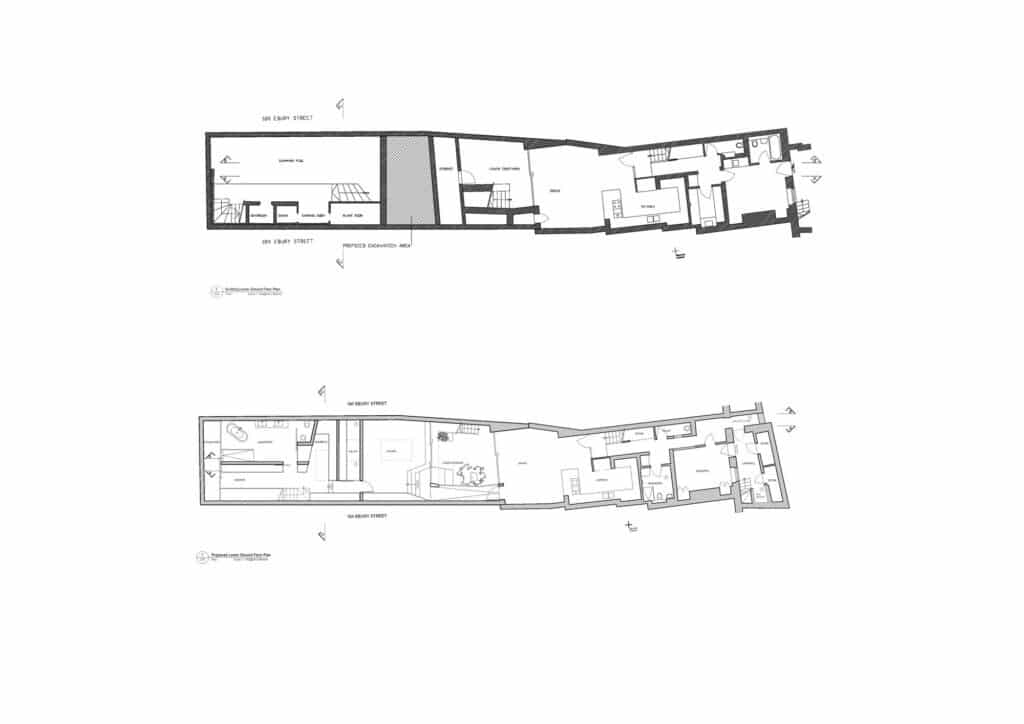
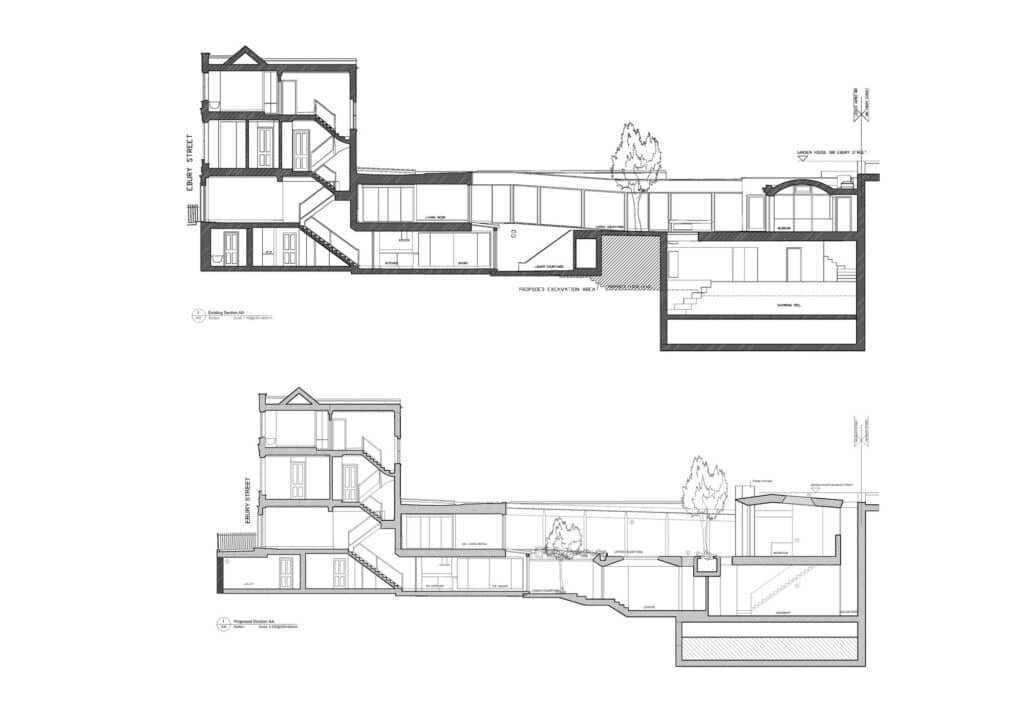
The Adaptive Reuse architectural intervention focused on reusing the volume of an unused old swimming pool within the property, transforming it into a series of new living spaces. This included the addition of two floors containing a master suite, dining area, and bathrooms, along with a sunken courtyard formed in the location of the former pool. This transformation emphasized the activation of space rather than horizontal expansion or disrupting the original building mass.
| Field | Details |
|---|---|
| Architects | Studio DERA |
| Area | 82 m² |
| Year | 2025 |
| Photographs | Lorenzo Zandri |
| Manufacturers | BB Fiberbeton, CSI Hull, Guy Valentine, Ted Todd |
| Category | Houses, Extension |
| Office Lead Architects | Marcel Rahm |
| Design Team | Studio DERA |
| Landscape Architecture | FFLO |
| Engineering & Consulting (Structural) | Structural Design Studio |
| General Contractor | JK London Development |
| City | London |
| Country | United Kingdom |


Architectural Composition and Light
The design is characterized by its reliance on natural light and finely processed materials to shape the spatial experience. The new spaces are integrated into forms carved within the rear garden, creating a gradual transition between interior and exterior. The organization of volumes, proportions, and shifting light contributes to a calm spatial rhythm, while maintaining a visual balance with the building’s historic façade.
Spatial Sequencing and Architectural Movement
The extension unfolds as a sequential spatial system, where the spaces are connected through a clear, progressive flow. The upper and lower courtyards are linked via a colonnade that directs movement and frames views toward vegetation and the sky, reinforcing the visual relationship between interior and exterior.
Light and Material Composition
The design incorporates a sculptural lightwell finished with a lime-textured plaster treatment, allowing the visual scene to shift with the changing light throughout the day. The material palette is based on a combination of travertine stone, glass-reinforced concrete (GRC) panels, and timber cladding, which introduces a tactile dimension to the interior spaces. This is complemented by extensive glazed openings, including bifold doors, skylights, and courtyard windows, enhancing the penetration and distribution of natural light throughout the spaces.
Integration with Natural Elements
Natural elements play a key role in softening the architectural mass and reducing its rigidity through layered greenery and trees planted in containers and on the roof garden. vegetation extends toward the sunken courtyard, creating a gradual transition between the interior space and the surrounding landscape, reinforcing the continuity between architecture and nature.


✦ ArchUp Editorial Insight
The transformation of a Grade II listed Georgian building in Belgravia operates as a recalibration of an existing real-estate asset under the logic of yield maximization within conditions of land scarcity and rising heritage asset value. The foundational driver is the preservation of real-estate capital under stringent planning constraints, where adaptive reuse becomes more economically viable than reconstruction. Regulatory resistance emerges from listed building protections, volumetric massing restrictions, insurance risks, and the difficulty of modifying existing structural voids such as the former swimming pool volume. The resulting spatial outcome, introducing residential functions vertically, creating a sunken courtyard, and organizing circulation through a colonnaded walkway, acts as a negotiated settlement between heritage compliance and the absorption of high residential market demand. Materials and light are deployed here less as autonomous design expressions and more as mechanisms for cost control and supply-chain optimization.