Beyond Solid Walls: How Mixed Reality Reshapes Museum Space

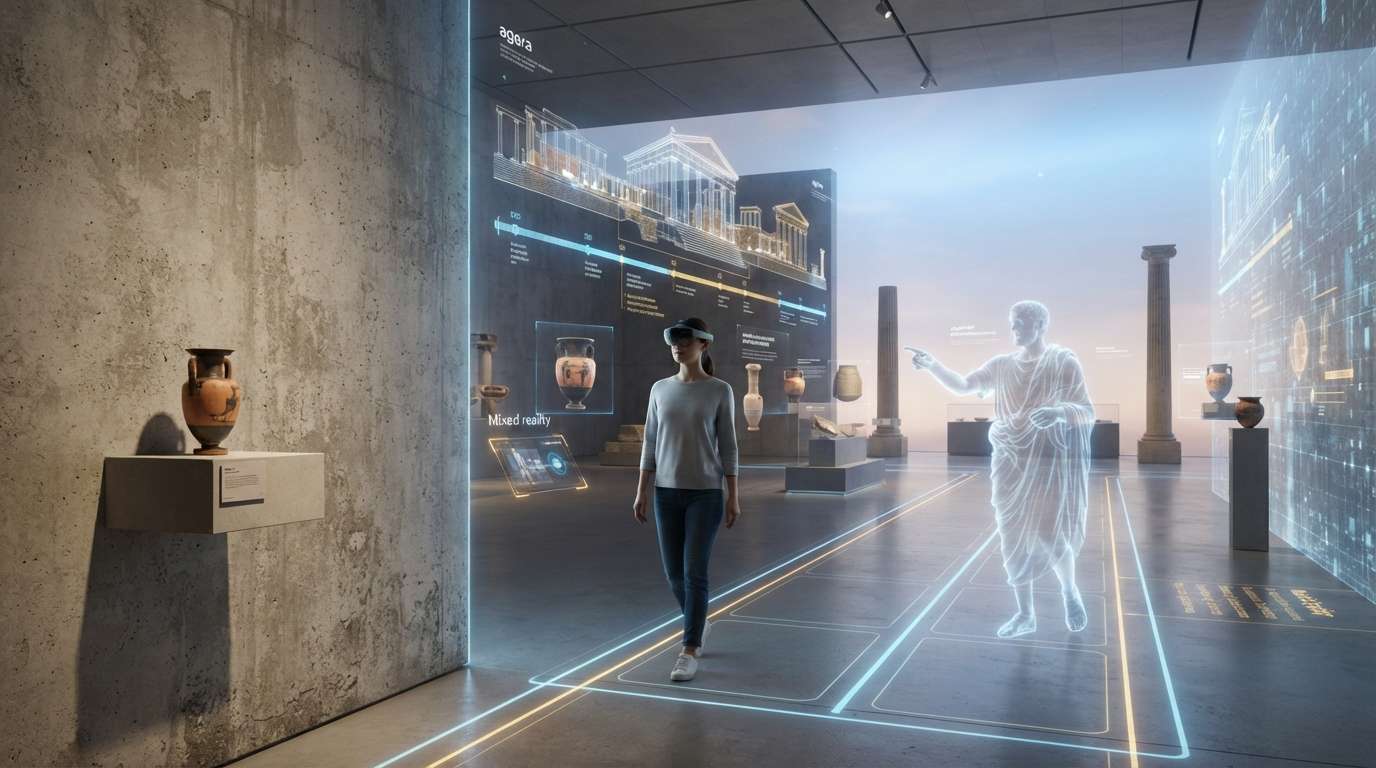
Holographic guides and interaction restructure traditional architecture to produce immersive spatial experiences
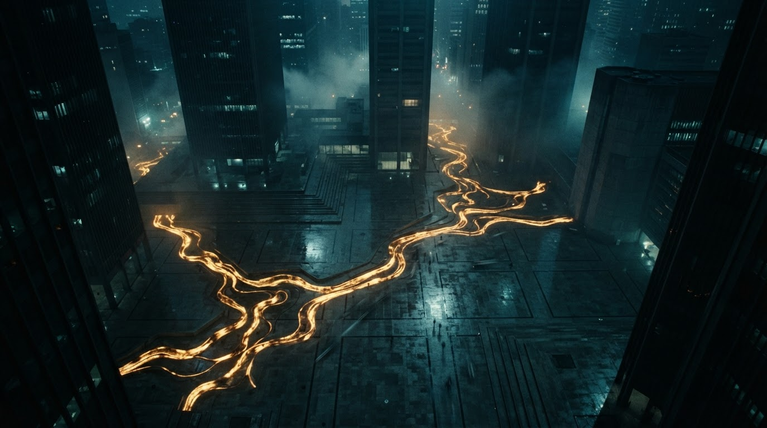
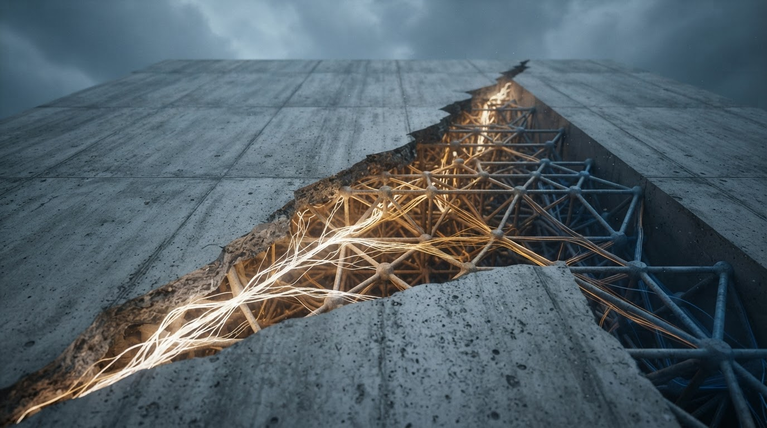
For centuries, museums existed within the confines of silent glass boxes, where visitors stood detached, separated from history and art by physical walls or vitrines. However, a shift occurs when these physical barriers dissolve entirely, allowing the architectural space itself to become an interactive medium that narrates history and projects timelines into the air. This shift is no longer confined to science fiction; it is a tangible reality shaped by mixed reality (MR) technologies that blend three-dimensional digital elements with physical architectural spaces. Between 2020 and 2026, a quiet shift reorganized how this technology redefines the philosophy of museum interior design and circulation paths within exhibitions, transforming mute concrete walls into dynamic platforms that narrate histories and guide visitor footsteps.
From Physical Constraints to Hybrid Space
Architectural designers frequently confront the challenges of limited floor areas within the rigid concrete frameworks of existing buildings. In their study on extended reality museums, Alperen Kasgarlı and Salih Aydın demonstrate that merging the physical and digital worlds allows designers to transcend these physical limits entirely. Architects no longer need to construct physical walls to display additional artifacts; instead, they can use mixed reality to expand the space visually, overlaying digital information and virtual objects onto the existing physical context. Through this lens, the interior layout of the museum shifts from a static arrangement of physical artifacts to a dynamic design process of “hybrid space.” In this environment, a three-dimensional holographic virtual guide leads visitors along visual paths that intersect with real walls and columns, fostering a new sensory perception that manipulates depth and scale within restricted exhibition halls.
The Holographic Guide and the Engineering of Circulation Paths
Managing crowd flow within galleries and heritage sites represents one of the most complex challenges facing urban and interior designers. Addressing this issue, a research team led by Ramy Hammady introduced a framework to construct and evaluate the role of mixed reality as a holographic virtual guide floating in space using Microsoft HoloLens smart glasses. This study prompts a re-evaluation of circulation engineering within museum spaces. Instead of imposing rigid, unidirectional pathways to protect artifacts or manage crowd flow, the holographic guide enables flexible paths that adapt to visitor behavior in real time. The digital guide accompanies visitors step-by-step, projecting floating visual instructions that direct movement and prevent architectural bottlenecks at major focal points, thereby restructuring the relationship between the physical body and the built environment while granting open spaces unprecedented operational flexibility.
Beyond Museum Walls: Extending Heritage into Public Space
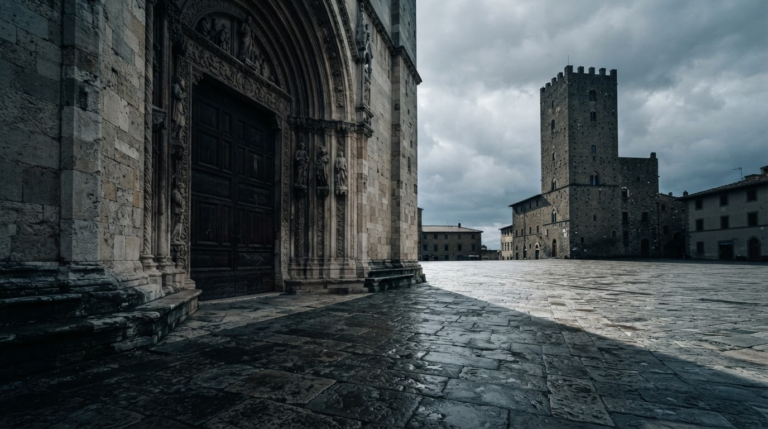
The role of museum architecture does not end at the building’s physical thresholds; it extends to integrate with the surrounding urban fabric and open archaeological sites. Julio Cabero-Almenara and María del Carmen Llorente-Cejudo demonstrate how augmented reality (AR) and mixed reality improve user engagement with cultural heritage outside traditional museum walls. This integration embeds historical landmarks into the daily life of the city and revitalizes public plazas. In a complementary study conducted by Samuli Laato and Timo H. Laine on archaeological sites, technology reveals how ruined structures can be virtually reconstructed. Visitors standing in an empty, ruined courtyard can witness a historic structure rise before them at its original scale and detail through mixed reality lenses. This connection liberates archaeological architecture from its physical decay, transforming the public urban space into an open-air museum without walls, which alters tourism planning and urban development strategies for historic cities.
Space and Architectural Vision: How Curators and Decision-Makers View Digital Space
Integrating digital dimensions into museum architecture introduces logistical and philosophical challenges for designers and curators alike. In their study of museum professionals’ perspectives, Maria Shehade and Theopisti Stylianou-Lambert highlight a persistent tension between preserving the integrity of physical architectural space and the influx of digital hardware and immersive technologies. Design and curatorial experts argue that integrating mixed reality requires careful planning that does not obscure the aesthetic value of the physical building. Architecturally, this demands the design of concealed storage solutions for charging docks, careful recalibration of lighting design (as smart glasses require specific lux levels to function accurately without visual interference), and the designation of safe transition zones to prevent users immersed in virtual environments from colliding with physical walls or structural columns.
Storytelling and Sensory Interaction with Spatial Treasures
The physical environment is no longer a passive vessel for collections; instead, it becomes an active participant in narrative delivery and sensory engagement. In a study published in 2026 led by Qi Chen, researchers explored how digital storytelling and interaction with museum treasures alter visitor behavior and emotional responses, deepening their connection to the site. When this narrative integrates with the physical environment, the psychological bond between the visitor and the space strengthens. This research aligns with findings by Chi-Yen Chen and Chih-Wei Chang in 2025 regarding the development of mobile augmented reality guides designed to enhance the visual and physical experience of art appreciation. From an architectural perspective, directing visitor attention to specific structural or decorative details—such as ceiling patterns or column capitals—through visual storytelling revitalizes the space itself, turning the exhibition visit into an active exploration akin to decoding a spatial novel.
Human Behavior and the Re-engineering of Interior Space
When designing future museums, ergonomics and visual comfort must align with the requirements of smart, virtual systems to avoid physical disorientation. Dimitrios Buhalis and Nedim Karatay analyze tourist behavior and experiences with augmented and virtual reality, emphasizing that visitor acceptance of these technologies depends heavily on how seamlessly they integrate into the physical environment without causing feelings of detachment or motion sickness. From an architectural standpoint, this necessitates the re-engineering of interior layouts to provide comfortable, unobstructed paths that support free movement while using head-mounted displays or mobile guides. This requirement corresponds with research by Ya Niu and Lei Qiu on adapting Microsoft HoloLens applications to physical museum layouts. Planning spacious galleries free from unexpected physical obstacles and organizing carefully positioned rest areas has become essential to modern exhibition design, ensuring digital experiences do not cause physical fatigue or spatial confusion within innovative museum spaces.
✦ ArchUp Editorial Insight
The adoption of mixed reality in contemporary museums is not a pursuit of spatial liberation, but a direct response to the escalating financial pressures of urban cultural institutions. Confronted by soaring municipal real estate costs and shrinking public subsidies, museums utilize virtual overlays as a low-capital alternative to physical expansion, artificially multiplying exhibition space without concrete investment. This digital transition simultaneously addresses labor liabilities; substituting human docents with proprietary holographic systems reduces long-term operational overhead. Furthermore, algorithmic crowd routing via augmented lenses functions as a cost-effective risk-mitigation tool, shifting the burden of safety and circulation control from architectural intervention to personal device software. Ultimately, the “hybrid museum” is the logical spatial consequence of public institutions adapting to the hyper-efficiency demands of the attention economy.
References
[1] Hammady, Ramy, Minh Ma, and Charles Strathearn. “A framework for constructing and evaluating the role of MR as a holographic virtual guide in museums.” Virtual Reality, 2021.
[2] Kasgarlı, Alperen, and Salih Aydın. “X-Reality Museums: Unifying the Virtual and Real World Towards Realistic Virtual Museums.” Applied Sciences, 2020.
[3] Cabero-Almenara, Julio, and María del Carmen Llorente-Cejudo. “How can augmented reality improve the user experience of digital products and engagement with cultural heritage outside the museum space?” IOP Conference Series: Materials Science and Engineering, 2020.
[4] Laato, Samuli, and Timo H. Laine. “Augmented Reality to Enhance Visitors’ Experience at Archaeological Sites.” Advances in Intelligent Systems and Computing, 2020.
[5] Shehade, Maria, and Theopisti Stylianou-Lambert. “Virtual Reality in Museums: Exploring the Experiences of Museum Professionals.” Applied Sciences, 2020.
[6] Chen, Qi, Xiao Huang, and Xiao Li. “Digital storytelling in VR museums: How interaction with museum treasures affects tourists’ responses?” Tourism Management, 2026.
[7] Chen, Chi-Yen, and Chih-Wei Chang. “Augmented Reality Art Museum Mobile Guide for Enhancing User Experience.” IEEE Computer Graphics and Applications, 2025.
[8] Buhalis, Dimitrios, and Nedim Karatay. “Tourists and Augmented and Virtual Reality Experiences.” Handbook of e-Tourism, 2022.
[9] Niu, Ya, and Lei Qiu. “Augmented Reality Museum Visiting Application based on the Microsoft HoloLens.” Journal of Physics: Conference Series, 2019.