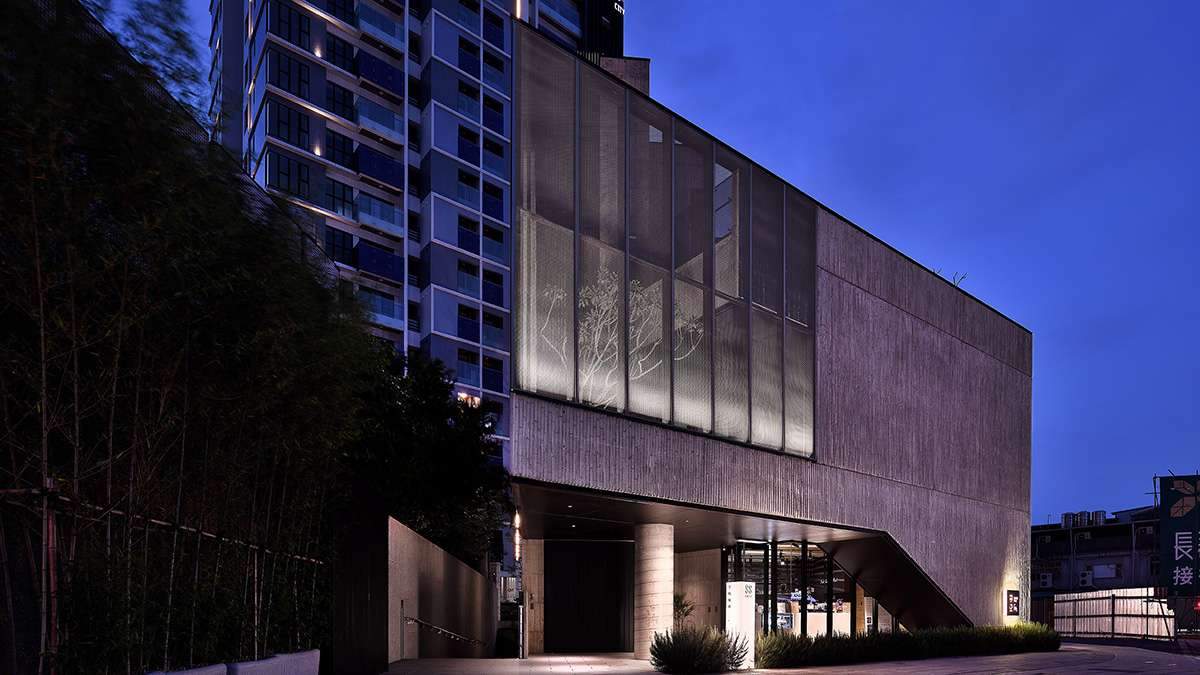
Temporary Pavilions Transform the Urban Fabric of Logroño

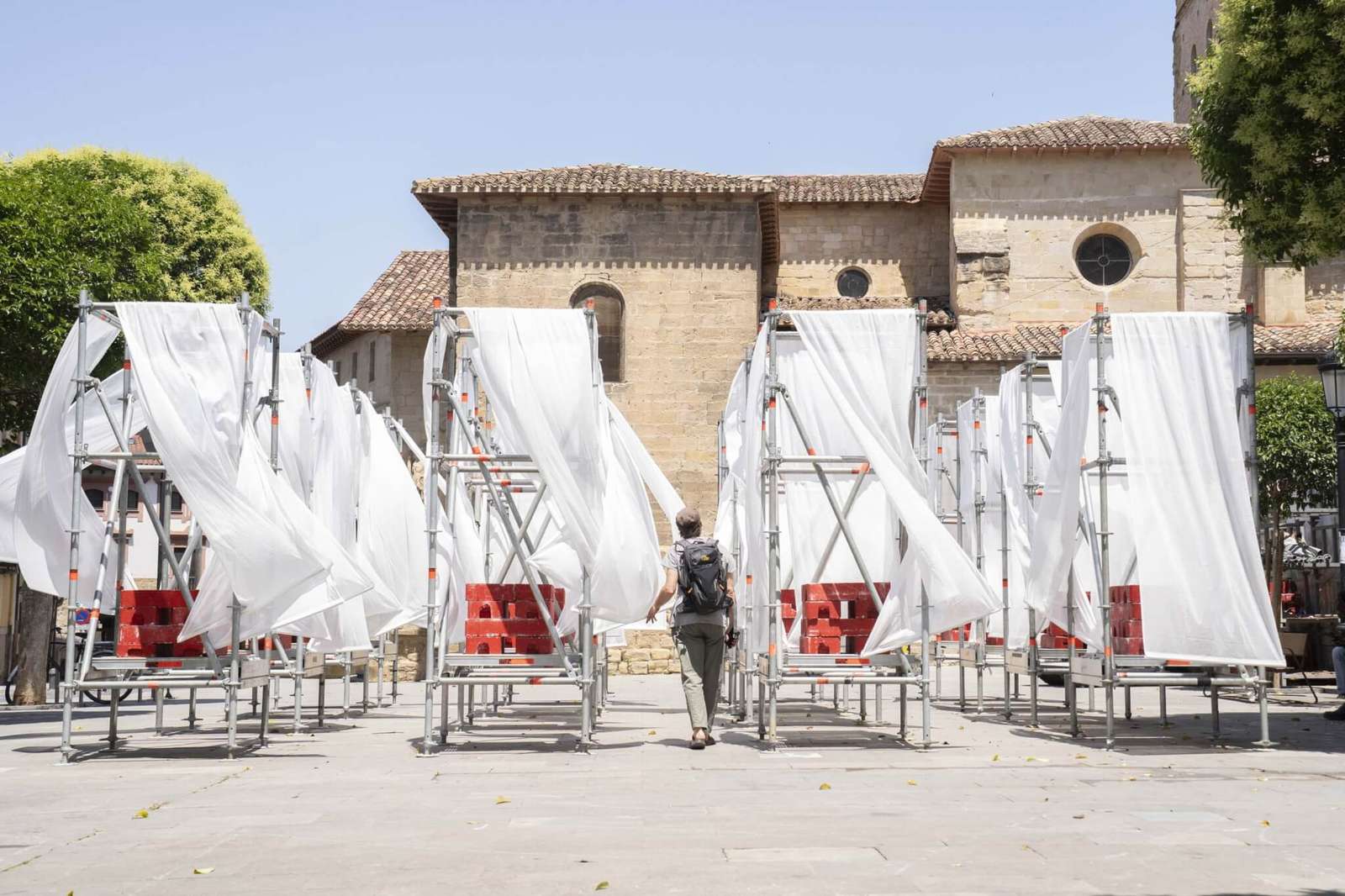
An annual international festival in Logroño, Spain, recently turned the city’s historic streets into an experimental laboratory for urban design. The event invited global teams to install temporary structures that challenge how residents perceive public space and environmental systems. These interventions occupy plazas, narrow alleys, and bridges to test new ideas about the relationship between people and their cities.
The program organized the various works into three thematic categories to address specific urban challenges. “Identity and Fiction” focused on how storytelling shapes the physical environment, while “Urban Ecologies” examined the bond between the built landscape and nature. A third category, “Ephemeral Agents,” presented projects intended to act as catalysts for long-term change within the public realm.
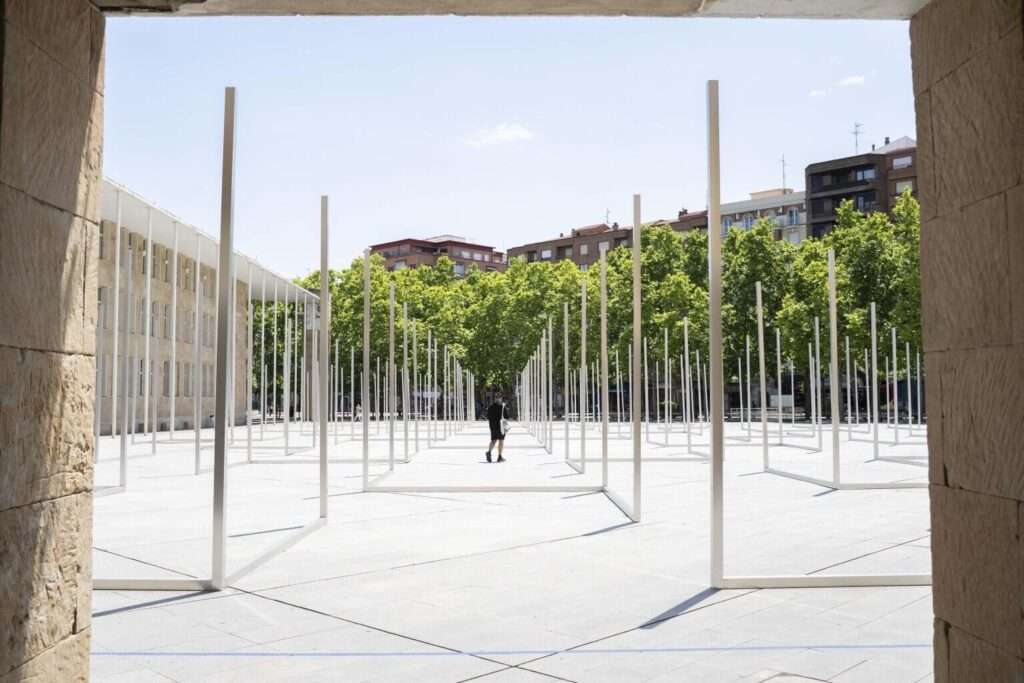
In one plaza, the design team responded to the existing architecture by installing a rhythmic sequence of thin pillars. This intervention mimics the porticos of a neighboring municipal building, creating a physical dialogue between the permanent stone structures and the new temporary additions. By echoing these classical forms, the project invites visitors to reconsider the scale and proportion of the surrounding architecture.
Interactive Landscapes and Ecological Experiments
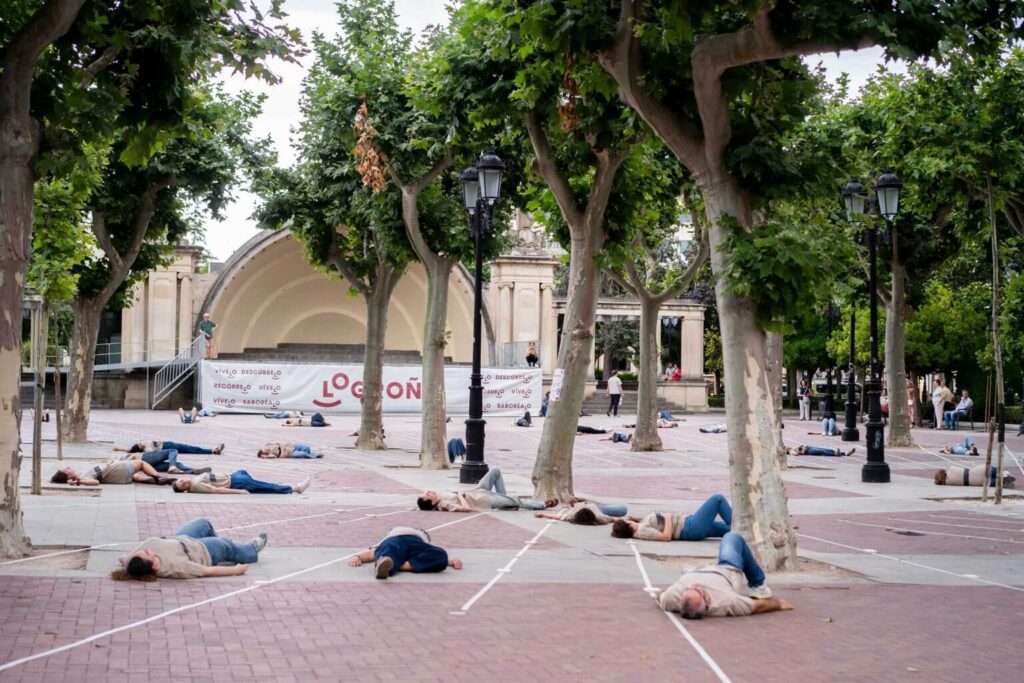
Social interaction served as a primary driver for several installations. One project utilized radial lines painted on the pavement to choreograph a massive performance involving hundreds of citizens and professional dancers. This approach treats the street as a stage, demonstrating how simple graphic interventions can reorganize human movement and collective activity in a shared space.
Other works prioritized environmental education and resource management. A pink garden shed and drought-resistant planting beds provided a sanctuary for urban gardening. This installation included a seed-sharing program where visitors could take home materials to start their own green spaces. Nearby, a technical pavilion near the railway station explored bio-gas generation, storing energy within its roof structure to provoke discussion about decentralized power and sustainability.
The festival also explored individual experiences within the dense city. One team utilized discarded stone slabs from a factory to build a small, solitary sanctuary designed for only one person at a time. This structure uses specific soundtracks during morning and evening sessions to create a contemplative atmosphere, contrasting with the busy urban life outside its walls.
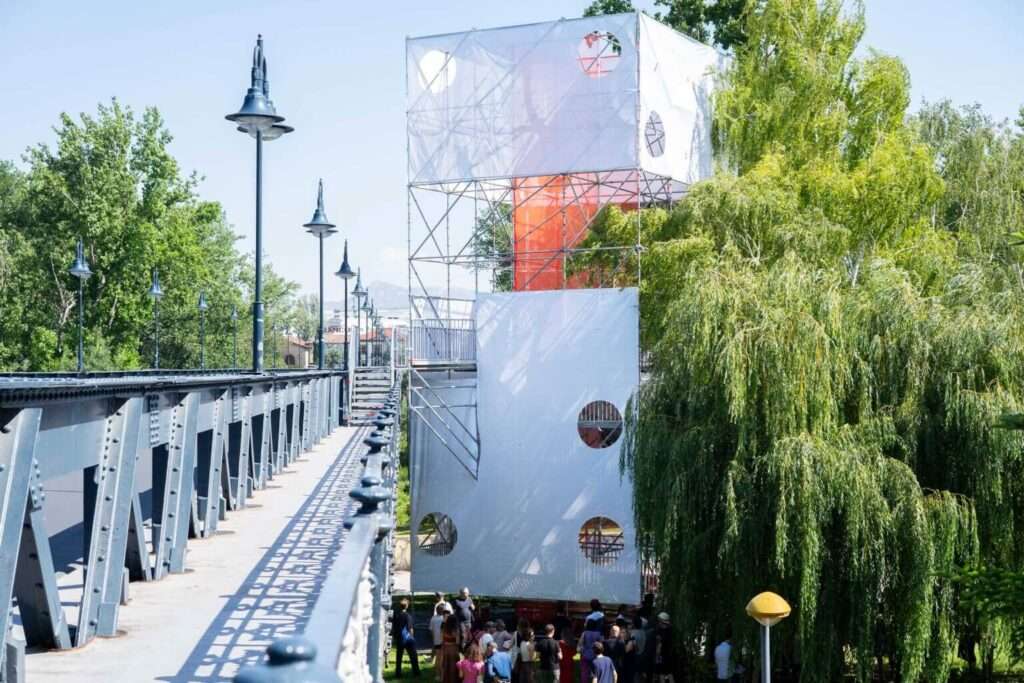
Connectivity across the river also played a vital role in the event. One project focused on the city’s relationship with the Ebro River and its historic Iron Bridge. By creating a physical link to the water’s edge, the design highlighted the importance of bridge infrastructure and the natural landscape in the identity of the town.
Structural Typology and Programmatic Intelligence
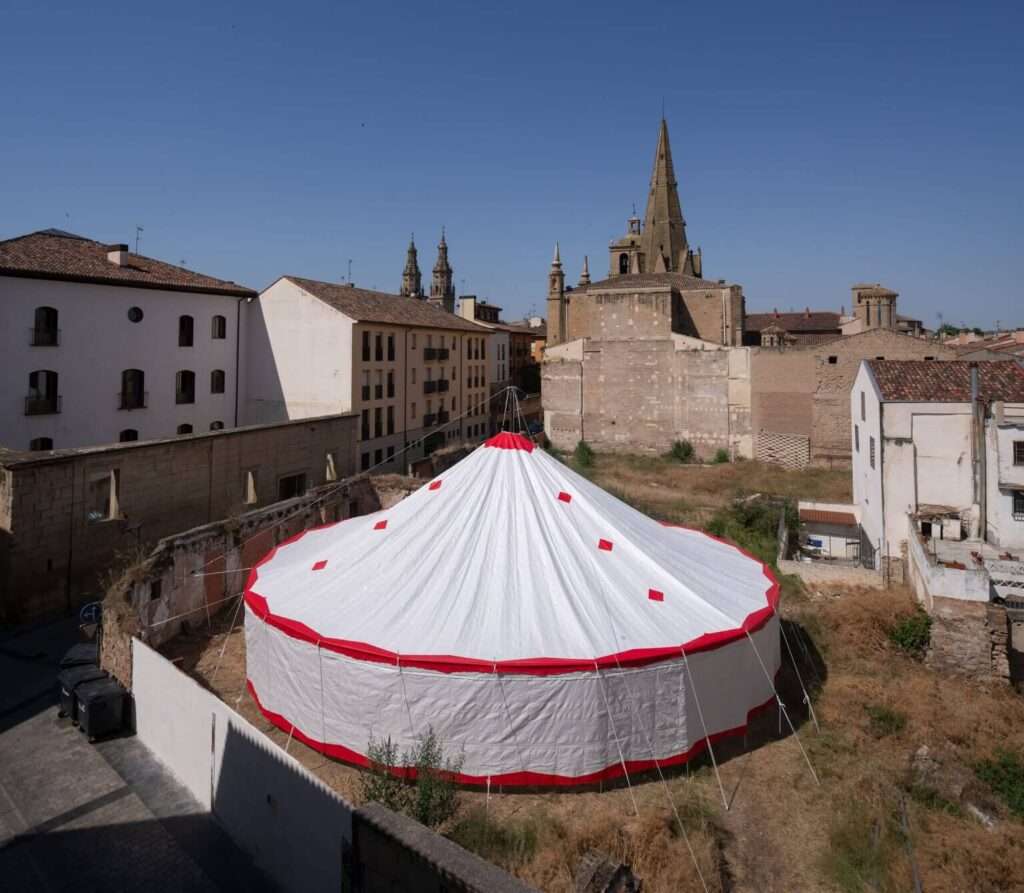
The 2026 installations demonstrate a sophisticated understanding of temporary construction as a tool for urban analysis. By deploying varied typologies—including the circus tent, the rhythmic colonnade, and the stone sanctuary—the projects investigate how material weight and translucency alter the perception of historic sites. The programmatic intelligence of these works lies in their ability to perform multiple roles: they act as visual markers, social stages, and technical prototypes. The use of reclaimed industrial waste and bio-gas storage indicates a move away from purely aesthetic pavilions toward functional urban experiments. These structures successfully negotiate the tension between the permanence of the Spanish masonry fabric and the fleeting nature of the festival, proving that small-scale interventions can effectively reframe large-scale urban issues.
✦ ArchUp Editorial Insight
The 2026 festival demonstrates how temporary interventions serve as a low-risk testing ground for radical urban ideas. By weaving these pavilions into the historic fabric of Logroño, the event successfully bypasses traditional planning bureaucracies to offer immediate, tangible experiences of better cities. Each installation acts as a physical hypothesis regarding social density, resource management, and historical continuity. However, this model of ephemeral architecture risks becoming a decorative distraction from the systemic issues it aims to solve. While these pavilions spark vital conversations about public space, they often vanish before they can enact permanent structural change. The festival creates a vibrant urban fiction for one week, yet the challenge remains in translating these poetic moments into the enduring, often mundane policy shifts required for true urban transformation.
Project Team: Smiljan Radić, AAU Anastas, PPAA, DF_DC, Dancing on Architecture, Sahra Hersi, Parabase, and Future Firm. Location: Logroño, Spain.
Project Notes: The festival took place from June 18–23, 2026. The Fundación Cultural de los Arquitectos de La Rioja and Javier Peña Ibáñez organized the event with the Logroño City Council and the Government of La Rioja.