National Medal of Honor Museum: A Monumental Aluminium Block Suspended to Honor American Valor

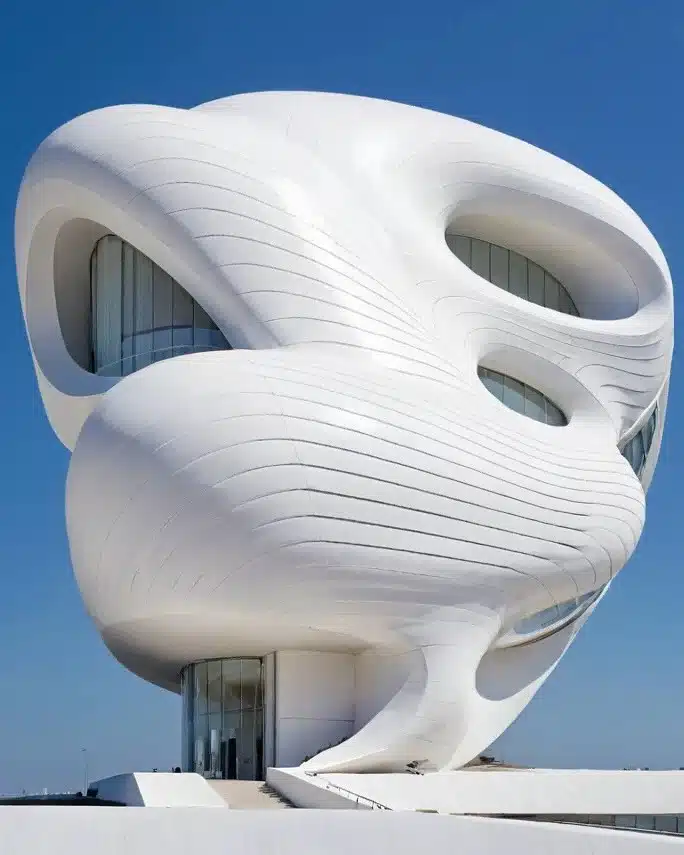
Set amid the bustling landscape of Arlington, Texas, the National Medal of Honor Museum is a bold architectural tribute designed by Rafael Viñoly Architects (RVA) to represent the highest form of military recognition in the United States. Hovering above ground as a suspended monolith, the building’s striking form embodies the gravity of sacrifice and valor.
Lofted 40 feet above a five-acre site next to AT&T Stadium and Globe Life Park, the museum is defined by a 200 x 200-foot anodized aluminium block—one that cantilevers in all four directions. RVA conceptualized the form as a physical and symbolic weight, meant to represent the burden and honor carried by Medal of Honor recipients.
Beneath the structure, a sunken rotunda, concrete columns, and glass-enclosed memorial spaces form an experiential path that gradually elevates visitors—both physically and emotionally—into the suspended exhibition galleries. With immersive films, interactive installations, and over 800 artefacts on display, the museum opens new dialogues about heroism, citizenship, and legacy.
Opened to the public on March 25, 2024—National Medal of Honor Day—the museum bridges the past and future through architecture, design, and storytelling.

Monumental Design for Monumental Stories
The Concept: “Weight of Valor” Made Tangible
The National Medal of Honor Museum achieves an architectural metaphor rarely seen at this scale. RVA’s approach was to express the gravity of sacrifice through mass: a 35-foot-deep aluminium block lofted above the earth by five massive concrete-clad columns. These pillars are more than structural—they represent the five branches of the U.S. military and hold integrated services within.
Material Strategy: Honoring Through Metal and Concrete
The anodized aluminium shell is unpainted, allowing the raw material to reflect light differently throughout the day—reinforcing themes of permanence and reverence. The base structure is wrapped in concrete and structural glass, contributing to a stark yet respectful material palette.

| Key Material | Description |
|---|---|
| Aluminium | Anodized, unpainted, continuous panels |
| Concrete | Used for structural columns and lower mass |
| Structural Glass | Floor-to-ceiling panels in memorial spaces |
Spatial Experience: Descent Before Ascent
Visitors begin their journey by descending into the sunken Rotunda of Honor, an outdoor circular gathering space defined by a large oculus. From there, they enter semi-circular glass-walled rooms, including:
- The Griffin Institute
- Col Neel E Kearby Theater
- Patrick Brady Hall
Ascending into the Stories
Two spiral staircases and a glass elevator carry guests into the suspended exhibition volume. The transition from open, natural light into darker, denser spaces is symbolic—drawing visitors into the weight of the experience.
Inside, a central ring displays all 3,528 Medal of Honor recipients in gold backlit text. From this point, visitors continue into a doughnut-shaped immersive video experience followed by thematic exhibition galleries.

Exhibition Features
| Section | Highlights |
|---|---|
| Medal of Honor Experience | Circular, dual-ring video installation |
| Main Gallery | 400+ displayed items, 400 in storage |
| Audio/Visual Interactions | VR missions, AI-powered interviews with recipients |
| Historical Spotlight | Mary Walker (only female recipient), Douglas Munro (USCG), 700+ immigrants |
| Artefact Highlight | Full-size Huey Helicopter placed inside after building construction |
Architectural Analysis: Form as Memory and Message
The museum’s most powerful architectural element is its suspended mass. The floating aluminium block is not simply a container—it is message and memory fused. Its elevation symbolizes elevation of honor, while its weight underscores sacrifice.
The conical concrete columns allow for simultaneous symbolism and hidden services—a dual function typical of Viñoly’s humanist-modernist sensibility. The transparency at the base contrasts the heaviness above, allowing light and landscape to fill the communal areas below.
Internally, the shift from natural light into controlled lighting in the exhibition zone mirrors the psychological shift visitors undergo as they move from general understanding into deep contemplation.
The architecture doesn’t distract—it channels focus. It curates reverence.

Project Importance: Rethinking the Heroic Museum Typology
This project challenges the standard approach to military museums. Rather than focusing on machinery, battlefields, or tactics, it emphasizes personal valor, human dignity, and remembrance.
For architects and designers, it offers a critical lesson: mass can be expressive. The building operates as an emotive object, a sculptural container that embodies its content in form and function.
By prioritizing symbolic architecture and multi-sensory experiences, it redefines what memorial architecture can be in the 21st century—not static, but engaging; not decorative, but resonant.
This is an architectural prototype for emotionally-driven spatial storytelling, especially relevant in an era of rethinking national memory and civic identity.

✦ ArchUp Editorial Insight
The National Medal of Honor Museum creates a striking visual impact through its use of contrasting materials and suspended massing. The anodized aluminium block’s scale and form offer gravitas, while the glass base provides transparency and openness. Its sequencing of descent into a contemplative space followed by an upward journey into curated exhibits reflects a thoughtful narrative logic. However, the stark symbolism may risk overwhelming subtler emotional tones. That said, the commitment to meaningful metaphor elevates the experience beyond typical museum design. Ultimately, the architecture provides both structure and story—anchored in legacy and uplifted by form.

Conclusion
The National Medal of Honor Museum in Arlington is not simply a repository of military history—it is a spatial poem on valor. Through bold, minimalist architecture and deep narrative experiences, it transforms a five-acre site into a realm of national memory.
This building does not just house stories—it becomes one. The aluminium block overhead remains ever-present, a silent sentinel of honor. Its sheer mass doesn’t intimidate—it invites reflection.
In a time where public spaces increasingly compete for attention, this museum slows time, demanding reverence, curiosity, and remembrance. It is a reminder that architecture can still move us—not through noise, but through thoughtful silence, suspended above the ground, just like the legacy it honors.

Explore the Latest Architecture Exhibitions & Conferences
ArchUp offers daily updates on top global architectural exhibitions, design conferences, and professional art and design forums.
Follow key architecture competitions, check official results, and stay informed through the latest architectural news worldwide.
ArchUp is your encyclopedic hub for discovering events and design-driven opportunities across the globe.