Aerial view showcasing the nuclear architecture of Kashiwazaki-Kariwa Plant in Niigata, with horizontal reactor layout and coastal cooling infrastructure.

Nuclear Architecture in Japan: Kashiwazaki Kariwa Plant After Fukushima

Home » News » Nuclear Architecture in Japan: Kashiwazaki Kariwa Plant After Fukushima

Japan is preparing to restart the world’s largest nuclear plant, 15 years after the Fukushima disaster. Nuclear Architecture defines the spatial and structural framework of the Kashiwazaki Kariwa nuclear facility in Niigata Prefecture. The complex exemplifies large scale industrial planning shaped by seismic risks and coastal conditions. Its planned restart highlights as a critical factor in urban planning and long term infrastructure.

The facility is located about 220 kilometers northwest of Tokyo along the Sea of Japan coast. It is operated by Tokyo Electric Power Company. The site contains seven reactor units alongside service buildings and safety zones. This creates a contained industrial landscape.
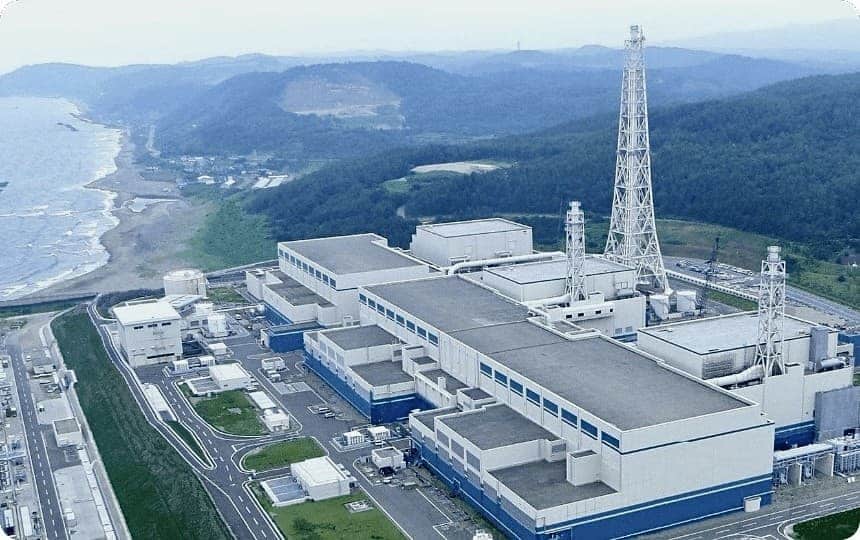
Wide aerial shot of Kashiwazaki-Kariwa Nuclear Power Plant under overcast skies, surrounded by forested hills and Sea of Japan coastline.
This wide angle aerial image shows how designers strategically placed the Kashiwazaki Kariwa Nuclear Power Plant along the coast, integrating its massive reactor buildings into the natural topography of Niigata Prefecture. The plant’s horizontal layout, visible transmission towers, and proximity to the sea demonstrate the design team’s priorities for seismic resilience and cooling efficiency. Surrounding green hills and the shoreline highlight the plant’s environmental context and influence on the region.(Image © TEPCO / Tokyo Electric Power Company)

Design Concept and Spatial Organization

Nuclear architecture at Kashiwazaki Kariwa emphasizes horizontal zoning. Reactor operations are separated from control and emergency functions. This reduces operational overlap and limits cascading risks. Each reactor has an independent containment structure. This allows phased maintenance and controlled operation. Similar planning principles are discussed on architecture platform and in architectural design studies.
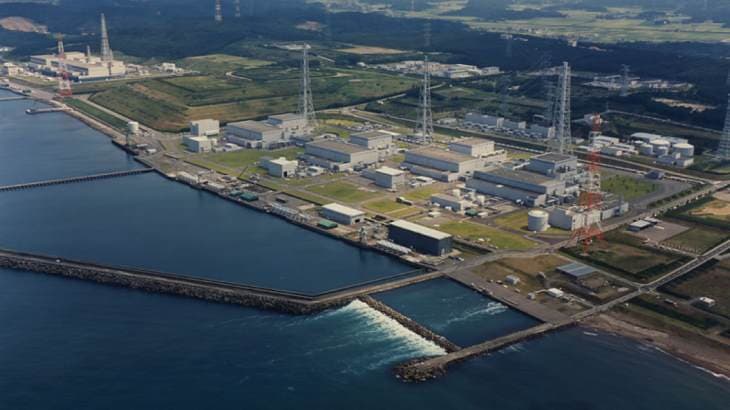
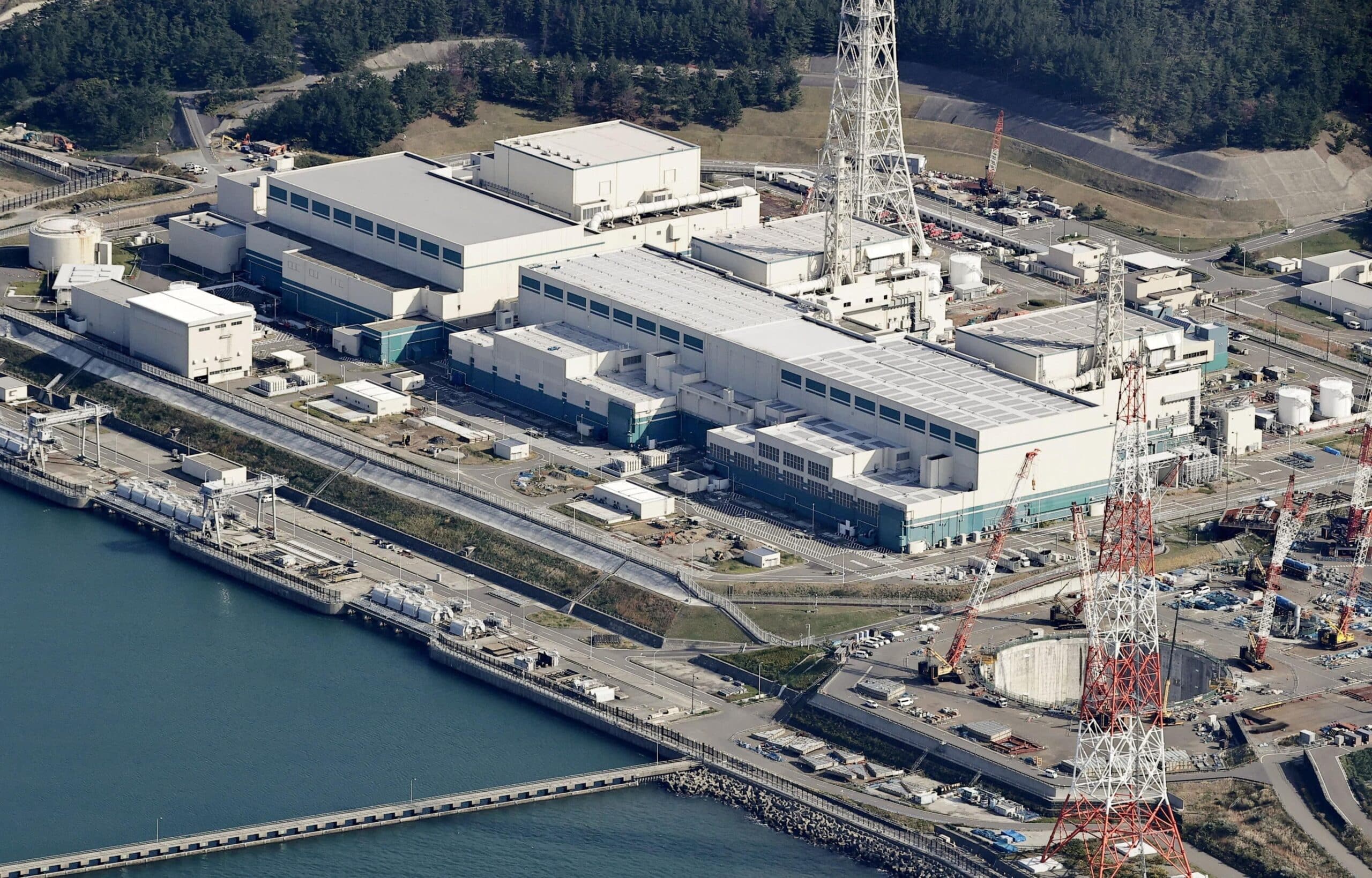
Expansive aerial view illustrating Japan’s nuclear architecture through the spatial layout of Kashiwazaki-Kariwa Plant amid farmland and coastal defenses.
This expansive aerial perspective highlights the Kashiwazaki-Kariwa Nuclear Power Plant’s vast footprint along Japan’s western coast, where its multiple reactor units, cooling infrastructure, and transmission towers are embedded within a landscape of farmland and forest. The image underscores the plant’s role as a regional energy hub and its architectural response to seismic and environmental constraints including coastal defenses, horizontal zoning, and integrated safety systems.
(Image © NHK / Japan Broadcasting Corporation)

Materials and Construction Systems

Reinforced concrete forms the primary containment structures. Steel frameworks support internal loads. These building materials were chosen for seismic resistance and long-term durability. Deep foundations and vibration-resistant joints ensure stability. These methods reflect standard practices in nuclear construction engineering.
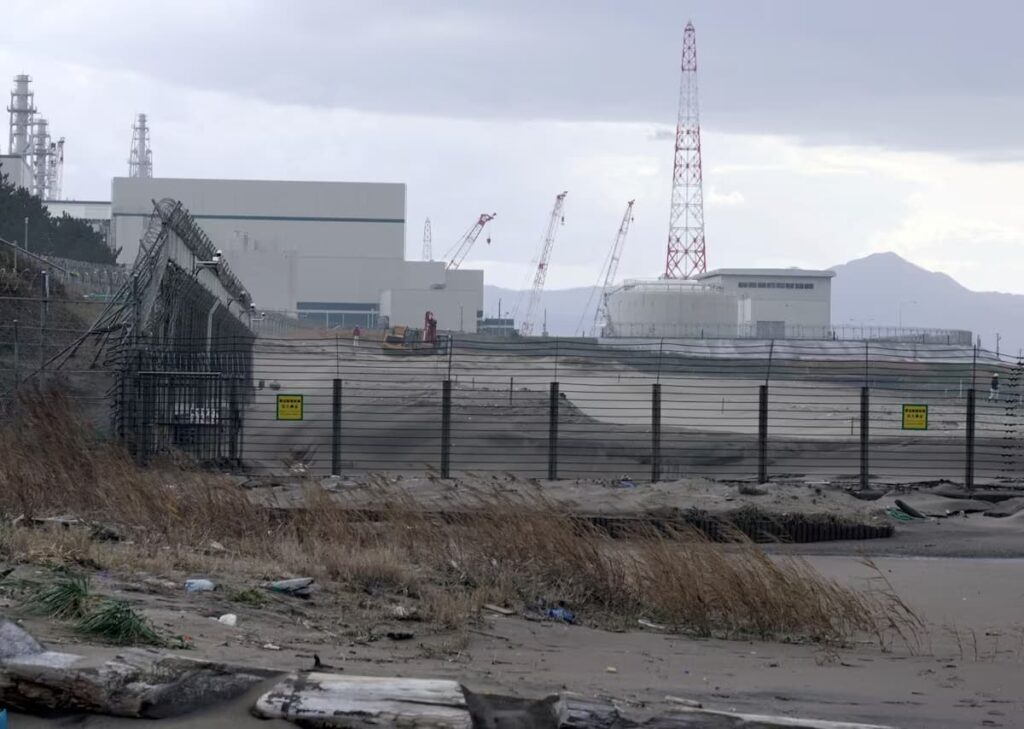
Ground-level view of high security fencing, construction cranes, and service roads at the perimeter of Kashiwazaki-Kariwa Plant.
This ground-level perspective captures the fortified boundary of the Kashiwazaki-Kariwa Nuclear Power Plant, where security fencing and ongoing construction activity frame the industrial complex against a backdrop of distant mountains. The image highlights the plant’s layered safety infrastructure from physical barriers to visible maintenance operations reflecting post Fukushima upgrades aimed at preventing cascading failures. The dry coastal grasses and debris in the foreground contrast with the engineered precision of the facility, emphasizing its isolation and environmental interface.
(Image © Mainichi Shimbun / Mainichi Newspapers Co., Ltd.)

Safety Measures and Environmental Controls

Safety and environmental engineers integrate key systems within the nuclear architecture.They shape internal circulation and site layout. Cooling systems, backup power, and ventilation controls are key design elements. Tokyo Electric Power Company emphasizes stronger safety measures to prevent past failures. This links architectural planning to sustainability considerations.
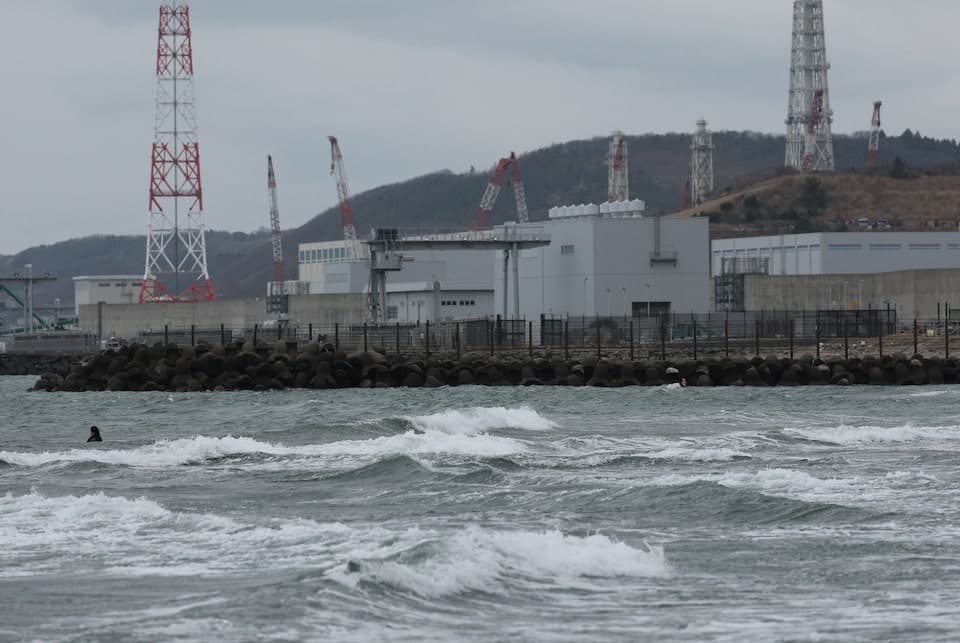
Coastal view illustrating the nuclear architecture of Kashiwazaki-Kariwa Plant, with turbulent waves, breakwaters, and transmission towers rising above hills after Fukushima.
This coastal perspective frames the Kashiwazaki-Kariwa Nuclear Power Plant as a monumental industrial presence against the natural rhythm of the Sea of Japan. The turbulent waves in the foreground contrast with the engineered stability of the plant’s breakwaters and reactor buildings, while towering transmission structures rise above the hills symbolizing the facility’s role in powering the nation. The image captures the tension between energy infrastructure and environmental forces, highlighting seismic resilience and coastal defense design.
(Image © Asahi Shimbun / Asahi Newspapers Co., Ltd.)

Urban and Regional Impact

The facility directly influences regional zoning, evacuation routes, and transport infrastructure. The plant’s presence affects nearby cities. Nuclear architecture continues to guide land use and regional planning decisions in Niigata.

Conclusion

The restart raises questions about whether nuclear architecture can meet safety requirements while addressing public concerns about nuclear risk.

Architectural Snapshot
A large coastal nuclear facility in Niigata demonstrating horizontal containment planning, seismic construction systems, and long term interaction between energy infrastructure and regional planning.

ArchUp Editorial Insight


The article frames the Kashiwazaki Kariwa plant as a large scale infrastructure project, relying on a controlled technical narrative focused on layout, safety systems, and construction logic. Its structure is clear and disciplined, yet it closely follows institutional language, leaving limited room for questioning how architecture mediates fear and public memory. The critical gap lies in treating risk as a design problem rather than a social condition shaped by space and power. Still, the text gains credibility by positioning the plant as an urban and regional actor, not merely an energy machine. In the long run, such coverage will remain useful as documentation, but its relevance will depend on whether architectural journalism dares to move beyond compliance and into interpretation.

Further Reading From ArchUp

  • OBJ-01: based on the purity of raw materials

    Valencian designer Manu Bañó beautifully crafts ‘OBJ-01’ – an extraordinary metal table lamp part of an open collection of simple products based on the purity of raw materials, industrial processes and gestures that cause a specific function.Manu Bañó is co-founder of the design studio EWE and Associate of the renowned furniture, interior design and architecture

  • Commercial building design covered with plants

    Kengo Kuma and Associates designed a commercial building covered in vegetal motifs on its façade,…

  • The Hearth electric heater

    This mixture of the end table and electric warmer highlights a tabletop that works as…

  • Eco-Friendly Home in Mexico: 2023 Winner

    For a home situated in the drought-susceptible region of Ciudad López Mateos, Mexico, Desai Chia…

  • Spaghetti Bench by Pablo Reinoso

    For the series entitled Spaghetti Bench, Pablo Reinoso used public benches, which are anonymously designed and travel across cultures with an out-of-time, old-fashioned quality, as a starting point for his reflections. Starting in 2006, these new creations have multiplied and found homes in very diverse places. © Spaghetti Bench by Pablo Reinoso In line with

Leave a Reply

Your email address will not be published. Required fields are marked *