Stainless-Steel Tower Wraps Space Shuttle at California Science Center Expansion

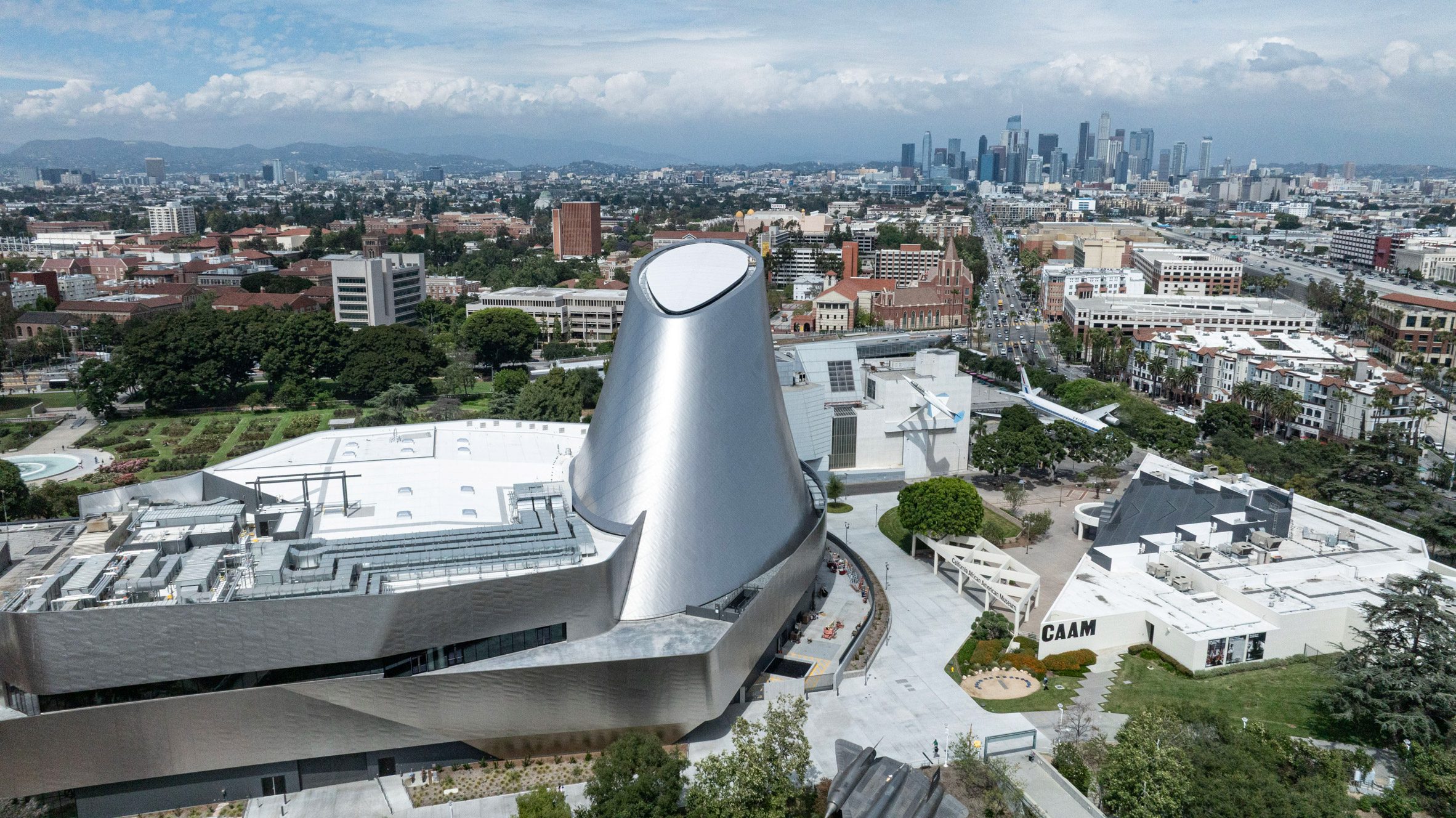
The Samuel Oschin Air and Space Center in Los Angeles has completed construction. The 200,000-square-foot expansion houses a retired NASA space shuttle displayed vertically in a 61-metre curvilinear tower.
A Stainless-Steel Tower Built Around a Space Shuttle
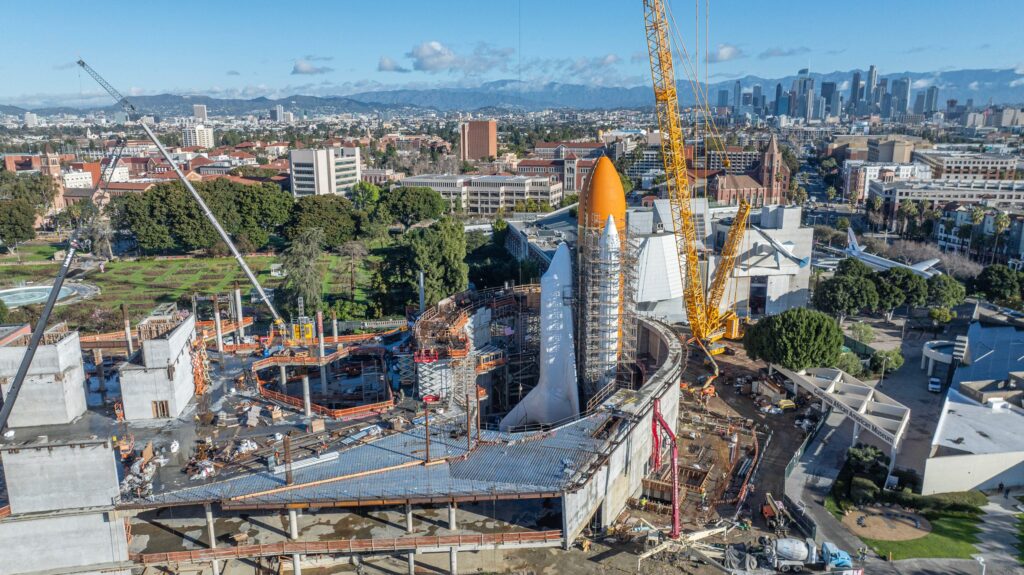
The expansion adds four storeys to the California Science Center. It doubles the complex’s total exhibition space. A 2,000-tonne stainless-steel cylinder forms the centerpiece of the new architecture. This curvilinear structure encloses Space Shuttle Endeavour in a permanent vertical launch position. The shuttle served NASA from 1992 through its final mission in 2011. Moreover, the project represents the only place worldwide where visitors can view a shuttle standing upright.
The lower portion of the building features two tiers of textured metal panels. These cantilevered volumes extend over the ground-level entry area. Meanwhile, the original California Science Center retains its sandy red brick cladding. The new extension stands apart with its own distinct visual identity through the use of stainless-steel building materials.
Six Months to Install a Full Shuttle Stack
Installing the shuttle required a complex six-month process. In early 2024, crews lifted Space Shuttle Endeavour into its full vertical configuration. They then mated it with real solid rocket boosters and ET-94. That external tank is the last remaining flight-qualified unit in existence. Therefore, the assembled stack carries significant historical weight beyond its visual impact. The curvilinear design of the tower draws directly from the shuttle’s aerodynamic geometry.
100 Aerospace Artefacts Across Three Galleries
The interior design phase now begins across three main galleries. Teams will install 100 aerospace artefacts within 100 new interactive exhibits. However, an official opening date has not yet been announced. Objects on display will include the Hawker Siddeley Harrier T.4 fighter jet. A Rocket Lab Electron launch vehicle and a Solid Rocket Booster segment will also feature. The exhibit design is handled by Evidence Design.
Los Angeles continues to see major cultural buildings reach completion. The Los Angeles County Museum of Art expansion and the Lucas Museum of Narrative Art are also progressing nearby. These projects collectively reshape the city’s cultural landscape. Furthermore, renewed public interest in space exploration following the Artemis II moon journey adds context to this news.
A Quick Architectural Snapshot
The Samuel Oschin Air and Space Center wraps a retired NASA shuttle inside a 61-metre stainless-steel tower. The 200,000-square-foot expansion doubles the California Science Center’s exhibition space across four storeys. It stands as the only facility in the world displaying a space shuttle in full vertical launch configuration.
✦ ArchUp Editorial Insight
Museums no longer compete on collections alone. They compete on spectacle. The Samuel Oschin Air and Space Center reflects a broader institutional pressure: public science centers must generate viral moments to secure funding, sponsorship, and attendance. Displaying a shuttle vertically is not an architectural decision. It is a marketing decision that architecture was asked to solve. The 2,000-tonne tower exists because a shuttle lying horizontal generates no media cycle. Meanwhile, cities like Los Angeles use landmark cultural buildings as economic anchors, particularly ahead of major global events. Construction timelines, material choices, and spatial drama all respond to this logic. The building’s form follows institutional survival, not programmatic necessity.
This project is the logical outcome of shrinking public science budgets + attention-economy pressures on cultural institutions + Los Angeles positioning itself as a global cultural destination before the 2028 Olympics.