Opening of the Computing and Data Science Building at Stanford University in Palo Alto


A New Hub for Academic Collaboration
The Computing and Data Science Building at Stanford University marks a major architectural addition to the campus.
It redefines how research and education connect.
The building is designed as an open, inclusive environment.
It encourages interaction among departments.
Academics and students meet here to share ideas and drive innovation.
A Site Connecting Past and Present
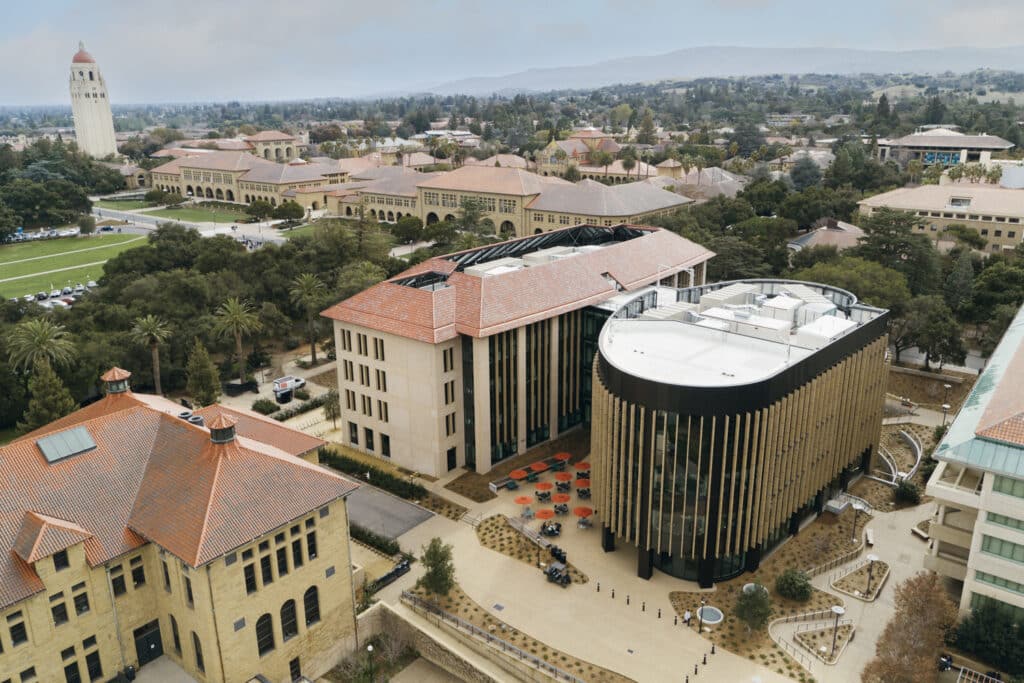
The building stands at the heart of the campus, positioned at a key crossroads.
It connects the university’s historic core with its newer facilities.
A central open courtyard anchors the layout.
It brings in abundant natural light and links interior and exterior spaces seamlessly.
Architecture Reflecting the Flow of Knowledge and Technology
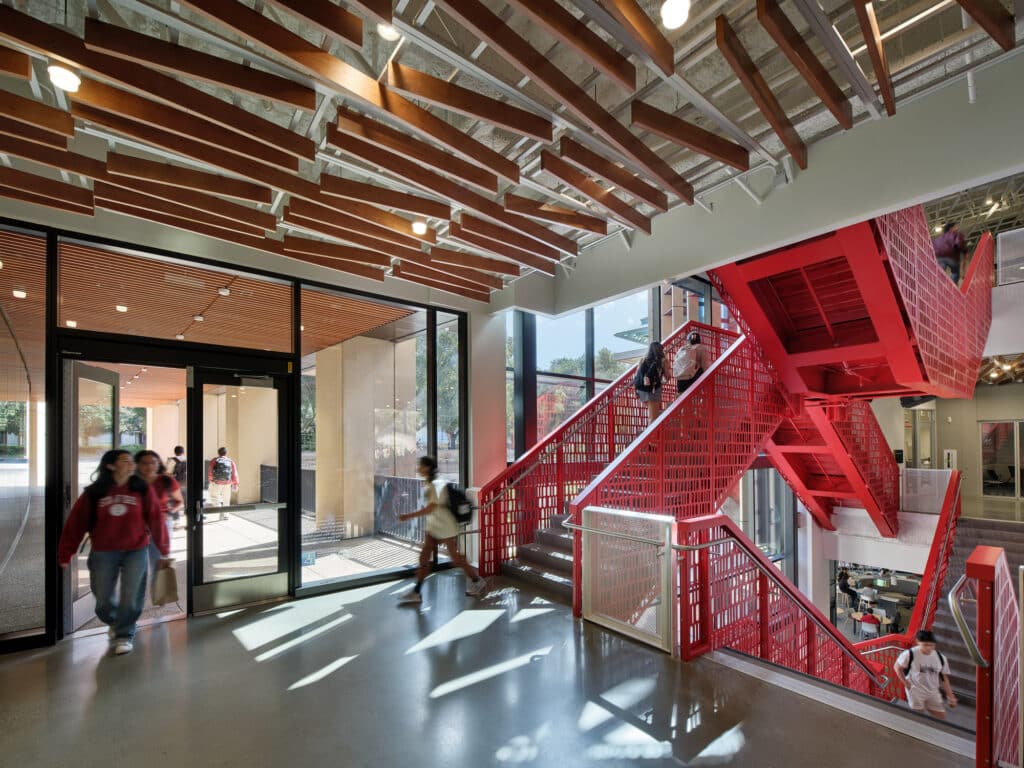
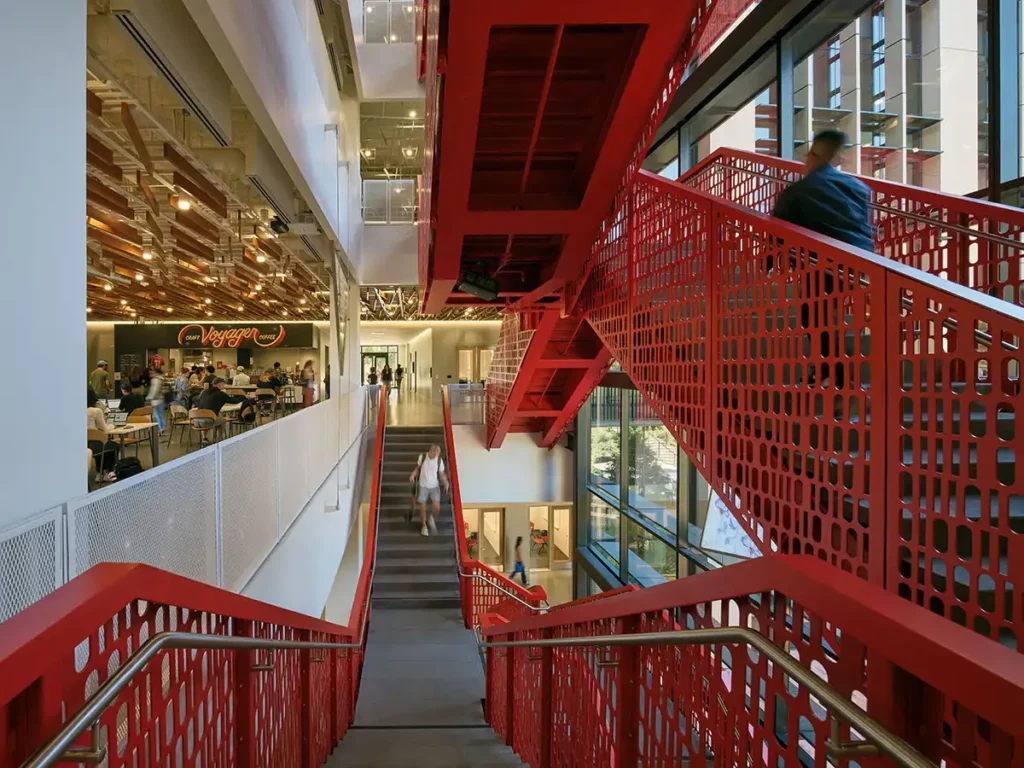
The building’s form combines rectilinear and curved volumes that blend harmoniously to produce a balanced visual rhythm. At its center, a five-story open atrium features a main staircase that connects all levels and serves as the social heart of the structure. This central space, known as “the Hive,” brings together collaborative work areas and meeting rooms that encourage spontaneous interaction.
Facades Blending Warmth and Transparency
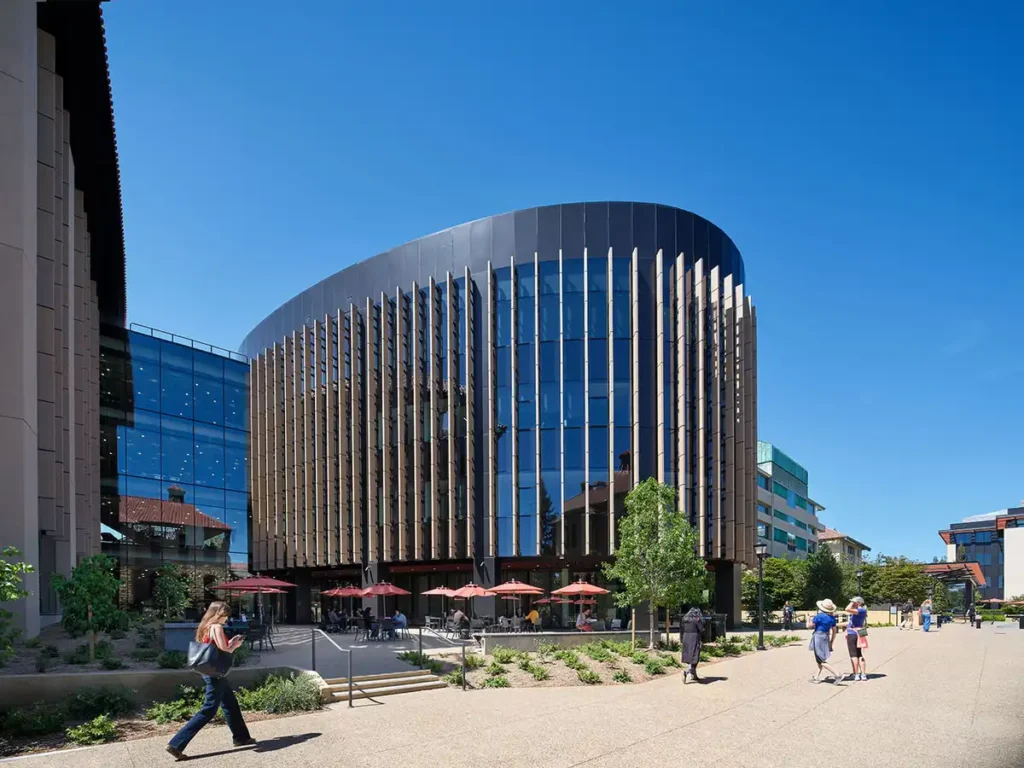
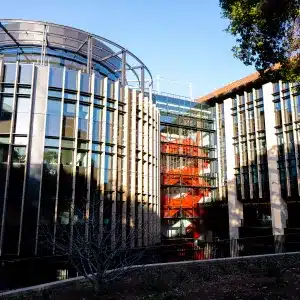
The exterior features a composition of vertical terracotta panels paired with transparent glass surfaces, balancing the traditional materiality of Stanford’s historic architecture with a contemporary technological aesthetic. These façade elements also function as natural shading systems, reducing glare and energy use while maintaining generous daylight inside.
Details That Express Innovation
The interior details reflect the building’s scientific and exploratory spirit, particularly through the red central staircase, which symbolizes continuous movement and intellectual exchange. The use of color and material reinforces the building’s role as a space for thought and collaboration, not just an academic facility.
A Vision Linking Architecture and Knowledge
The Computing and Data Science Building presents an architectural model that unites Stanford’s historical identity with its forward-looking vision for research and technology. It embodies the essence of contemporary academic architecture, balancing functionality, sustainability, and human experience.
✦ ArchUp Editorial Insight
The article examines Stanford University’s Computing and Data Science Building as a study in material transparency and technical precision. The images reveal a balanced dialogue between glass and terracotta, merging academic heritage with contemporary innovation. While the design conveys a sense of intellectual flow, its spatial dynamics occasionally feel constrained by a rigid functional framework that limits interaction. Nevertheless, the architectural clarity and masterful use of natural light secure the building’s place as a distinct landmark within the evolving landscape of academic architecture.
Explore the Latest Architecture Exhibitions & Conferences
ArchUp offers daily updates on top global architectural exhibitions, design conferences, and professional art and design forums.
Follow key architecture competitions, check official results, and stay informed through the latest architectural news worldwide.
ArchUp is your encyclopedic hub for discovering events and design-driven opportunities across the globe.