Pink Labyrinth Transforms Palazzo Litta Courtyard During Milan Design Week 2026

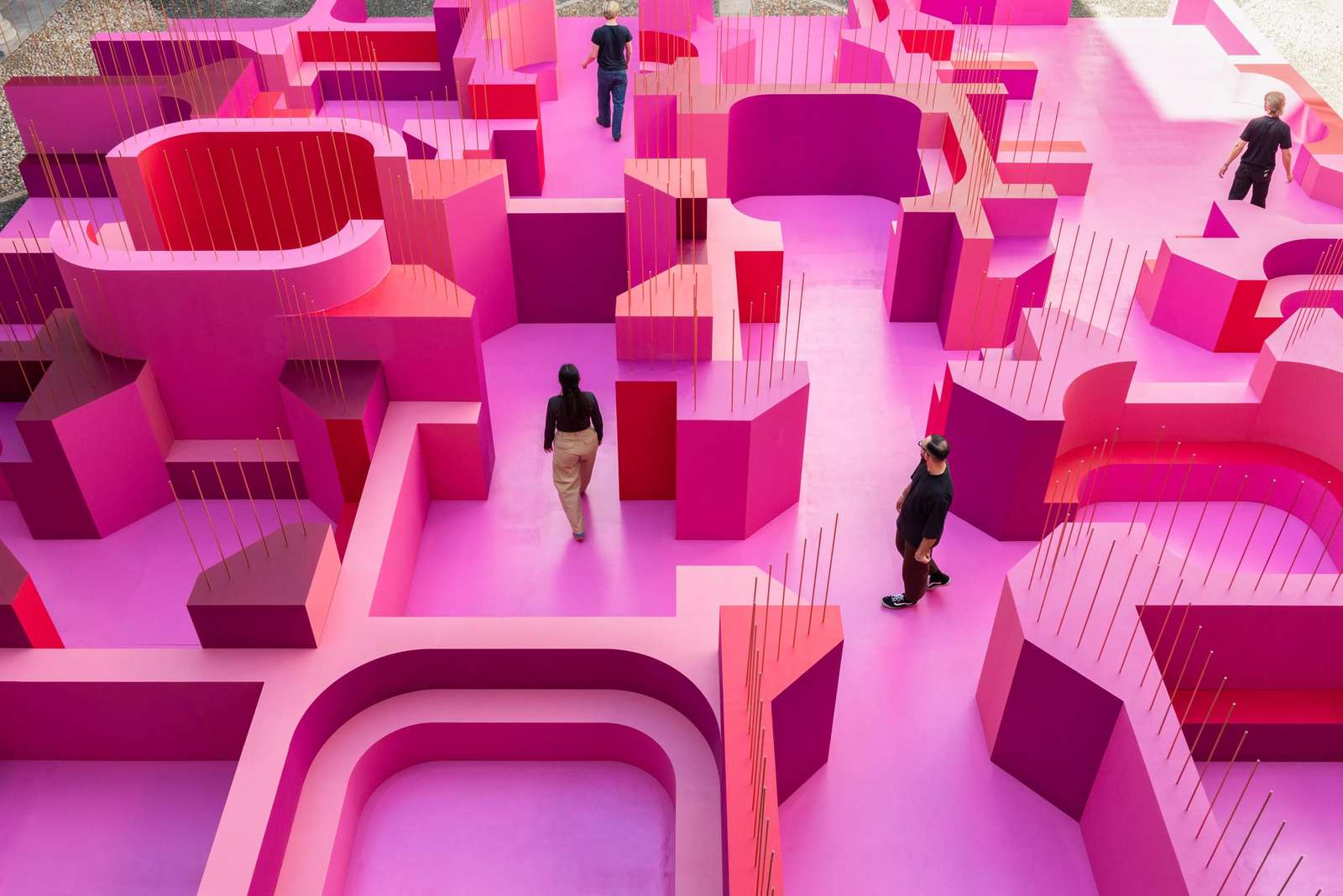
A temporary pink labyrinth now fills the courtyard of Palazzo Litta in Milan during Milan Design Week 2026. Titled Metamorphosis in Motion, the installation reimagines the historic Baroque setting. The project explores movement, geometry, and public interaction through a fully walkable spatial experience.
A Labyrinth Rooted in Historic Geometry
Metamorphosis in Motion occupies the entire central courtyard of Palazzo Litta. The structure responds directly to the site’s existing proportions and symmetry. As a result, it frames the Baroque facades while introducing curved forms and rising volumes.
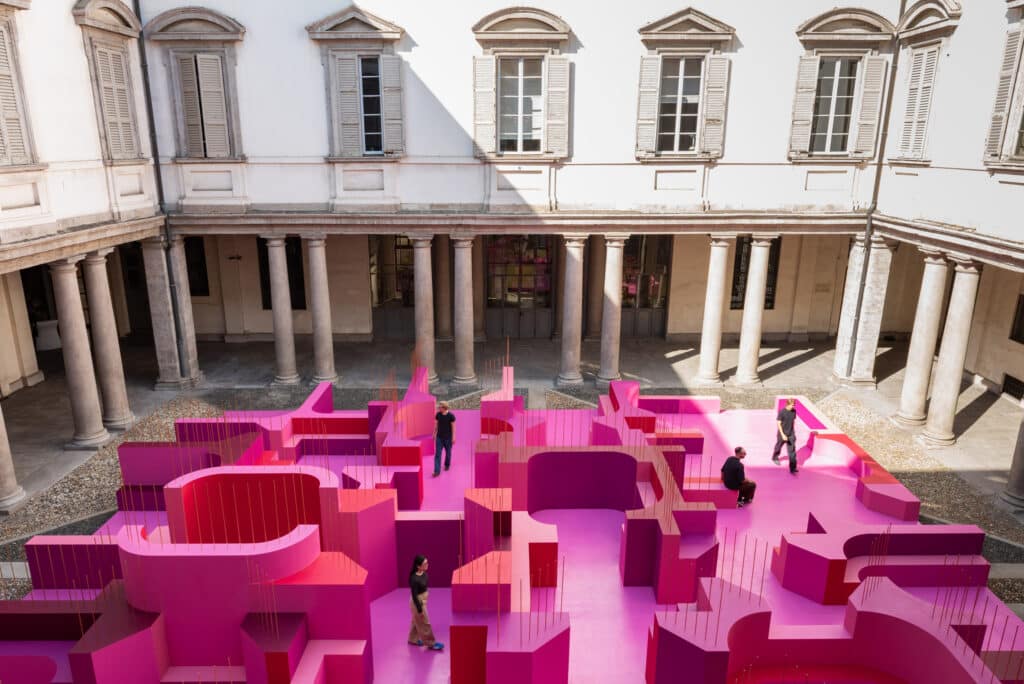
The installation encourages visitors to slow their pace. Pathways create moments of pause and unexpected encounters. Meanwhile, shifting natural light alters the perception of the pink surfaces throughout the day. This interaction between light and form highlights the relationship between temporary intervention and historic architecture.
The project forms part of the MoscaPartners Variations exhibition, one of many events reshaping Milan’s cultural landscape this week. More broadly, such installations reflect how major design gatherings influence cities through short-term spatial transformations.
Material Strategy and Reusability
The labyrinth uses wood as its primary structure. Builders selected the material for its light weight and ease of assembly. Moreover, the design allows for disassembly and reuse in another location.
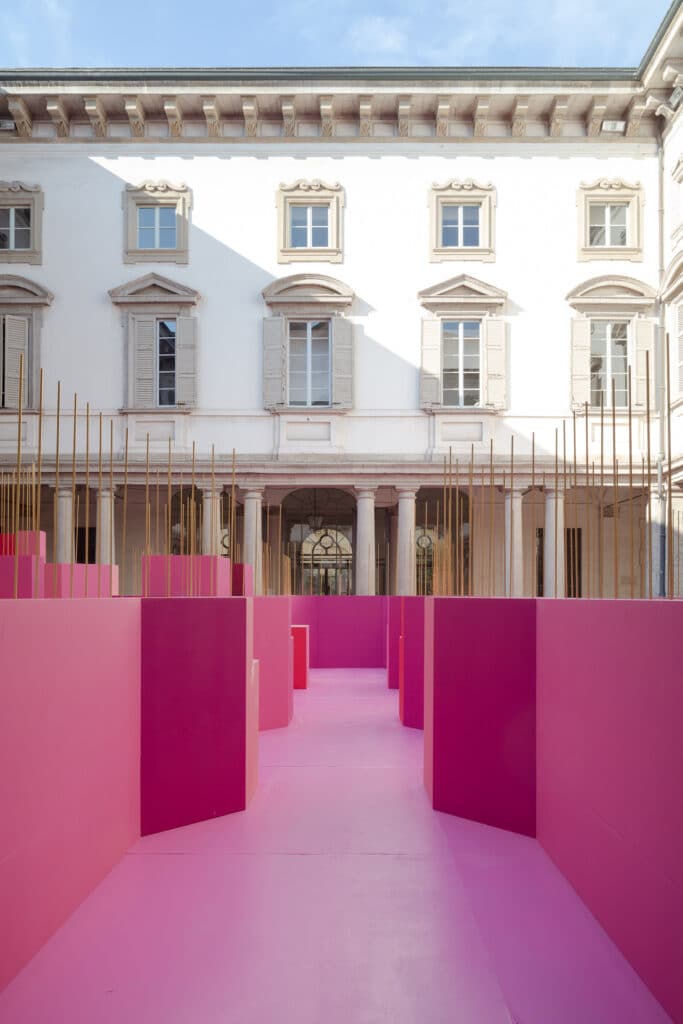
This approach reduces material waste and extends the installation’s lifecycle. Therefore, the project aligns with ongoing discussions around sustainability in temporary construction. Designers increasingly test recyclable systems during global events, where short durations often generate high resource consumption.
The pink finish adds a distinct visual identity. The color contrasts with the muted tones of the historic courtyard. At the same time, it softens the spatial experience and reinforces the installation’s immersive character.
Temporary Installations and Urban Impact
Milan Design Week continues to expand across districts and courtyards. However, critics often question its scale and commercial intensity. Despite this, courtyard installations such as Metamorphosis in Motion show how temporary projects can activate overlooked spaces.
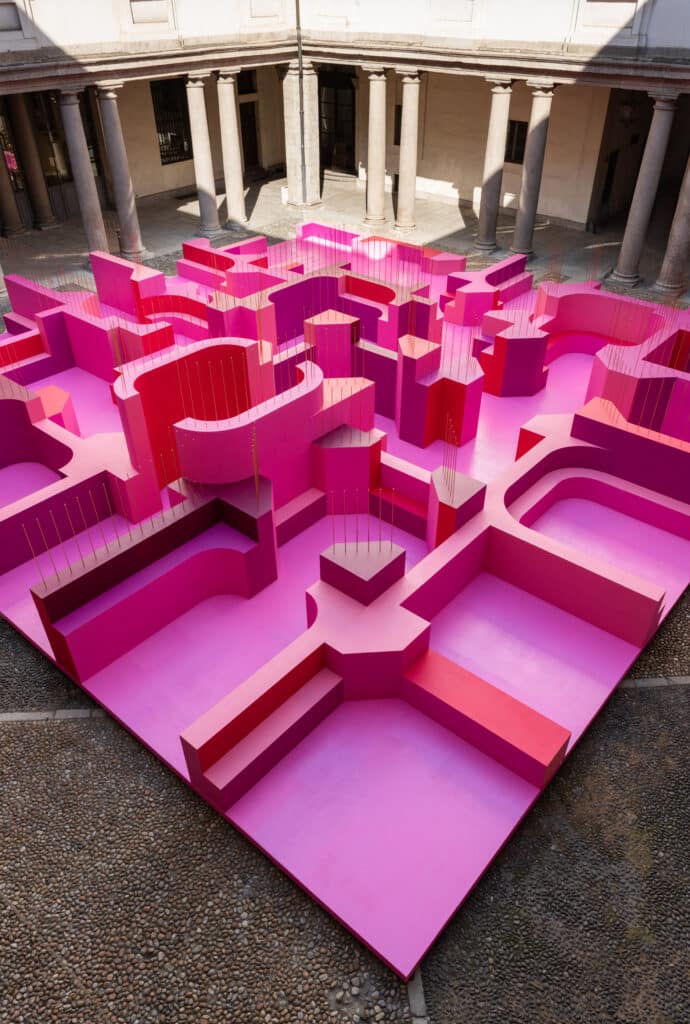
The structure is designed for easy assembly and future reuse in different settings. Image © Nathalie Krag
Unlike permanent buildings or towers, this structure prioritizes movement over monumentality. Visitors do not observe it from a distance. Instead, they navigate its interior paths. This spatial strategy connects event-based design with broader conversations in urban planning.
The installation remains open to the public from 21 to 26 April 2026. It stands as one of several high-profile interventions featured in this year’s international news coverage of Milan Design Week.
A Quick Architectural Snapshot
Metamorphosis in Motion
Location: Palazzo Litta, Milan
Dates: 21–26 April 2026
Material: Reusable wood structure
Concept: Walkable pink labyrinth responding to Baroque courtyard geometry
Focus: Movement, light variation, temporary spatial transformation
✦ ArchUp Editorial Insight
The proliferation of temporary installations in historic courtyards reflects a shift in urban economic cycles. Architecture here functions as a symptom of the experience economy, where short-term activations generate higher cultural capital than permanent structural changes. The decision to use modular wood stems from logistical pressures and the necessity for rapid assembly within the rigid timelines of global trade fairs. This spatial intervention responds to the behavior of modern audiences who prioritize sensory immersion over static observation. Furthermore, the use of vibrant hues serves as a calculated strategy to contrast with historic stone, ensuring visibility in a saturated media landscape. The project avoids the long-term liabilities of fixed construction while fulfilling the site’s requirement for temporary commercial utility.
This project is the logical outcome of compressed exhibition schedules + the demand for high-visibility digital content + the logistics of reusable modular systems.