Edge Power System and Office Electrical Reconfiguration

Gap Between Office design Evolution and Electrical Infrastructure
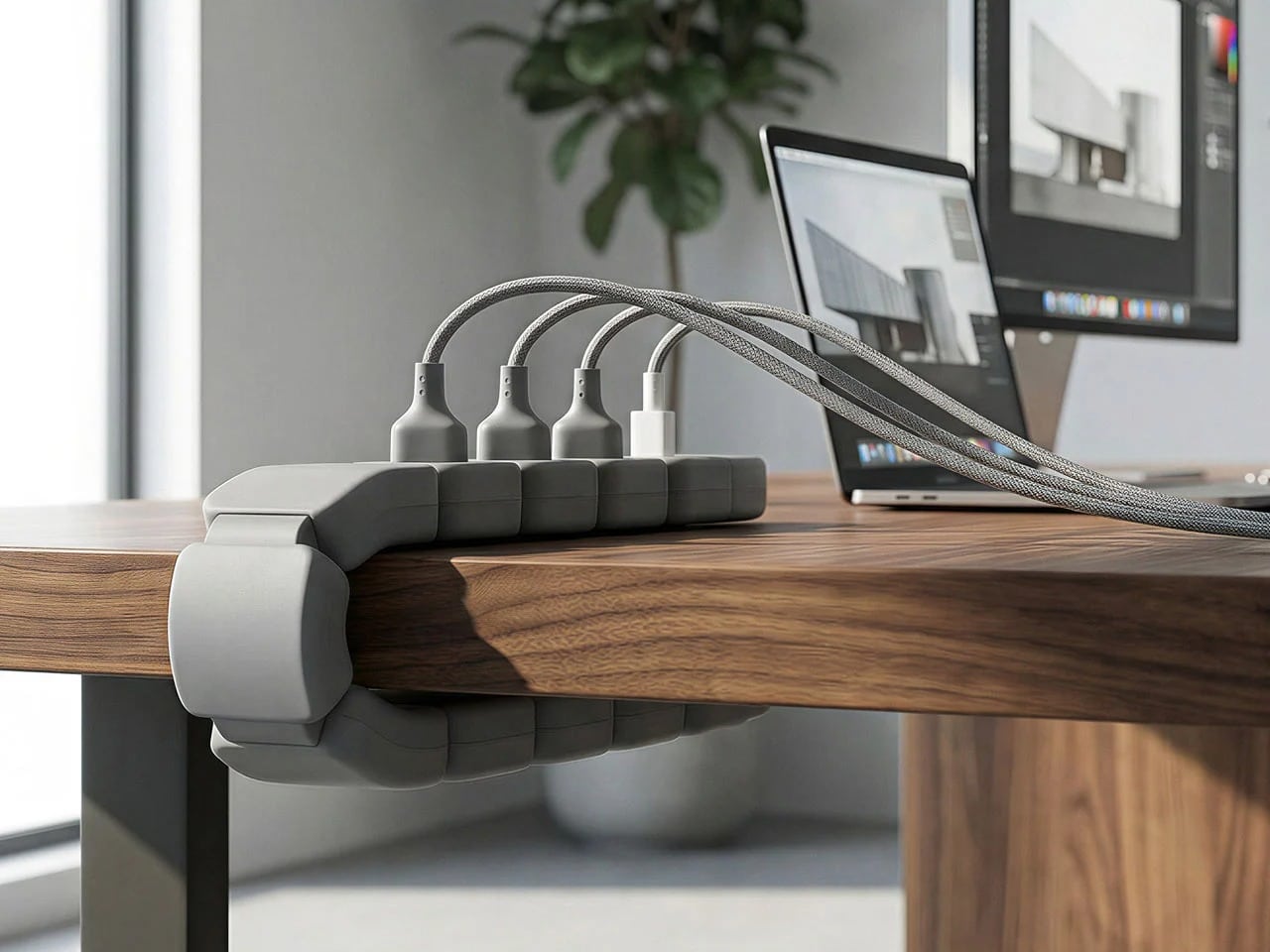
Office design has undergone significant development in recent years in terms of the use of modern design solutions and higher-quality materials, more efficient layouts, and improved levels of functional comfort. However, traditional electrical distribution units have remained outside this evolution, as they are still often placed on the floor in a way that leads to cable entanglement and dust accumulation. They also impose an inconvenient usage pattern that requires frequent bending to access power sources, revealing a mismatch between the advancement of the work environments and the stagnation of some of its core elements.
Reorganizing Access to Power Within the Workspace
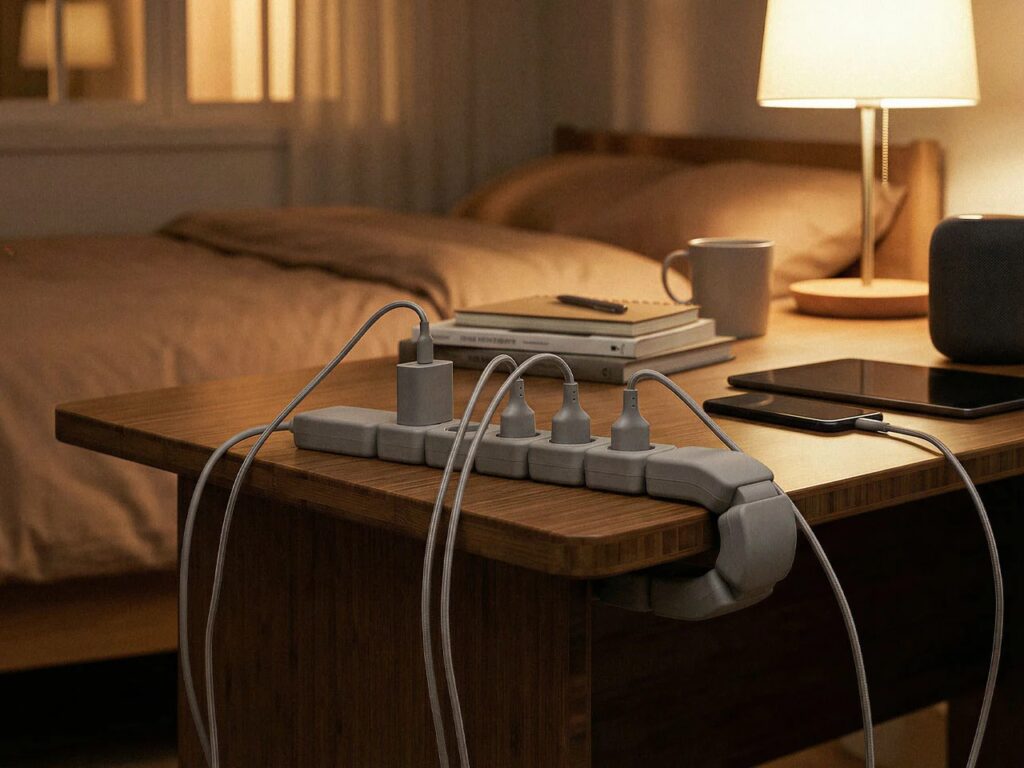
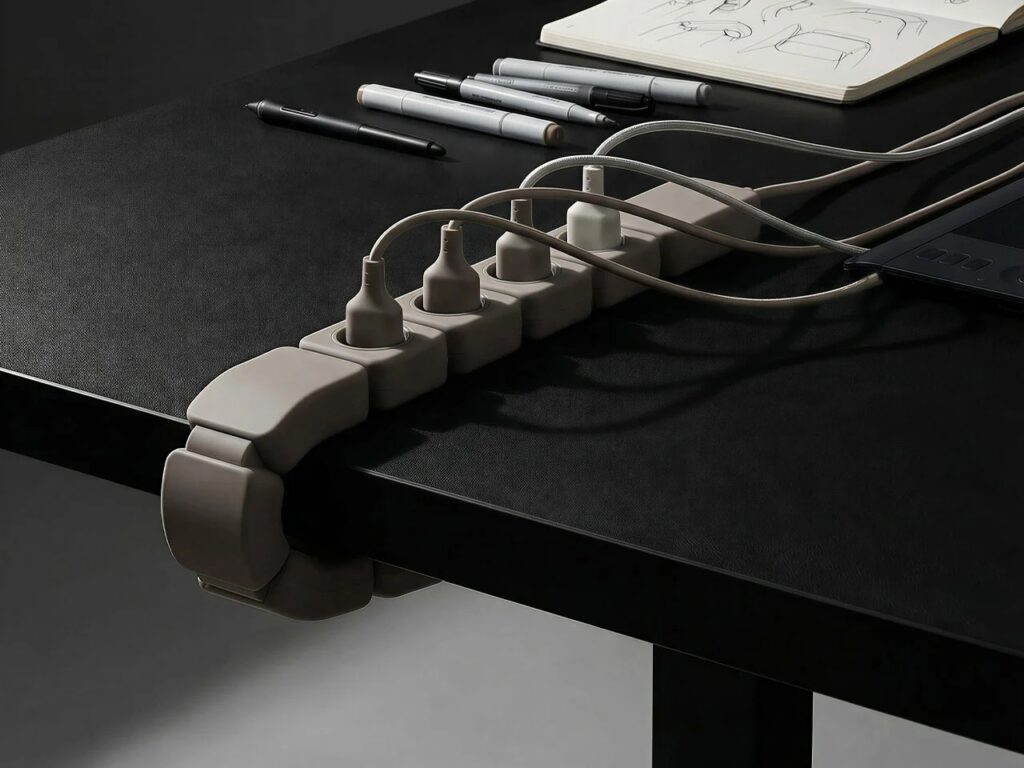
In some modern design solutions, power is treated as a direct component of the work surface rather than a hidden element. For example, the concept of clamp-mounted power units fixed to the edge of a desk relies on repositioning connection points within the user’s immediate reach. This shift changes the interaction pattern with electricity inside the work environment, reducing reliance on physically uncomfortable movements and eliminating the need to search for floor outlets or long cable extensions. As a result, it helps reduce visual clutter and improves the overall organization of the workspace.
Flexibility of Installation and Repositioning of the Power Source
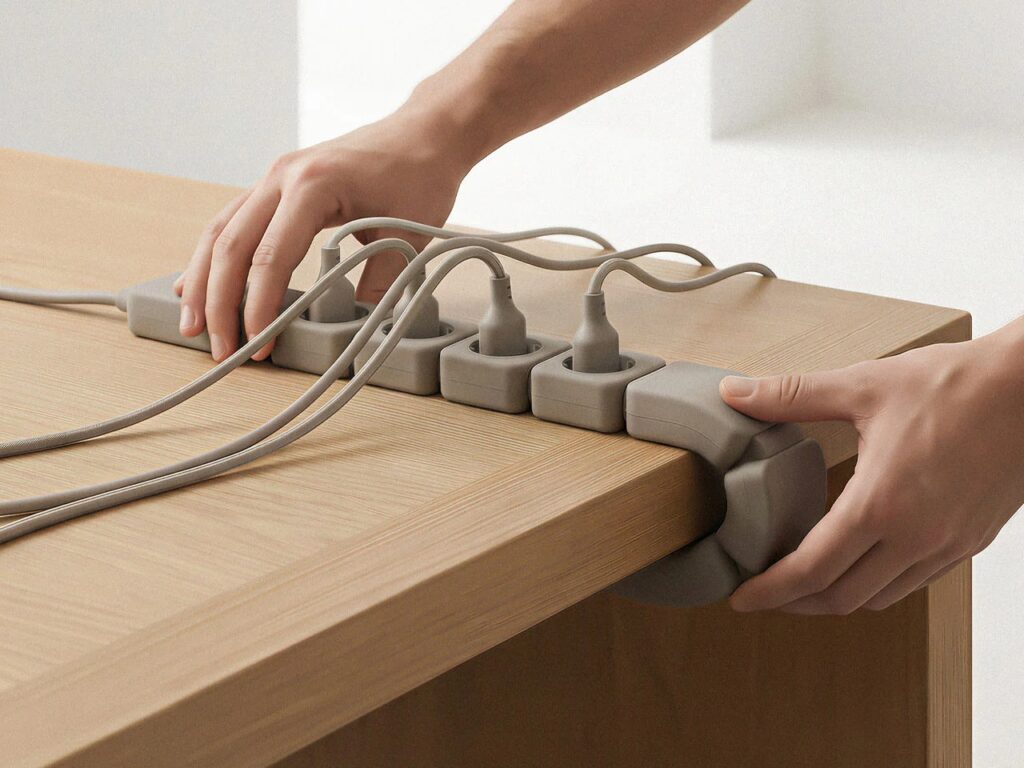
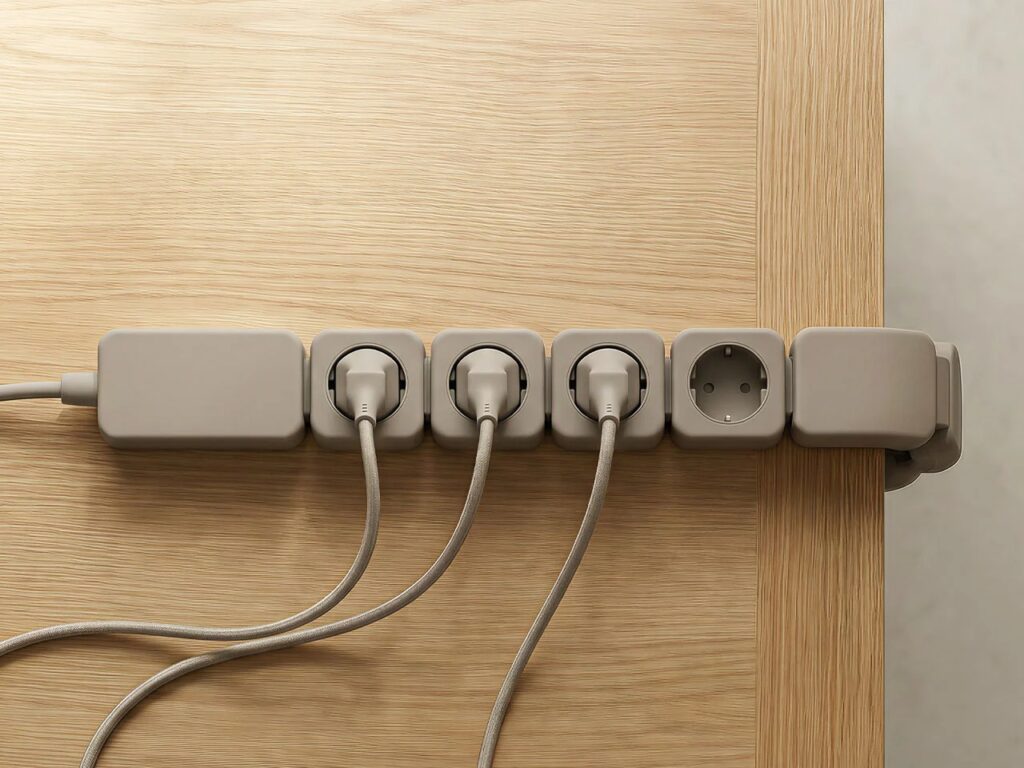
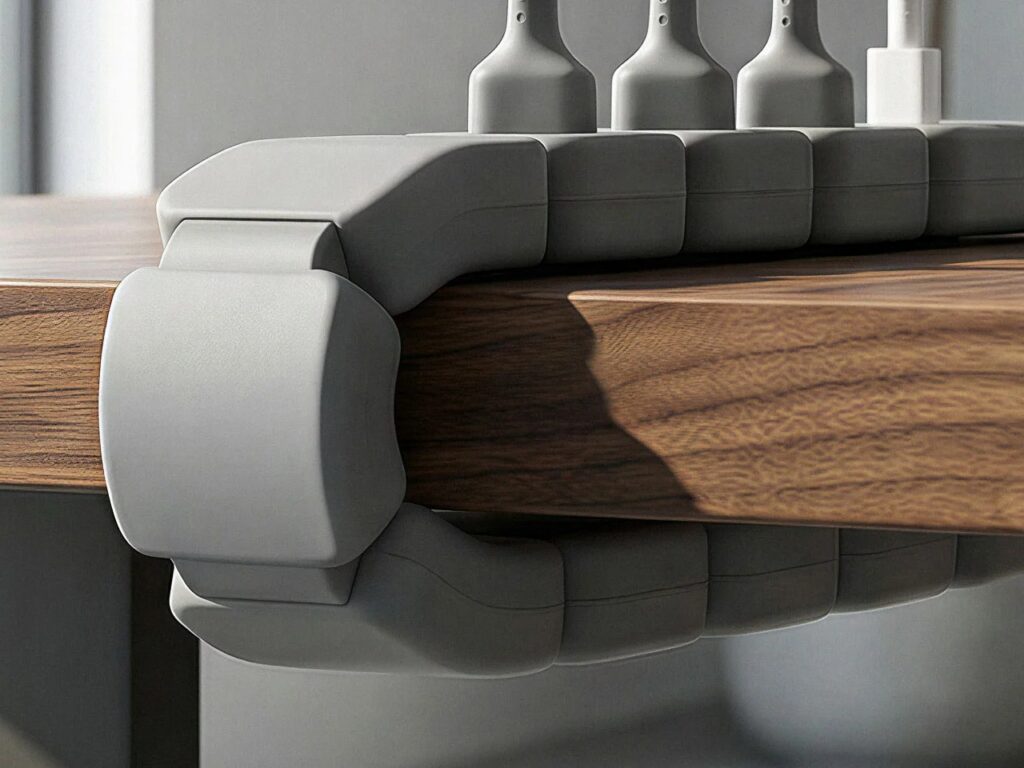
This product won a design award in New York for product design, and its core concept is based on flexibility in use. Instead of fixing the power unit in a static location, it is built on the philosophy of distributing it according to need under the principle of “adding power anywhere.” It is mounted using a clamp that can be attached to the edge of the desk and easily moved whenever the work setup changes, without the need for additional tools. This allows it to be used in different environments such as home offices, shared workspaces, or temporary setups, with the ability to adapt to multiple types of tables.
Locking Mechanism and Mechanical Stability
The mounting system relies on a self-locking over-center mechanism, where the clamp passes the neutral point and shifts into a locked position, helping reduce the likelihood of loosening during continuous use. This feature becomes important in the context of daily usage that involves plugging and unplugging devices and moving cables from different angles. In addition, the extended contact surfaces enhance the stability of the unit and reduce vibration, maintaining its steadiness within the work environments.
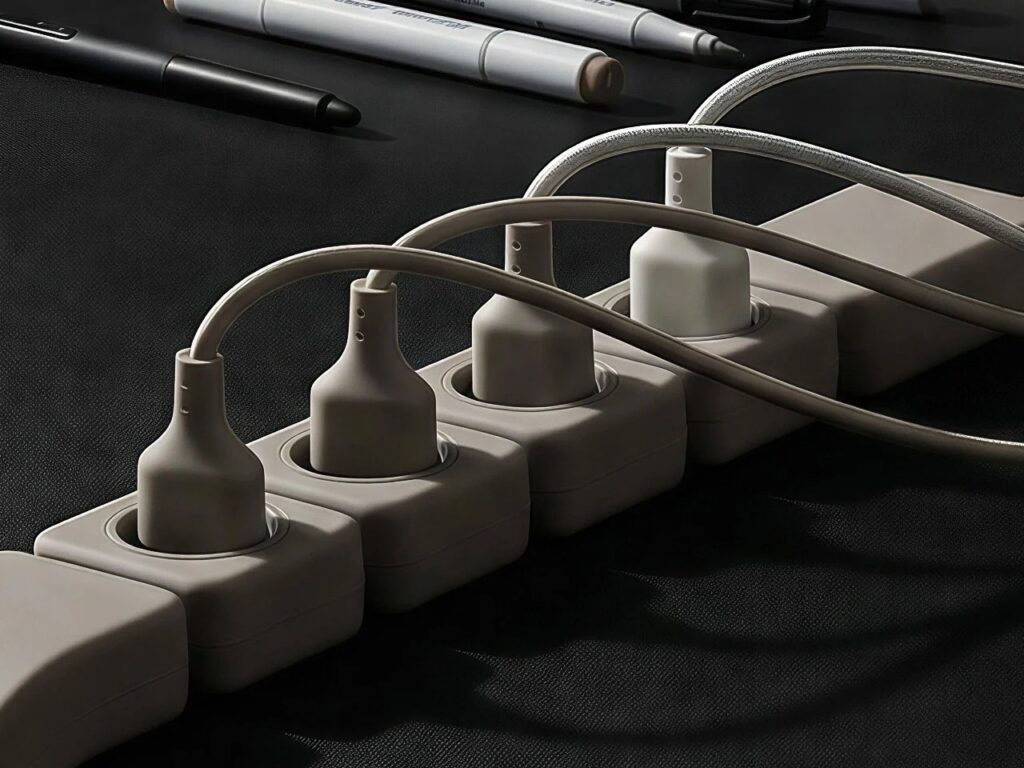
Outlet Distribution and Usage Organization
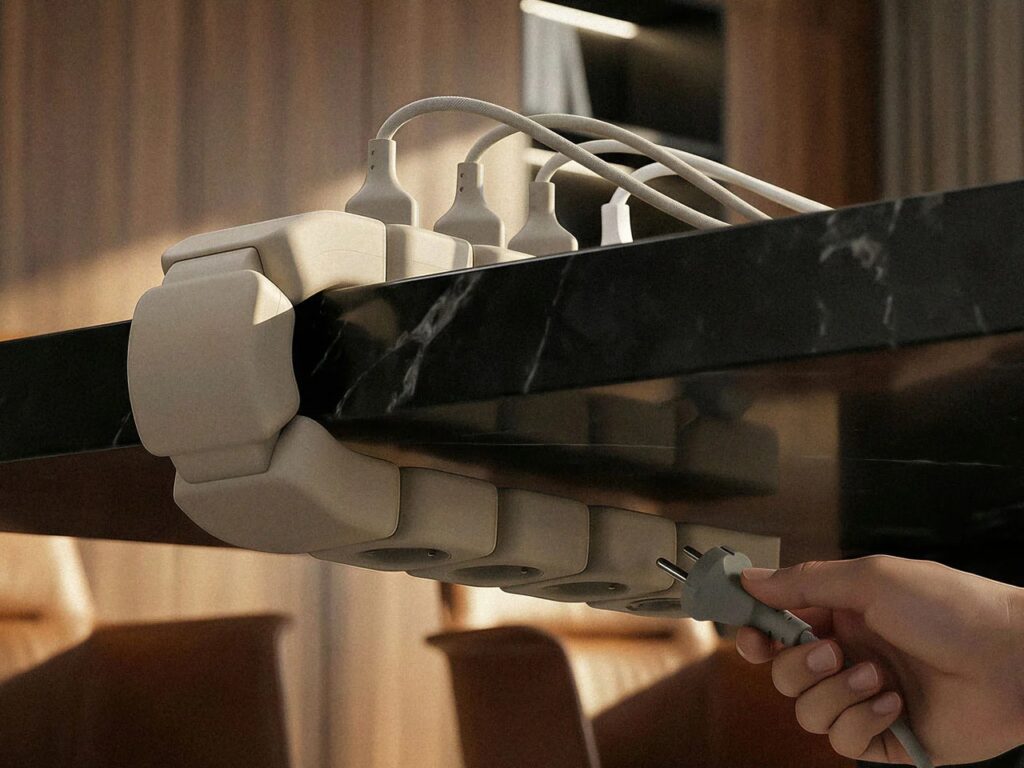
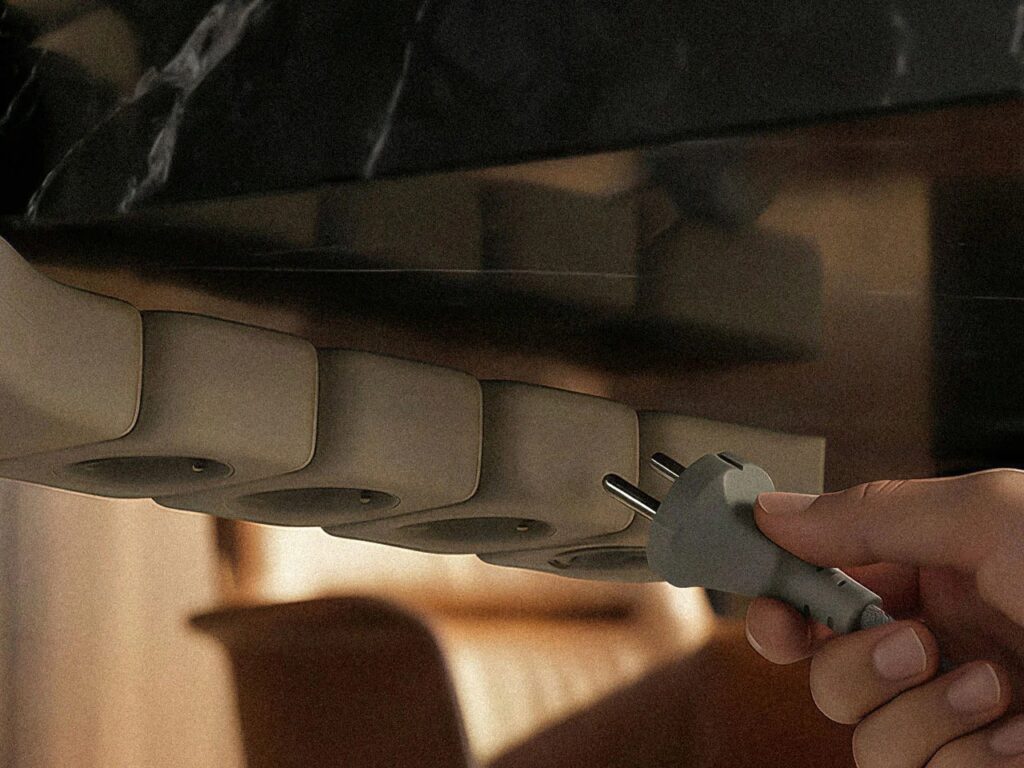
The design of Edge is based on dividing its eight outlets into two functional groups. Four outlets on the upper section are intended for frequent use, providing quick access for devices that are constantly plugged in and unplugged. In contrast, four outlets are placed on the lower section to serve as dedicated ports for fixed connections such as chargers and permanent links. This division helps organize cables and reduce their overlap, improving desk order and limiting visual clutter.
Improving Safety Conditions and the Usage Environment
Raising the power distribution unit off the floor is associated with several functional impacts related to daily use. These include reducing exposure to spilled liquids, protecting the unit during cleaning processes, and minimizing the risk of tripping or unintentionally pulling cables during movement around the desk. This positioning also adds a practical layer of protection in the context of repeated office use within construction and workplace environments.
A Design Approach Based on Repositioning
This type of design reflects an attempt to reposition a traditional component within the workspace in a way that better aligns with modern usage patterns. Through outlet organization and unit relocation, an element once viewed as a secondary accessory becomes more integrated into the structure of the desk, enhancing functionality and reducing complexity in everyday use.
✦ ArchUp Editorial Insight
We analyze the Edge power distribution system as a direct outcome of the productivity logic governing hybrid workplaces and the procurement standards of modern office equipment, rather than as an independent design decision. The primary driver here is the allocation of capital toward efficiency indicators in hybrid workplaces, where usage density and operational continuity determine adoption decisions.
Points of friction emerge through safety requirements, insurance liabilities associated with floor-based extensions, and maintenance protocols that restrict cable presence within circulation paths. Within this framework, the desk-edge clamp-mounted system becomes a spatial compromise that relocates electrical access from the infrastructural periphery to the direct zone of use, thereby reducing behavioral friction in daily user interaction.
The final configuration reflects the standardization pressure within office equipment supply chains, where mobility and repositioning capabilities outweigh fixed solutions, while the designer’s role remains secondary to a systemic logic governed by risk management, operational continuity, and usage intensity.

★ ArchUp Technical Analysis
Technical and Documentary Analysis of the Edge Power Distribution Solution – Product Design:
This article presents a design analysis of the Edge power distribution solution as a case study in reorganizing the electrical infrastructure within the office work environment. To enhance its archival value, we would like to present the following key technical and design data.
The system relies on a clamp that secures power modules to the edge of the desk, placing connection points within the user’s direct reach, with a self-locking over-center mechanism that transitions past the neutral point into a locked position to reduce the likelihood of loosening, along with extended contact surfaces to enhance stability and reduce vibration.
The product has received an award in New York for product design and can be installed without tools and easily relocated when work settings change. The outlet distribution is based on two functional groups: four outlets on the upper section for frequent use, and four outlets on the lower section for fixed connections (such as chargers and permanent connections).
The system elevates the distribution unit off the floor to reduce exposure to spills, protect it during cleaning, and minimize tripping hazards or unintended cable pulls, with the ability to adapt to multiple table types for use in home offices, co-working spaces, or temporary setups.
Related Insight: Please refer to this article to understand the context of modern architectural preservation:
Designing Hybrid Work Environments: Between Operational Efficiency and User Comfort.