Safdie Unveils Pavilion-Style Design for Cherokee Heritage Center in Oklahoma


Safdie Architects has revealed plans for a new Cherokee Heritage Center in Tahlequah, Oklahoma. The project redevelops the original 1967 center on the former Cherokee Female Seminary site. The proposal expands the 43-acre campus to support cultural preservation, education, and community engagement.
A Pavilion Campus Rooted in Landscape
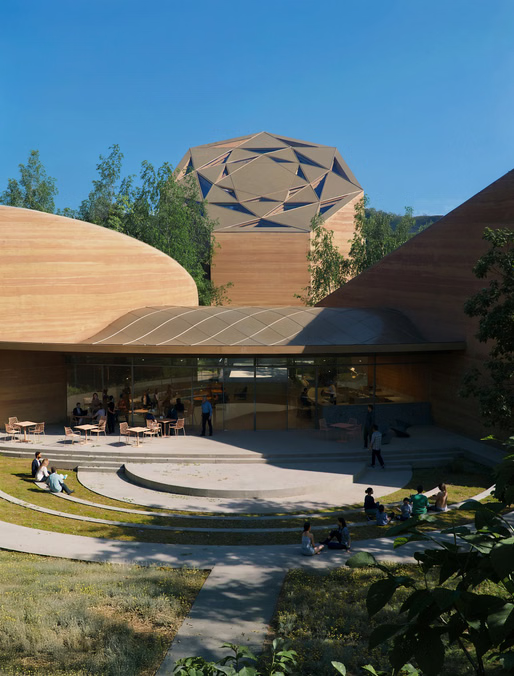
The masterplan organizes the site as a series of pavilions set within the existing tree line. These structures follow a newly introduced crescent-shaped creek that shapes circulation and views. The layout redefines the campus through low-rise buildings that vary in scale and purpose.
One pavilion rises above the canopy and acts as a visual landmark for visitors. Meanwhile, smaller volumes house exhibition galleries, classrooms, genealogical research facilities, and communal areas. The dispersed arrangement strengthens the relationship between architecture and landscape.

The design team developed the project in collaboration with landscape specialists and representatives of the Cherokee Nation. Therefore, the spatial organization responds directly to cultural and environmental priorities.
Water and Ecology as Organizing Elements
A rainwater-fed creek forms the central spine of the campus. It connects pathways, native planting zones, and outdoor exhibition areas. Moreover, the water system supports long-term sustainability goals while shaping visitor movement.
The landscape strategy integrates ecological restoration with cultural storytelling. Designers embedded the pavilions within wooded areas to minimize disruption. As a result, the project reduces visual impact and preserves the natural character of the site.
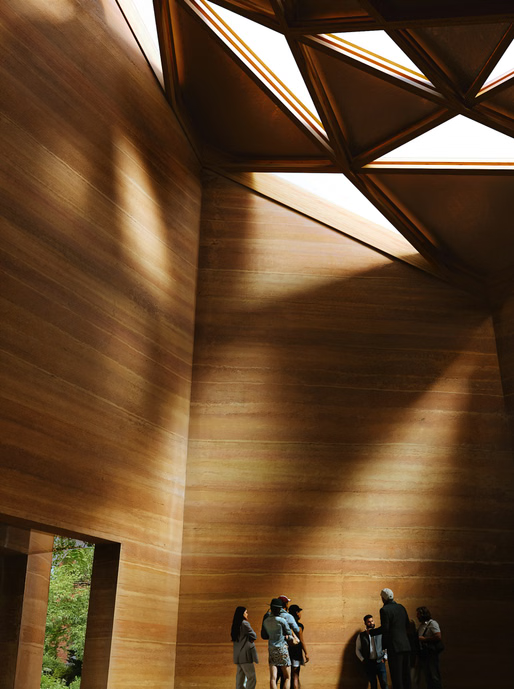
This approach reflects broader discussions in urban planning about how cultural institutions can reconnect with their environmental context. The campus operates as both an educational facility and a living landscape.
Preserving History Through Spatial Continuity
The project retains the preserved columns of the original Cherokee Female Seminary. Designers incorporated these elements into a new central gathering space. Consequently, the campus maintains a physical link to its historical foundations.
The broader plan also connects to existing cultural landmarks on the site. These include the reconstructed Diligwa village and the Tsa-La-Gi amphitheater. Together, these elements create a layered narrative across the campus.
The redevelopment replaces aging facilities with contemporary construction strategies while respecting heritage structures. It also introduces updated exhibition environments and flexible interior design solutions for research and education.
The project reflects a growing trend in cultural news where institutions expand beyond static displays. Instead, they create immersive campuses that integrate ecology, memory, and community life.
A Quick Architectural Snapshot
Location: Tahlequah, Oklahoma
Site Area: 43 acres
Program: Exhibitions, education, research, community spaces
Key Feature: Pavilion layout linked by rainwater-fed creek
Concept: Preserve history while embedding new architecture within the landscape
✦ ArchUp Editorial Insight
The decentralization of the Cherokee Heritage Center into isolated pavilions signals a transition from monumental institution to distributed infrastructure. This spatial shift stems from the necessity to mitigate environmental footprints in sensitive ecological zones while satisfying tribal land-use mandates. Economic pressures often dictate high-density footprints, yet the sprawl here suggests a priority for land conservation over construction efficiency. The reliance on a rainwater-fed creek as a primary organizing element addresses regional water scarcity and operational maintenance costs. By integrating heritage ruins into functional gathering zones, the project navigates the tension between historical preservation and contemporary expansion needs. Rather than a singular cultural statement, the plan functions as a risk-management strategy for long-term site viability. This project is the logical outcome of decentralized programming + ecological mitigation requirements + historical site constraints.