Living Landscape Library Integrates with North Dakota Badlands

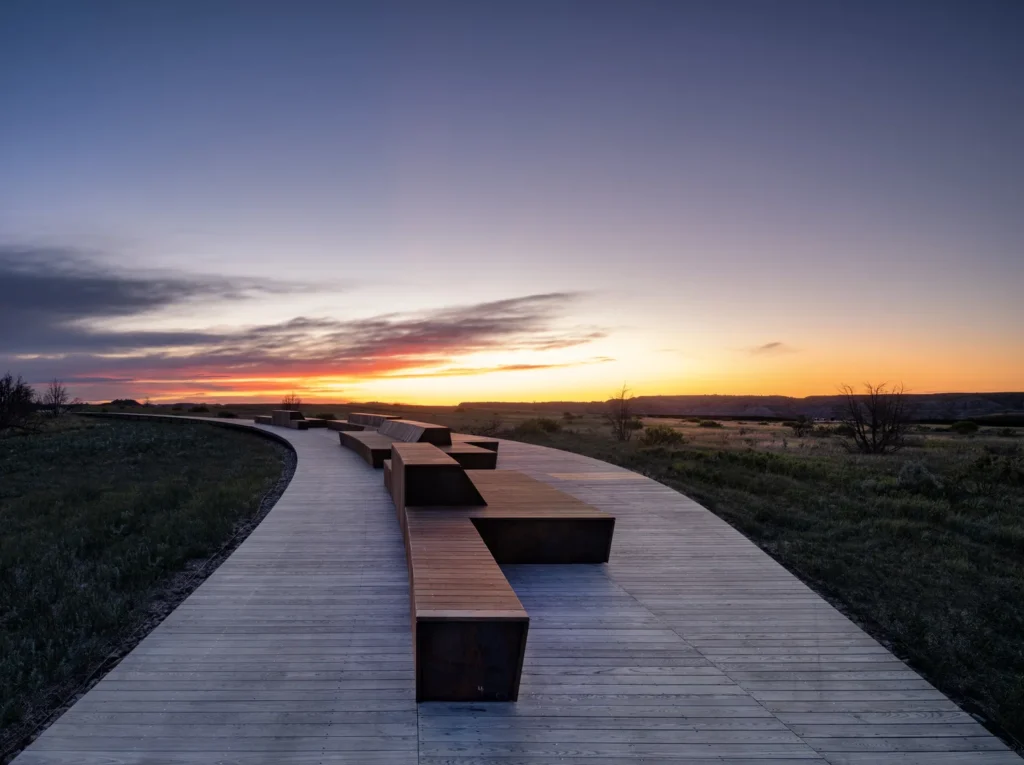
A new presidential library in Medora, North Dakota, merges carbon-neutral construction with an expansive ecological restoration project. The 96,000-square-foot facility occupies a 93-acre site adjacent to a national park, utilizing an accessible earthen roof to extend the natural prairie over the building. The project functions as a self-sustaining ecosystem that generates its own energy and manages its own waste while serving as a cultural repository.
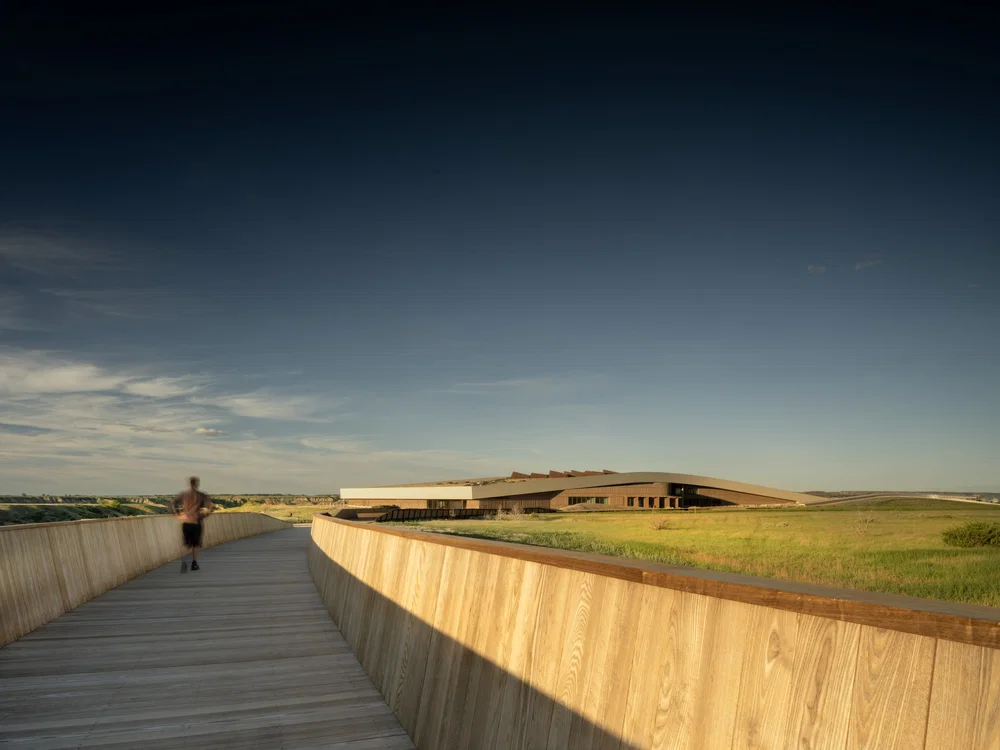
The design follows a central philosophy where the building and the surrounding terrain become one continuous experience. A nearly mile-long elevated boardwalk allows visitors to move through the restored landscape at various heights. This path offers panoramic views of the rugged terrain and includes outdoor classrooms and a suspended netted overlook. The site supports multiple modes of arrival, marking the first time a presidential library connects directly to hiking trails, mountain bike paths, and horseback routes.
Inside the facility, the team choreographed a sequence of spaces that transition between varying light levels to reflect a narrative journey. Large windows frame views of historically significant landmarks, while skylights bring natural light into the deeper gallery spaces. The program includes climate-controlled exhibition halls, a large auditorium for public debates, and digital infrastructure to house extensive collections. The interior layout prioritizes a direct visual connection to the cities and wilderness areas that defined the subject’s conservation work.
Material Sourcing and Environmental Performance
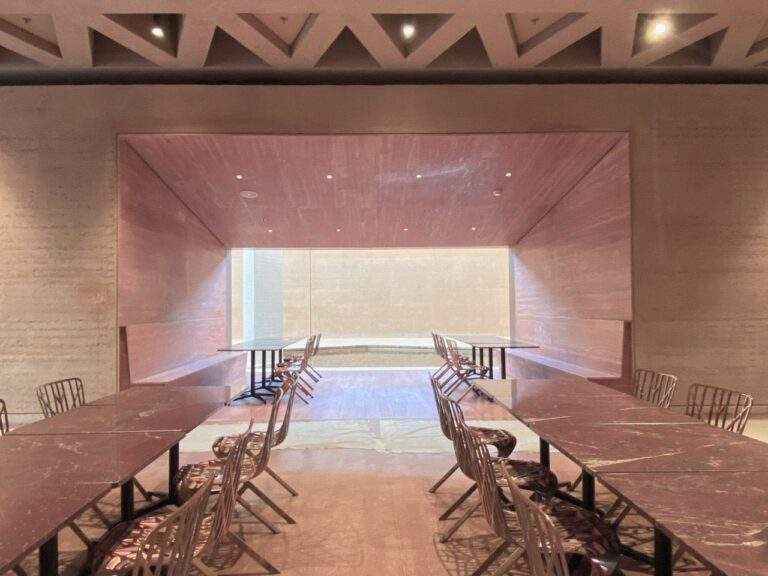
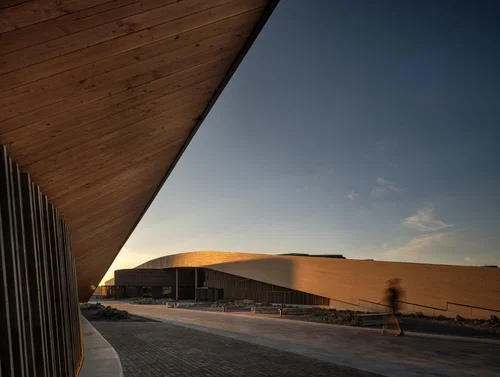
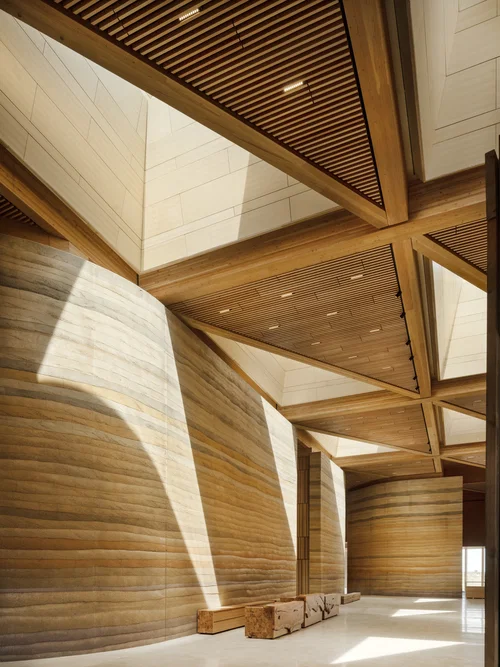
The project utilizes a material palette rooted in the local geology of the Badlands. The team specified mass timber, reclaimed regional wood, and low-carbon concrete to reduce the environmental footprint. Rammed-earth walls, built from soil sourced directly from the area, display natural layers that mimic the surrounding cliffs. These building materials avoid chemicals found on industry red lists and allow for future disassembly.
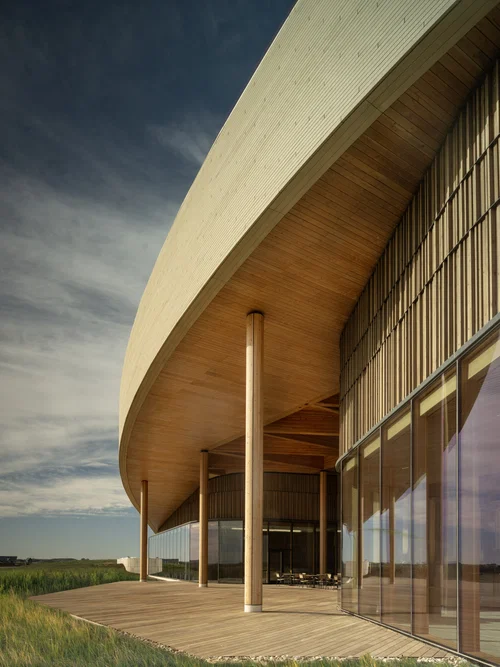
The library pursues the most rigorous environmental standards in the world, targeting full Living Building certification. This framework requires the site to achieve zero net energy, zero water waste, and zero carbon emissions. To support these goals, the team integrated a native plant project that cultivated over 200 species across the roof and grounds. These efforts connect the 93-acre plot to thousands of acres of nearby protected grasslands, creating a cohesive habitat for local wildlife.
Operational Stewardship and Land Management
Beyond the physical structure, the scheme incorporates active land management into its daily operations. The team integrated practices such as controlled burns, haying, and grazing into the public programming. This approach transforms the architecture into a tool for active conservation rather than a static monument. Visitors witness the seasonal rhythms of the prairie, turning the visit into a lesson in modern environmental stewardship.
The project represents the largest and most complex cultural institution to seek this level of sustainability certification in a remote location. The collaboration between national experts and local fabricators allowed the project to meet a demanding timeline for a significant national anniversary. By relying on local knowledge and resourcefulness, the intervention demonstrates how high-performance sustainability can flourish in challenging, isolated climates.
Spatial Sequence and Geological Integration
The project establishes a sophisticated relationship between built form and topography by treating the building as a thickened layer of the earth. The use of rammed-earth walls provides thermal mass, while the living roof acts as a biological insulator, reducing the energy required for climate control. Spatially, the elevated boardwalk functions as a primary circulation spine that detaches the visitor from the ground, offering a different perspective on the prairie ecosystem. This tension between immersion and observation defines the experience. The design successfully avoids the typical monumental posture of civic buildings, instead choosing a low-profile silhouette that yields to the horizon of the North Dakota landscape.
✦ ArchUp Editorial Insight
The project successfully redefines the presidential library by replacing the traditional monument with an active ecological machine. By embedding the facility within a 93-acre restoration zone, the team creates a compelling argument for architecture as a tool for environmental repair rather than just a container for history. The integration of local rammed earth and mass timber demonstrates a rigorous commitment to carbon-neutral sustainability in a remote climate. However, this pursuit of the “Living Building” ideal faces a significant contradiction. The site’s isolation requires visitors to travel vast distances, potentially offsetting local energy gains with high transportation emissions. While the building itself functions perfectly as a self-contained ecosystem, its role as a regional tourist destination highlights the persistent tension between rural cultural icons and global environmental footprints.
Project Team: Snøhetta (Design Architect, Landscape Architect, and Interior Designer), Resource Environmental Solutions, and North Dakota State University. Location: Medora, North Dakota.
Project Notes: The project opened on July 4, 2026. The Theodore Roosevelt Presidential Library Foundation served as the client. The facility targets Living Building Challenge certification and LEED Platinum status.