Dymak Headquarters and Circular Climate-Responsive Design

Massing Composition and Spatial Scenography
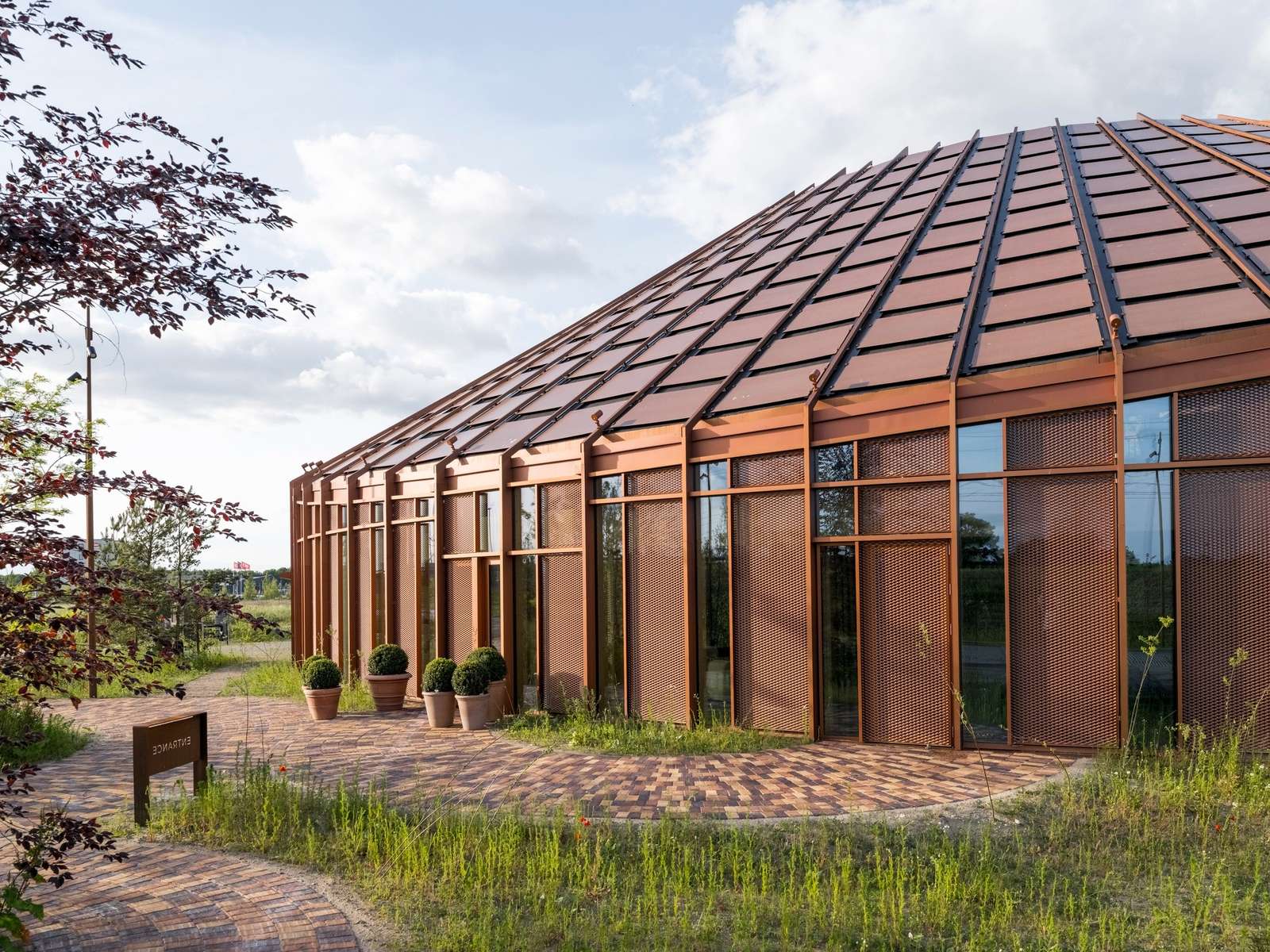
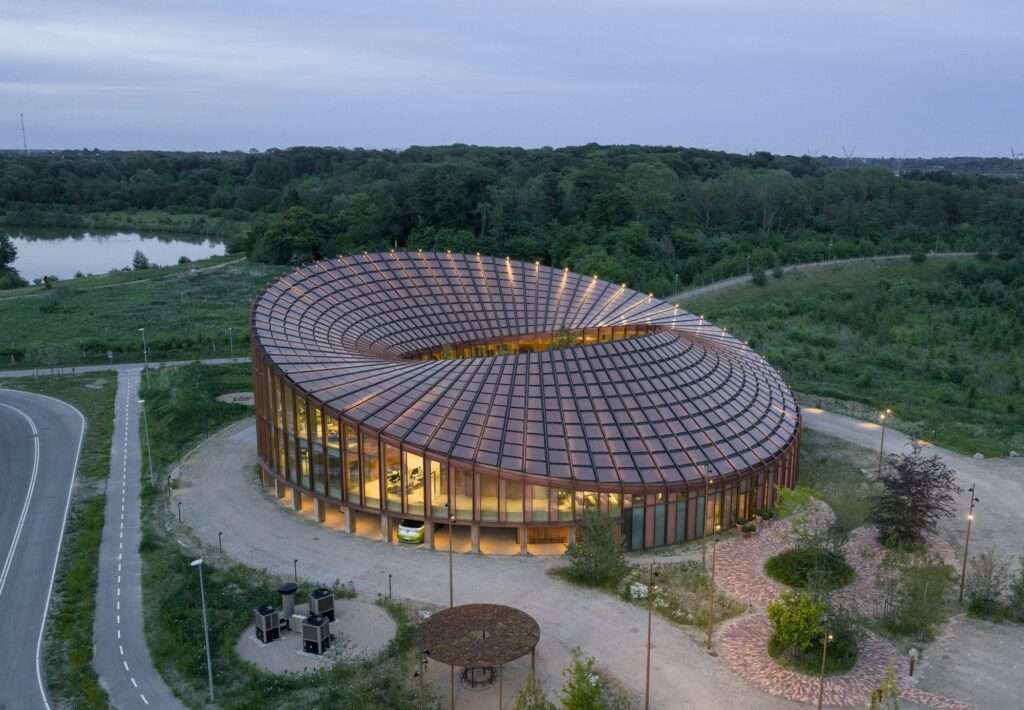
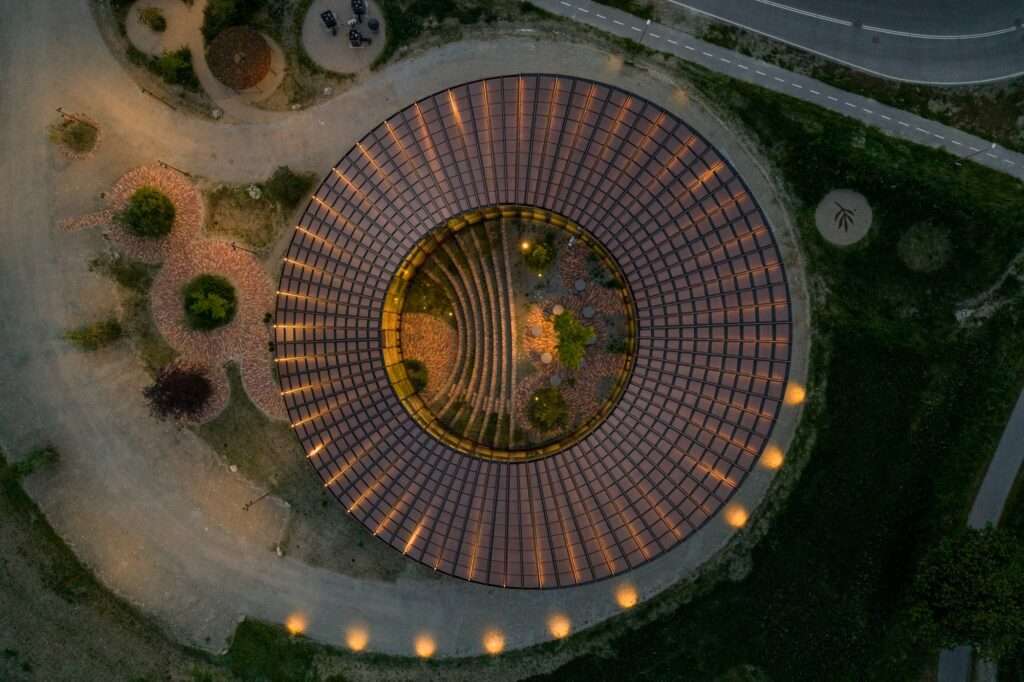
The architectural concept of the building is based on a continuous circular mass that encloses a central green courtyard, creating a spatial mediator between the industrial character of the surrounding context and the natural landscape overlooking Lake Glisholm. The undulating roof grants the volume a dynamic presence that softens the rigidity of its horizontal extension, while the timber-and-glass grid façade establishes a balance between visual openness and environmental protection. Rather than treating the envelope as a conventional separating element, the design leverages the relationship between solid masses and transparent surfaces to create a workplace environment that responds to surrounding climatic conditions while showcasing the company’s materials and products within an authentic architectural setting.
Human Experience and Circulation Strategy
The central courtyard organizes movement throughout the building as a pivotal node connecting various functions and spaces. The circular geometry creates a continuous circulation path linking offices, exhibition areas, and shared facilities without abrupt interruptions, enhancing ease of movement and daily interaction among users. Courtyard-facing glazed façades reinforce a constant visual connection between indoor activities and natural elements, while the distribution of shared amenities, including fitness and relaxation areas, supports a more flexible and integrated working environment.
| Field | Details |
|---|---|
| Architects | Bjarke Ingels Group |
| Area | 2800 m² |
| Year | 2026 |
| Photographs | Rasmus Hjortshøj – COAST |
| Category | Offices, Office Buildings |
| Partners In Charge | Bjarke Ingels, Ole Elkjær-Larsen |
| Project Manager | Joos Jerne |
| Project Leader | Lisbet Fritze Trentemøller |
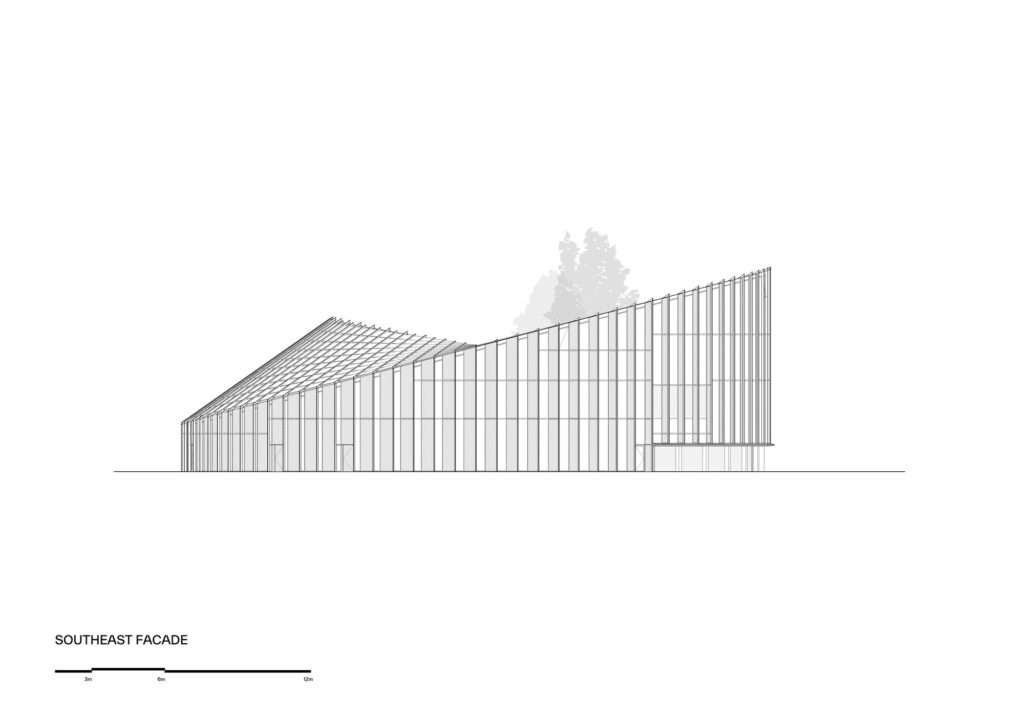
Environmental Orientation and Climatic Performance of the Mass
The roof form functions as an effective climatic response mechanism, interacting with solar exposure and environmental conditions across the site. On the northern side, the roof rises to accommodate expansive glazed façades that frame extended views of the landscape while allowing consistent indirect daylight to penetrate deep into the interior. Toward the south, it gradually descends to reduce direct solar exposure and limit thermal loads within the building. This strategy is complemented by a renewable energy system, with approximately 880 photovoltaic panels integrated into the roof, generating a substantial portion of the building’s operational energy demand and enhancing its long-term environmental performance.
Materiality and the Formation of the Interior Environment
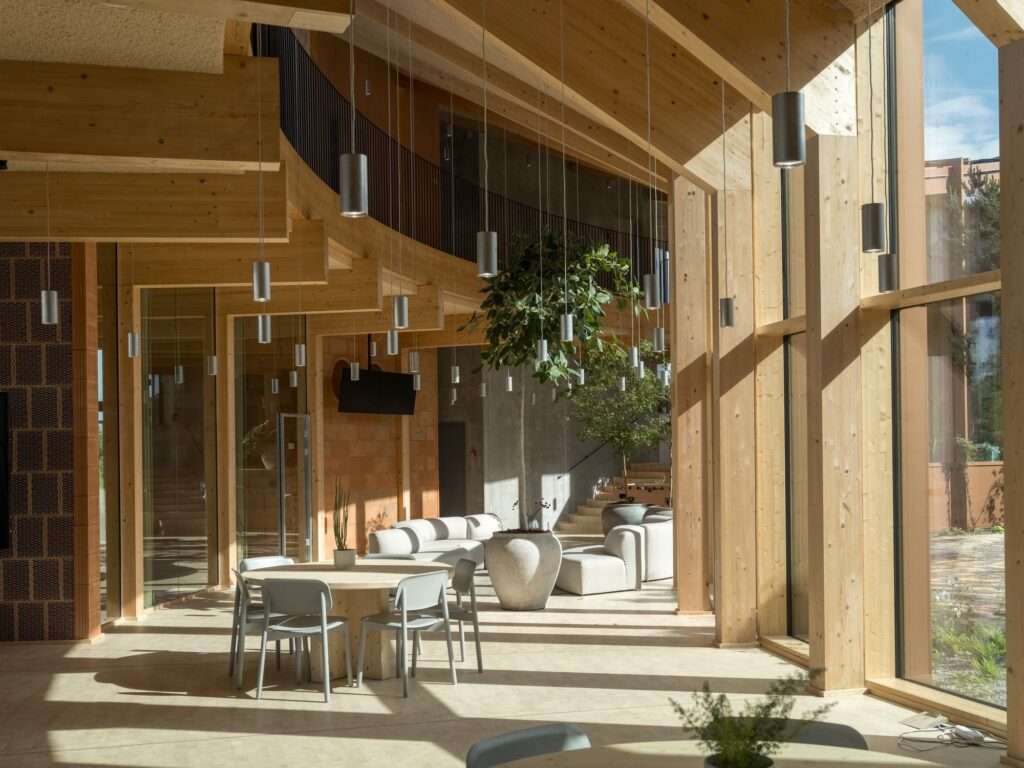
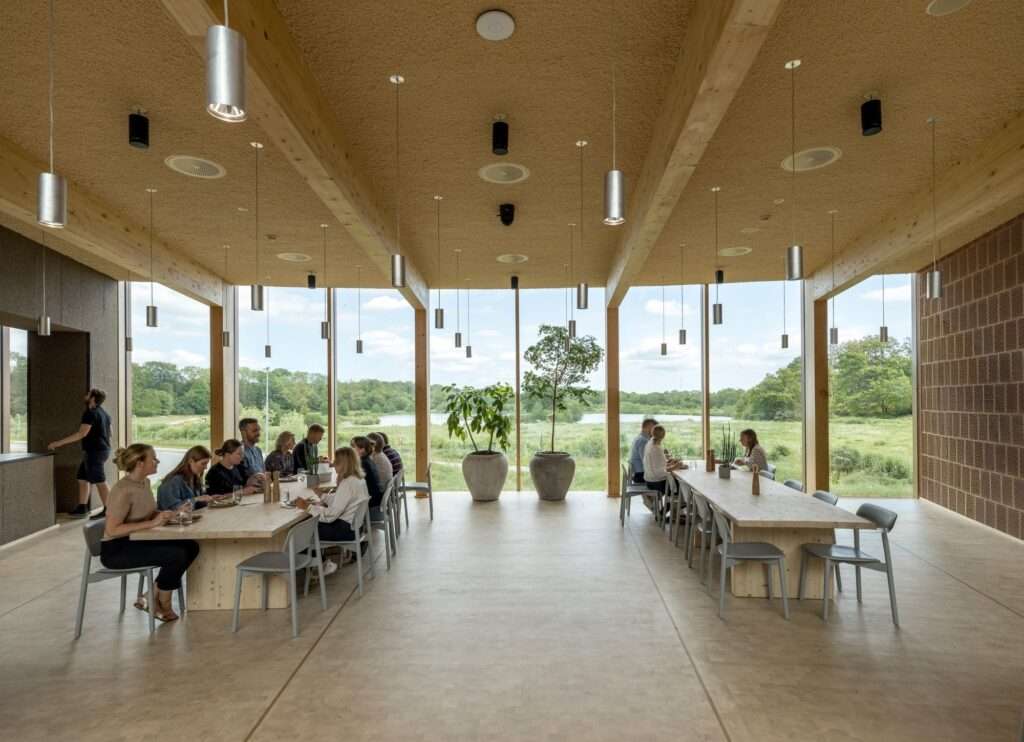
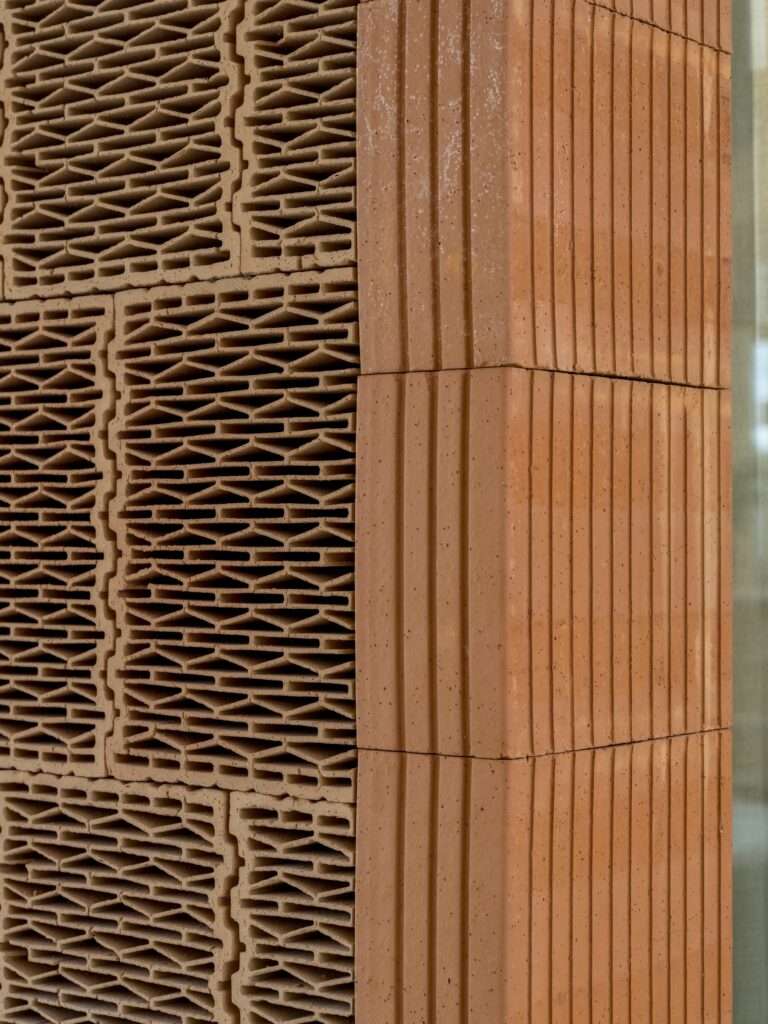
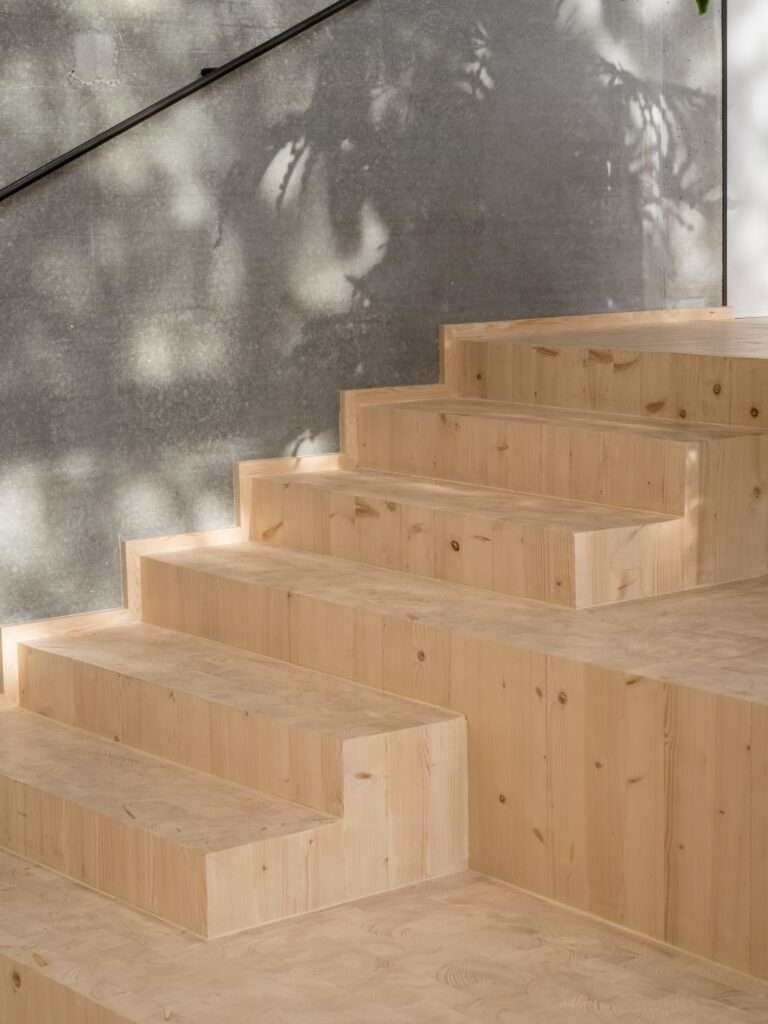
The project’s material identity is defined by a palette of low-carbon natural materials, including timber structures, clay tiles, clay plaster, and eelgrass. These materials contribute to an interior environment characterized by strong tactile qualities that reflect the local natural context while supporting the project’s environmental objectives. Their application also enhances acoustic and thermal comfort, while reinforcing the presence of the raw materials that form the foundation of the company’s activities and institutional identity. Additional technical references regarding such materials can often be found in Material Datasheets.
Topographical Composition and Integration with the Natural Landscape
The landscape design begins at the building’s perimeter through carefully shaped topography that integrates circulation routes, parking areas, and planted zones into a cohesive system. This ground-level strategy reduces the visual impact of adjacent infrastructure while gradually directing attention toward the lake and surrounding scenery. Rainwater management systems are incorporated into the external landscape through open channels and retention basins that slow water runoff, transforming the site’s ecological infrastructure into an active component of the spatial experience. Similar landscape-driven approaches can be observed across numerous contemporary projects.
Spatial Transition and Functional Organization
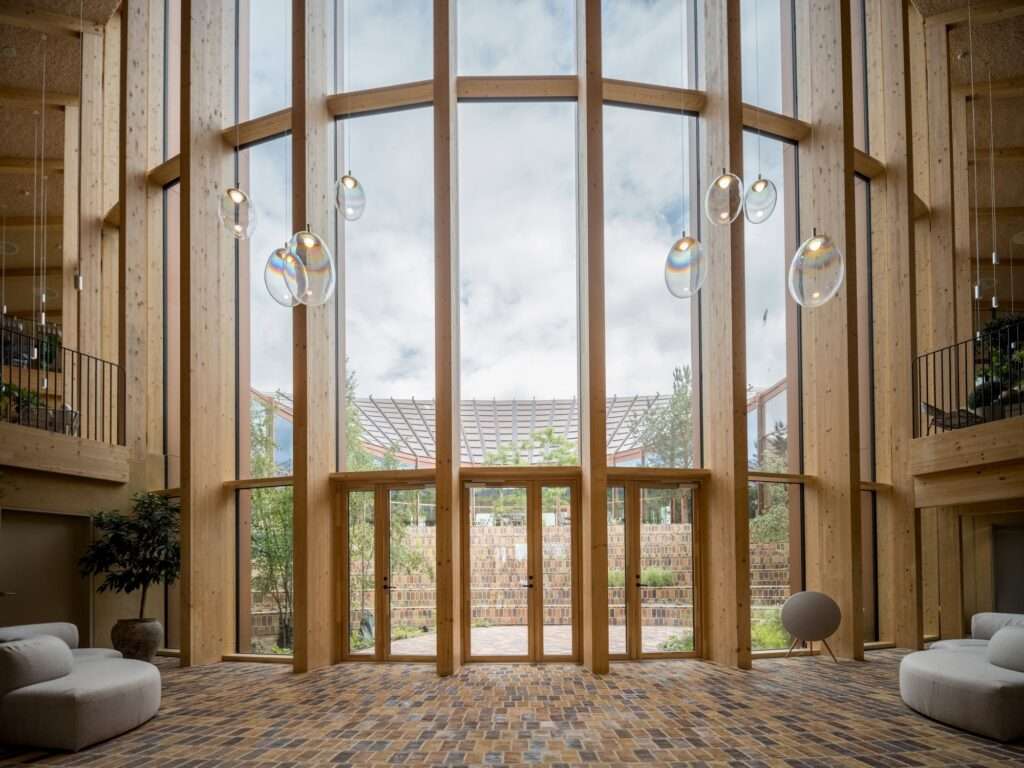
The main entrance leads into a double-height reception space that establishes a clear transition between the exterior environment and the building’s internal program. The functional layout follows a sequence that reflects patterns of use: the ground floor accommodates the most publicly oriented functions, including the showroom, photography studio, and fitness facilities, while the upper levels house workspaces, meeting rooms, and relaxation areas. This organization creates a clear gradient between public and semi-private activities while maintaining visual and spatial continuity throughout the project.
Façades and Envelope Performance
The façade employs a timber-and-glass grid system that adapts to varying solar exposure conditions around the building. Shading elements become denser on the southern façades to reduce heat gain and improve visual comfort, while the northern elevations remain more open to maximize stable natural daylight. As a result, the architectural envelope evolves into an active environmental component that balances sustainability objectives with interior comfort, rather than functioning merely as an external skin enclosing the mass. Such performance-oriented solutions continue to influence contemporary construction practices.
Sensory Materiality and the Central Courtyard
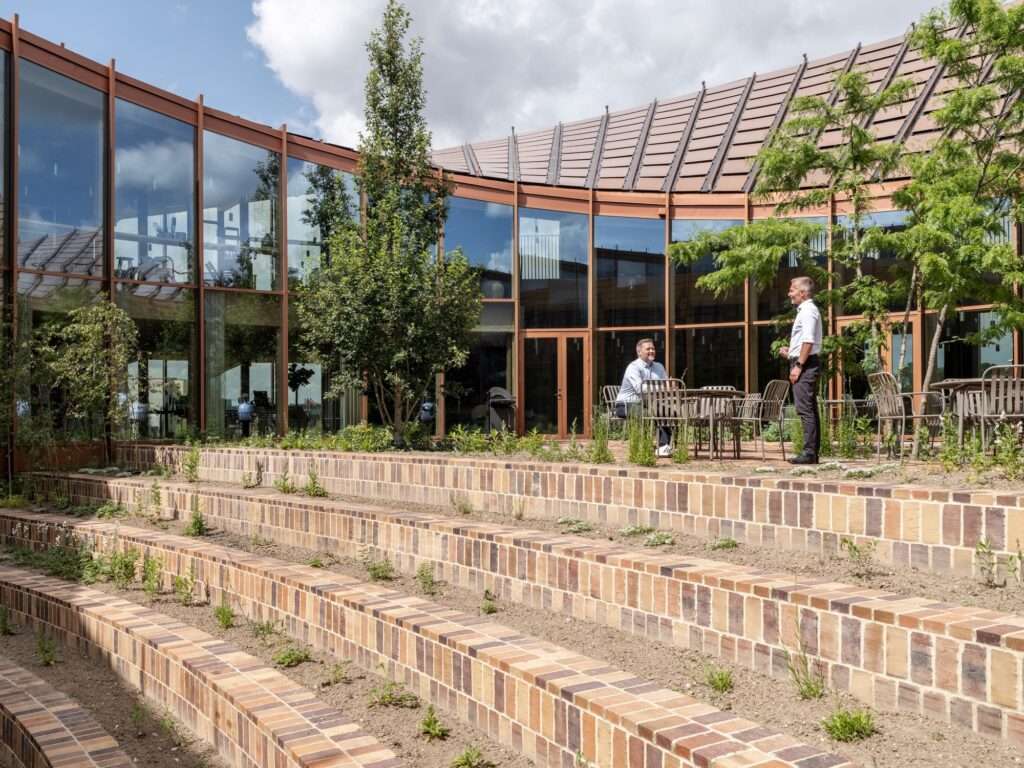
The central courtyard serves as a natural extension of the material language established throughout the building. Warm ceramic flooring continues from interior spaces into the outdoor areas, reinforcing the continuity of the spatial experience. Seating zones and carefully landscaped green areas support everyday use and informal gatherings, while native trees and vegetation introduce a changing seasonal dimension that strengthens users’ connection to the site. In this way, the courtyard becomes an active social and climatic space that contributes to the organization of daily life within the headquarters while linking its various functions within a unified spatial framework.
✦ ArchUp Editorial Insight
The project redefines the corporate headquarters as an active environmental instrument rather than a static workplace. Through its circular massing, climate-responsive roof, integrated photovoltaic system, and reliance on natural materials, the operational framework is transformed into a spatial narrative that connects productive identity, environmental awareness, and user experience. Consequently, the project positions itself within contemporary architectural discourse surrounding architecture and the use of low-carbon building materials.
However, this proposition implicitly assumes that environmental expression necessarily reflects genuine environmental performance. The central courtyard, natural material strategies, and integration with the surrounding landscape may obscure the operational and technical costs required to sustain such a spatial system. From this perspective, the project can also be interpreted as the construction of a carefully curated corporate image, where architectural symbolism occasionally takes precedence over long-term performance indicators and future adaptability. Such questions remain central to ongoing research into sustainable architecture and environmental design.