Architecture of Sleep: How Acoustic Spaces Shape Our Motor Skills During Daytime Naps

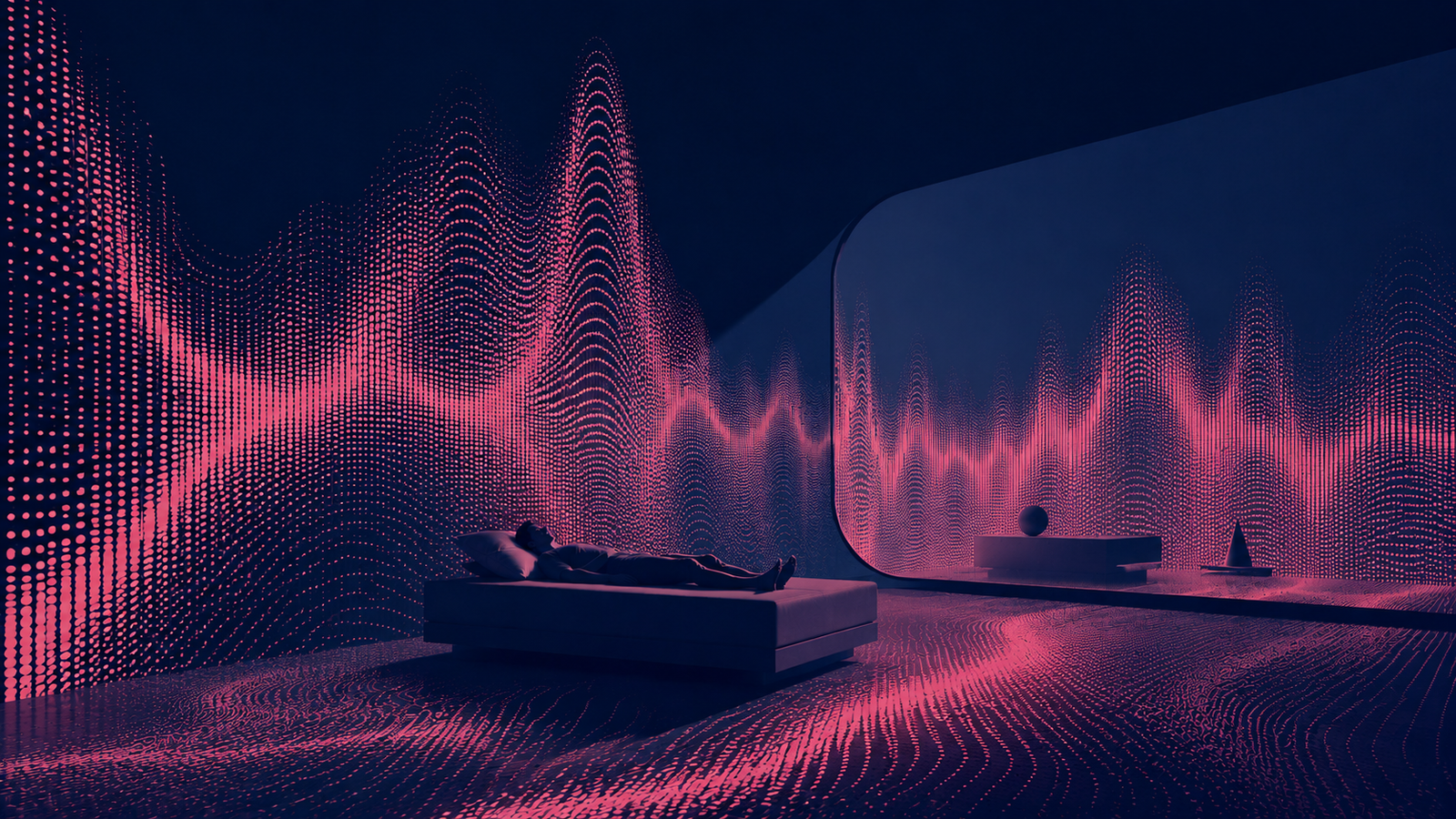
Targeted Memory Reactivation Opens New Horizons for the Design of Physical Therapy Rooms and Musical-Sports Facilities
In the relentless pursuit of productivity, many designers overlook the potential of architectural space to interact with the human mind during periods of unconsciousness. Imagine a bedroom or a medical rehabilitation center transforming into a dynamic environment that reprograms the brain and refines the motor skills of a patient or athlete deep in sleep. This scientific paradox is no longer mere science fiction; it is the core of Targeted Memory Reactivation (TMR) technology. This method reveals how acoustic and environmental cues surrounding an individual during sleep can enhance physical and motor performance upon waking. It represents a call to rethink the architecture of unconscious space and integrate smart acoustic systems into residential and medical interior design.
From Keyboard to Space: The Genesis of Acoustic Stimulation
The exploration of this technology began when researchers sought to understand how complex motor skills stabilize. Recent studies led by James Antony and Ken Paller in 2012 demonstrate that replaying musical tones previously practiced by participants, and repeating them precisely during slow-wave sleep, leads to a remarkable improvement in keyboard performance accuracy upon waking. This revelation demonstrates that the brain does not isolate itself from its environmental surroundings during sleep; rather, it listens and reorganizes its motor plans based on surrounding acoustic stimuli. This pathway clears the way for designing recording studios and specialized residences for musicians that support intelligent passive learning.
The Metrics of Time and Envelope: Activation Specificity Within the Sleep Environment
The process requires more than merely broadcasting sounds; the temporal and environmental envelope imposes strict conditions for a response. In a parallel study conducted by Manuel Schönauer and Steffen Gais in 2014, evidence shows that acoustic stimulation yields no benefit or positive effect when delivered during wakefulness. The brain requires an isolated, stable sleep environment to trigger the motor response. More intriguing for architects and designers of micro-housing is that a brief three-hour sleep period supported by targeted acoustic stimulation matches the storage efficiency of an uninterrupted, eight-hour natural sleep cycle. This discovery introduces opportunities to design smart nap rooms in modern workplaces and advanced athletic training facilities, where targeted audio systems integrate seamlessly into suspended ceilings.
Full-Body Dimensions: Virtual Flight and the Architecture of Dreams
When moving from fine finger movements to full-body coordination, the spatial vision expands to encompass larger, more complex volumes. Cyrielle Picard-Deland and her team led a 2021 study utilizing virtual reality flight missions that required comprehensive bodily coordination. The results demonstrate that acoustic stimulation during rapid eye movement (REM) sleep is twice as effective as that observed in control groups, correlating strongly with dreams containing elements of motion and acceleration. This link between the motor content of dreams and external stimulation inspires designers of simulation and virtual reality environments to include acoustic relaxation rooms adjacent to training laboratories, creating an integrated spatial experience that begins with visual-motor simulation and concludes with acoustic consolidation during sleep.
Prior Cognitive Structure as a Foundation for Acoustic Design
For a space to fulfill its activation function, it must address prior knowledge stored in the user’s mind. Research by Stephanie Groch and Ines Wilhelm in 2017 highlights that targeted memory reactivation fails completely if the acoustic stimuli associate with unfamiliar elements that lack an existing cognitive baseline in the individual. In an architectural context, this necessitates highly customized and personalized acoustic design for bedrooms or clinics. Familiar sounds associated with an athlete’s or patient’s daily work environment are uniquely capable of stimulating the fast brain frequencies and neural connections responsible for developing motor skills.
Neuro-Engineering Pathways and the Control of Cerebral Content
Comprehensive systematic reviews, such as the study by Dirk Schouten and Silvia Pereira in 2017 alongside research by Nicola Cellini in 2018, reveal the deep neural mechanisms underlying the success of this technique. These papers confirm that precisely directed acoustic cues during sleep activate the caudate nucleus and the hippocampus bilaterally, guiding neural flow to replay recorded movements. Interestingly, the reviews demonstrate the inefficiency of olfactory stimuli in improving motor skills due to the absence of direct pathways from the olfactory bulb to the motor regions of the cerebral cortex. This limitation restricts the role of environmental design to the acoustic realm and spatial audio engineering rather than olfactory architecture.
Therapeutic Applications in Modern Clinic and Hospital Design
The practical opportunities presented in studies by Ken Paller in 2017 and Stephanie Witkowski in 2020 present medical architecture practitioners with a new responsibility. Healthcare architects can design interactive acoustic recovery suites for stroke and neurological injury patients. By pairing the movements required during physical therapy sessions with specific tones and acoustic signals within the medical gymnasium, and subsequently broadcasting these tones automatically through integrated sound systems in patient bedrooms at night, designers can accelerate the construction and generalization of new motor pathways. The architectural envelope shifts from a passive shelter for the patient into an active therapeutic partner that helps restore lost bodily functions.
✦ ArchUp Editorial Insight
What the neuroscience of Targeted Memory Reactivation actually reveals is not a design opportunity but a procurement pressure: the institutional demand to quantify recovery, compress rehabilitation timelines, and reduce the cost of skilled human intervention. When acoustic stimulation during slow-wave sleep can demonstrably accelerate motor consolidation, healthcare administrators and sports facility investors gain a measurable return-on-investment argument for embedding proprietary audio systems into built environments. The architectural outcome acoustic recovery suites, sensor-lined ceilings, personalized sound envelopes is not a response to human need but to liability frameworks, insurance models, and the monetization of unconscious time. The sleeping body, reframed as a productive asset, transforms the ward, the clinic, and the training facility into optimized processing infrastructure. The architecture follows the logic of the invoice.
References
Antony, James J., Gobel, Eric W., O’Hare, Justin K., Reber, Paul J., and Paller, Ken A. “Cued memory reactivation during sleep influences skill learning.” Nature Neuroscience, 2012.
Schönauer, Manuel, Geisler, Thilo, and Gais, Steffen. “Strengthening Procedural Memories by Reactivation in Sleep.” Journal of Cognitive Neuroscience, 2014.
Johnson, Brian P., Scharf, Martin S., and Westlake, Kelly P. “Targeted Memory Reactivation During Sleep, But Not Wake, Enhances Sensorimotor Skill Performance: A Pilot Study.” Journal of Motor Behavior, 2017.
Picard-Deland, Cyrielle, Aumont, Thomas, Samson-Richer, Alexandre, Paquette, Tony, and Nielsen, Tore. “Whole-body procedural learning benefits from targeted memory reactivation in REM sleep and task-related dreaming.” Neurobiology of Learning and Memory, 2021.
Groch, Stephanie, Schreiner, Tobias, Rasch, Björn, Huber, Reto, and Wilhelm, Ines. “Prior knowledge is essential for the beneficial effect of targeted memory reactivation during sleep.” Scientific Reports, 2017.
Schouten, Dirk I., Pereira, Silvia I. R., Tops, Martin, and Louzada, Fernando M. “State of the art on targeted memory reactivation: Sleep your way to enhanced cognition.” Sleep Medicine Reviews, 2017.
Cellini, Nicola, and Capuozzo, Antonio. “Shaping memory consolidation via targeted memory reactivation during sleep.” Annals of the New York Academy of Sciences, 2018.
Lewis, Penelope A., and Bendor, Daniel. “How Targeted Memory Reactivation Promotes the Selective Strengthening of Memories in Sleep.” Current Biology, 2019.
Paller, Ken A. “Sleeping in a Brave New World: Opportunities for Improving Learning and Clinical Outcomes Through Targeted Memory Reactivation.” Current Directions in Psychological Science, 2017.
Witkowski, Stephanie, Schechtman, Eitan, and Paller, Ken A. “Examining sleep’s role in memory generalization and specificity through the lens of targeted memory reactivation.” Current Opinion in Behavioral Sciences, 2020.