Qasr AlHokm Station: The Urban Reflection Experience

The Urban Reflection Experience in Stations
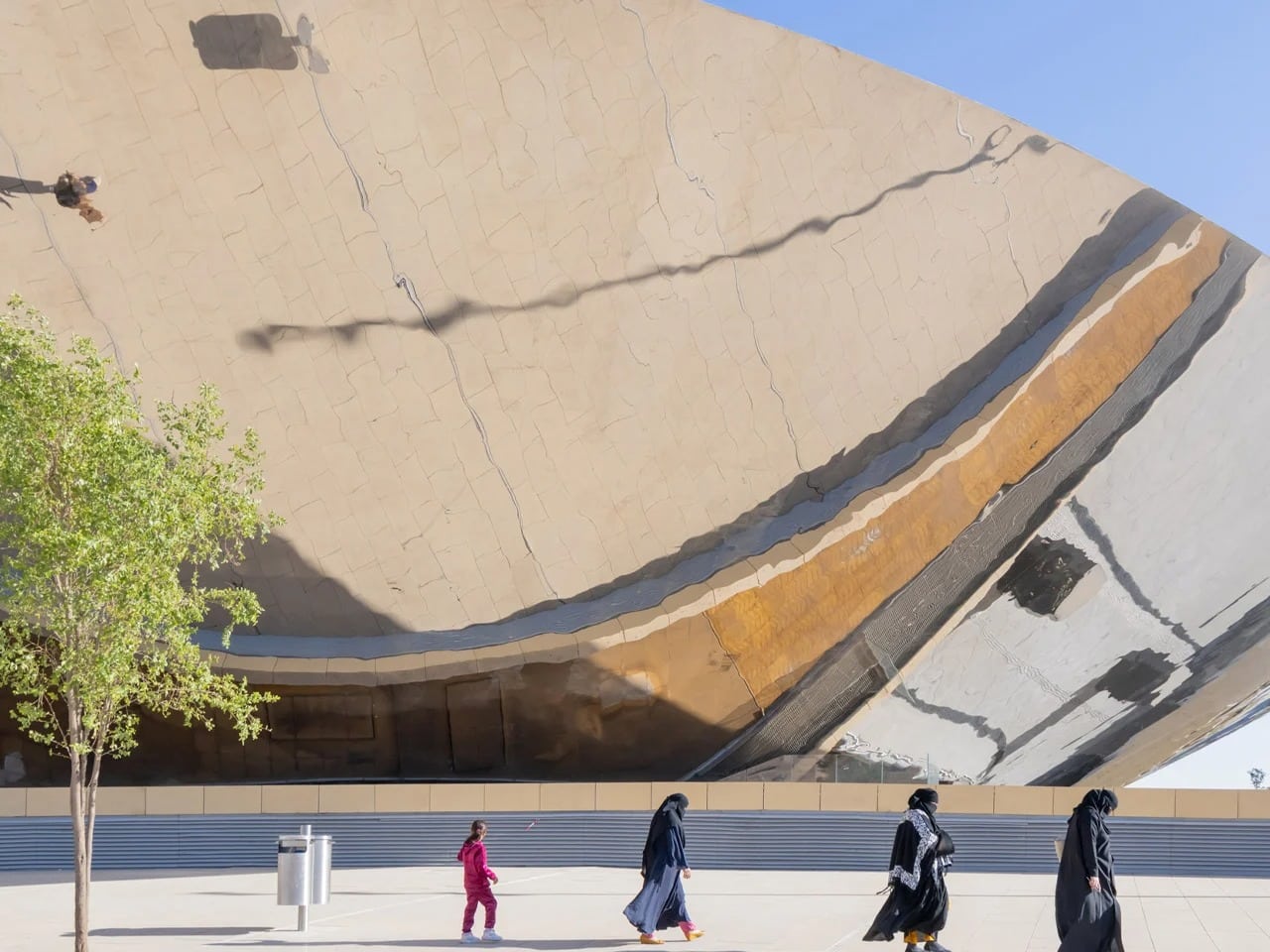
An intriguing architectural phenomenon sometimes occurs in modern transit stations, where design can create a visual experience that makes the city appear to reflect itself onto commuters. In one station, a wide canopy made of stainless steel with a mirror-polished finish was used, allowing a 360-degree reflection of the surrounding urban landscape to hover above passengers’ heads. This phenomenon is not limited to visual beauty; it also creates a simultaneously disorienting and dazzling sensory experience, enriching the traveler’s spatial awareness.
The Importance of Design in the Urban Context
This case demonstrates how stations can be more than mere transit points; they become part of the urban fabric and reflect the city’s historical and social context. When designing a station located in a historic area or near significant cultural sites, balancing modernity with architectural sensitivity becomes essential. Smart designs consider not only passenger flow and efficiency but also their emotional interaction with the space.
The Role of Stations in Transporting Large Numbers of Passengers
Major stations within public transit networks play a pivotal role in facilitating the daily movement of millions of passengers. Their design is not limited to infrastructure alone but also encompasses the passenger experience and their interaction with the urban environment, making each station an opportunity to rethink the relationship between the city and its inhabitants.


The Concept of Stations as Open Urban Plazas
Some modern stations aim to go beyond being mere transit points, transforming into open urban spaces that dissolve the traditional boundaries between the city and underground transportation. In these models, wide, mirror-polished canopies are used to create a living reflection of the city, so that the flow of urban life is mirrored above passengers, while simultaneously reflecting underground activity outward. This technique enhances the traveler’s spatial perception, turning the station into an “urban lens” that visually connects the different levels of the city in an innovative way.
Guiding Passenger Flow and the Experience of Natural Descent
Sloped floors and gradual internal gradients play a fundamental role in smoothly guiding passengers toward the heart of the station. The gradual design not only facilitates movement but also creates a sensory experience that links the upper open space with the interior areas, making the descent toward inner corridors feel natural and harmonized with foot traffic.
Integrating Nature and Sustainability Underground
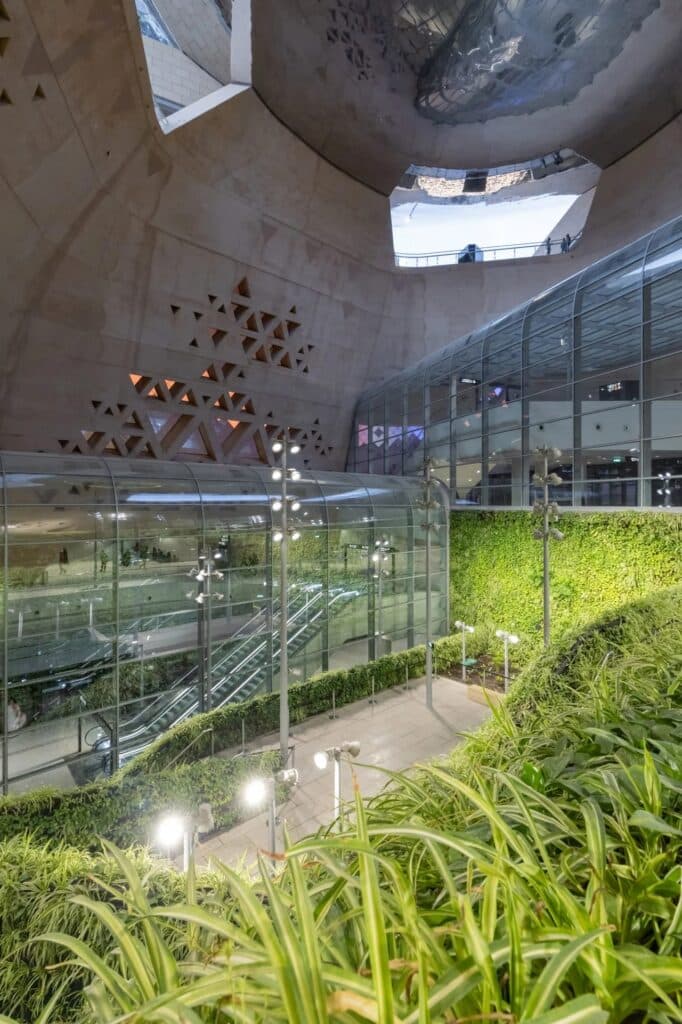
One of the most notable innovations in modern station design is the integration of green spaces underground. These can include sunken gardens that provide a cool, comfortable refuge in hot, arid urban environments. Additionally, native plants, natural ventilation, and photovoltaic panels contribute to environmental sustainability, transforming these elements from purely aesthetic features into part of a comprehensive ecological strategy aimed at enhancing the quality of life within the station.


Appreciating Architecture in Transit Stations
Recent experiences in transit station design demonstrate how some buildings can stand out not only for their practical function but also for their architectural and cultural value. Global awards and recognitions, such as the Prix Versailles, highlight innovative designs that transform stations into inspiring urban spaces, where infrastructure interacts with the community in ways that go beyond basic transportation functions.
Stations as Civic Spaces
Carefully designed stations can be regarded as more than mere transit points; they are true civic spaces. Smart design transforms infrastructure into an architectural element that adds cultural and aesthetic dimensions to the city, providing passengers with a sensory and emotional experience that goes beyond simply moving from one point to another. In this way, the station becomes part of the city’s identity and contributes to enhancing the public architectural value of the community.


✦ ArchUp Editorial Insight
The construction of Qasr AlHokm Station represents an expected outcome of capital allocation directed toward high-capacity transit nodes within Riyadh’s urban fabric. The project was driven by public investment requirements and projected returns based on passenger density, while regulatory constraints related to safety, challenges in integrating underground and surface flows, and cycles of local labor employment negotiated through union contracts formed the primary points of friction.
The spatial result manifests as a multi-layered movement system, where reflective canopies and sloped corridors function not as a deliberate visual display but as solutions to competing pressures: effectively distributing passenger flows, maintaining continuity across programmatic zones, and alleviating operational bottlenecks. Reflective surfaces and expansive open spaces serve as tools for spatial segmentation and for highlighting the hierarchical sequencing of population units, demonstrating that the station’s apparent complexity is a direct representation of financial and urban pressures rather than an independent architectural decision.