Rammed Earth Resort Opens on Remote Japanese Island in Seto Inland Sea

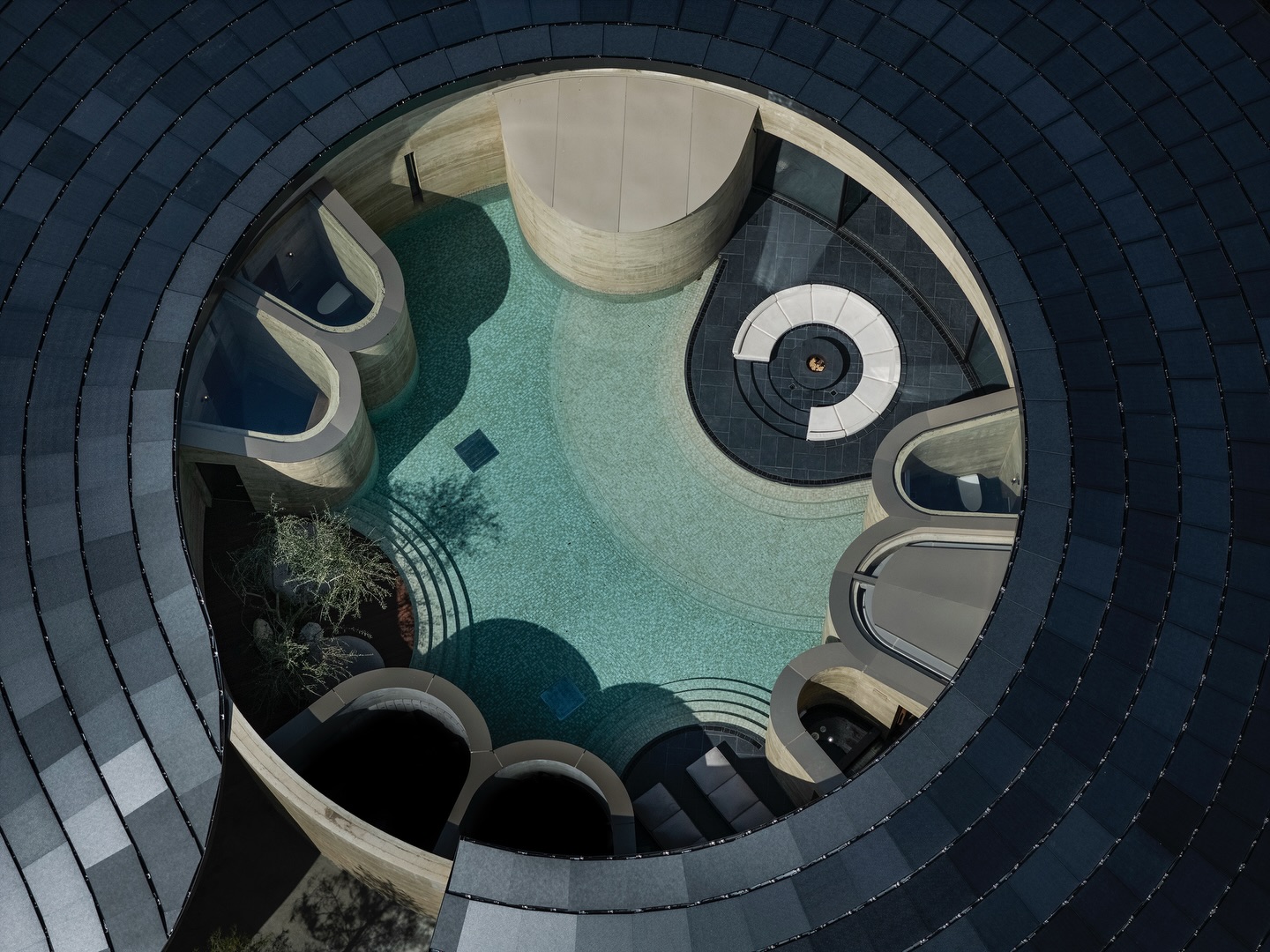
A new resort featuring three villas and a beach terrace has opened on Sagishima, a remote island in Japan’s Seto Inland Sea. The project uses traditional rammed earth construction techniques with soil excavated directly from the 30,000-square-meter site.
Traditional Building Materials Meet Modern Design
NOT A HOTEL Setouchi showcases building materials deeply rooted in traditional practices. The pavilions utilize rammed earth walls constructed from on-site soil, creating buildings that blend into the mountainous terrain. This technique reduces material transportation needs while connecting the structures to their immediate environment.
The resort comprises four distinct pavilions that follow the island’s dramatic topography. Moreover, each structure offers different viewing angles of the surrounding landscape, ranging from 90 to 360 degrees. The architecture incorporates solar roofs alongside the earthen walls, combining renewable energy with traditional construction methods.

Site Integration in Remote Island Location
The pavilions weave through the landscape like ribbons, responding to natural hillside contours. Therefore, visitors experience both extroverted openness toward the sea views and protected private spaces enclosed by spinal walls. This design approach creates inhabited viewing platforms that frame the Seto Inland Sea archipelago.
The project represents a contrast between Scandinavian and Japanese design principles. However, the structures maintain cohesion through their shared materiality and site-specific approach. The beach terrace restaurant completes the resort complex, carved into the hillside terrain.

Sustainability Through Local Resources
Using excavated soil as primary building materials demonstrates resource efficiency in remote locations. The rammed earth technique provides thermal mass while eliminating the need for imported materials. Meanwhile, the solar roof systems contribute to the project’s energy needs, addressing sustainability in island environments.
The resort location in the Seto Inland Sea presents both opportunities and challenges for construction. The remote island setting required careful planning for material logistics and construction sequencing. Nevertheless, the project team successfully completed the structures using primarily site-sourced materials.

A Quick Architectural Snapshot
NOT A HOTEL Setouchi features three villas and a beach restaurant across 30,000 square meters on Sagishima island. Rammed earth walls from excavated soil create buildings that follow mountainous terrain. Solar roofs and 90 to 360-degree viewing angles characterize the architecture. The resort opened recently as news from Japan’s Seto Inland Sea.
✦ ArchUp Editorial Insight
Remote island tourism in Japan faces a fundamental tension. Visitors seek authentic cultural experiences while infrastructure costs demand premium pricing. This project responds to that economic reality through material strategy rather than imported luxury finishes.
Rammed earth construction using excavated soil addresses two pressures simultaneously. First, transportation logistics to isolated islands inflate conventional building material costs significantly. Second, wealthy travelers increasingly reject visibly expensive aesthetics in favor of perceived authenticity.
The variable viewing angles from 90 to 360 degrees suggest a tiered pricing model. Different pavilions likely command different rates based on panoramic access. Meanwhile, solar roofs reduce operational costs in locations where energy infrastructure remains limited.
This project is the logical outcome of high-end tourism economics plus remote site logistics plus market demand for experiential authenticity over visible luxury.