

Recycled Plastic and Concrete Create a Brutalist Supermarket in Mallorca

In an architectural landscape increasingly focused on sustainability and the reinvention of traditional concepts, the “Plastic Box” project in Mallorca, Spain, stands out as a bold statement. Designed by Minimal Studio, this supermarket offers more than just goods to shoppers; it provides an immersive architectural experience that challenges our perceptions of retail spaces. By embracing the principles of Brutalist architecture and fusing them with circular design, the project becomes a tangible model for how recycled materials like plastic and concrete can be transformed into a stunning and functional environment.
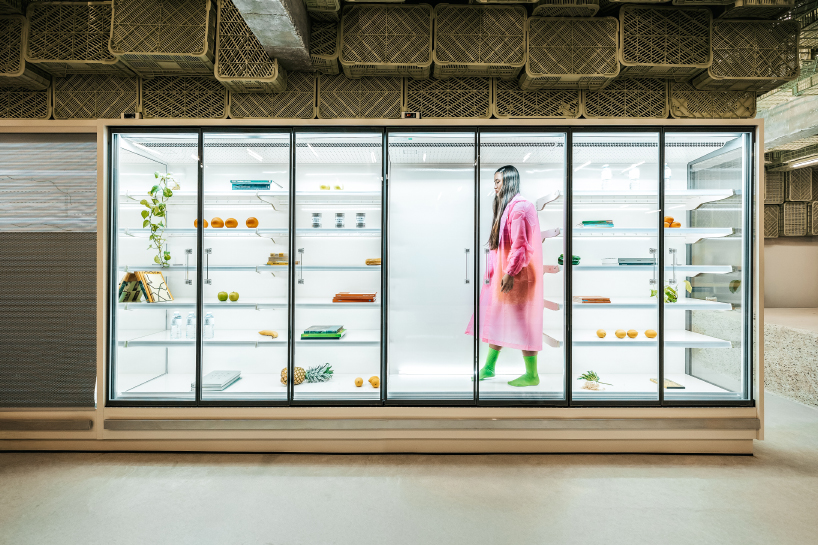
The Concrete Shell: A Resilient Facade and Clear Boundaries
The building’s exterior defines its identity at first glance. The project is enveloped in a monolithic concrete shell, forming a solid crust that suggests robustness and longevity. This shell not only serves a structural purpose but also creates a rigorous visual frame that clearly delineates the retail space. The openings in this shell are designed to function as dark, austere “gateways,” creating an intentional and dramatic transition from the outside to the inside. This sharp contrast between the external ruggedness and the illuminated interior prepares the visitor for a unique sensory experience, emphasizing the project’s separation from the noise and context of the ordinary street.
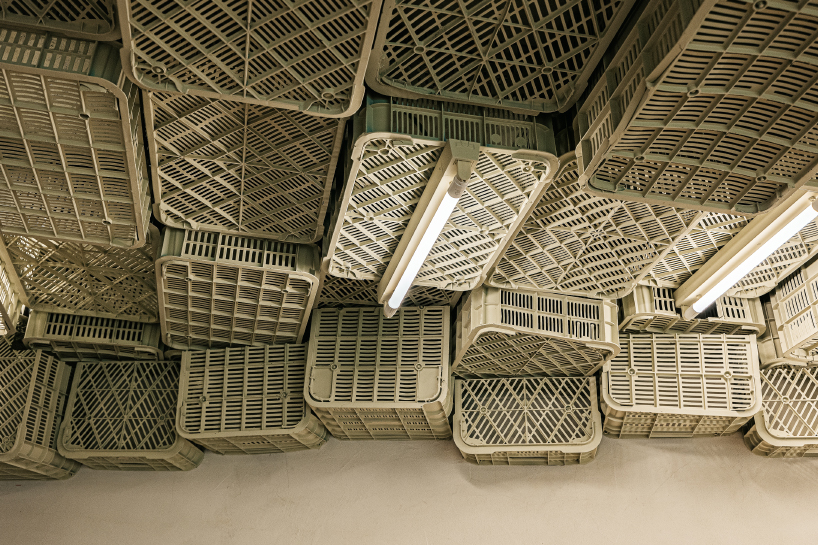
The Plastic Box Ceiling: Where Function Meets Aesthetics
The project’s ceiling is its beating heart and most prominent architectural innovation. It is not merely a cover but a vital and complex system.
· A Sustainable Modular Composition: The ceiling is assembled from over a thousand recycled plastic boxes, arranged in a modular system that facilitates installation and maintenance. This choice not only gives new life to plastic materials but also significantly reduces the project’s carbon footprint.
· A Key Player in Shaping Light: Each plastic box plays a vital role in shaping the light within the space. It filters and modulates incoming natural light, producing changing patterns of shadow and light on the floors and walls throughout the day. This dynamic lighting transforms a static space into a living, evolving environment.
· Integration of Services and Infrastructure: The role of the boxes goes beyond aesthetics to become a fully functional, integrated element. They conceal within them LED lighting systems, ventilation channels, and even rainwater collection systems. This smart integration eliminates the need for false ceilings or separate service suspensions, reinforcing the principle of “architectural honesty” championed by Brutalism
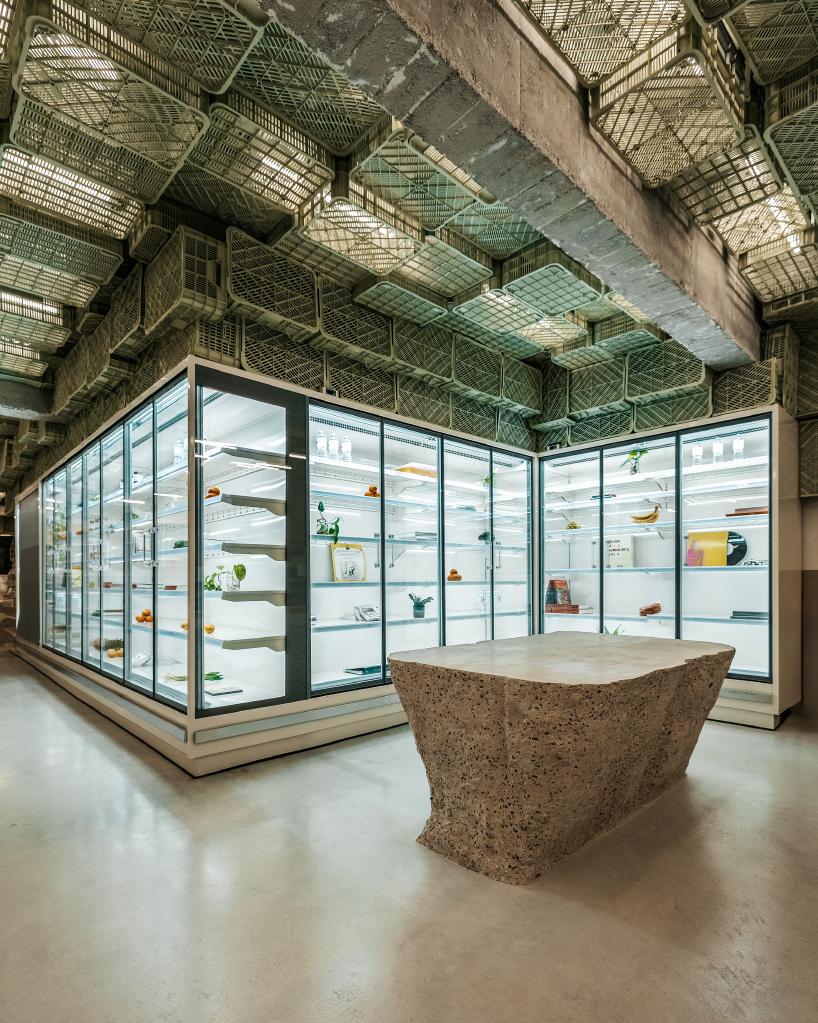
The Interior: Brutalist Honesty and a Different Shopping Experience
The philosophy of Brutalist design is clearly reflected in the interior, which embraces honesty and the raw display of materials.
· Raw and Honest Materials: Bare steel shelving with an industrial aesthetic contrasts with the smoothness of polished concrete floors, while monolithic checkout counters stand as sculptural blocks within the void. These materials, displayed with complete sincerity without falsification or excessive polishing, emphasize the beauty of structural logic and function.
· Dramatic Indirect Lighting: Instead of relying on direct, bright commercial lighting, the design uses indirect lighting emitted from within the ceiling boxes. This method illuminates products dramatically through plays of shadow and contrast, creating a calm and focused atmosphere, turning the act of shopping from a traditional consumer activity into a rich visual and sensory experience.
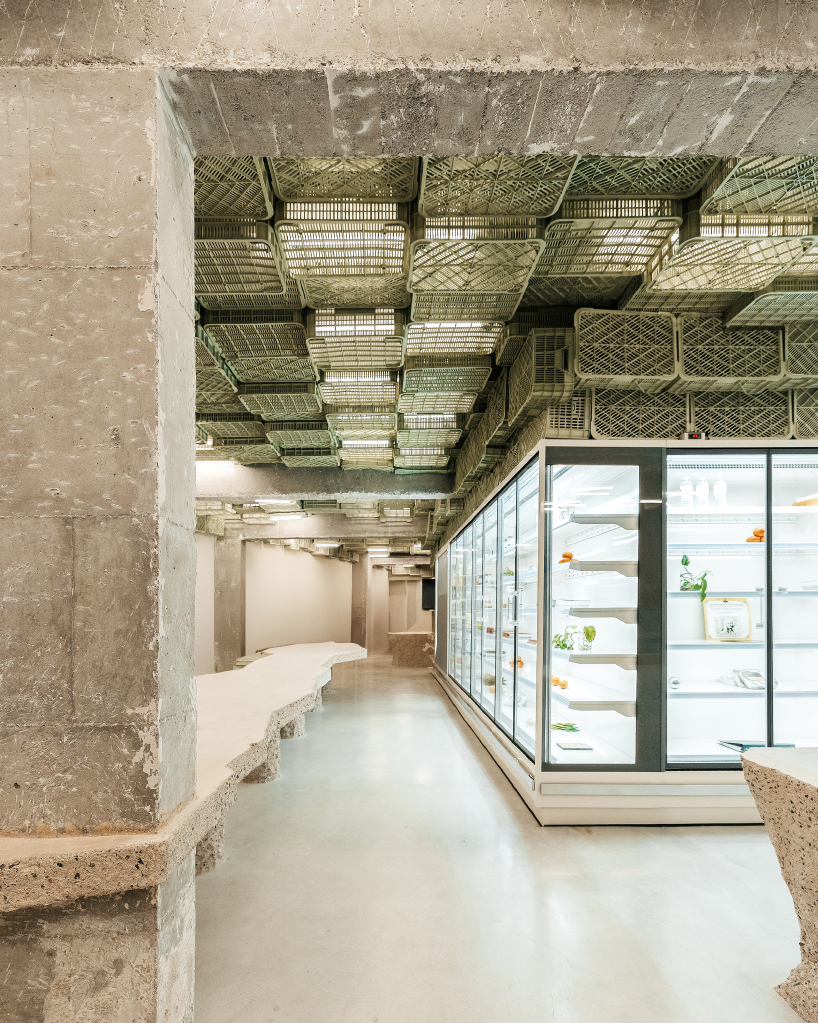
Challenging Conventions: A Contemporary Brutalist Legacy
By choosing the name “Plastic Box,” the designers invoke the legacy of Brutalist architecture, which celebrates function and basic materials. However, the project does not mimic the past; it evolves it. The use of recycled plastic as a key player in the ceiling is a contemporary reinterpretation of the principle of “structural honesty.” By challenging the traditional standards of retail design, which often favor gloss and bright colors, this supermarket presents an alternative that focuses on sustainability, material exploration, and the experiential value of architectural space itself.
✦ Archup Editorial Insight
The project presents an architectural approach that redefines the supermarket space by merging Brutalist principles with circular design, using recycled materials like plastic and concrete. The enclosed concrete shell establishes a limited relationship with the external surroundings, restricting visual and physical integration with its urban context in Mallorca and isolating the internal experience from its environment. The complex modular ceiling, relying on the repetition of the plastic unit, may create a sense of monotony in the user’s spatial experience, while the density of the suspended structural and service elements risks generating a visually cluttered interior space. However, the ceiling’s structural unit successfully achieves notable functional efficiency by cohesively integrating lighting, ventilation, and water drainage systems into a unified whole.
Brought to you by the ArchUp Editorial Team
Inspiration starts here. Dive deeper into Architecture, Interior Design, Research, Cities, Design, and cutting-edge Projectson ArchUp.


