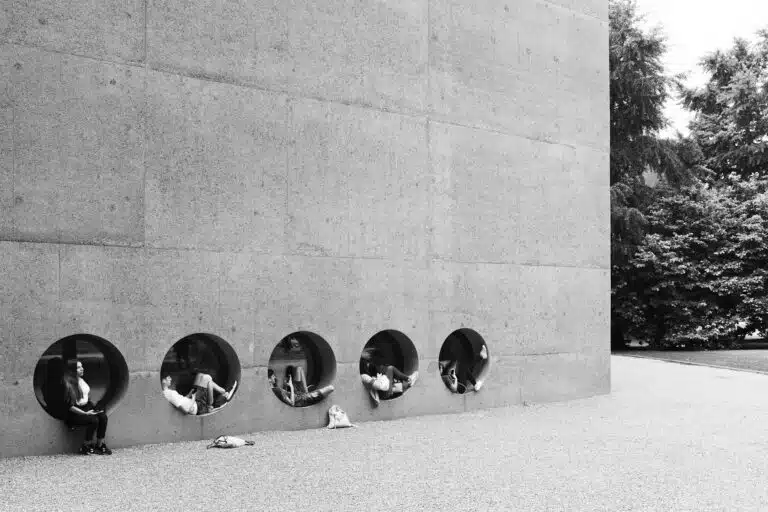
Reimagining the Side Setback: From Passageway to Multifunctional Space

The side setbacks configure the distance that must be between the building and the side boundary of the land. Master plans, building codes, or zoning laws determine this minimum clearance to ensure the building benefits from better aeration, sunlight, and permeability. Although this feature brings several qualities to the built environment, many people do not know how to take advantage of the space given by the setback, and it often becomes just a passageway. The key is to stop seeing this as lost area and start designing it as integral, multifunctional space.
Integration With Green Space
Mainly at ground level, the boundary of the land forms the contact with the outside. Therefore, in addition to studying the material, texture, and color of this wall, creating a landscape project can greatly increase the spatial quality of both the side setback and the internal space in constant contact with it. Thinking of a green perimeter brings nature closer to the resident, offering biophilic benefits and helping to maintain the required permeable area for rainwater absorption. Another option is to insert large retractable openings that allow the physical union between internal and external space, creating an expanded environment.

Meeting Places and Social Space
Backyards, balconies, and barbecue areas are all essential social space in Brazilian culture. With that in mind, side setbacks can be designed to expand these environments and be used as outdoor living space. To make this space more comfortable, pay attention to materials, textures, and lighting design.

Water Presence
In architecture, water is an element that can evoke feelings of calmness and well-being while also benefiting thermal and acoustic comfort. A reflecting pool can become the protagonist of an environment, even when placed in the space of the side setback. For those who wish to have a swimming pool, a single lane can be designed to make better use of that space.

Other Possibilities for the Space
According to local building codes, it may be possible to add coverings to the lateral setback, transforming it into a protected, multipurpose space for living, meeting, gardening, or storage. It is also possible to imagine an architectural project where the bulk of the house is deconstructed to incorporate the side setbacks into various patios and open areas as a core part of the design. Thus, the setbacks are not seen as a hallway but as integrated, valuable space within the whole house.

✦ ArchUp Editorial Insight
This article effectively argues that the underutilized side setback should be re-envisioned as valuable multifunctional space rather than a mere regulatory obligation, outlining creative strategies from landscaping to flexible covers to achieve this. The critique, however, is that the piece remains somewhat theoretical; it would benefit from a stronger practical call to action, such as advising readers to first consult a specific professional like an architect or surveyor to understand their plot’s unique constraints before ideating. Despite this, its greatest strength is its empowering shift in perspective, successfully transforming the reader’s view of the setback from a negative, empty obligation into a positive canvas of architectural opportunity.
Brought to you by the ArchUp Editorial Team
Inspiration starts here. Dive deeper into Architecture, Interior Design, Research, Cities, Design, and cutting-edge Projectson ArchUp.