Reviving Spatial Memory: Clara Campoamor Square in San Silvestre, a Model for Rooted Urban Design

Architectural Heritage: The Rural Imprint on the Urban Fabric
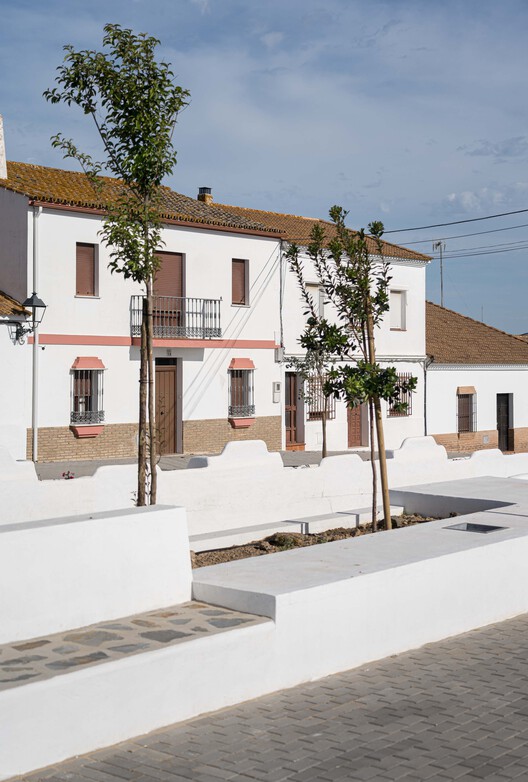
The authentic features of the Spanish countryside extend throughout the surroundings of San Silvestre de Guzmán, where ancient stone fences, shale and lime walls, historic mills, clear water troughs, and wells form a unique natural and cultural landscape. These elements are not just archaeological landmarks but living testimony to age-old construction traditions, closely linked to the control of the territory and the organization of agricultural and livestock activities that shaped the identity of the Andévalo region. Today, this spatial memory is alive in the town’s public spaces, where these anonymous fences seamlessly transform into road boundaries, comfortable benches for rest, or planters adorning the streets—the same revitalization principle upon which the Clara Campoamor Square redevelopment project is based.
Intervention Philosophy: Connection, Not Separation
The project does not aim to impose a separate, new entity but focuses on creating a new “border element” for the square. This element works to achieve an organic connection with the existing architectural and natural features, aiming to define the boundaries of an open urban space that is simultaneously an integral part of the broader urban fabric of San Silvestre. This design strategy creates a multi-functional space that blends aesthetics and utility, where essential components like flowing water in a fountain, benches designed for comfort and socializing, and a selection of native plants are integrated to serve residents and visitors alike.
Addressing Urban Challenges: A Natural Barrier Against Noise and Pollution
In facing the challenges of noise and pollution from vehicle traffic, the design offers an intelligent solution based on creating multi-functional barrier elements. These are not just traditional fences but structures that naturally integrate with seating areas, providing protection and privacy. The project also dedicates planters for native trees and shrubs of the Andévalo region, such as the Strawberry Tree (Arbutus unedo), Holm Oak (Quercus ilex), and Rosemary (Rosmarinus officinalis), which not only enhance local biodiversity but also contribute to air purification. Additionally, water points and comfortable spots dedicated to observing and contemplating the surrounding natural landscape have been designated.
The Square’s Composition: An Earthly Carpet Open to the Community
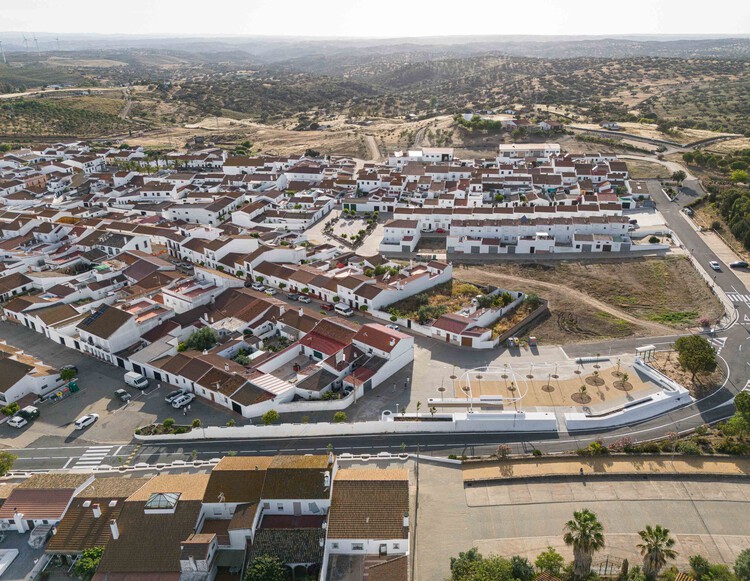
The square’s pavement is designed as an “earthen carpet” of permeable tiles, a sustainable technique that allows for natural rainwater drainage, reducing surface runoff and enhancing groundwater recharge. This carpet outlines a “social interaction zone,” characterized by a visual and spatial opening towards the heart of the town, while intentionally closing off at the road’s end to create a sense of intimacy and containment.
Resting Benches and Natural Shading: The Vegetal Pergola
Alongside the newly planted trees, a long bench is arranged, providing ample space for rest and gatherings. At its base, a layer of fertile soil is dedicated to supporting flowering and aromatic shrubs, adding a palette of bright colors, fragrant scents, and varied textures to the space. Above all this, the design proposes a “vegetal pergola,” a structure that allows climbing plants to grow over it, aiming to create a natural canopy that provides protection from the sun and generates shaded areas welcoming visitors during periods of high summer temperatures.
A Final Touch: Water and Greenery Under the Pine Shades
Under the shade of the existing pine trees, which were preserved as a natural focal point in the square, the project is completed with a final touch inspired by the region’s elements. A small water feature has been added alongside a water pillar, working together to introduce the elements of sound and moisture into the atmosphere, creating a comfortable sensory environment in harmony with nature. This tranquil space, located on the edge of the urban area, becomes a sanctuary for relaxation and contemplation, concluding the visitor’s journey in this site that blends the authenticity of heritage with the modernity of sustainability.

✦ Archup Editorial Insight
The project addresses the strategy of revitalizing public spaces by integrating heritage elements into a contemporary urban setting. A question arises regarding the effectiveness of the intentional closure of the road’s end in achieving integration with the surrounding urban fabric, as this cut might impede the continuity of movement and visual connectivity rather than enhancing it. The reliance on a vegetal pergola for shade, which requires years to grow and become functionally effective, creates a temporal gap between project completion and practical benefit. Furthermore, the concentration of multiple water and planting elements within a limited area raises considerations regarding water consumption feasibility and the challenges of long-term sustainable maintenance. On the positive side, the use of permeable paving as a solution for stormwater absorption remains a commendable aspect, effectively addressing urban drainage challenges and enhancing the efficiency of the natural water cycle on-site.
Brought to you by the ArchUp Editorial Team
Inspiration starts here. Dive deeper into Architecture, Interior Design, Research, Cities, Design, and cutting-edge Projectson ArchUp.