Ring Lunch Box: Tool Centrality and Modular Design

Design Logic Based on the Core Element
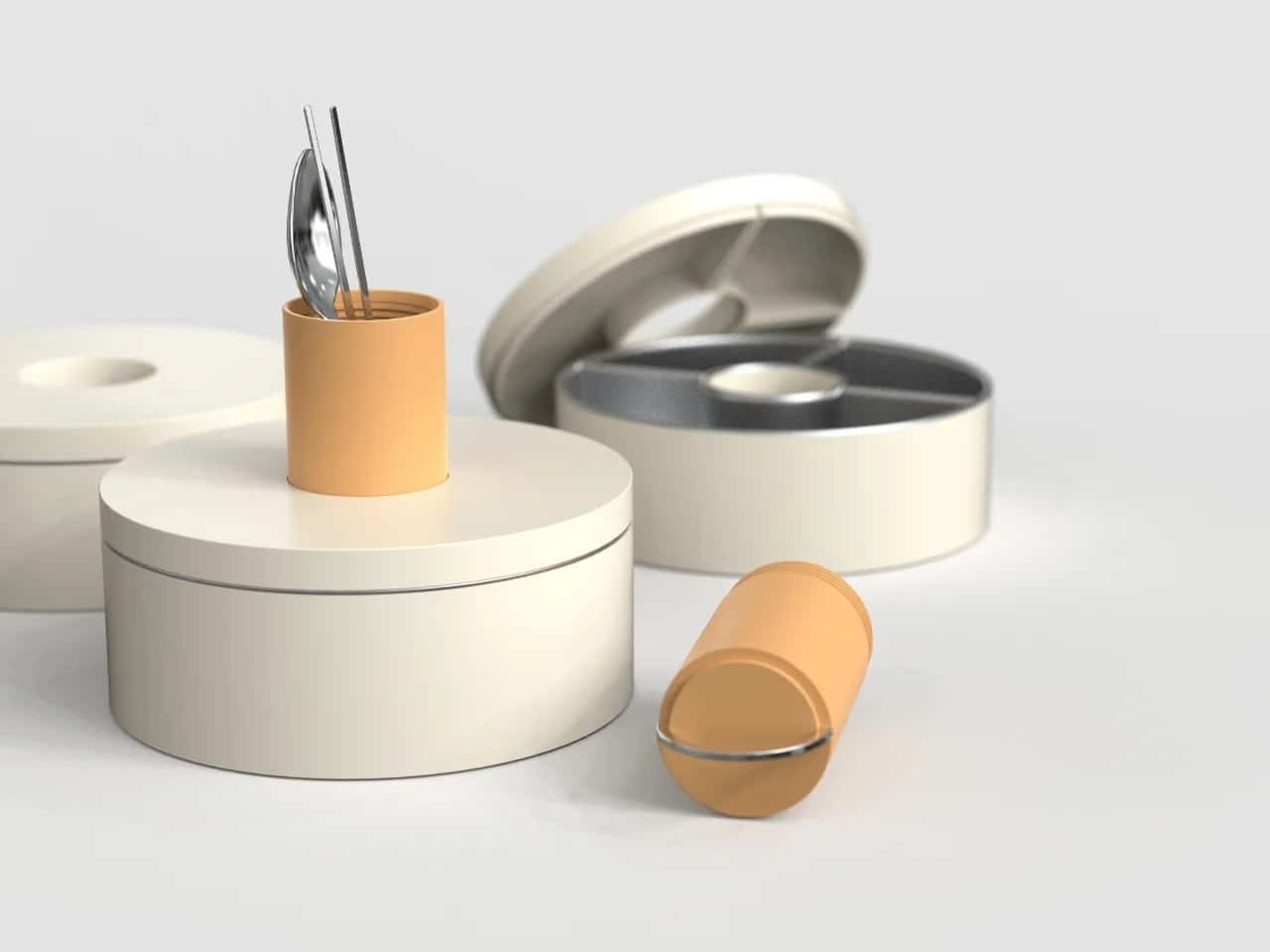
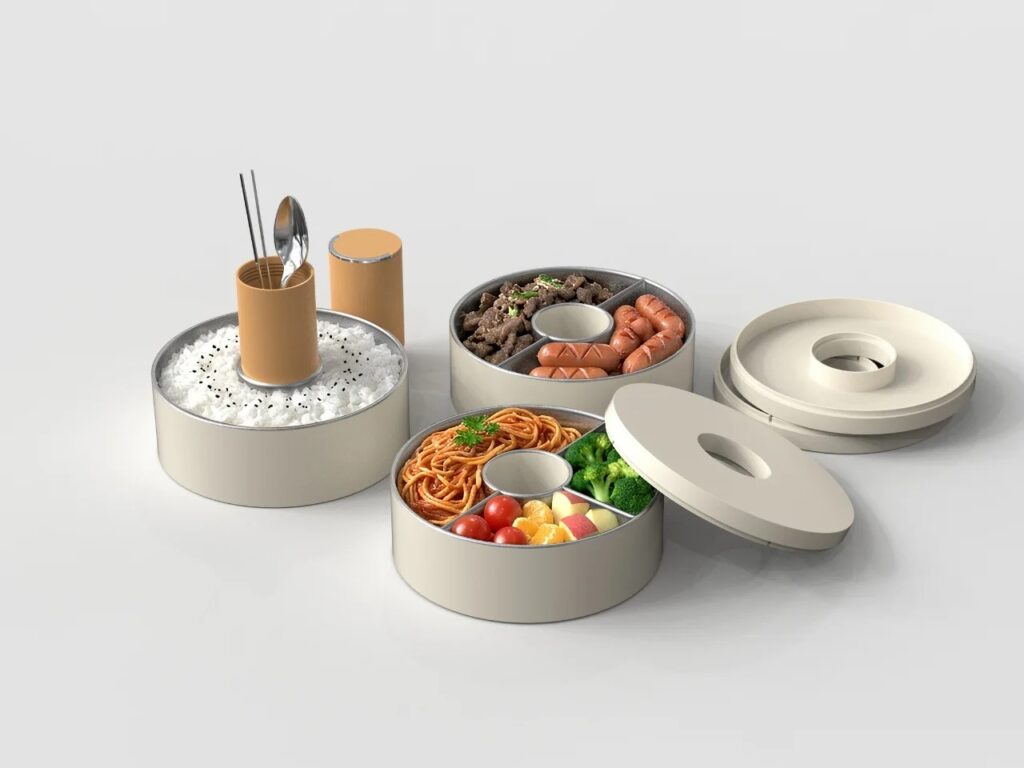
Design Logic Based on the Core Element The idea begins with the tool of use itself, rather than the content. In this case, the design starts from the spoon as a central element, around which an entire carrying system is constructed. This shift in the starting point reorders design priorities, making the organization of tools the foundation, with Architecture storage units added accordingly. In this way, the logic of dealing with everyday objects shifts from the inside out.
Modular Structure and Assembly Mechanism
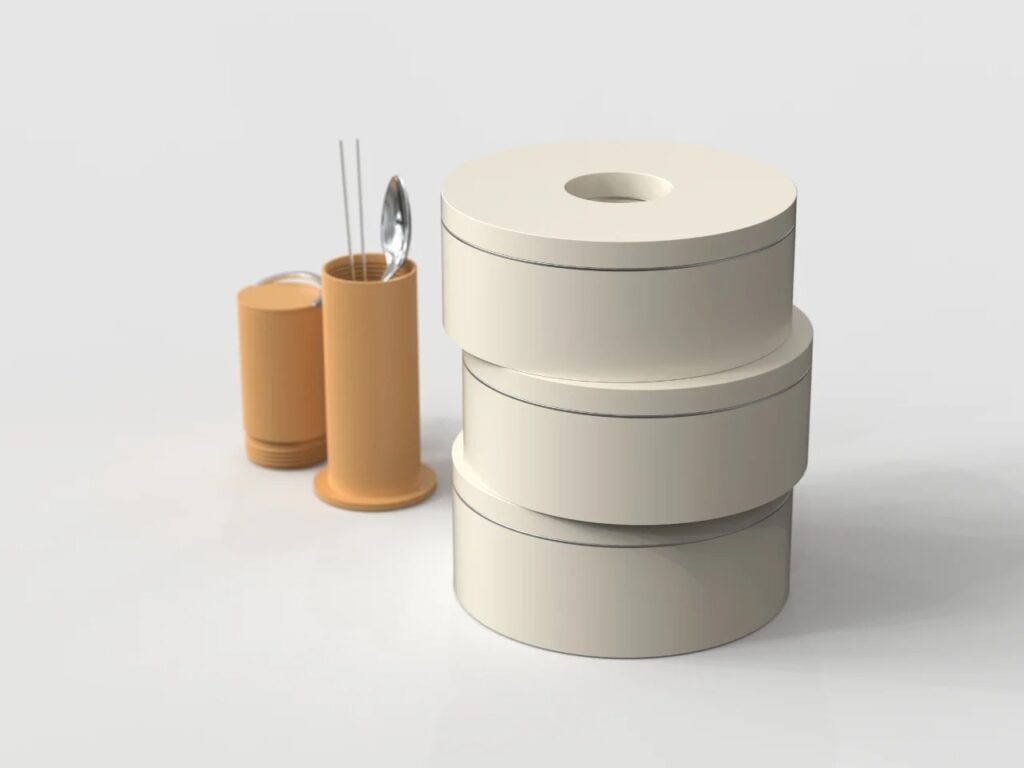
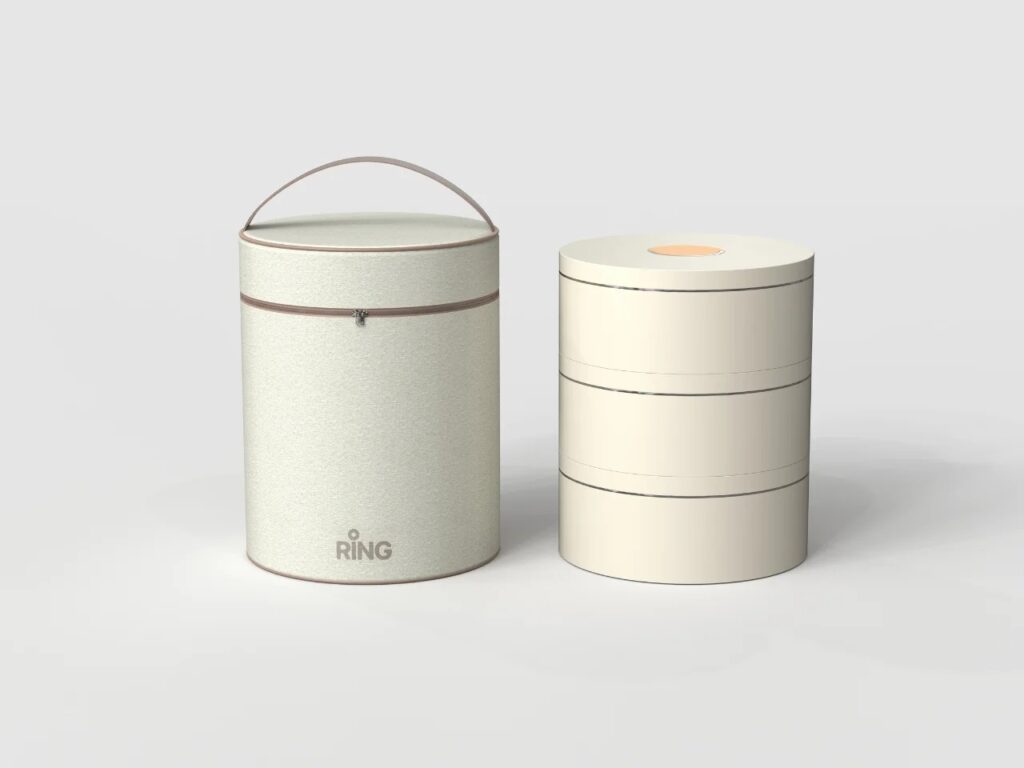
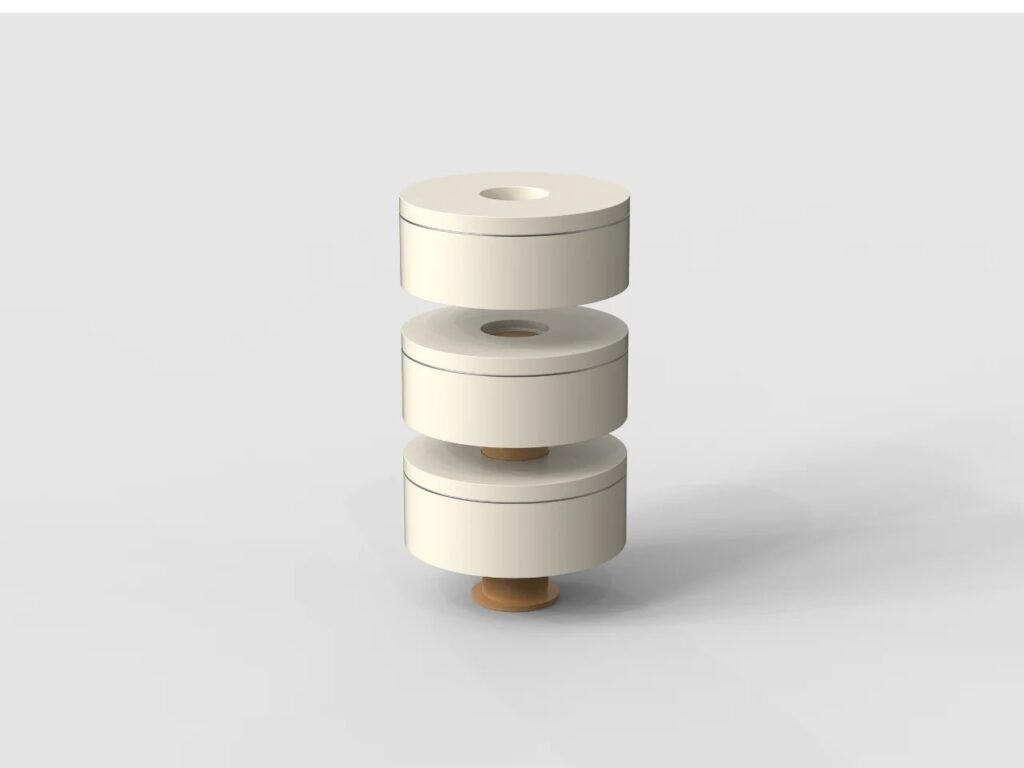
The system relies on a central cylindrical axis around which three ring-shaped containers are sequentially mounted. This configuration creates a compact structure that is easy to assemble and disassemble without complexity. The relationship between the parts is also clear, as each unit operates within a logical sequence around the center. The result is a modular system that balances stability with ease of use, without the need for complex fastening mechanisms, drawing from principles found in Construction and modular Buildings design.
Geometric Honesty and Form Simplification
The ring-shaped configuration directly reflects its functional logic, as the containers take this form because they physically surround a central element. In contrast, the cylindrical shape of the internal part responds to the function of carrying and gripping. There are no decorative elements detached from function; instead, form aligns precisely with purpose, a key trait in Interior Design. This approach highlights the value of simplification, where complexity is reduced rather than amplified, enhancing clarity of concept and efficiency of use.
Professional Recognition as an Indicator of Early Maturity
The designer Heegon Yun is presented here as a case study of an early-stage designer who already holds a record of awards such as the iF Design Student Award 2024 and the European Product Design Award 2023, in addition to reaching the finals of the Spark Design Award 2025. Such achievements are frequently covered in Architectural News and Top News. This presence should not be read as individual distinction alone, but as an indicator of conceptual clarity and the ability to validate ideas across different evaluation contexts. This is reflected in the “Ring Lunch Box” project as a practical embodiment of this design approach, relevant to Research on product logic.
Within the Context of Korean Design Culture
In a broader context, the project can be read within contemporary Korean design tendencies, which lean toward reorganizing everyday products through disciplined simplicity. This approach does not rely on attracting attention, but rather on achieving a balance between function and form in a quiet manner. From this perspective, the “Ring Lunch Box” appears as a natural extension of this direction, where performance is embodied without the need for excessive expressive elements, similar to concepts found in Cities infrastructure and Projects organization.
Tool Centrality and Modular Logic
The design reconfigures the relationship between tool and container, turning the tool from a secondary element into a structural axis around which the entire system revolves. This shift is not limited to function alone, but also affects the way the object is used. At the same time, the modular structure emerges as a practical organizing principle, where containers can be separated and used independently, making cleaning easier and allowing flexible control over quantities. In this sense, modularity here is not a theoretical idea, but a direct outcome of a clear engineering logic that reduces the likelihood of complexity or misuse, as seen in advanced Building Materials and Material Datasheets.
✦ ArchUp Editorial Insight
Ring Lunch Box functions as a structural solution within systems of standardization for everyday consumer products, where portable food carrying is reorganized according to a logic of logistical efficiency and reduced friction in eating patterns during urban mobility. The primary driver here is not aesthetic, but rather tied to production efficiency and the reduction of waste associated with using separate utensils, along with the resulting complexity in storage and the loss of components. For further reference, similar systemic thinking appears in Archive and Architecture Competitions documentation.
The regulatory constraints of mass manufacturing processes and the costs of industrial molding shape the modular ring structure, through a central axis that reduces component variability and facilitates assembly. The final outcome represents a compromise between transport requirements, cleaning cycles, and standardized consumption patterns, producing a stacked ring system that minimizes compositional disorder. In this context, the role of the designer recedes in front of the logic of production and repetitive user behavior.