Root Cabin Redefines Rural Living in Zakynthos

Integration with the Rural Context and Site Conditions
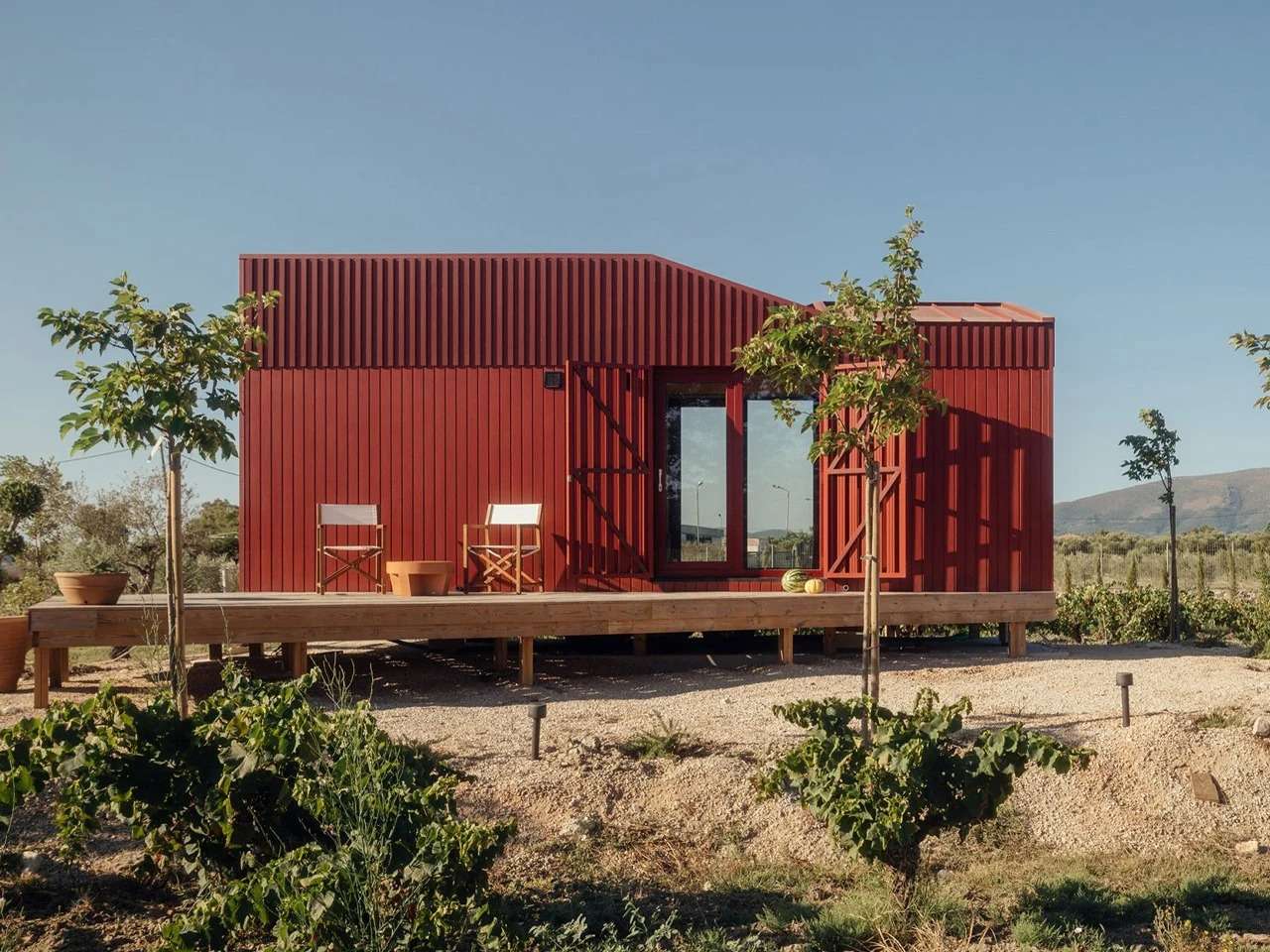
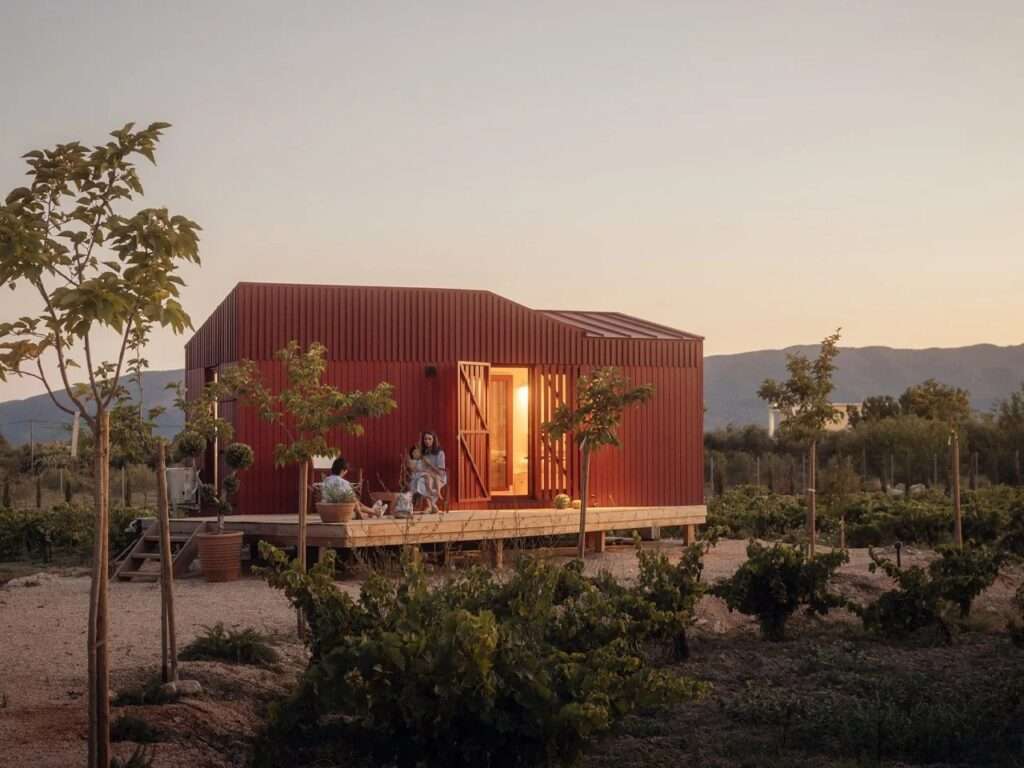
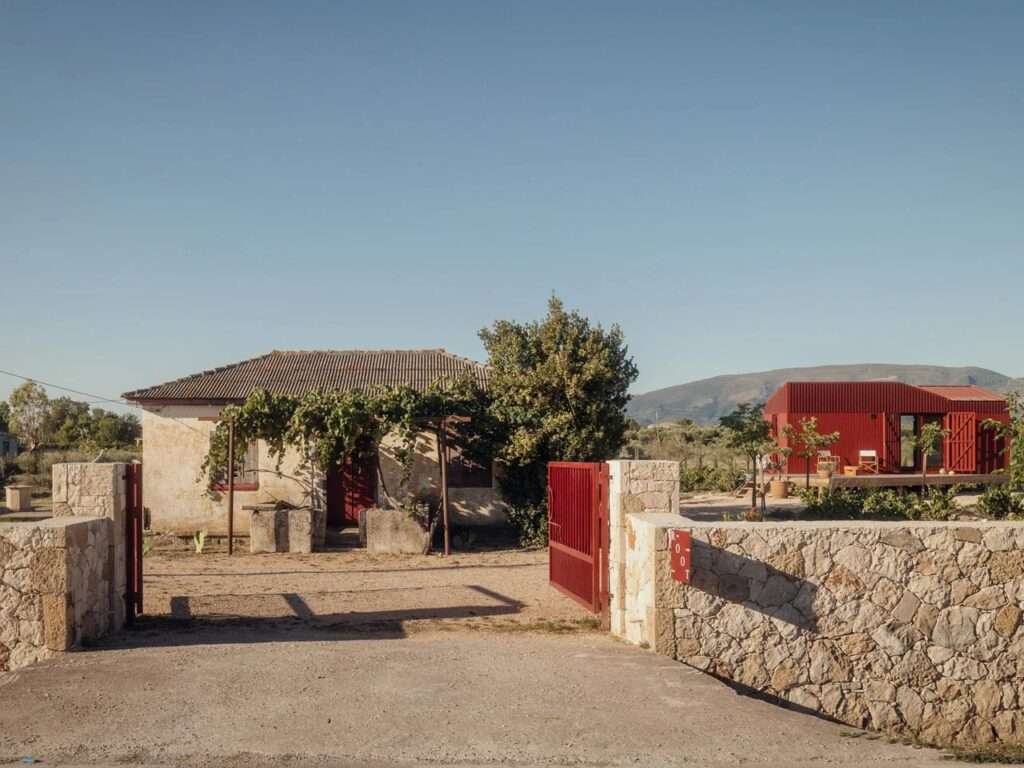
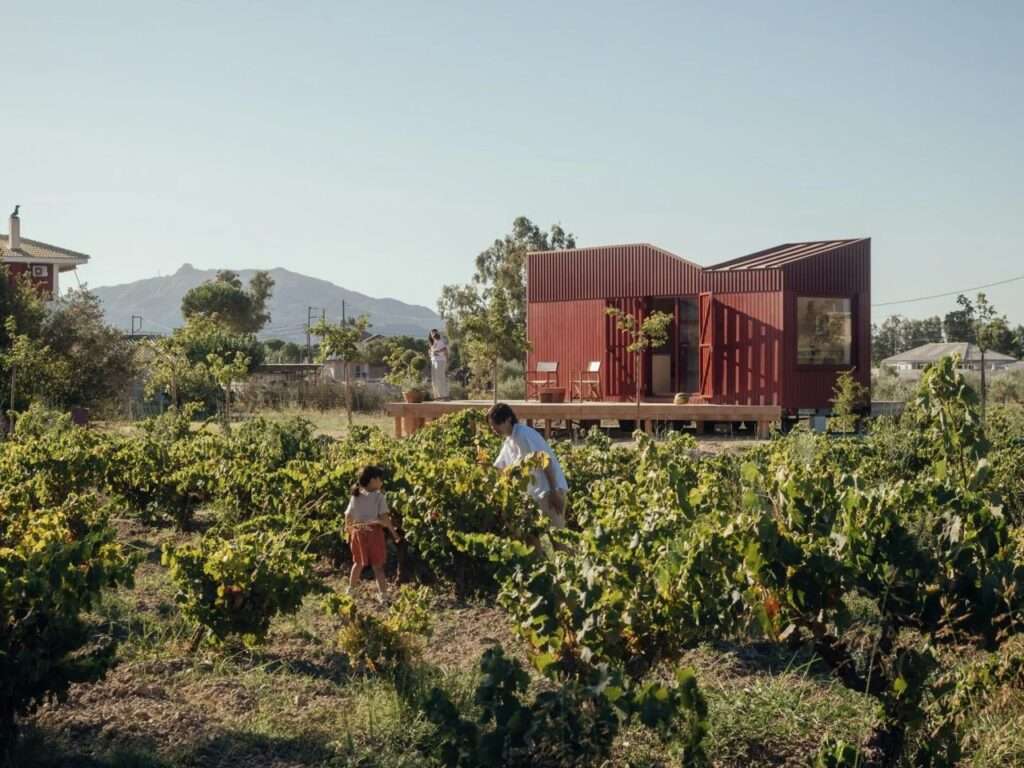
The Root Cabin case study is situated within an agricultural landscape on the island of Zakynthos, positioned among olive groves and vineyard rows. Within this context, the project adopts an approach based on integrating the structure into the existing landscape rather than imposing a separate visual presence, preserving the site’s agricultural and historical character within broader Cities and regional contexts.
Small-Scale Architecture and Rethinking Holiday Homes
The 20-square-metre cabin presents a model for compact prefabricated holiday housing. The project also raises questions regarding how the conventional form of this building typology can be reconsidered, with a focus on spatial efficiency and minimizing environmental impact through contemporary Architecture approaches.
Design Shaped by Site Characteristics
The case study developed by Kasawoo was based on creating a design derived from the site’s characteristics rather than imposing external elements onto it. As a result, the cabin was designed with compact dimensions of 2.5 × 8 metres, allowing it to integrate within vineyard rows while reducing its impact on the existing landscape fabric.
Prefabrication and Minimizing Site Intervention
The off-site construction process, followed by transporting the cabin as a fully completed unit, reflects an approach aligned with principles of prefabrication and reduced direct intervention within the surrounding environment. Its portability and ability to be repositioned further reinforce the concept of minimizing permanent impact on the land. Within this context, the case study indicates a direction focused on reducing unnecessary elements and prioritizing essential functions within the project.
The Relationship Between Architectural Form and Context
The exterior envelope utilizes deep-red timber cladding inspired by historical buildings found in Zakynthos, while the inclined rooflines correspond with the surrounding mountainous horizon. As a result, the architectural mass appears to absorb and respond to site characteristics rather than pursuing an independent visual identity through conventional Buildings strategies.
Interior Organization and Integrated Functions
Internally, the project relies on plywood surfaces to cover walls, ceilings, and integrated components, creating a unified visual and functional environment. The bed, kitchenette, sofa, and bookshelves are incorporated directly into the architectural structure itself, representing an approach aimed at maximizing the use of limited space and organizing functions within a compact footprint through principles associated with Interior Design.

Spatial Organization and Relationship with the Surrounding Landscape
The interior layout distributes the bedroom and bathroom at opposite ends of the cabin, positioning a central living space between them. Large sliding glass doors further strengthen both visual and physical connections between the interior environment and the surrounding natural landscape, creating continuity between inside and outside despite the limited spatial dimensions.
Materials and Colors as a Means of Connecting with Place
Certain color elements originating from the exterior continue into the interior space, while the bathroom incorporates blue tones associated with the surrounding local context. In addition, elements crafted by local artisans, including ceramics and textiles, introduce another layer of connection to place through the integration of locally rooted materials and objects within the design.
Operational Independence and Reduced Reliance on Conventional Systems
The cabin relies on passive ventilation systems and operable openings that reduce dependence on conventional infrastructure networks. Within this approach, the concept of comfort becomes associated with spatial quality and the efficiency of architectural elements rather than increased floor area or unnecessary additions.


✦ ArchUp Editorial Insight
Root Cabin operates as a spatial product shaped by a logic of compliance within Zakynthos’ rural tourism market, where inherited agricultural land ownership intersects with growing seasonal demand for short-term accommodation within an increasingly restrictive regulatory environment for construction. The driving mechanism lies in a cross-border supply chain between Romania and Greece, enabling the redistribution of labor and manufacturing costs within a prefabrication model aligned with the transportation requirements of modular units. Points of friction emerge through land subdivision restrictions, reduced infrastructure dependency requirements, and insurance standards associated with semi-autonomous accommodation models, collectively pushing toward minimal site intervention. These pressures ultimately translate into a transportable spatial configuration that consolidates residential functions within a standardized envelope, transforming architecture into a mobile market asset rather than a permanent attachment to the ground.