RTX Spark Arrives: What Changes for Architectural Rendering and Design?

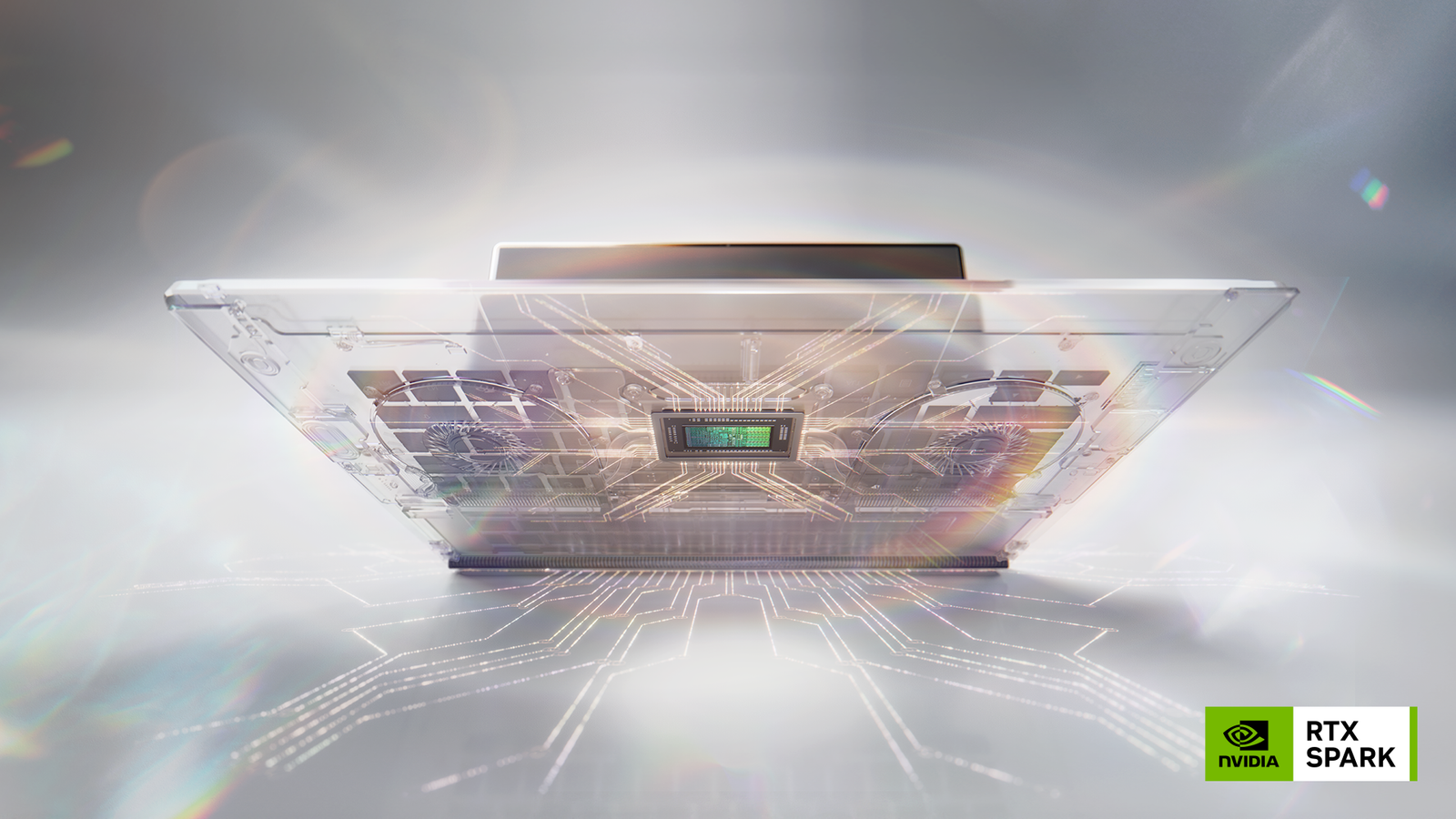
NVIDIA announced the availability of RTX Spark laptops on October 16, 2026, following the platform’s unveiling on May 31. For architecture studios, the news is not the end of the workstation. It is the arrival of another way to bring substantial graphics memory and local AI processing into a portable computer.
The company describes the platform as bringing together thirty years of NVIDIA innovation. That is a statement about accumulated technology, not evidence that this particular chip spent thirty years in development.
What the specifications actually mean
NVIDIA lists up to 128GB of unified memory and up to one petaflop of FP4 AI performance. FP4 describes a low-precision AI computing format: the figure is not a rendering benchmark or a promise that every architectural application will accelerate equally. Nor does the announcement establish exact equivalence to an RTX 5070 across workloads.
Unified memory changes how capacity is shared, not simply how much is installed. Microsoft describes changes to Windows that increase the memory accessible to the GPU. For visualisation teams, the potential value is accommodating demanding scenes without treating a separate graphics card’s memory as the only available pool. Capacity, however, is not the same as throughput: fitting a scene and completing its render quickly are different tests.
The architectural test is the whole workflow
Microsoft identifies the platform as Arm-based and describes Prism emulation for x86 software. A studio should therefore test its actual project workflow rather than infer universal compatibility from the Windows name. That means checking the modelling application, render engine, plugins, asset libraries, export formats and peripheral drivers as a connected chain.
A useful trial would open a representative project, revise geometry, refresh linked files and produce a final image at the office’s normal quality settings. The comparison should record completion time, stability and sustained performance both plugged in and on battery. A brief demonstration cannot settle those questions for every laptop chassis or software version.
Local AI changes where work happens, not who checks it
NVIDIA presents local models and agents as a central use case. In architectural practice, possible applications include searching an approved project archive, preparing scripts or generating preliminary visual studies. These are potential workflows, not results independently demonstrated by ArchUp on this hardware.
Local processing can reduce reliance on remote inference, but “local” is not a blanket guarantee of free software, offline operation or confidentiality. A studio still needs to check model licences, software subscriptions, network connections and agent permissions. An assistant is software running on the hardware, not a complete professional service embedded permanently in silicon. Generated drawings, quantities and design decisions still require human review.
✦ ArchUp Editorial Insight
Design offices buy computing capacity to reduce interruptions between a decision and the evidence needed to evaluate it. If a portable machine can handle a studio’s real models and visualisation tasks, it may shorten the cycle between a site visit, a design revision and a client discussion. That possibility deserves testing without declaring existing workstations obsolete. The relevant economic unit is not the chip but the completed workflow: software, staff time, compatibility, maintenance and the cost of correcting errors all belong in the comparison. Local AI also shifts responsibilities. Work that previously relied on a remote service may move onto equipment the practice must configure, secure and support itself. Greater control can be valuable, but it is not the absence of administration. For smaller studios, the opportunity is to retain more iteration close to the designer; the risk is purchasing impressive theoretical capacity that essential tools cannot use reliably. Architectural productivity should therefore be measured in dependable project decisions and completed deliverables, not the largest number on a processor specification sheet.
Sources: NVIDIA Newsroom, RTX Spark availability announcement, October 16, 2026; NVIDIA Newsroom, platform announcement, May 31, 2026; NVIDIA RTX Spark specifications, accessed October 18, 2026; Microsoft Windows Experience Blog, platform introduction, May 31, 2026. Architectural implications are ArchUp’s analysis, not an independent hardware test.
Featured image: Official illustration showing RTX Spark inside a transparent laptop chassis. © NVIDIA.