
Touch and Strut: Directing Light or Lighting the Room


A lamp can organize a room before it becomes its decorative centre. A narrow beam identifies a reading surface or a table; a luminous shade stays visible as part of the surrounding space. The Touch and Strut collections offer two different ways of making that distinction tangible, through adjustable metal heads on one side and timber frames with linen shades on the other.
Touch: direction is part of the design
Touch is made primarily from brass or steel, with cylindrical shades, slender stems and wooden accents. Its heads can pivot, bringing adjustment into the everyday use of the object rather than fixing the beam permanently to one position.
The table lamp illustrates this relationship particularly clearly. Its angled cylinder directs light toward the work surface, while the vertical support and base occupy comparatively little of the desk. The wooden detail makes the adjustment mechanism visually distinct from the metal body. The design question is not only how the lamp looks, but whether its controls remain easy to reach after books, a screen or other objects have been placed around it.

From a reading place to a shared table
The floor version stands beside seating with a small head above a thin stem. Its limited visual mass allows the window, chair and sofa to remain the principal elements of the room. Moving the head changes the relationship between the lamp and the occupied seat, so placement should be judged from the seated position as well as from across the room.

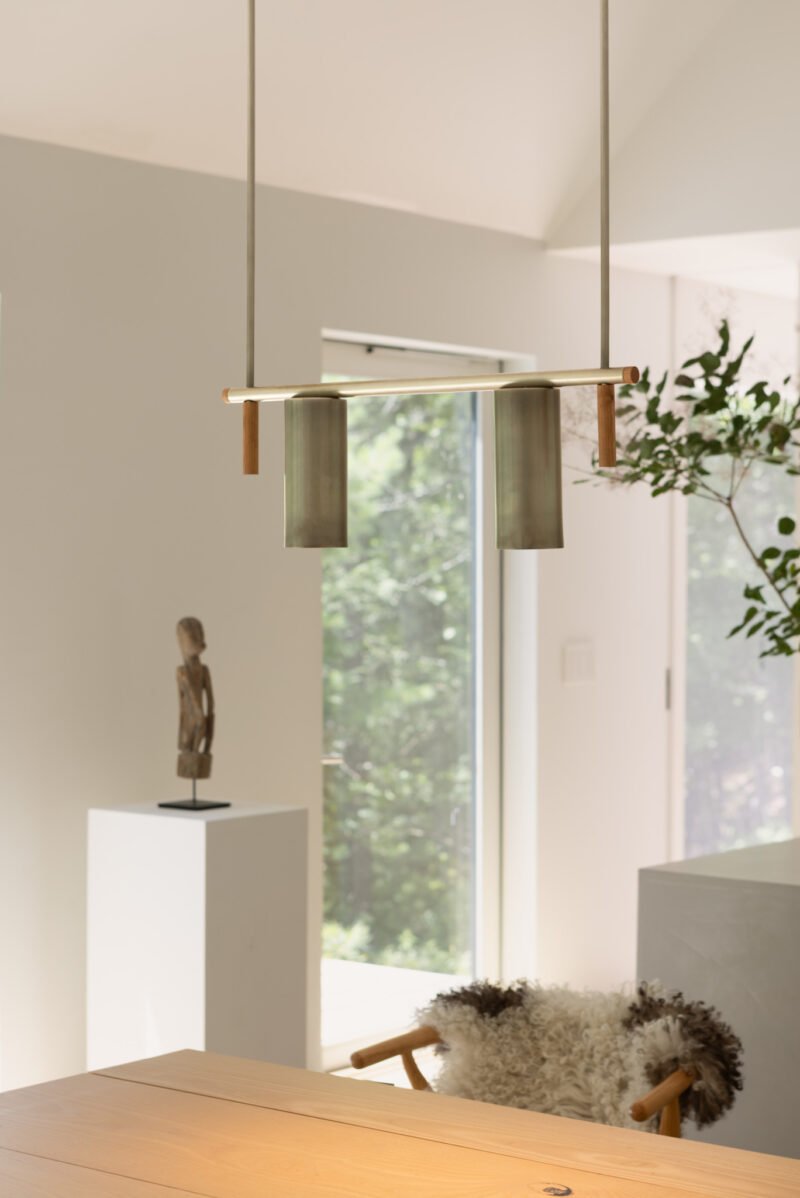
The pendant version brings two cylindrical heads together above a table. A horizontal bar establishes their relationship, while the suspension leaves the tabletop free. In the wider kitchen-and-dining view, separate pendants correspond to different surfaces. This can be read as a hierarchy of places to use, rather than a uniform ceiling pattern applied independently of the furniture.

Strut: the shade becomes a luminous object
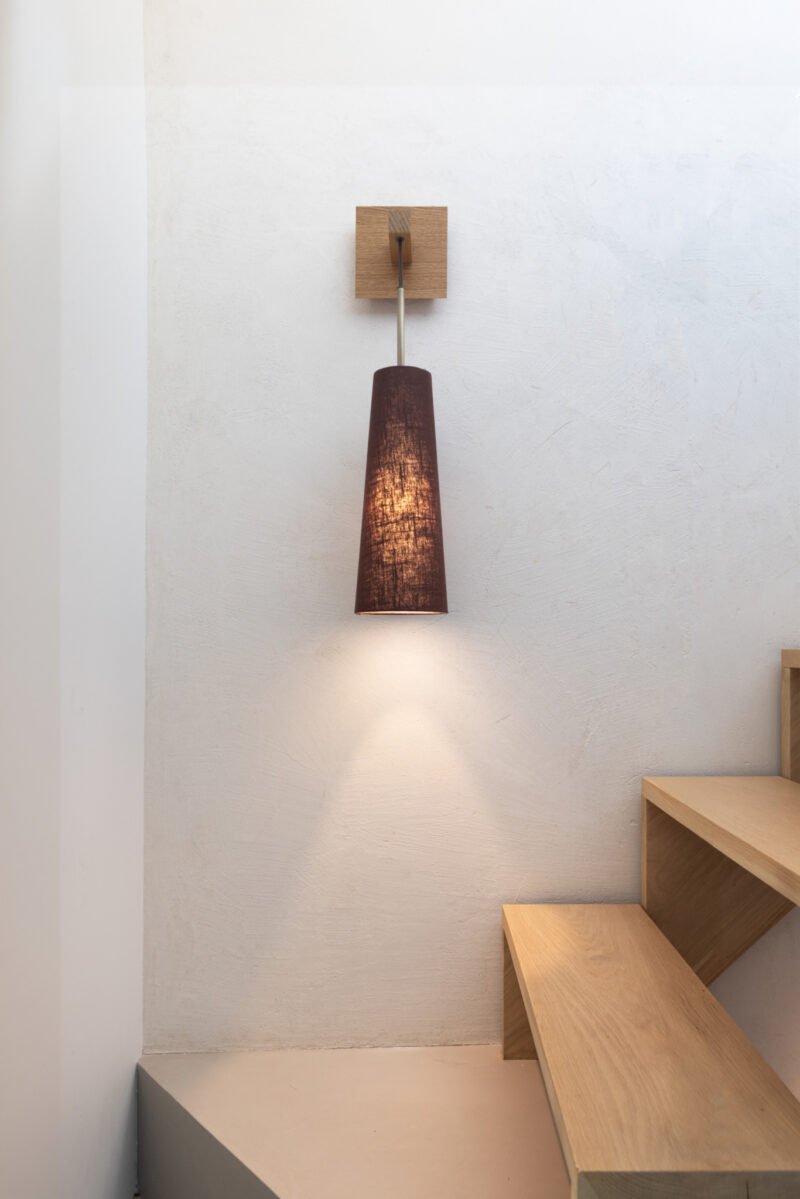
Strut combines wooden supports, restrained metal details and elongated linen shades. Unlike the more enclosed metal cylinder, the fabric shade becomes a visible part of the lit composition. The wall version sits away from a simple mounting plate, leaving a narrow gap that helps distinguish the object from the wall.
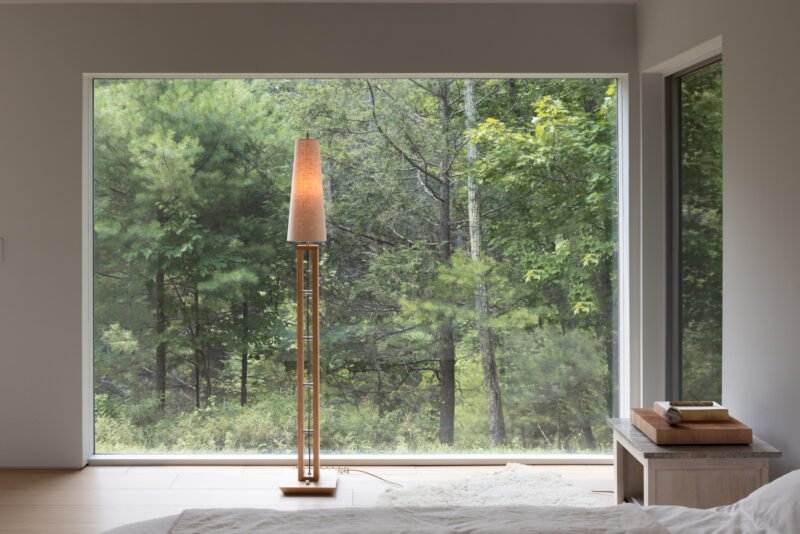
The floor version exposes its timber framework below the shade. The space between the supports is part of its outline: the lamp is not read as one continuous solid column. Against a large window, this open framework keeps the view around and through the object present.
The practical decision sits beyond the silhouette
For a real room, adjustment and maintenance deserve as much attention as finish. A movable head needs to hold its chosen position through repeated use. A fabric shade introduces a different cleaning task from a metal surface. Access to the light source, replacement parts and the controls also matters, particularly when a lamp is placed behind seating or above a regularly used table. These are specification questions, not qualities that can be settled by an atmospheric photograph.
✦ ArchUp Editorial Insight
The domestic settings shown here place reading, sitting and eating within adjoining areas, yet these activities do not ask the same thing of a light source. Touch responds with a cylindrical head that can be redirected, while Strut makes the shade itself a more visible, softly luminous presence. The spatial consequence is a separation between lighting a specific place and giving a room an evening character. ArchUp reads this contrast as more useful than treating either collection as a complete lighting solution. A focused beam can define a small working area without demanding that every surface receive equal emphasis; a shaded lamp can remain part of the room when no single task dominates. The trade-off is control. An adjustable head requires a deliberate choice of direction, and its position must be reconsidered when furniture moves. A linen shade offers a different visual effect but does not, by appearance alone, establish adequate light for detailed work. These objects therefore make their strongest architectural contribution when their placement follows the furniture, sightlines and habits of use, rather than when the room is arranged merely to display them.
Design credits: Touch and Strut by John Sorensen-Jolink / Coil + Drift. Photography: Haley Birt.


