
Salma Tower in São Paulo A Modern Model of Biophilic Architecture and Sustainable Office Spaces

Introduction
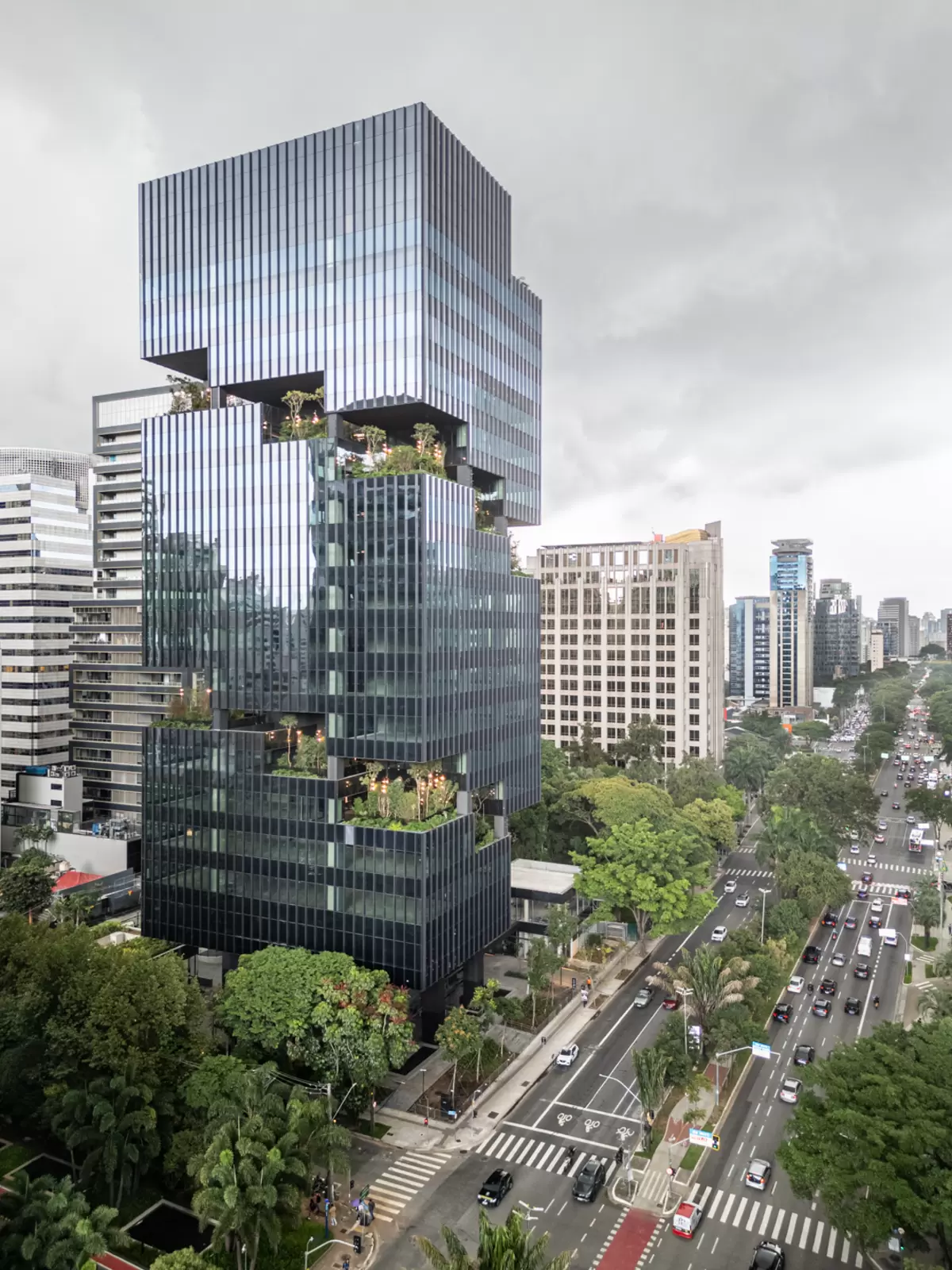
Salma Tower São Paulo represents a unique model that combines contemporary architecture with sustainability, offering a new experience for office environments. The tower integrates nature into the building through vertical forests and spiral green terraces around the central core, creating a healthy and regenerative workplace while redefining the relationship between the building and the city.
The focus keyphrase Salma Tower São Paulo appears in the introduction to reinforce SEO and highlight the architectural significance of the project.
Location and Building Type
The tower is situated in a vibrant urban area, occupying a plot that spans three main streets, with a total floor area of 36,616 m² across 16 floors and a height of 80 meters. The building is designed as a Triple-A commercial office tower, emphasizing the integration of nature into the office environment.
Design Concept and Architectural Approach
Biophilic Architecture and Reconnecting with Nature
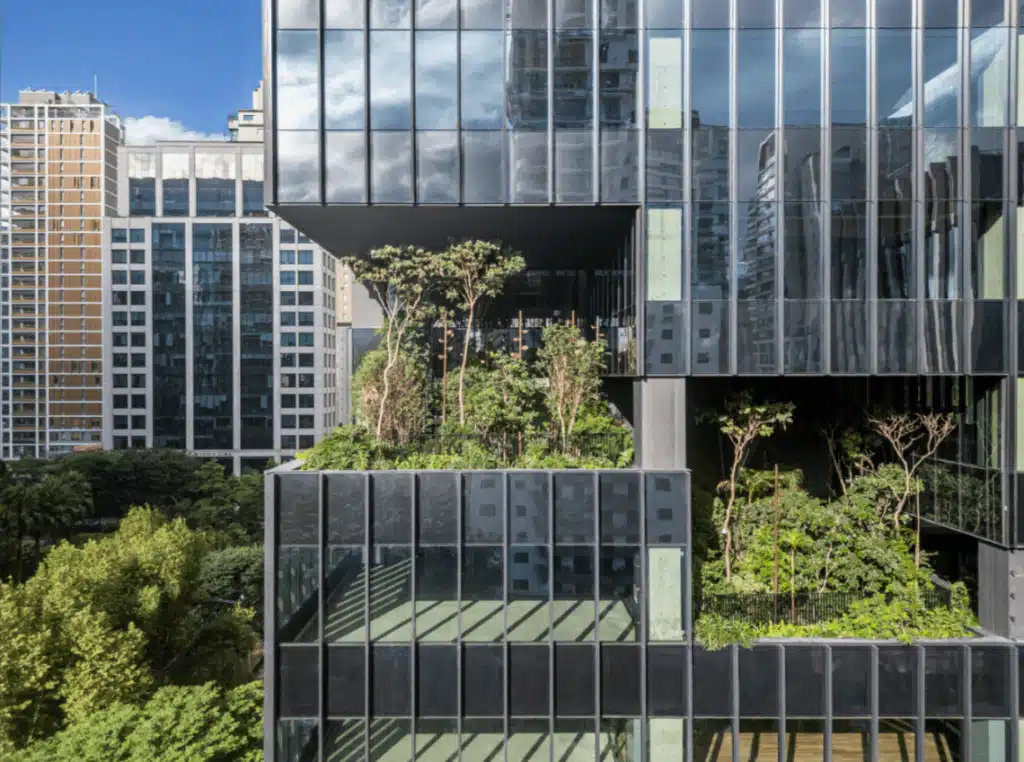
The design of Salma Tower is based on the principle of biophilic architecture, where nature plays a central role on every floor. The vertical forests cover an area of 1,200 m², arranged in a spiral around the central core, creating a balanced internal climate and serving as both thermal and acoustic buffers.
The office floors feature a floor-to-floor height of 4.68 meters, providing spaciousness, natural ventilation, and a sensory experience for employees and visitors alike.

Interaction with the Urban Context
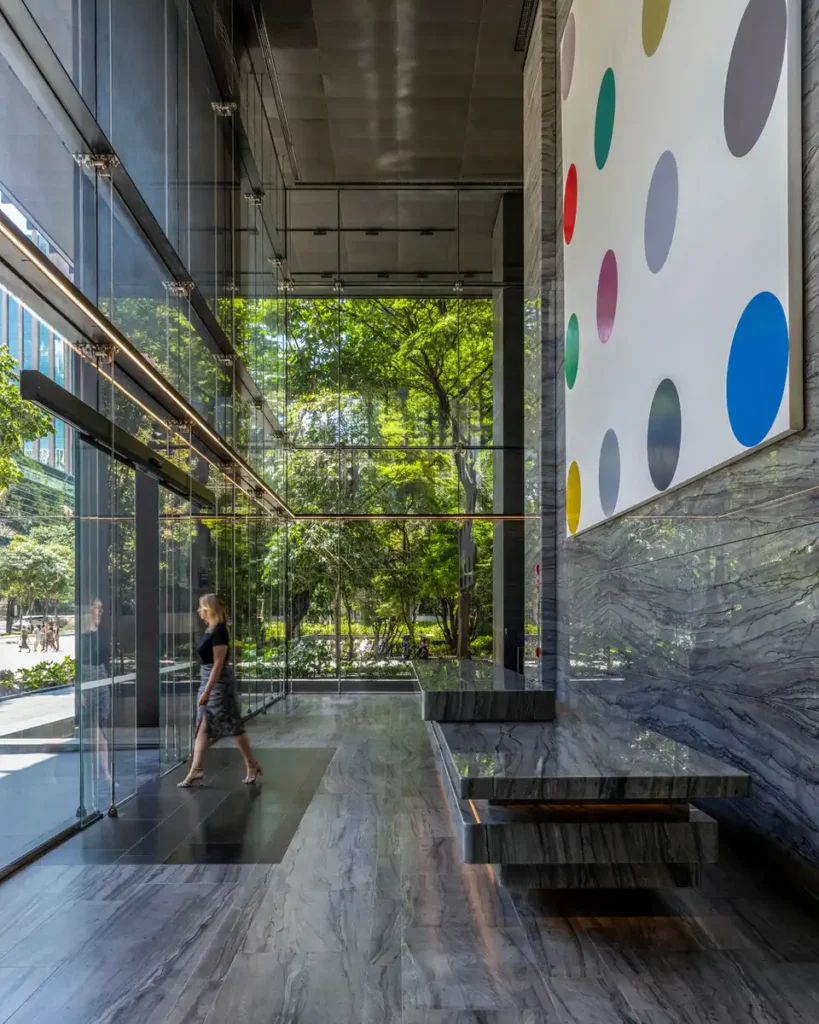
The ground floor is designed as a fully open space without walls or barriers, with active frontages hosting cafés and shops. This design encourages integration with the urban environment and promotes movement and interaction within the city.
Materials, Sustainability, and Techniques
The tower incorporates insulated glass façades for thermal control, along with a water reuse system for irrigating the vertical gardens and servicing facilities, reducing total water consumption by up to 60%.
According to green terrace regulations, 5% of the site area is dedicated to vegetation on the upper floors, with pathways designed to allow movement through the greenery, including barefoot walking, enhancing the sensory connection with nature.
Materials and Techniques Table
| Element | Description | Measurement/Value |
|---|---|---|
| Land Area | Total site area | 3,379 m² |
| Building Area | Total floor area | 36,616 m² |
| Floors | Number of floors | 16 |
| Building Height | Overall height | 80 m |
| Vertical Forests | Area of greenery on floors | 1,200 m² |
| Floor-to-Floor Height | Distance between floors | 4.68 m |
| Water System | Water consumption reduction | 60% |
| Ground Floor | Open space with urban integration | Barrier-free |
Sensory and Cultural Innovation
The building offers a unique sensory and environmental experience. The vertical forests not only improve air quality and reduce noise but also provide employees with a sense of openness to nature during work. Carefully designed pathways within the greenery enhance the tactile and visual connection, making each floor a distinctive and immersive experience.

Significance of Salma Tower
- Sustainable architectural model combining function and nature.
- Largest integration of native forest within urban architecture in the area.
- Enhances employee well-being and sensory experience within the workplace.
- Inspires future projects to adopt nature-centered and human-focused designs.

Conclusion
Salma Tower São Paulo stands as an architectural landmark demonstrating the possibilities of sustainable, biophilic design in commercial office towers. It exemplifies how architecture can integrate nature, mental well-being, and sensory quality into the workplace, offering a reference model for future urban office buildings that prioritize human experience and environmental responsibility
Comprehensive Project Summary Table
| Item | Value/Description |
|---|---|
| Name | Salma Tower |
| Location | São Paulo, Brazil |
| Floors | 16 |
| Building Height | 80 m |
| Land Area | 3,379 m² |
| Building Area | 36,616 m² |
| Vertical Forests | 1,200 m² of native greenery |
| Ground Floor | Fully open space without barriers |
| Building Type | Triple-A Commercial Office |
| Innovation | Nature integration, biophilic design, immersive sensory experience |
| Sustainability | 60% water reduction, insulated glass, full environmental integration |
✦ ArchUp Editorial Insight
Salma Tower features a striking visual design, with spiral green terraces entwined around a central core and transparent glass façades that create fluidity between interior and exterior spaces, offering openness and natural ventilation. The architectural approach emphasizes biophilic principles, where vertical forests act as thermal and acoustic buffers, reimagining how nature can integrate into office buildings. Critically, the strong focus on environmental solutions may occasionally constrain interior flexibility, yet it significantly enhances the overall user experience. This design strategy gives the project notable value as a benchmark for sustainable urban architecture.





🔁 From an architectural standpoint, Salma Tower in São Paulo carries a noticeable resemblance to one of BIG’s stepped-form projects in New York. It’s not a criticism as much as an observational note: the massing logic, the cascading terraces, and the visual rhythm feel conceptually aligned, almost as if echoing a familiar design language.