

Scandinavian Serenity in Warsaw: Inside GamFratesi Tranquil Puro Warszawa Stare Miasto Hotel

Set within the historic textures of Warsaw’s Old Town, the Puro Warszawa Stare Miasto Hotel offers a serene contrast to the vibrant urban context that surrounds it. Designed by renowned Copenhagen-based studio GamFratesi, this newly built hotel combines understated elegance with a deep respect for materiality, history, and function. Located on Canaletta Street — named after 18th-century painter Bernardo Bellotto, known for his atmospheric depictions of Warsaw — the project marks a significant meeting point between Scandinavian simplicity and Polish heritage.
Although the hotel’s architecture externally blends with the eclectic rhythms of Warsaw’s UNESCO-listed Old Town, the interior presents a new spatial language grounded in “soft minimalism”, a core philosophy in GamFratesi’s design ethos. Their approach favors fluid circulation, tactile materials, and quiet compositions that transform the hotel into a spatial meditation on comfort and identity.
For anyone looking for a reliable and up-to-date architectural resource, ArchUp offers fresh content covering projects, design, and competitions.
A Seamless Ground Floor: Layers of Craft and Calm
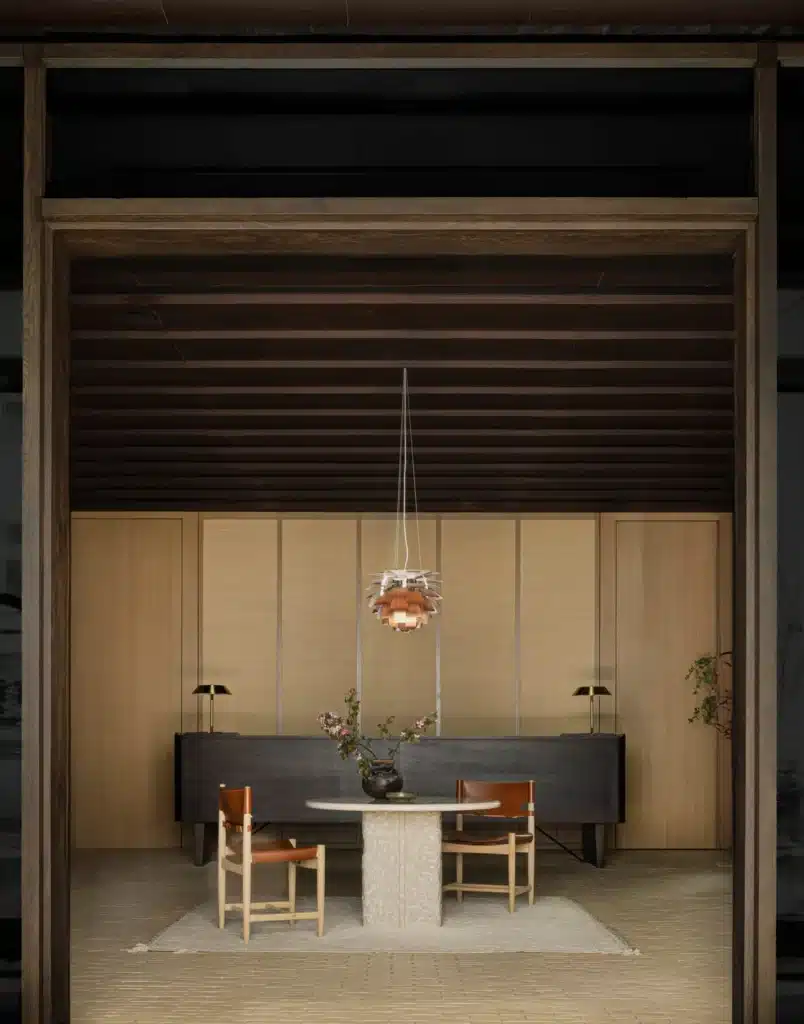
The entrance to Puro Warszawa opens into a reception space where the material story begins. A dark Danish cabinet functions as the check-in desk, anchored visually by a handmade brick floor and a warm beige rug. Suspended above, a sculptural stone pendant light offers an elegant focal point. This layering of textures — wood, stone, woven fabrics — is a consistent language throughout the building.
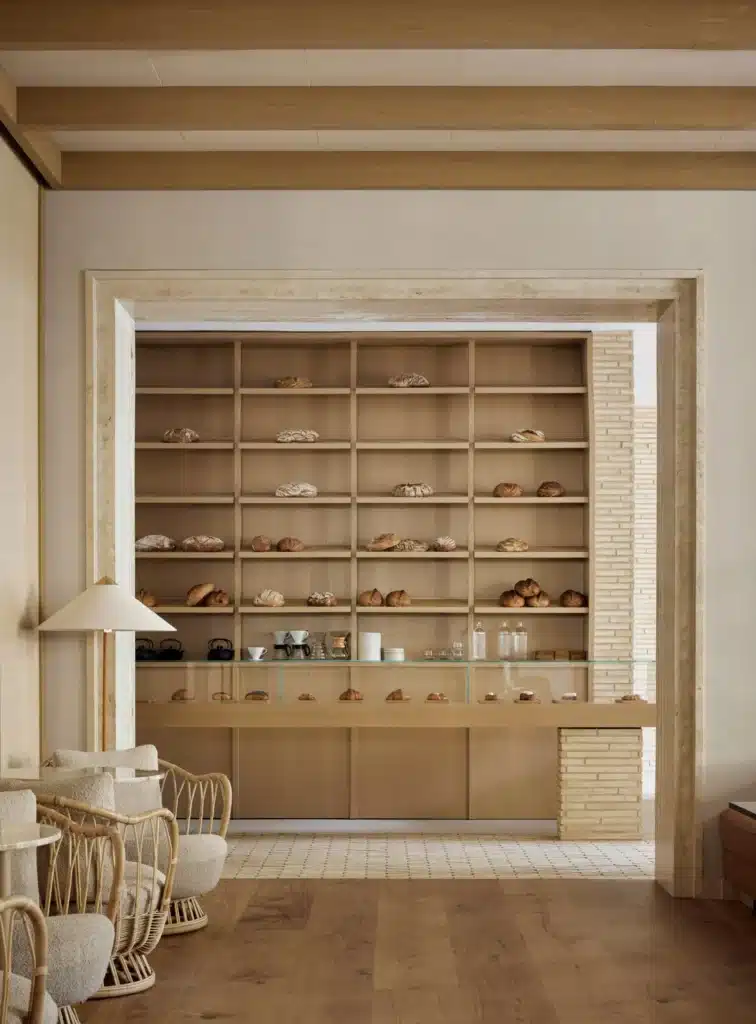
The ground floor is composed as a sequence of open rooms rather than discrete spaces. The reception gently transitions into a lounge and then into the hotel’s bakery and restaurant, named Mund. GamFratesi’s co-founder Enrico Fratesi describes this flow as essential to their spatial logic: “We wanted to create a continuous rhythm of movement, using portal-like openings to shape intuitive circulation.”
One standout area is the tunnel-like lounge with a curved ceiling, facing an internal courtyard garden. The ceiling’s gentle arc, paired with greenery and soft lighting, reinforces a sense of enclosure and transition. Along one side, a continuous custom sofa offers an inviting place to dwell — more akin to a living room than a lobby.
Materials and Meaning: Craft as a Narrative Tool
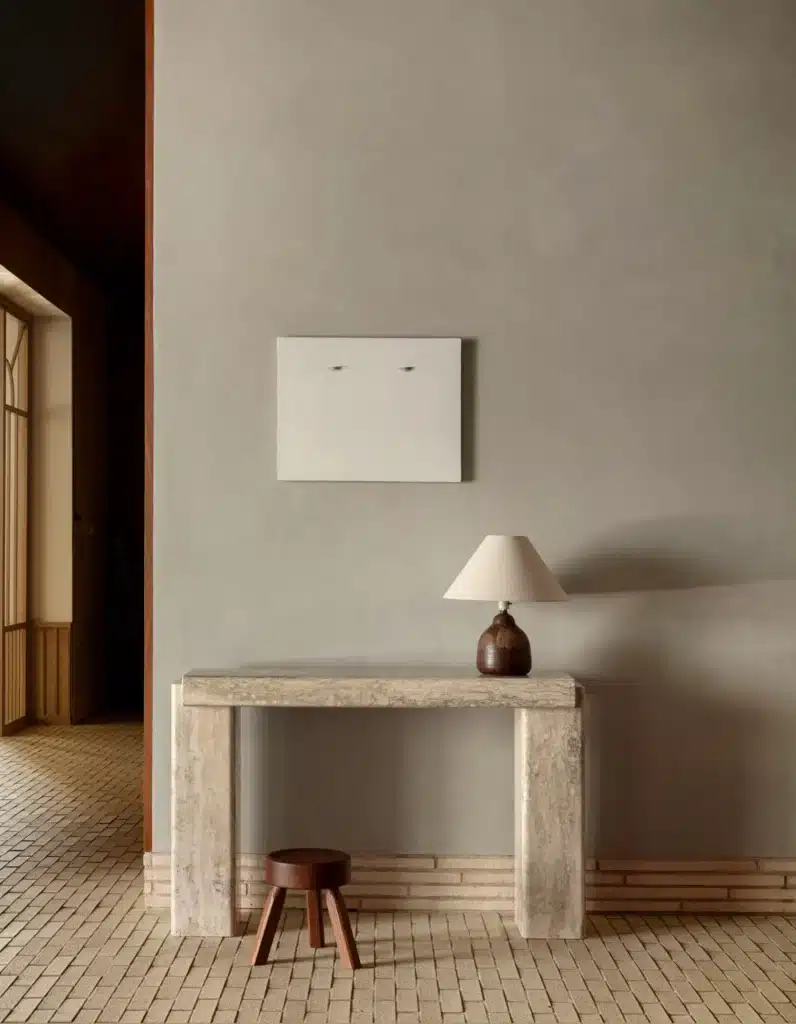
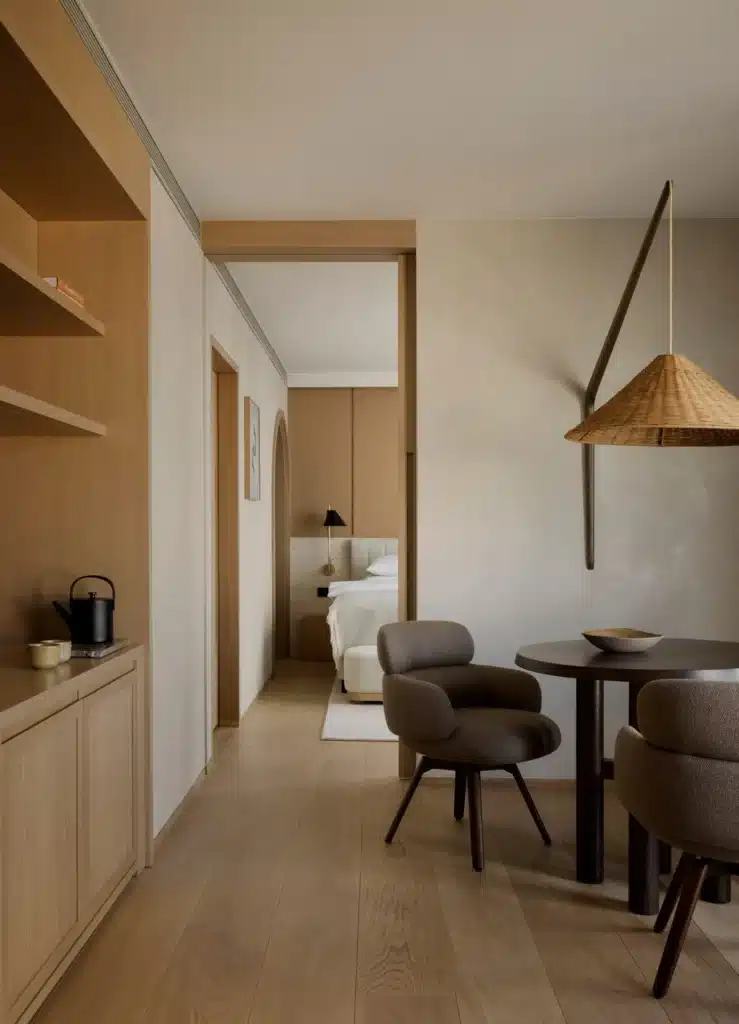
GamFratesi’s design approach is driven by the notion that materiality is memory. In Puro Warszawa, every surface tells a story. From handmade bricks and Danish hardwoods to ceramics and muted upholstery, the palette is tactile and artisanal. “We were interested in materials that would age gracefully,” Fratesi notes. “They bring soul and resonance — especially in a new building that doesn’t have the patina of time.”
The muted color scheme, composed of earthy neutrals, also draws inspiration from Canaletto’s historic paintings of Warsaw — artworks that depict the city in gentle sepia tones. This subtle reference not only ties the interior to its context but deepens its emotional register.
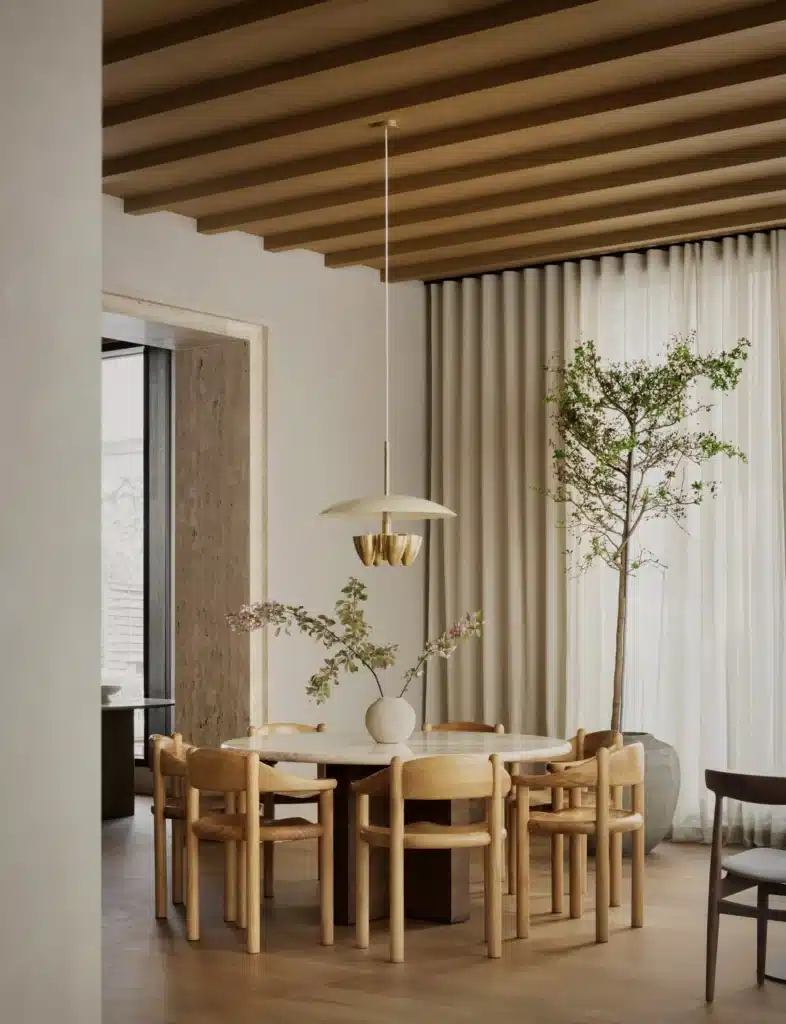
Custom furnishings by GamFratesi coexist with iconic pieces from leading Scandinavian brands such as Louis Poulsen, Carl Hansen & Søn, Gubi, Eikund, and &Tradition. The overall aesthetic is highly curated, but never sterile. It feels lived-in, familiar, and inviting — all while maintaining the restraint that defines Scandinavian design.
A Hotel That Feels Like Home
While many contemporary hotels favor theatrical gestures, Puro Warszawa is unapologetically quiet in its design. Even in the guest rooms, the material palette speaks in a soft voice: timber and travertine headboards, brass-framed mirrors, and custom sculptural coffee tables. The standard rooms include practical built-ins, work desks, and bespoke lighting — details that feel crafted rather than off-the-shelf.
Larger rooms and suites, meanwhile, are designed to mimic the layout of private apartments. These feature lounges, terraces, and thoughtful zoning that separates rest from social spaces. Bathrooms are outfitted with deep white tubs, stone niches, and soft lighting — reinforcing the experience of retreat and intimacy.
What emerges is a new typology for urban hotels: one that blurs the line between hospitality and domesticity, public and private, Scandinavian and Central European. The design is introspective without being cold, expressive without being ornate.

✦ ArchUp Editorial Insight
The Puro Warszawa Stare Miasto Hotel represents a masterclass in spatial restraint and material richness. GamFratesi’s vision doesn’t chase trends or gimmicks. Instead, it demonstrates how a building can whisper rather than shout — relying on proportion, light, and touch to generate beauty.
In a moment when global hospitality is often reduced to visual spectacle, this project reminds us of design’s deeper mission: to create places that make us feel rooted, calm, and connected. There’s a strong ethical and philosophical undercurrent here — one that values craft, culture, and continuity. By drawing from the textures of the past and weaving them through a modern language, GamFratesi has created a hotel that will remain relevant, meaningful, and beloved long after its opening.
Explore More with ArchUp
ArchUp documents the evolving profession of architects worldwide, from career insights and research to project profiles and industry news. Our editorial team publishes global salary trends, career advice, and opportunities for emerging talents. Learn more on our About page or Contact us to collaborate.
The photography is by Jonas Bjerre-Poulsen.


