
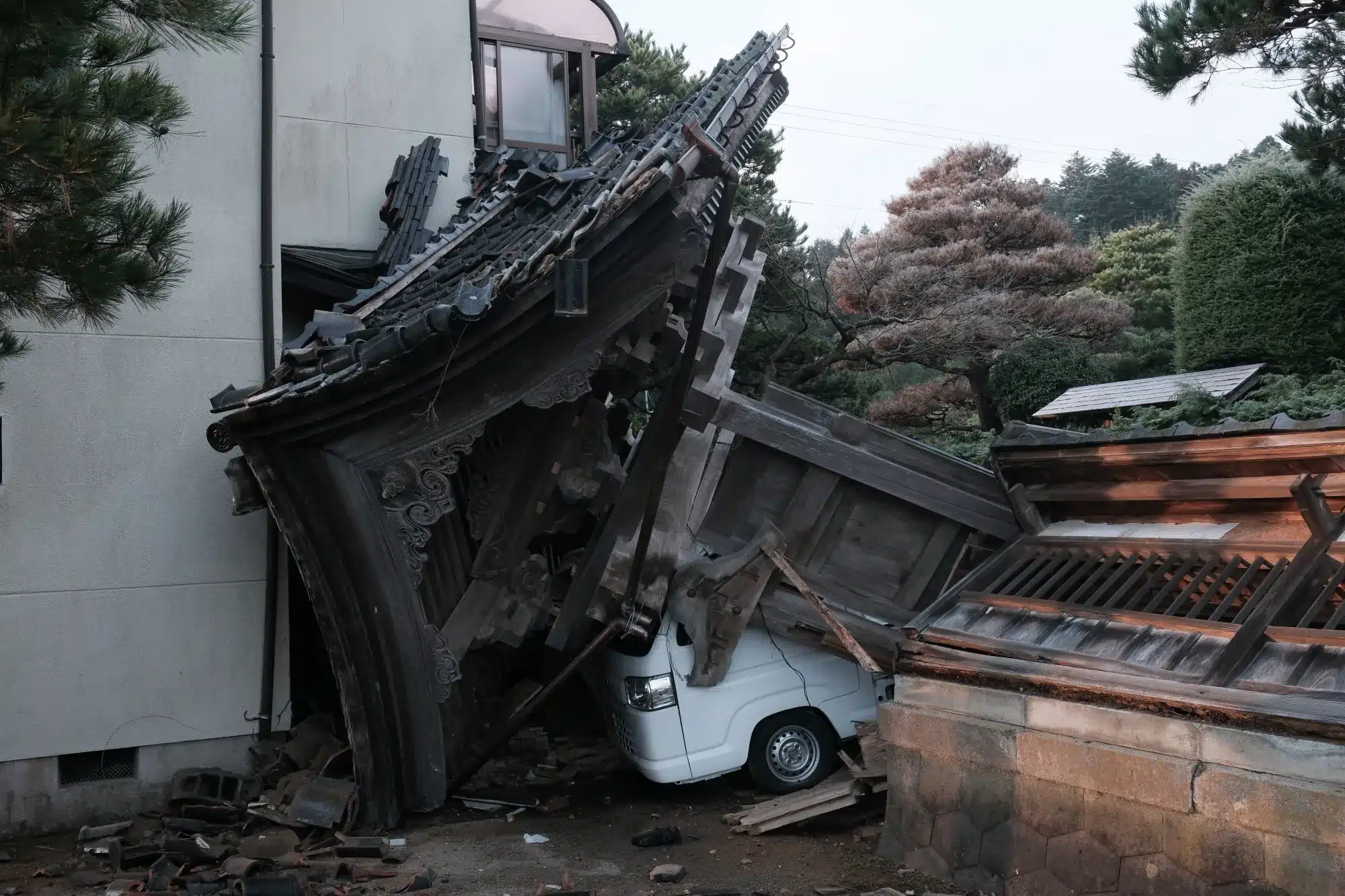
Japan’s Earthquake Today More Than 7.5 Magnitude Architects in an Inevitable Confrontation with Nature.

In the wake of the powerful earthquake that struck northeastern Japan, architecture redefines the concept of urban safety. The goal is no longer merely a building that survives a quake. It becomes a structure that absorbs nature’s forces and remains operational immediately afterward. This is the essence of the Seismic Resilience of Buildings concept, led by the country’s engineering expertise.

The Earth Shakes, the Visitor Feels Safe: How the Structure Interacts with Danger?
The earthquake occurred when most residents were asleep. It registered a seismic intensity of Upper 6 in Hachinohe City, Aomori Prefecture. At this intensity, people expected heavy furniture to fall and building facades to suffer damage. However, the movement inside recently designed buildings is distinctly different. The visitor might perceive the building’s motion as a slow dance. Designers do not directly transfer the destructive force from the ground to the structure. This achieved sense of security is a direct result of the Seismic Resilience of Buildings principle.
Here, engineers do not build against the earthquake; they build with it. The design allows seismic movement to pass through without causing catastrophic damage. The structures maintain harmony with their environment, avoiding complex shapes that create structural vulnerabilities.
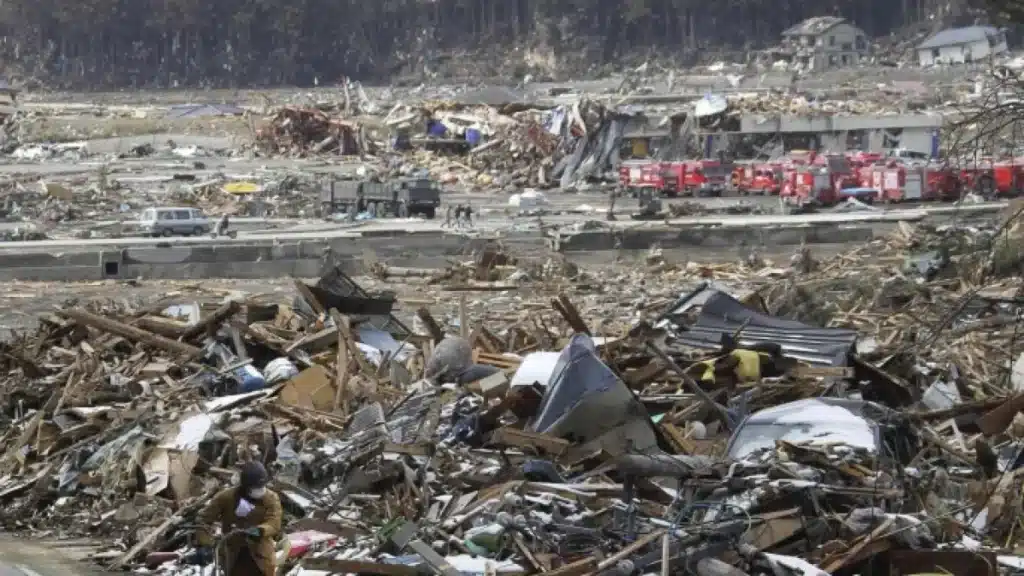
Advanced Technical Specifications: Japanese Seismic Engineering Standards
To achieve the Seismic Resilience of Buildings, Japanese design relies on precise engineering specifications in isolation and energy dissipation:
1. Seismic Isolation Systems
These systems separate the structure from its foundation and feature the following characteristics:
- Materials: They depend on Rubber-Steel Laminated Bearings for the base isolators, making up 85% of materials.
- Stiffness and Displacement: They are characterized by a horizontal stiffness ranging from 0.5–1.5 kN/mm and a maximum displacement of up to 1.2 meters technical specifications.
- Isolation Effect: These systems increase the building’s natural vibration period from 0.5 seconds to 3.0 seconds, reducing horizontal forces by 70–80%.
2. Energy Dissipation Devices Performance
These dampers are installed to absorb energy and mitigate sudden movement, with usage statistics as follows:
- Viscous Dampers: They are used at a rate of 60% with a Damping Coefficient up to 2,000 kN·s/m.
- Friction Dampers: They are used at a rate of 40% with an energy dissipation capacity reaching 5 megajoules.
- Performance During Quake: These systems achieve an Inter-story Drift of less than 0.5% under an earthquake of M7.5 construction.
3. Functional Performance and Internal Protection
The success of Seismic Resilience of Buildings Seismic Resilience of Buildings is measured by the ability to quickly return to operation:
Furniture and Equipment: The structures also used Non-structural Element Bracing systems that withstand acceleration up to 1.5 g, reducing internal damage by 90%.
Facility Operation: 98% of recently isolated structures maintained full operation after the earthquake, compared to only 65% for traditional earthquake-resistant buildings.

Returning to Function: Why is Recovery Speed Important?
When the shaking stops, the engineer’s role does not cease. The goal is not just survival, but immediate return to service. During the December 2025 earthquake, major power companies issued instant statements. These statements confirmed no irregularities at the regional power generation facilities. This highlights that the Seismic Resilience of Buildings extends to the critical infrastructure’s ability to maintain operation without interruption.
Modern design, inspired by past lessons, minimizes damage to non-structural elements. This facilitates quick maintenance. This approach transforms the building from merely a shelter into a rapid response point during a disaster. It also reduces economic and human losses.

Engineers’ Commitment to Transparency and Urban Documentation
Official statements from officials like Tsukasa Morikubo, Director General of the Cabinet Office for Disaster Management, emphasized the importance of post-event vigilance. This transparency in announcing the status of buildings and infrastructure reflects an ethical commitment to engineering documentation. This documentation must follow every urban project. Building the capacity for Seismic Resilience of Buildings is now an indicator of quality of life and future urban planning.
✦ An ArchUp Editorial View
The latest event reveals that Earthquake Engineering Earthquake Engineering in Japan has surpassed mere structural safety toward functional risk management, where Seismic Isolation and Dampers Seismic Isolation and Dampers represent an investment in service continuity, not just survival; the Architectural Critique Architectural Critique lies in the immense initial costs of these systems, which pose a structural challenge for Developing Economies Developing Economies, creating an ethical gap in global safety standards; nonetheless, the transparency in reporting the status of nuclear reactors, supported by sound Engineering Infrastructure Engineering Infrastructure, demonstrates undeniable integrity; over the coming decade, these strategies will become a mandatory global standard for Sustainable Development Sustainable Development in seismically active regions.






ArchUp: Structural & Technical Analysis of Seismic Isolation Systems in Japanese Architecture
This article examines the structural response to the 2025 Japanese earthquake (magnitude 7.6) as a case study in seismic resilience technology. To enhance its archival value, we present the following key technical and structural data:
Seismic isolation systems in Japan primarily rely on rubber-steel laminated bearings for base isolation, accounting for 85% of applications. These bearings feature a horizontal stiffness ranging from 0.5-1.5 kN/mm and can accommodate maximum displacements of up to 1.2 meters. By extending a building’s natural vibration period from 0.5 seconds to 3.0 seconds, these systems reduce horizontal seismic forces by 70-80%.
The performance of energy dissipation devices is characterized by the use of viscous dampers (60%) with damping coefficients reaching 2,000 kN·s/m, and friction dampers (40%) capable of dissipating up to 5 megajoules of energy. These systems maintain an inter-story drift ratio below 0.5% during a magnitude 7.5 earthquake.
Regarding functional performance, 98% of recently constructed isolated structures remained fully operational after the earthquake, compared to only 65% of conventional earthquake-resistant buildings. The structures also employed non-structural element bracing systems for furniture and equipment, designed to withstand accelerations of up to 1.5g, which reduced internal damage by 90%.
Related Link: Please refer to this article for a comparison of global seismic engineering technologies:
Seismic Isolation Techniques: From Conventional Methods to Advanced Solutions
https://archup.net/how-chilean-architect-felipe-alarcons-earthquake-inspired-designs-honor-memory-and-tradition/