Seriema House by Tetro Architecture

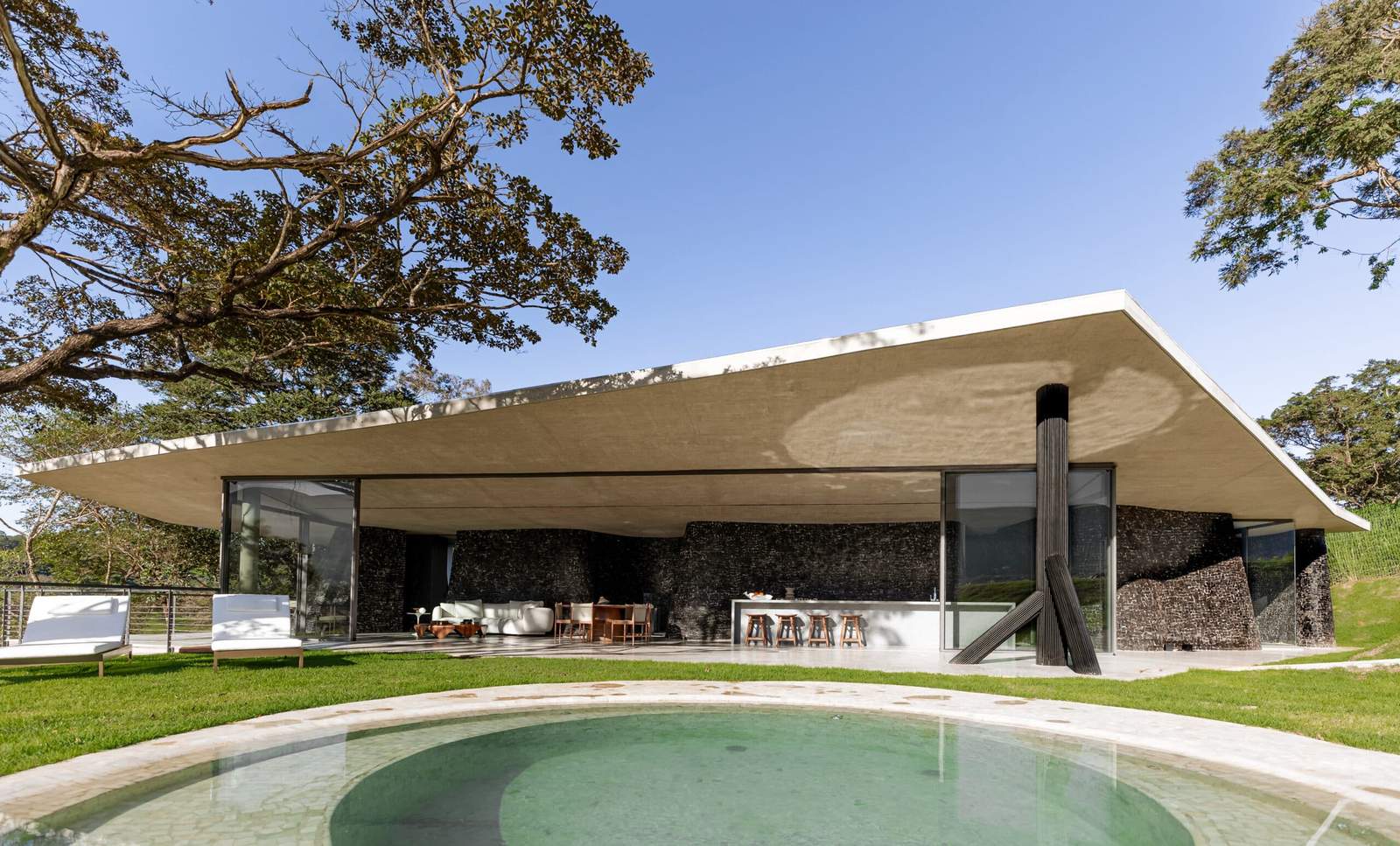
Seriema House is located in a quiet area on the outskirts of Belo Horizonte. Accessing it requires crossing a mountain range, marking a transition from the urban environment to a more natural setting. Moving away from the noise of the city, visitors arrive at a landscape integrated with nature.
The site presents two distinct settings. On one side, there is an open view of the mountains, while on the other, a dense forest with a variety of trees. The house is positioned between these two landscapes. Seriemas, birds native to the region, are commonly seen in the area, which influenced the name of the residence.
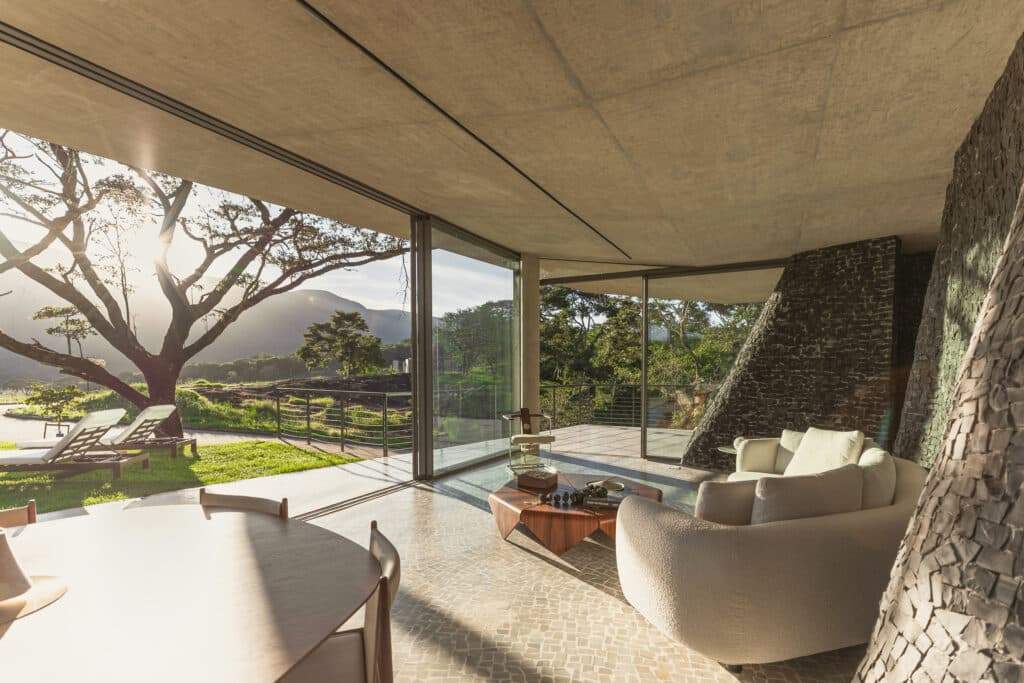
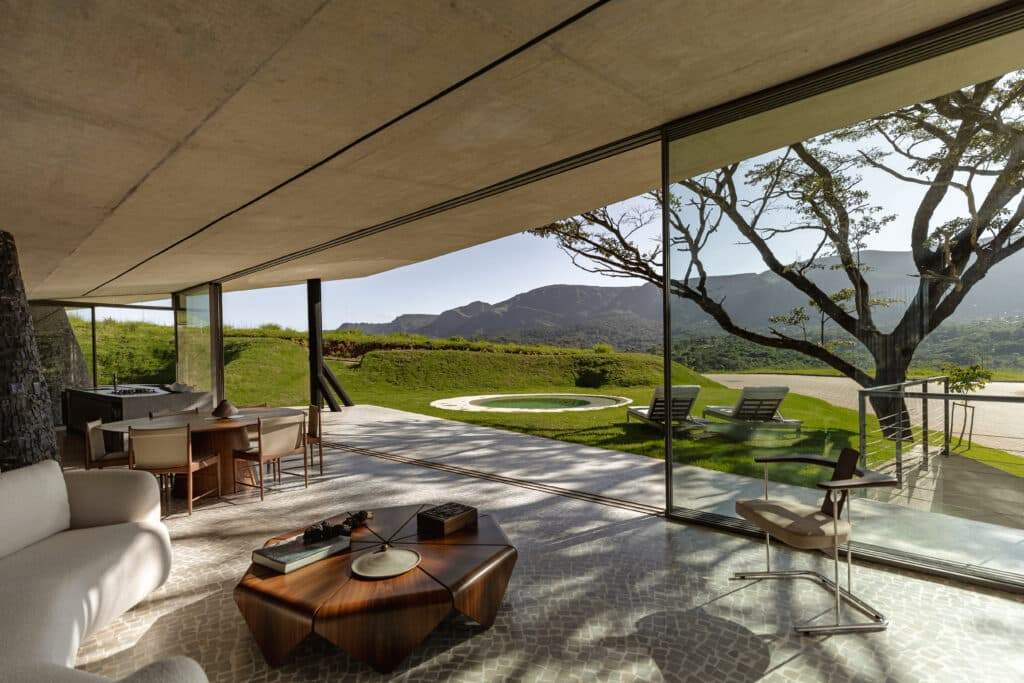
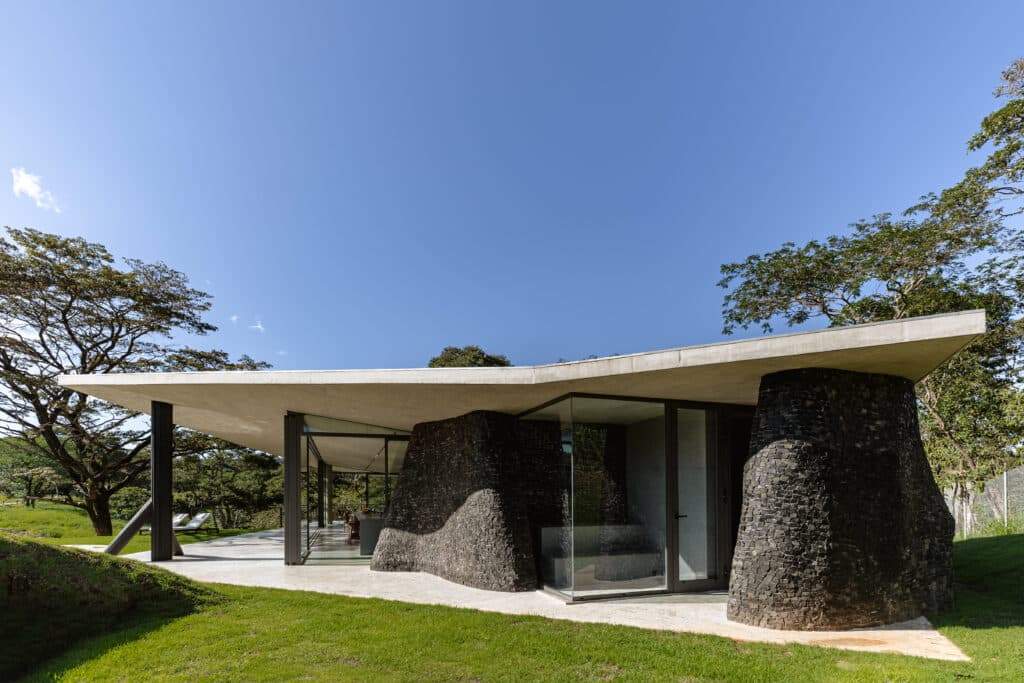
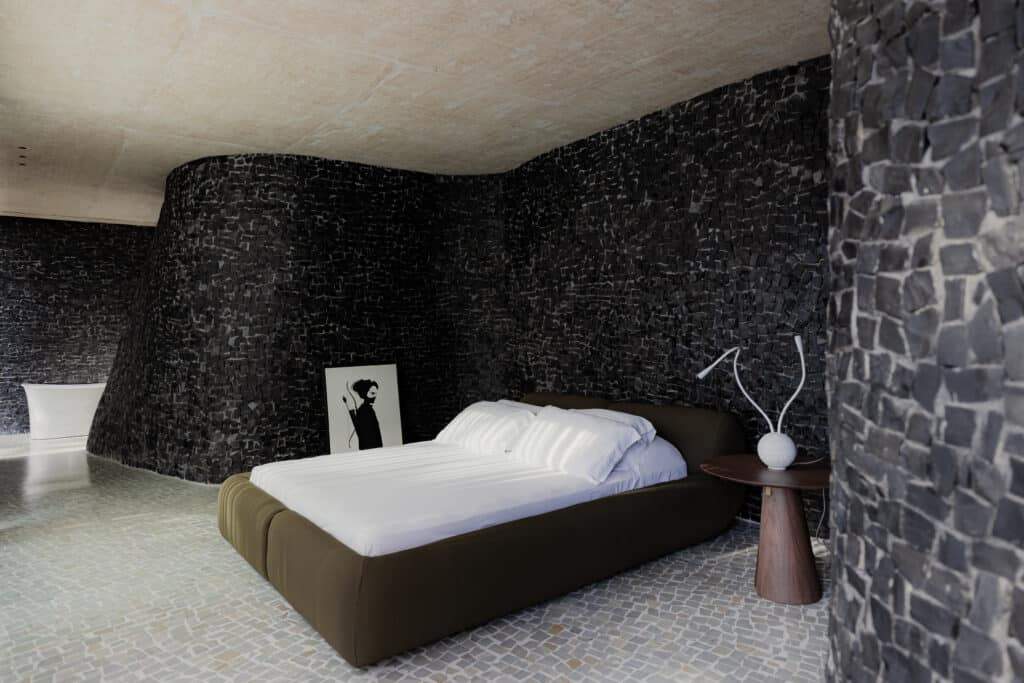
The house was designed as a place for reading, rest, and contemplation. The resident’s intention was to create a space for gathering and quiet activities, where architecture interacts with its surroundings. A defining feature of the design is a curved wall that separates the house into two sections. One side consists of an open and bright space with views of the mountains, allowing for sound and movement. The other side is enclosed, facing the forest, and intended for quiet and introspective activities.
The choice of materials establishes a connection with the landscape. The curved wall is covered in dark stones, contrasting with the lighter stone flooring. The use of stone as the primary material defines the structure, integrating it with its environment.