Silk Road Friendship Park: Restaurant in Harmony with Nature

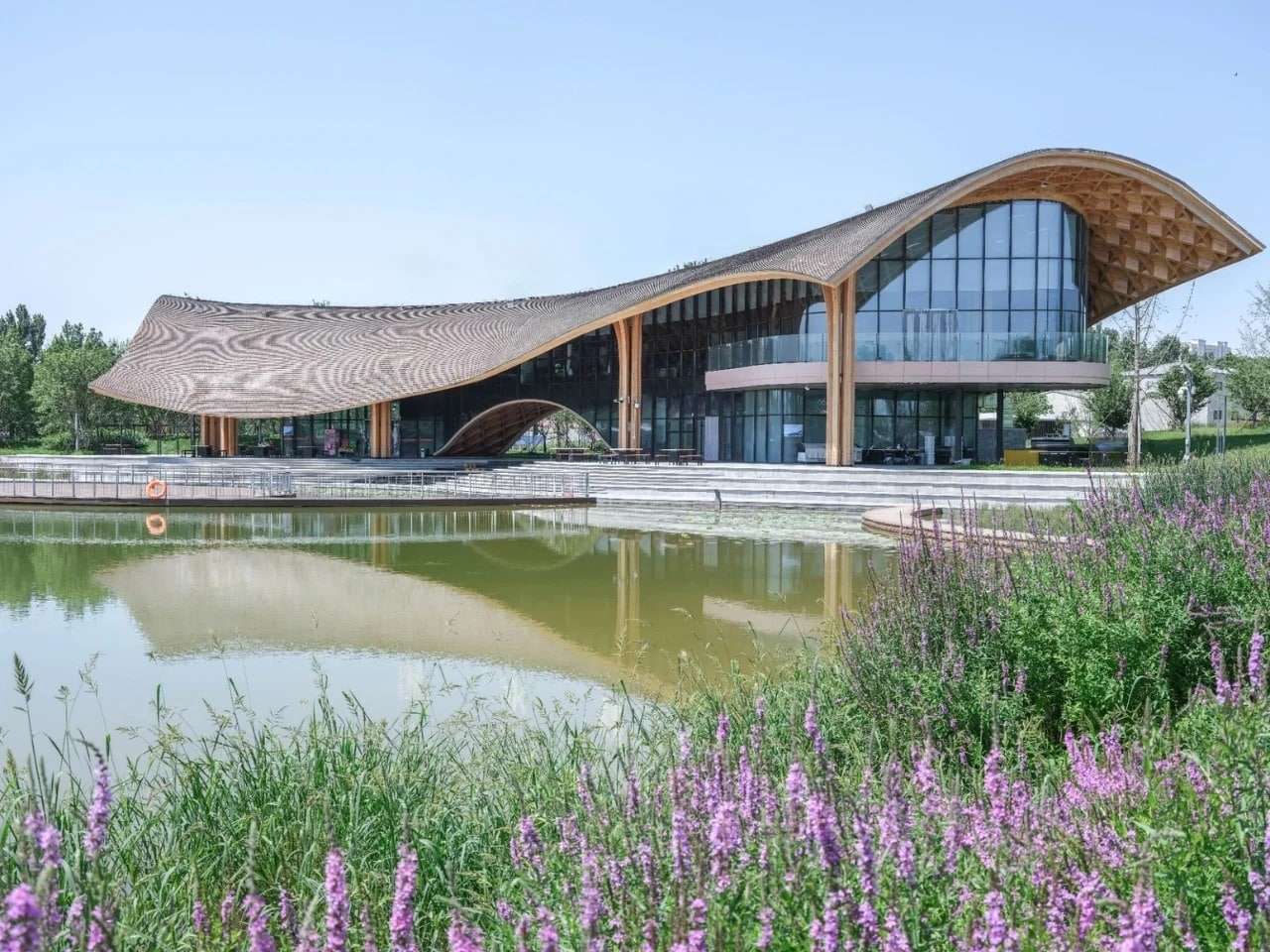
Integration of the Building with Its Surroundings
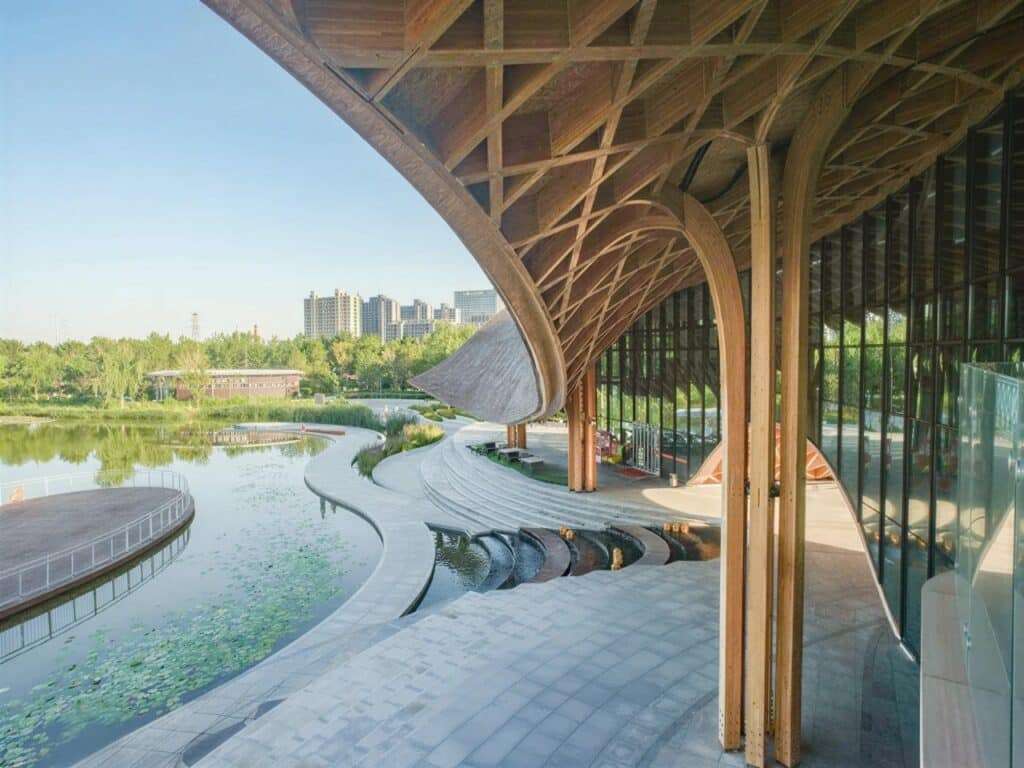
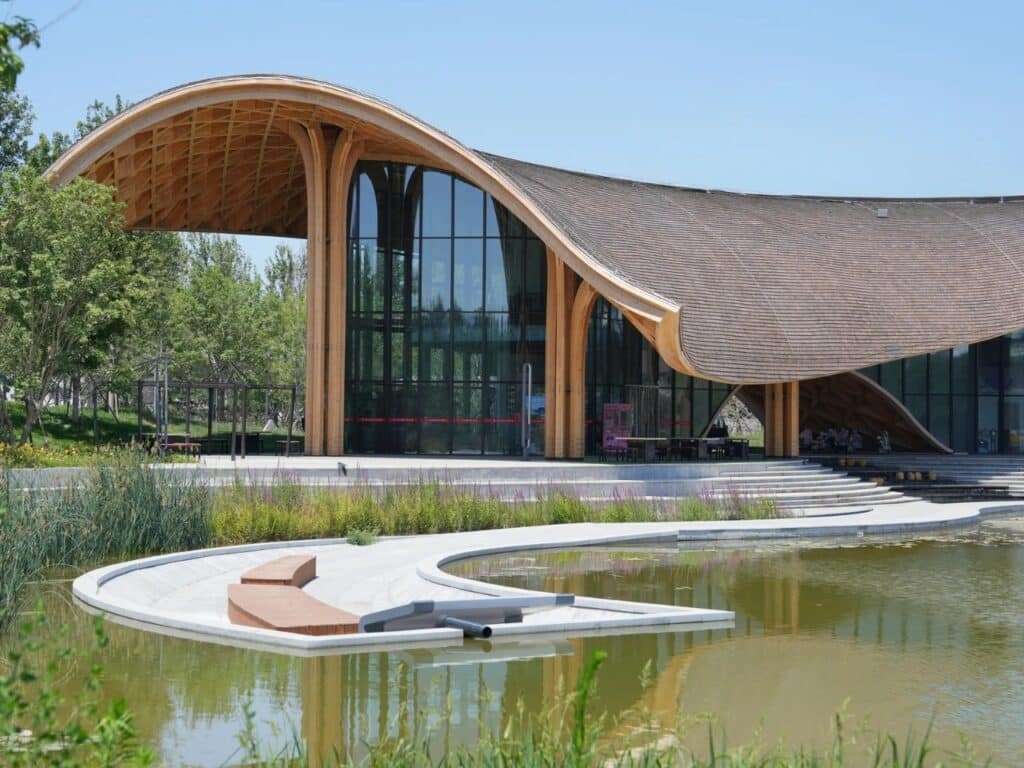
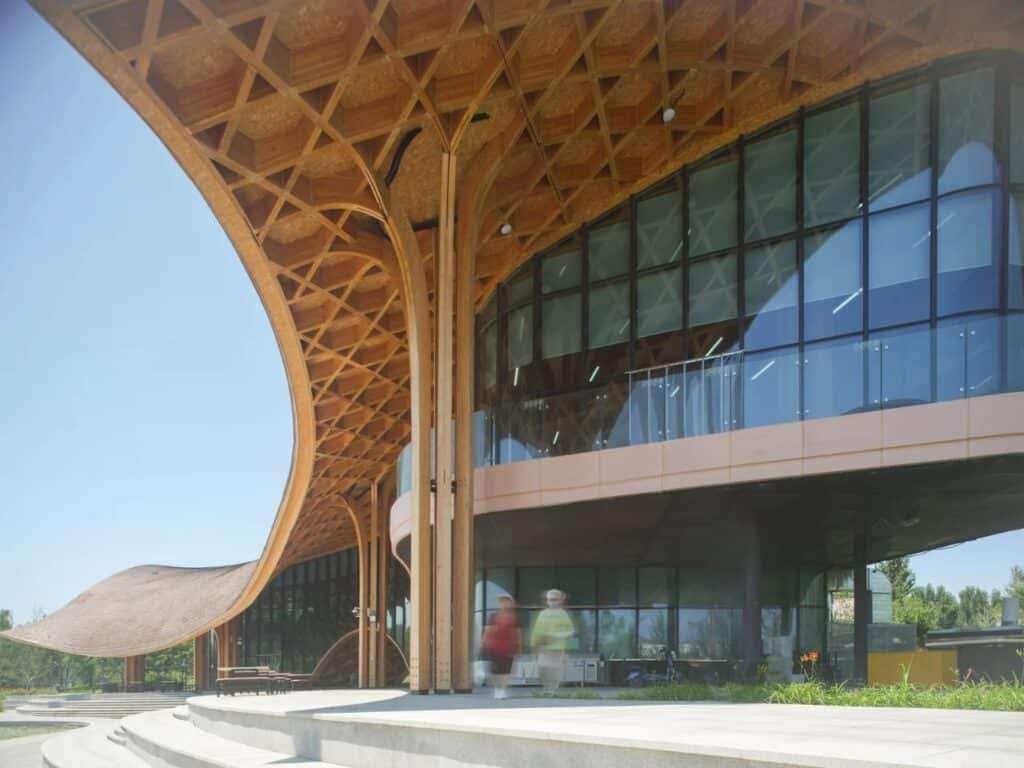
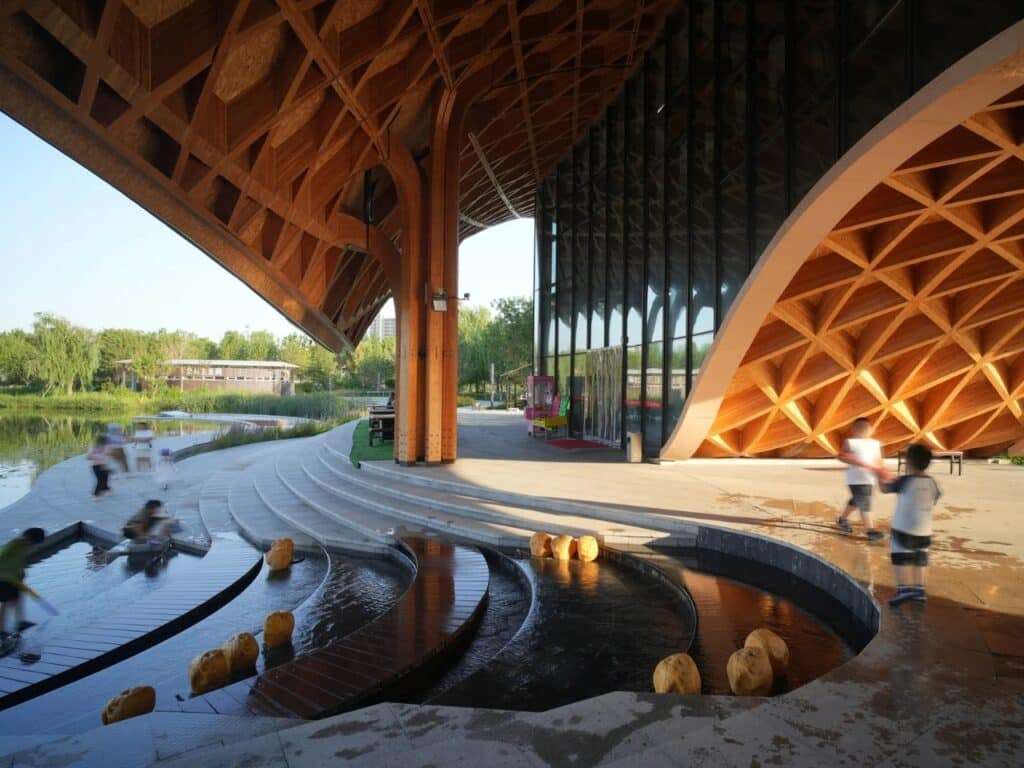
The first thing that catches the eye at a restaurant located on the edge of a lake within a cultural park is the way the building interacts with its natural surroundings. The structure does not seek attention or compete with the environment; rather, it appears as a natural extension of the shore, with wooden columns rising like trees in their growth patterns, as if they have always been part of the landscape.
Historical and Cultural Context
The restaurant is situated in an area of historical significance tied to an ancient trade route, making the site more than just a building location; it is a space that engages with the surrounding layers of culture and history. Although the overall area is relatively large, the sense of calm and harmony comes from the design itself, not from numbers or scale.
Visual Concept of the Building
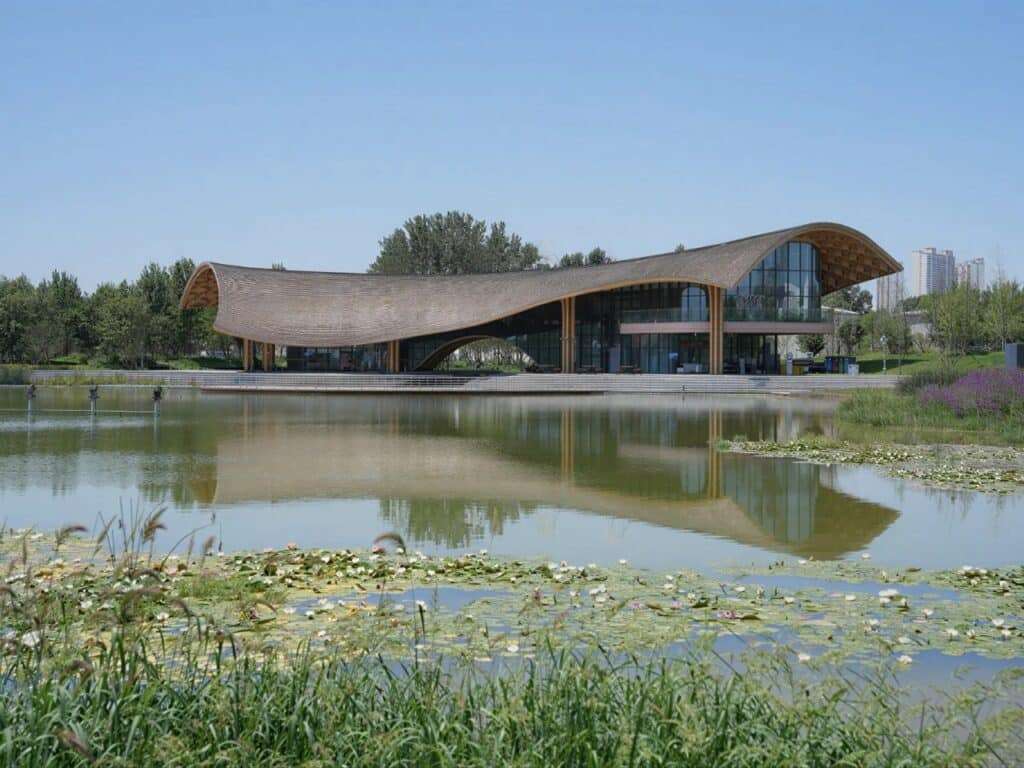
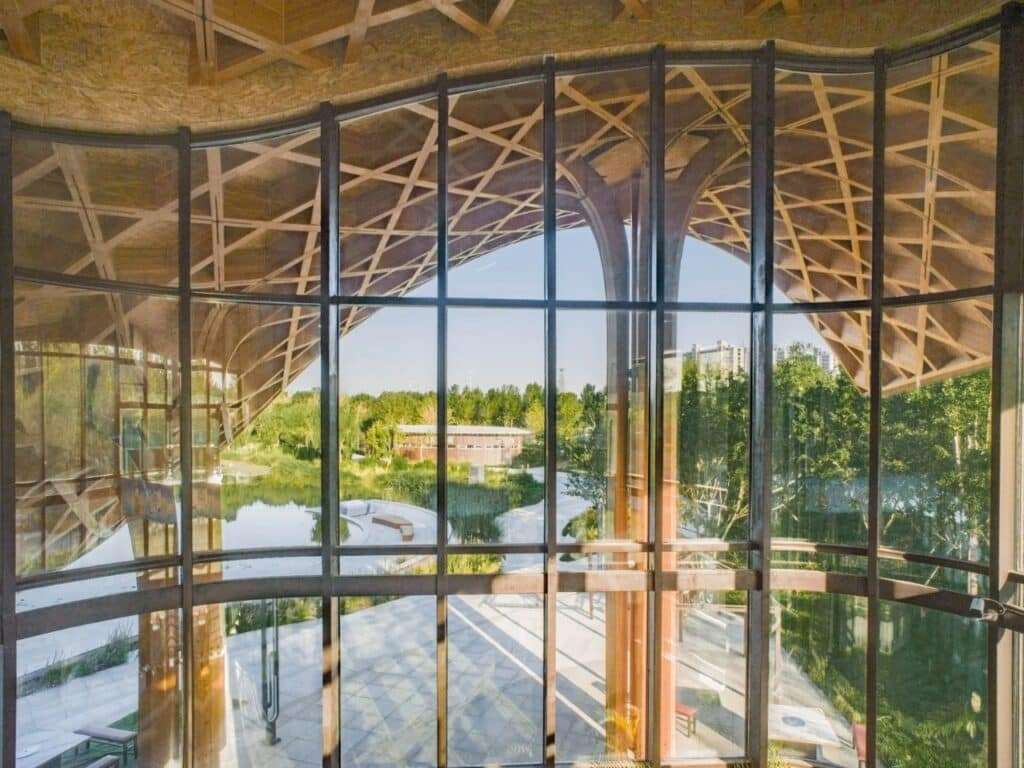
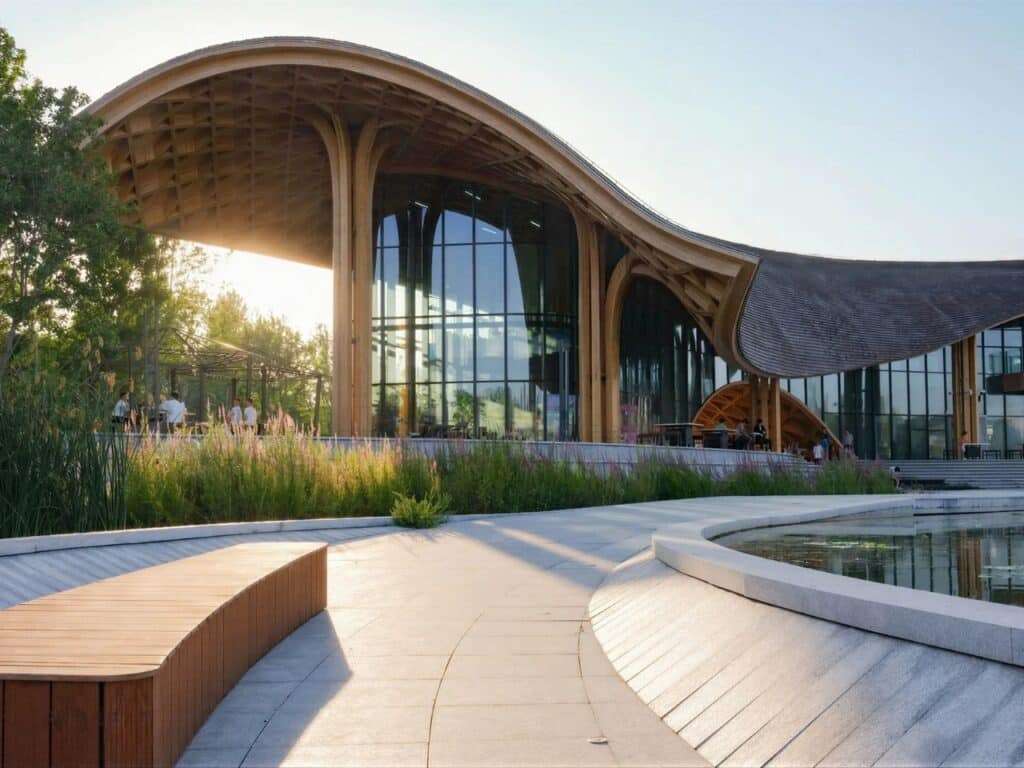
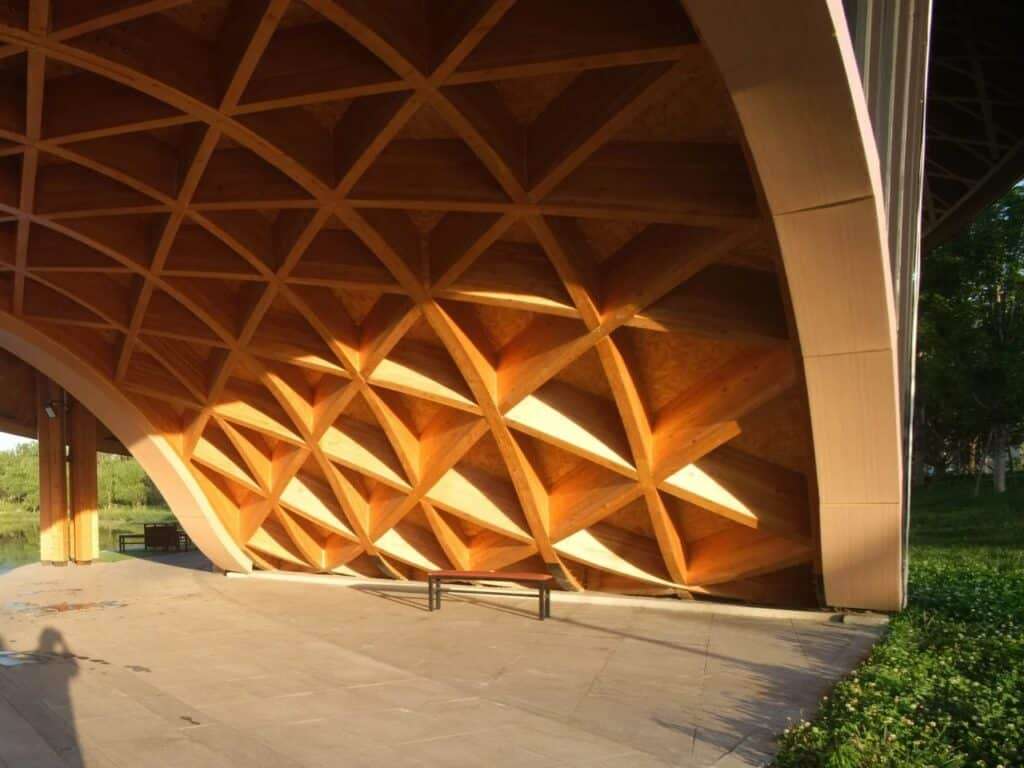
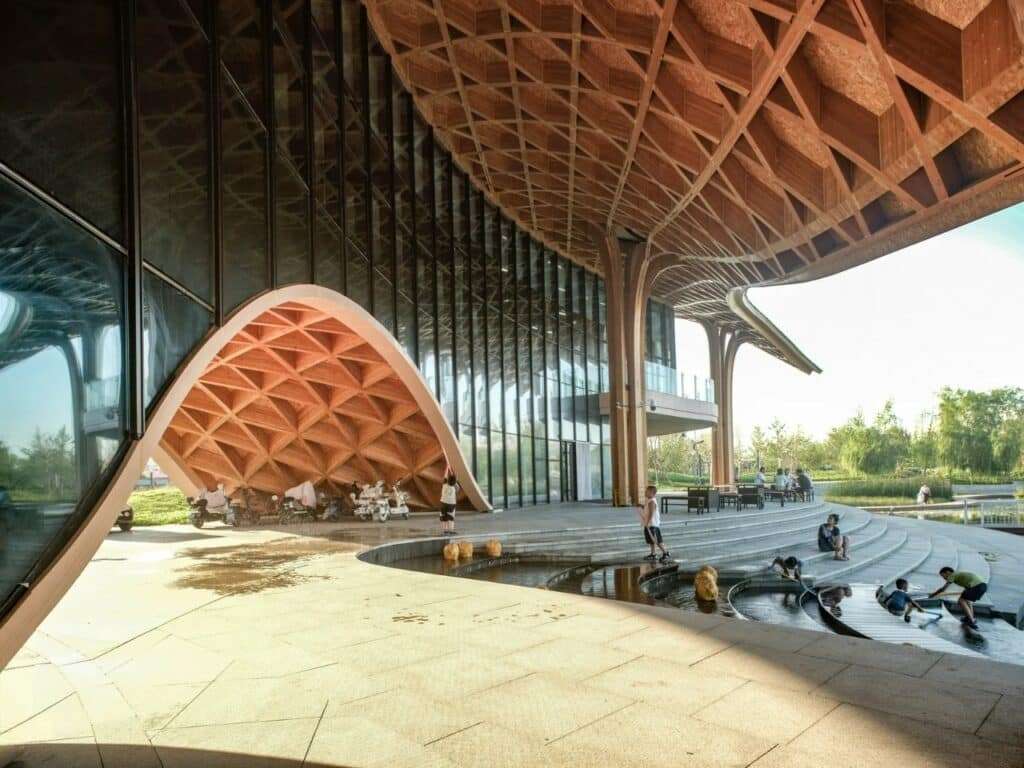
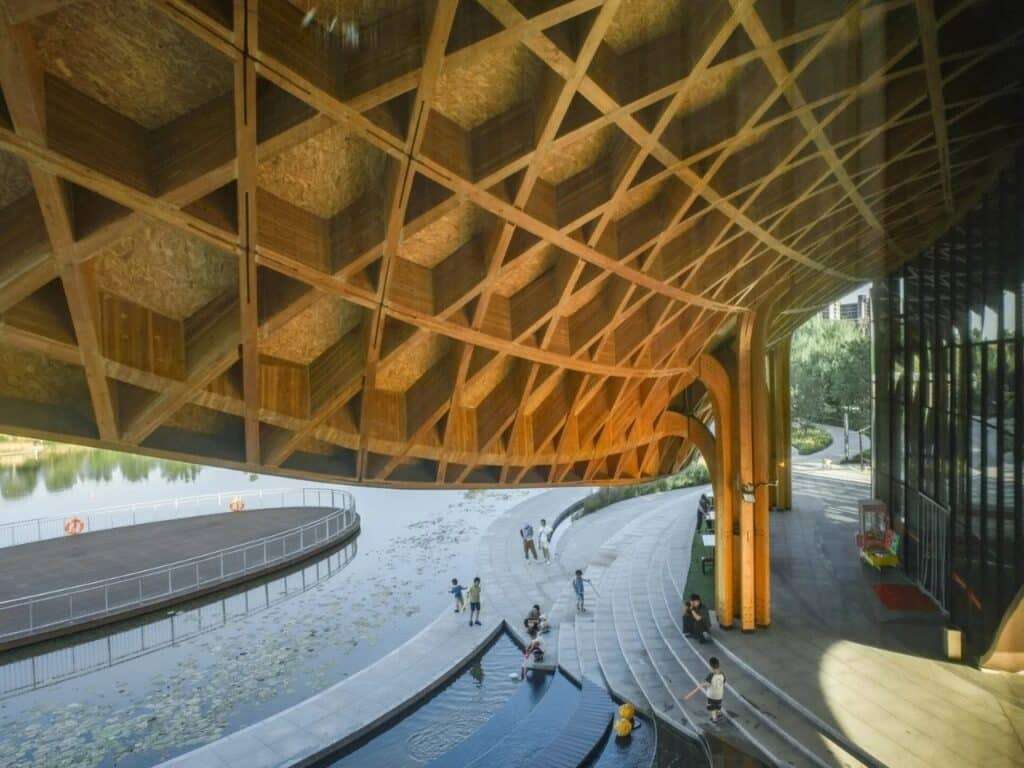
The design draws inspiration from the forest canopy and the lake’s water reflections. Wooden columns branch out from the ground to meet a flowing roof, forming a cohesive visual system that suggests the building naturally emerged from the earth and bends over the water, rather than being an artificial structure imposed on the site.
Integration of Traditional and Digital Technology
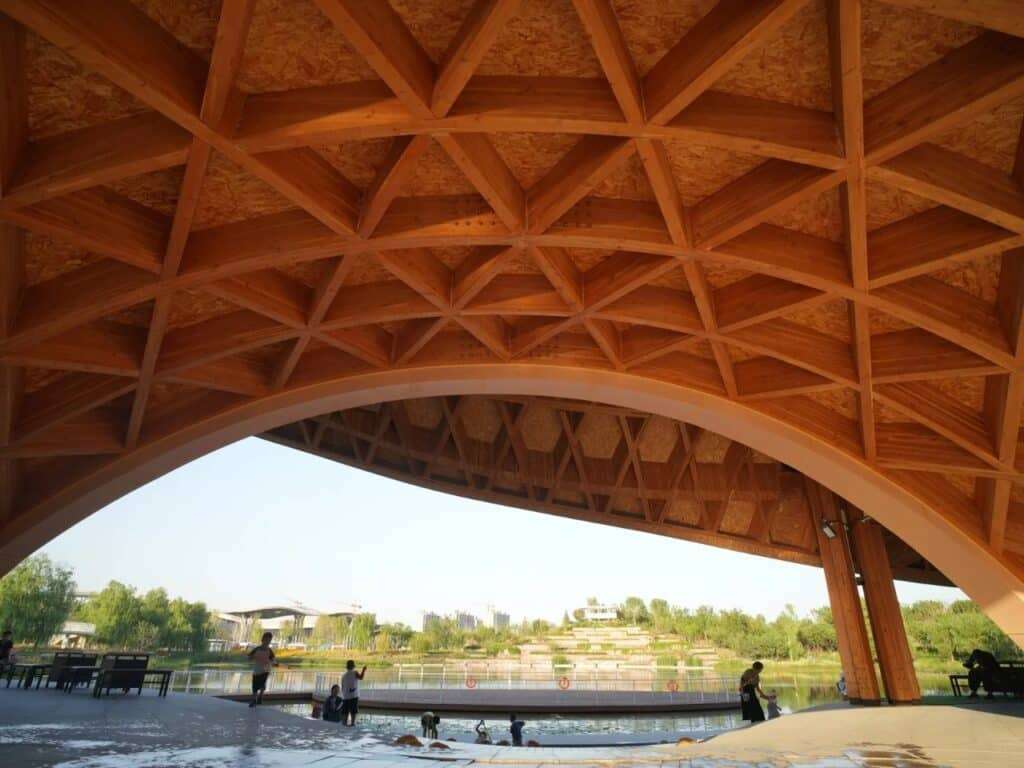
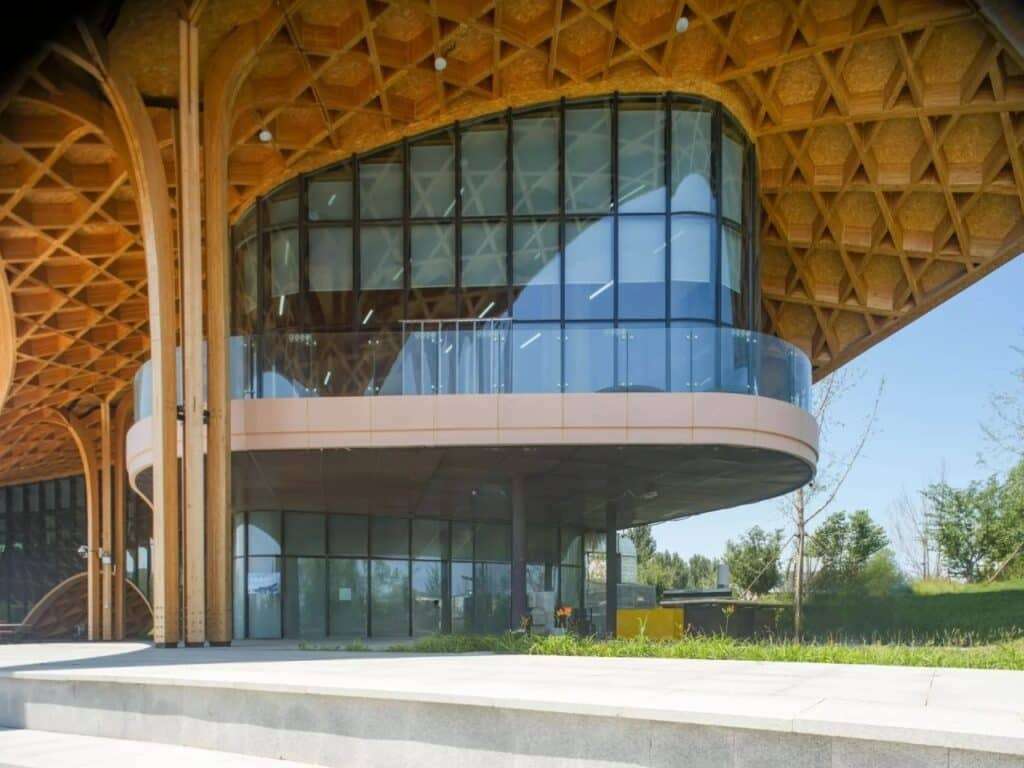
The practical architecture of this building becomes possible through a combination of traditional carpentry and digital fabrication. Glue-laminated timber was used, with digital prefabrication ensuring precise control over the forms. At the same time, the dimensions of each wooden element were adjusted using digital tools to guarantee a visibly handcrafted quality. This approach demonstrates how sophisticated building materials and architectural technology can create a warm, tangible experience when applied thoughtfully, rather than merely for display or technical showmanship.
Functional Planning and Spatial Narrative
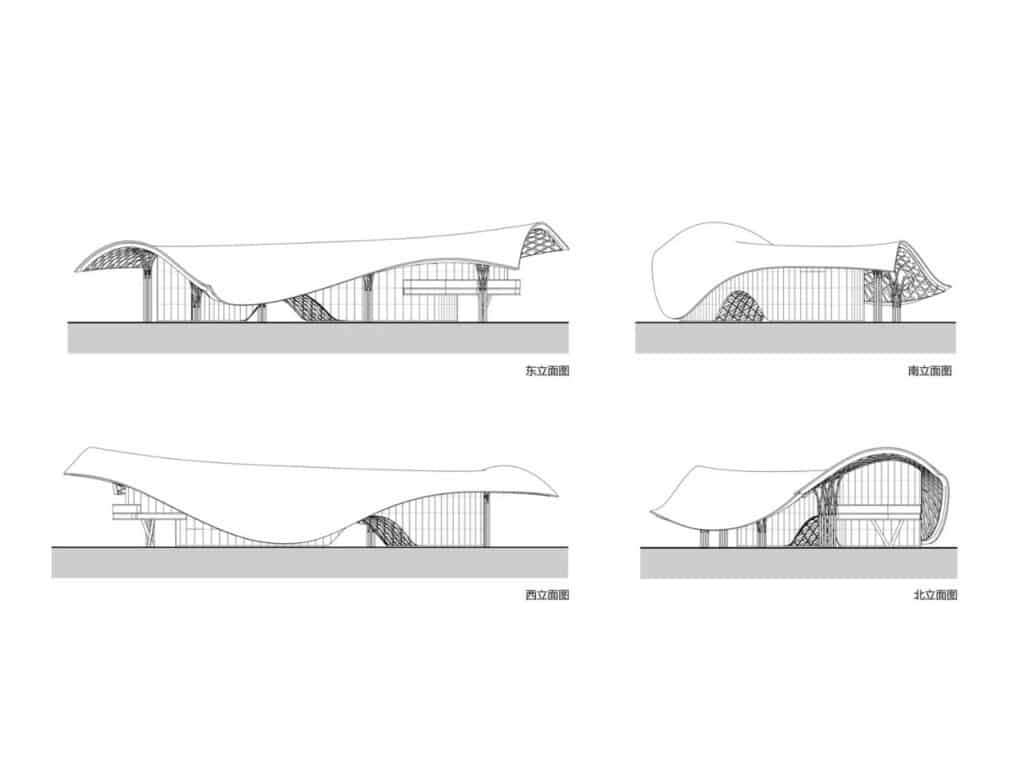
The building’s interior and exterior planning is carefully deliberate. It gently slopes from south to north along the shoreline, with a partially enclosed western façade that conceals the kitchen and service areas from view. This restriction is intentional, guiding visitors toward a central arched opening on the ground floor. Passing through it, the visitor suddenly encounters the water’s edge, creating a seamless transition from arrival to pause and appreciation of the scenery. This experience illustrates how architectural projects can direct movement and perception, much like successful spatial narratives do.
Interaction with Light and Time
The building opens onto the lake on three sides, allowing visitors to experience shifting visual effects as they move through the multilayered passage spaces formed by the suspended roof. During the day, the wooden columns cast shadows on the glass walls, mimicking the effect of a forest canopy filtering light into the interior. At sunset and during the night, these spaces transform under interior lighting, with the wooden curves illuminated, creating an entirely different experience at various times of the day and encouraging repeat visits to appreciate these changes.
The Role of Materials in Spatial Experience
Wood is not merely an aesthetic element; it serves functional and experiential purposes. It provides warmth where glass feels cold and adds an organic sense in contrast to industrial materials such as steel. These qualities subtly influence the visitor’s experience— even those unaware of it consciously perceive a difference in how the space feels. Through this balance of awe and intimacy, the interior design achieves an architectural environment that is simultaneously comfortable and striking, an accomplishment rarely achieved in many highly designed spaces.
Harmony with the Surrounding Environment
The project reflects an approach focused on harmony with its cultural and natural context. The park occupies a site of historical weight and significance, making it more than just a construction location. While placing a visually striking building here would have been easy, the design demonstrates how attention to materials and the sequencing of experiences can create a balanced interaction with the site, allowing the building to blend naturally rather than dominate its surroundings.
Architecture as a Sensory Experience
Architecture that knows when to remain quiet leaves a lasting impression on memory. In this project, the experience unfolds gradually as one moves through the building toward the lake, and as light filters through the wooden columns, the visitor perceives the architectural message of the space without the need for announcements or overt expression. This experience illustrates how projects can communicate with visitors through sensation and scene, rather than merely through form or scale.
✦ ArchUp Editorial Insight
The Silk Road Friendship Park Restaurant project reflects the convergence of incentives related to land-use planning and local cultural heritage requirements, which necessitated a low-impact approach to the waterfront. Regulatory constraints, including flood mitigation requirements, laminated timber supply schedules, and labor standards associated with the complex assembly of wooden elements, limited the building’s height and footprint, resulting in a low, stepped form.
The resulting spatial outcome functions as a reconciliation between capital allocation and regulatory compliance: the branching wooden columns and partially enclosed edges translate engineering constraints and risk-management-driven programming into clear pathways for end-user units, while the visual openness toward the lake facilitates the organization of circulation and spatial occupancy patterns. The layout reveals layers of regulatory structuring, balancing public access with operational control, while the simplicity of the form signals adherence to jurisdictional expectations rather than any deliberate aesthetic gestures. For more case studies, see our archive.