Vortex of Words Library: Spiral Timber Design Wins Rzeszów Competition

Spiral Library Design Transforms Polish Urban Landscape
A spiral timber-steel library has won an international design competition for Rzeszów, Poland. The winning proposal, titled Vortex of Words, combines cultural, educational, and social functions within a sustainable framework.
The project will serve as the new municipal and regional library for this city of nearly 200,000 residents. Located on Józef Piłsudski Avenue, the library addresses the city’s role as a vital transport hub near the Ukrainian border and a center for the aviation industry.
Strategic Urban Integration
The design responds thoughtfully to its urban context. Moreover, it establishes a green buffer zone that functions as both acoustic and psychological transition space. The library connects transit-oriented zones with pedestrian-friendly public realms, consequently bridging different urban scales.
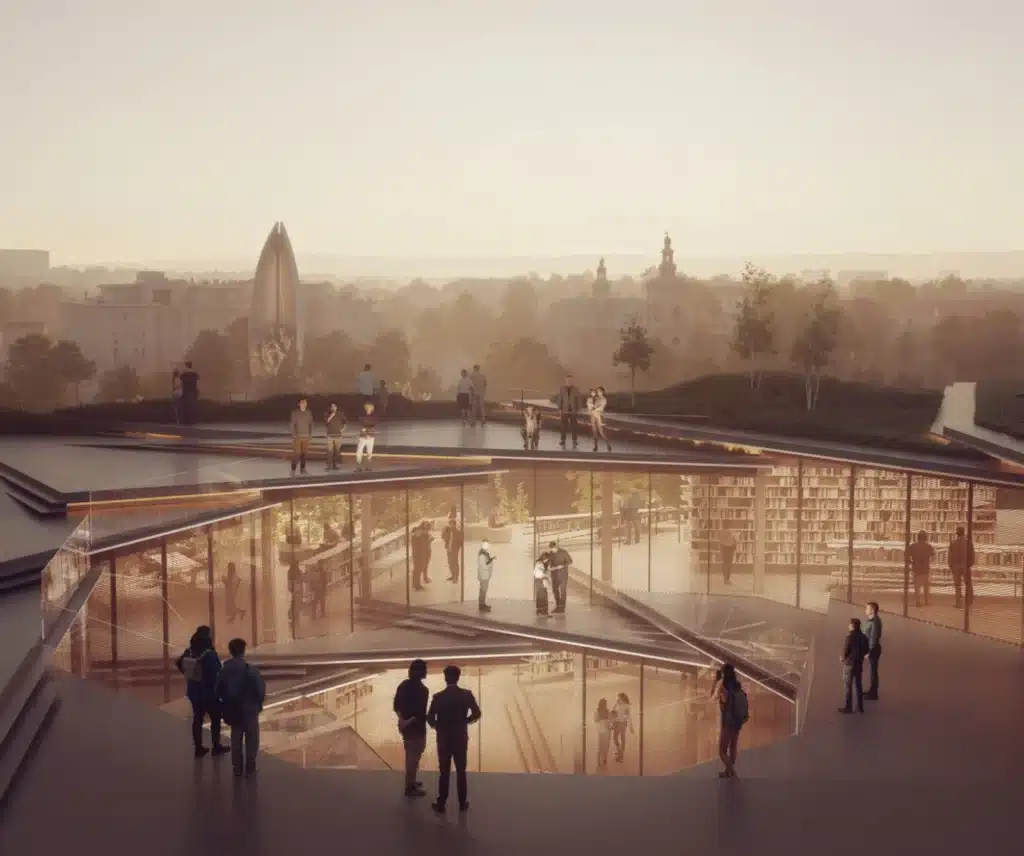
The spiral geometry allows the volume to ascend gradually. This creates stepped platforms that relate closely to human scale rather than imposing a monolithic presence. Additionally, the building dissolves traditional boundaries between interior and exterior spaces.
Inclusive Spatial Experience
Universal design principles ensure the facility remains accessible to all community members. Clutter-free passages connect functional spaces throughout. Furthermore, textured paving, tactile maps, and Braille signage support navigation for diverse users.
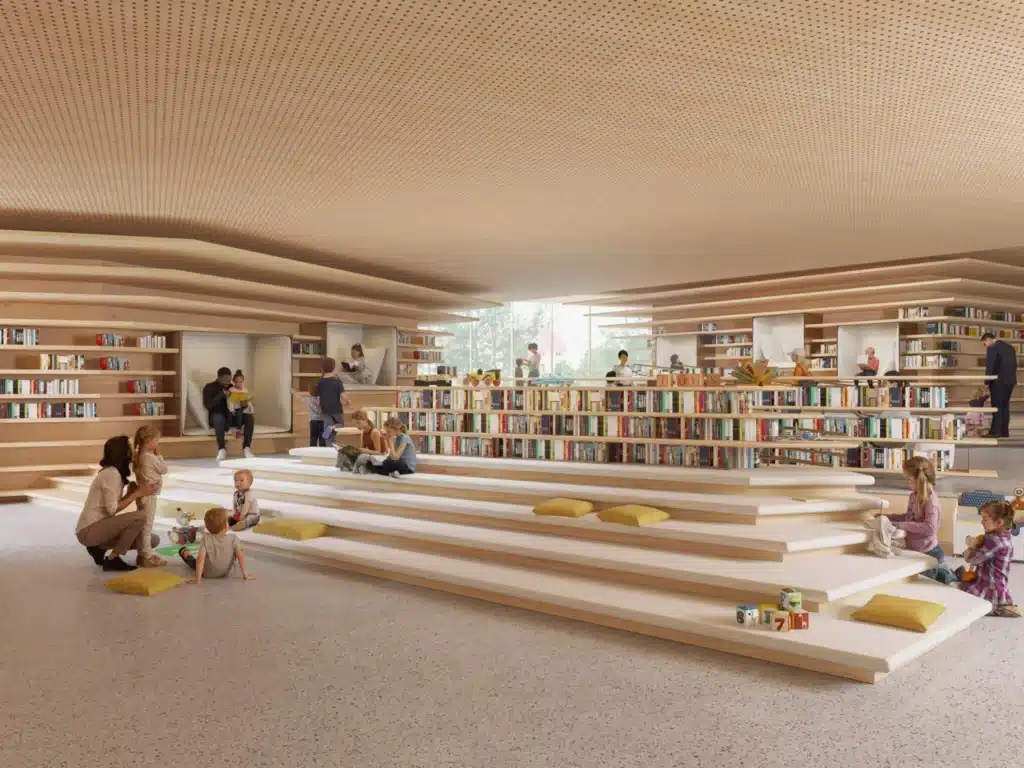
The layout includes well-lit reading rooms that balance concentration with accessibility. Multi-level platforms serve as natural meeting places. Beyond traditional library functions, the proposal includes expanded event zones for cultural expression.
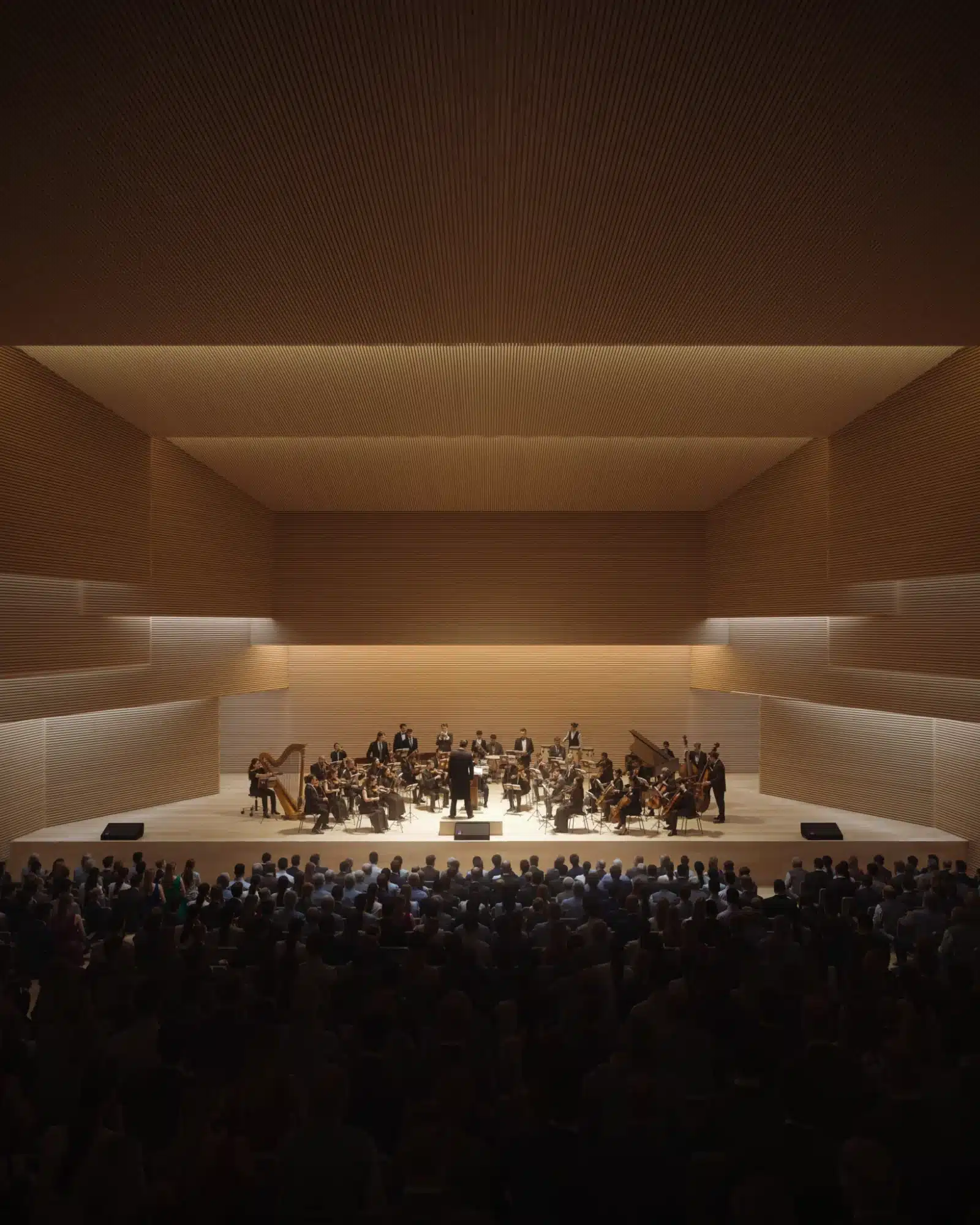
The concert hall features timber finishes that enhance acoustic performance. Its geometry focuses attention on the stage, creating an immersive musical experience. Meanwhile, the multipurpose hall accommodates workshops, exhibitions, and cultural meetings through its flexible design.
A glazed opening on upper levels leads to a panoramic terrace. This space provides city skyline views while serving as a venue for relaxation and civic engagement.
Hybrid Structural System
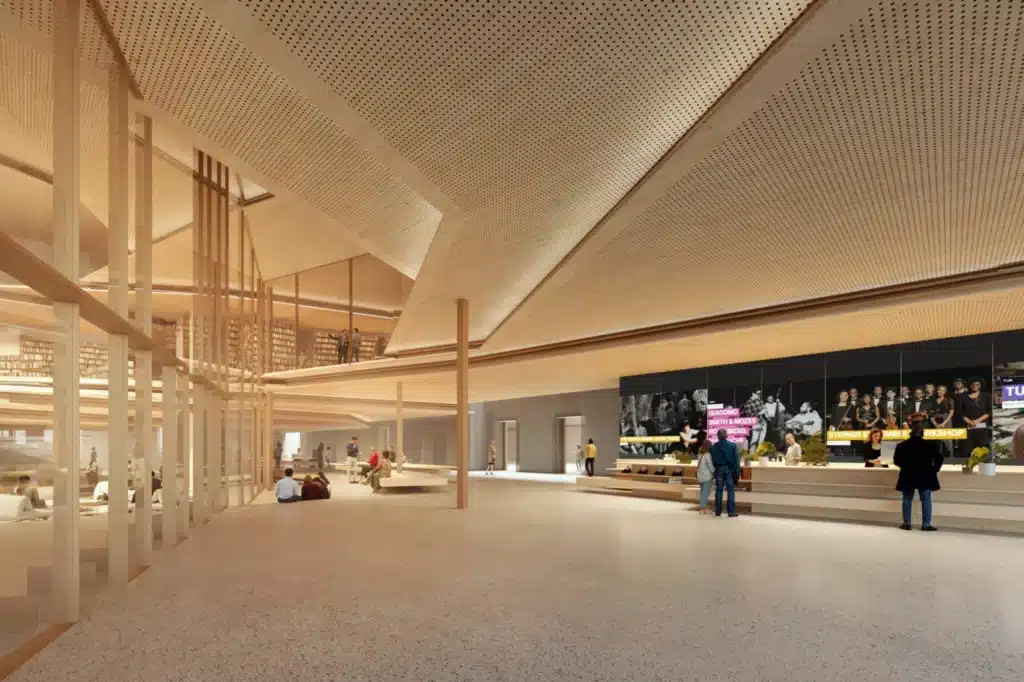
The structural approach combines timber and steel in an innovative hybrid system. Layered slabs integrate HVAC channels and reinforcement. Two 450mm slabs form a 900mm-deep section capable of spanning six meters.
This method allows timber to remain the dominant aesthetic while maintaining necessary structural rigidity. The exterior skin features glass panels with embedded champagne-toned metal mesh. This mesh provides passive shading, reducing heat gain while maintaining transparency.
The mesh creates a metallic glow during daylight hours. At night, however, it becomes translucent, revealing internal activities to the city. Natural materials and spiral geometry create a light-filled cultural space that feels both modern and regionally rooted.
Will this innovative library design set new standards for sustainable civic architecture in Poland?
A Quick Architectural Snapshot
The Vortex of Words library occupies a prominent site on Józef Piłsudski Avenue in Rzeszów, capital of the Subcarpathian Voivodeship. The hybrid timber-steel structure features a 900mm-deep slab system spanning six meters. Glass panels with champagne-toned metal mesh form the exterior skin, providing passive solar shading while maintaining visual transparency to surrounding urban fabric.
✦ ArchUp Editorial Insight
The spiral library emerges from a predictable convergence of pressures. European municipal governments increasingly require cultural buildings to perform multiple civic functions simultaneously, driven by funding constraints and political need for visible ROI. The timber-steel hybrid system reflects EU carbon mandates intersecting with insurance requirements for public buildings exceeding certain spans. Competition formats favor iconic geometry that photographs well, as selection committees operate under media scrutiny. The universal access provisions follow standardized EU accessibility directives rather than local advocacy. The champagne-toned mesh represents a now-common strategy: passive shading systems that reduce operational costs while creating distinctive identity, satisfying both sustainability metrics and city branding objectives. This building is the logical outcome of post-2020 European cultural infrastructure procurement, carbon-conscious material policies, and competition-driven iconography requirements.