
Sydney Opera House Engineering Solving the Unbuildable Icon: Triumph and Tragedy

Introduction: The Vision of a Sculptural Landmark
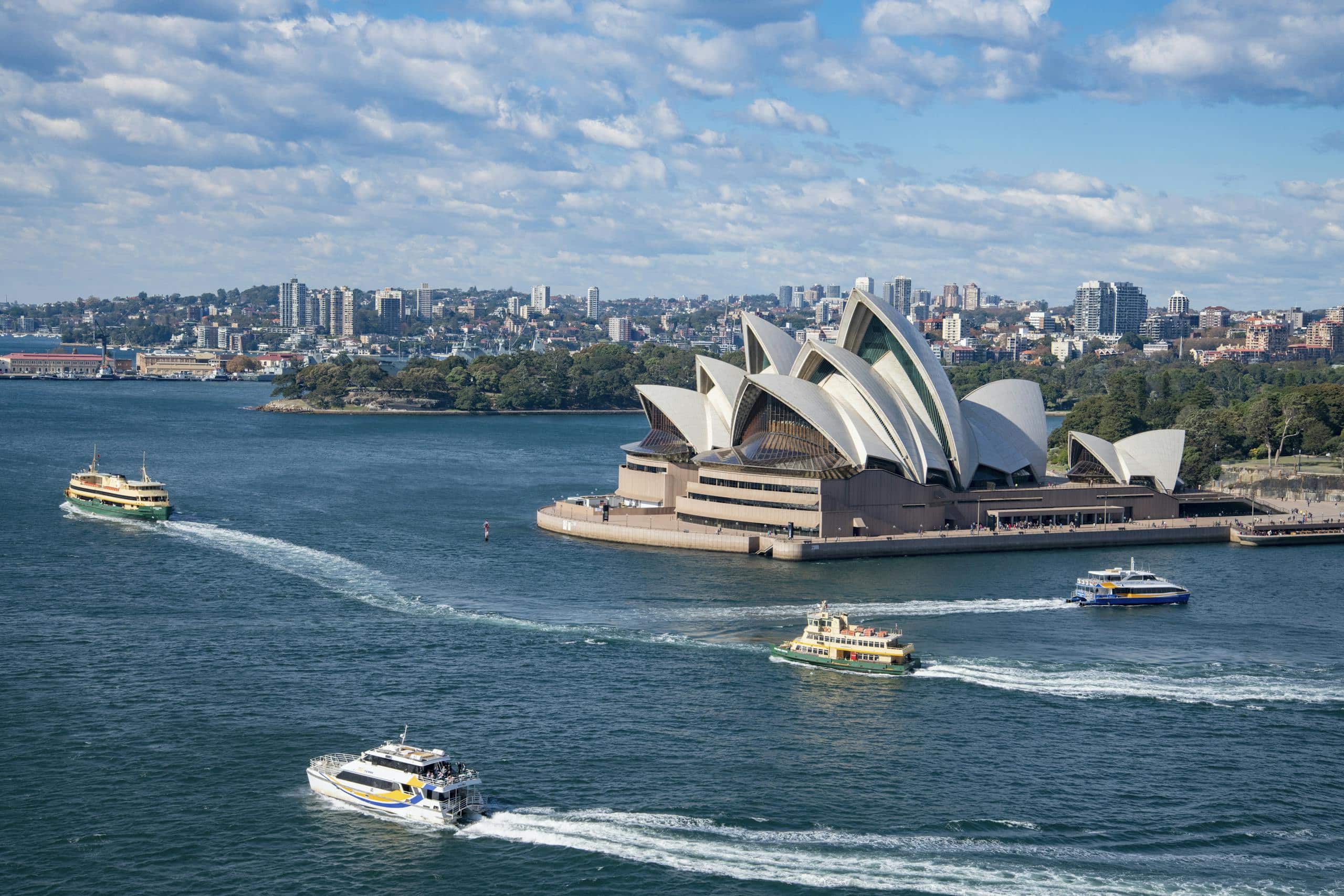
The Sydney Opera House stands as one of the most recognizable and revered Buildings of the 20th century. It is a masterpiece of late modern Architecture and a symbol of both a city and a nation. When the government of New South Wales announced an international Architectural Competition in 1956, it sought a national opera house on Bennelong Point, a dramatic peninsula in Sydney Harbour. The winning entry, by Danish architect Jørn Utzon, was a revolutionary concept. Judge Eero Saarinen famously rescued Utzon’s design from a pile of rejected entries. Utzon did not propose a conventional building; instead, he designed a lyrical, sculptural form of interlocking “shells” that seemed to float above a massive podium base.
However, this visionary Design remained almost entirely conceptual. Although it won the competition based on its poetic sketches, it presented an engineering challenge so profound that many considered it “unbuildable.” This complexity initiated one of the most challenging construction sagas in modern history.
The Engineering Impasse: The Problem with Free-Form Geometry
The core challenge of Sydney Opera House Engineering lay in the geometry of Utzon’s shells. Initially, his Design described them as “elliptical” or “parabolic” free-form concrete shapes. Ove Arup & Partners, the engineering firm, quickly discovered a massive problem: engineers could not mathematically define the geometry. In the pre-digital age of the late 1950s, calculating the structural stresses for such unique, non-repeating curves proved nearly impossible. Furthermore, the project faced astronomical Construction costs. Since every shell segment was geometrically unique, crews would have to custom-build the wooden formwork (the mold for the concrete), use it once, and then discard it. The cost of the formwork alone threatened to bankrupt the entire Project. This impasse lasted for nearly four years (from 1957 to 1961), ultimately pushing the project to the brink of cancellation and sparking intense political and Architectural Discussions.

The Engineering Breakthrough: The “Spherical Solution”
The Geometric Epiphany
The breakthrough for Sydney Opera House Engineering came in 1961. After years of intensive Architectural Research, tens of thousands of hours of early computer modeling, and countless failed prototypes, the engineering team, led by Ove Arup, and Utzon collectively realized the “Spherical Solution.” This was the project’s “Aha!” moment. They decided to abandon the undefined free-form curves. Instead, they based all shells on the geometry of a single, uniform object: a sphere with a radius of 75 meters (246 feet).
Predictability and Prefabrication
Defining all the shell “sails” as triangular segments cut from the surface of this single imaginary sphere transformed the challenge. The elegant solution simultaneously solved the two primary problems. First, the spherical geometry now defined the structure mathematically, allowing engineers to precisely calculate the stresses and load paths for every segment. Second, and most critically, this allowed for prefabrication. Crucially, because all shell segments shared the same curvature, the team could create a limited set of reusable molds to precast thousands of concrete “ribs” on-site. This single decision saved millions in Construction costs and time, successfully rescuing the project. Therefore, the shells are not the thin, delicate structures they appear to be; they are incredibly heavy, robust structures made of precast concrete segments held together by post-tensioned steel cables.
Structural Deep Dive: The Podium, The Foundations, and The Ribs
The Podium: The Structural Anchor
The brilliance of the shells often overshadows the engineering of the podium (Stage I of construction, 1959-1963). This massive, heavy concrete platform, clad in granite panels, acts as the structural anchor for the entire Building. The podium solves two key problems: Primarily, it provides the immense mass and foundation needed to resist the “outward thrust” of the shell arches. The shells constantly try to spread apart under their own weight, and the podium holds them together like a clamp. Moreover, the designers cleverly housed all the “back-of-house” functions offices, rehearsal rooms, dressing rooms, and machinery within the platform, which kept the main halls free and uncluttered, a key part of the Interior Design concept.
Foundations and Marine Engineering on Bennelong Point
Sydney Opera House Engineering also confronted a significant challenge at its base. Bennelong Point juts into Sydney Harbour, meaning the civil engineers had to secure the foundations against the water and into the underlying bedrock. To accomplish this, the construction team founded the podium on 588 concrete piers, which they drilled deep (up to 25 meters) into the stable Sydney sandstone. This deep foundation system was essential to support the immense, concentrated weight of the concrete podium (weighing 161,000 tonnes) and the 15-ton precast rib segments of the shells above. The project demanded extensive cofferdams to keep the harbour water at bay during the foundation work, a massive civil engineering Project in its own right.
Shell Construction : The Precast Ribbed Arches
The shells are technically precast concrete ribbed vaults, not “shells” in the traditional sense. Each “sail” forms from two opposing “half-shells,” and multiple, massive concrete ribs compose each half-shell. Crews cast these ribs (2,194 segments in total) on-site in sections using the reusable molds made possible by the Spherical Solution. Then, they lifted them into place using custom-built “Crepper cranes,” which were themselves an engineering marvel built to run on tracks laid on the arch as it was being constructed. Once a segment was in place, construction workers threaded high-tensile steel cables through ducts in the segments and post-tensioned them (tightened) to 250 tonnes, locking the ribs together into a rigid, self-supporting arch system. The distinctive chevron pattern visible on the tiles follows the lines of these structural ribs underneath.

Statistical Engineering Table: The Scale of the “Spherical Solution”
| Engineering & Design Element | Statistical Value | Unit | Engineering Significance to the Project |
| Total Project Duration | 14 | Years (1959-1973) | A massive time overrun (originally 4 years) due to the shell geometry impasse. |
| Final Cost | 102 | Million AUD | A staggering 1,400% over the original budget of 7 million, highlighting the cost of innovation. |
| Number of Precast Rib Segments | 2,194 | Segments | All derived from a single sphere, enabling mass prefabrication. |
| Weight of Largest Rib Segment | 15 | Tons | Required the design of specialized, on-site “Crepper” cranes. |
| Number of Roof Tiles | 1,056,006 | Tiles | A custom-developed, self-cleaning tile system (“Hoganas tiles”) from Sweden. |
| Radius of the “Spherical Solution” | 75 | Meters | The single geometric constant that made the entire Design buildable. |
| Number of Foundation Piers | 588 | Piers | Required to anchor the 161,000-ton podium into the harbour sandstone. |
| Glass Used in Façades | 6,225 | Square Meters | Custom-made laminated glass, another major technical challenge solved by Ove Arup. |
| Post-Tensioning Steel Cable Used | 350 | Kilometers | The “stitching” that holds the 2,194 precast concrete ribs together. |
The “Third Skin”: The Innovative Self-Cleaning Tile Façade
The Hoganas Tile Solution and Surface Engineering
Utzon was obsessed with the building’s surface. He rejected a dull, grey concrete shell, instead seeking a surface that would “play with the light” and “never look dirty.” After years of dedicated Architectural Research, he chose custom-made ceramic tiles from the Swedish company Hoganas. These tiles, now world-famous, are not purely white. Rather, they feature a mix of two colors: a glossy white and a matte, biscuity cream, which the crews arranged in a V-shaped “chevron” pattern.
This Design also provided an inherent engineering solution. The glossy finish of the tiles allows rainwater to sheet off, effectively washing away dirt and grime. Consequently, this makes the massive roof largely self-cleaning, a critical factor for long-term Sustainability and maintenance. Moreover, the mix of matte and glossy tiles prevents the shells from creating a blinding glare in the intense Sydney sun. Instead, the surface shimmers and changes character with the time of day, fulfilling Utzon’s vision. Architects consider these tiles one of the most innovative Building Materials of their time; crews did not glue them on, but held them in custom-designed precast “lids” bolted to the ribs, creating a ventilated façade.

The Interior Tragedy: Stage III and the Acoustic Compromise
The Utzon Controversy and Project Completion
The story of Sydney Opera House Engineering also includes a human tragedy. The immense technical challenges directly caused massive cost and time overruns. This created intense political friction with the new state government, culminating in Jørn Utzon’s resignation in 1966. He left the project before the interiors (Stage III) were even started and never returned to Australia to see his masterpiece completed. Following his departure, the government appointed a new team, led by Peter Hall, to finish the interiors.
The Great “Swap” and the Acoustic Failure
The new team faced a devastating problem. Utzon’s original Interior Design for the main hall (the largest shell) was designed for Opera. However, the engineers soon discovered that the hall’s shape (tall and narrow) was acoustically disastrous for opera, creating massive echoes and dead zones. The team made a drastic and controversial decision: they swapped the functions. They redesigned the large hall to become the Concert Hall (suitable for symphonies, which are less acoustically demanding). Meanwhile, they hastily converted the smaller hall, originally intended for plays, into the Opera Theatre. This compromise permanently plagues the building: the Concert Hall required large, clear acrylic “clouds” to be hung from the ceiling to fix the acoustics, while the Opera Theatre is notoriously cramped, with an orchestra pit too small for many grand operas. This remains the most contentious point in Architectural Discussions about the building’s function.

Conclusion
The Sydney Opera House stands as a definitive monument. It represents the point in history where complex, sculptural Architecture, enabled by the architect’s vision, and powerful structural engineering, facilitated by the engineer’s innovation, converged. Ultimately, the project cost 14 times its budget and took 10 years longer than planned. Nevertheless, it gave Cities around the world the courage to attempt the “unbuildable.” It redefined the relationship between architect and engineer and remains one of the most powerful Architectural Articles of human ingenuity a triumph of structural form and a tragedy of internal function.
✦ ArchUp Editorial Insight
Sydney Opera House embodies 20th-century Architectural Ambition, presenting a pioneering Sculptural Style of sail-like shells that appear to float above the harbor. The crucial Structural Innovation centered on the “Spherical Solution,” which rescued the free-form design from engineering impossibility, allowing for a Material Expression of precast concrete ribs clad in over a million self-cleaning ceramic tiles. However, the radical critique lies in the enormous Functional Cost Value and profound sacrifice; the initial engineering failure and the resulting complexity of the spherical solution led to massive time and budget overruns, culminating in the architect’s forced departure. Crucially, the fundamental Spatial Function was permanently compromised; management was later forced to swap the use of the two main halls due to disastrous acoustics, leaving the actual opera theatre cramped and functionally inadequate, a chronic acoustic failure at the heart of this global formal achievement.
A deeper Architectural Discussion within modern Architecture explores how innovative Design and advanced Construction methods reshape global Projects in the pursuit of sustainability and human-centered environments.



ArchUp Editorial Management
The article provides a comprehensive analysis of the engineering and architectural epic of the Sydney Opera House, with exceptional focus on technical challenges and innovative solutions. To enhance its archival value, we would like to add the following technical and structural data:
We would like to add that:
· Mathematical Spherical Solution: Implementation of spherical ellipsoid equation (x²/a² + y²/b² + z²/c² = 1) where a=b=75m, c=50m, enabling calculation of 10,000 coordinate points per shell
· Advanced Tiling System: “Höganäs” ceramic tiles with 0.7 friction coefficient, 450 MPa compressive strength, and frost resistance down to -30°C, using mechanical fixation allowing 5 mm expansion movement
· Geotechnical Engineering: 25-meter deep foundations in sandstone with 500 kN/m² bearing capacity, and drainage system handling 3 million liters of rainwater annually
· Technical Cost Analysis: 85% of additional costs attributed to custom engineering solutions, including specially designed 50-ton capacity cranes costing $2.5 million
Related Link:
Please review for a comparison of construction techniques for complex projects:
[Engineering Challenge: When Architecture Confronts the Technically Impossible]
https://archup.net/major-shifts-in-construction-technologies-from-traditional-methods-to-the-smart-building-revolution/