New Orchid-Inspired Financial Tower to Reshape Taipei’s Skyline

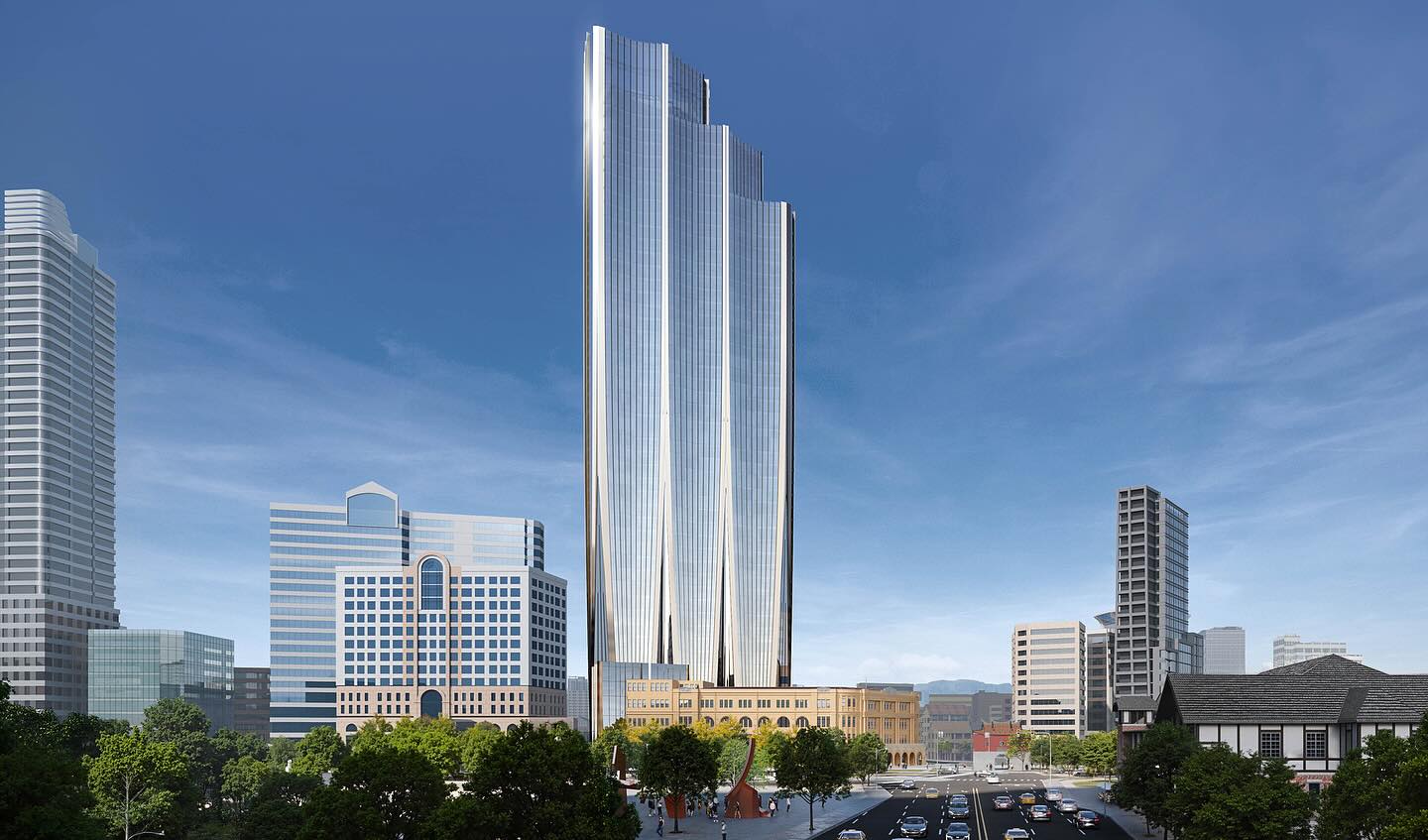
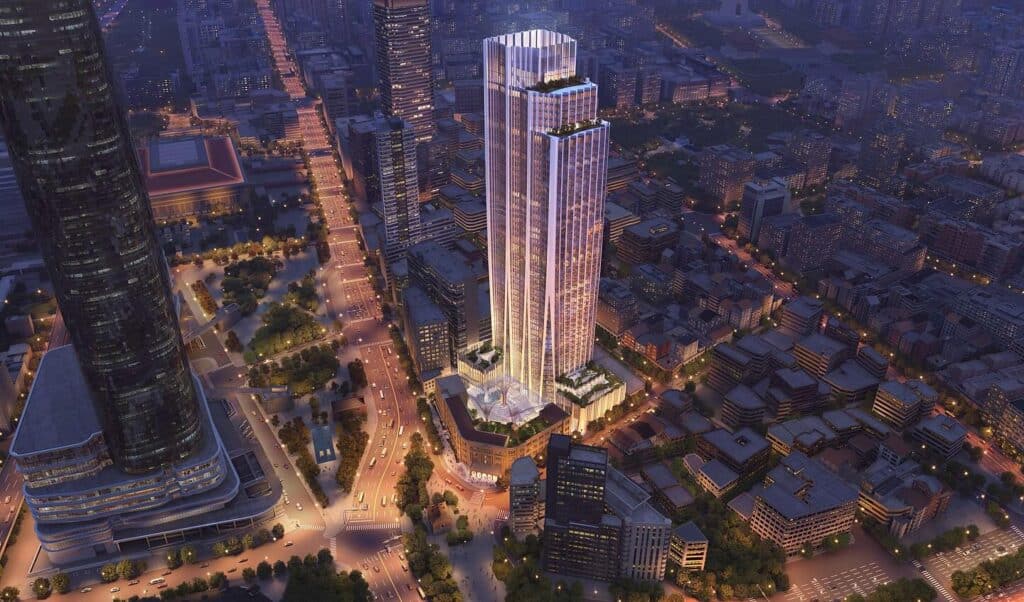
A new landmark is set to redefine the financial hub of Taipei. A striking 47-story Taipei financial tower will soon rise at the intersection of Zhongxiao West Road and Bo’ai Road. The development is a major piece of the city’s Western Gateway Project. Therefore, it aims to significantly upgrade the public realm. The project brings fresh global news to the architecture world.
A Blend of Modernity and Heritage
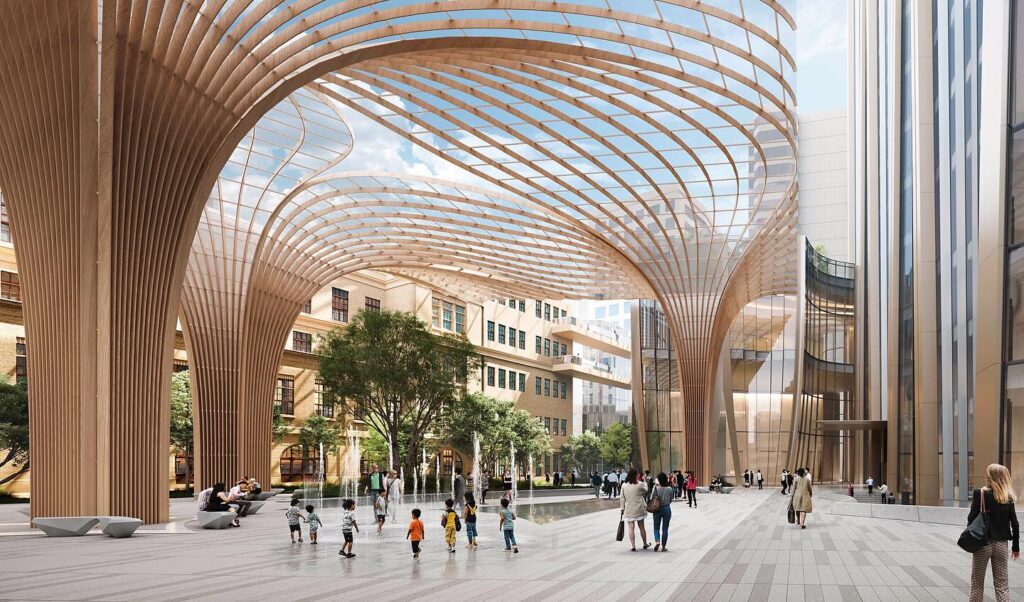
The project shows a deep respect for local history. It is located next to the historic Taipei Beimen Post Office, a restored site from 1930. The original ornate building will be transformed into a museum and cultural venue. Consequently, this preserves its rich history while creating a vital new public space. A large glazed canopy will shelter a new courtyard. This area is designed for public performances and events. This approach to urban planning ensures the district’s heritage remains a key part of the modern city.
Architecture Inspired by Nature
The tower’s architectural design is inspired by the native Phalaenopsis Orchid. Its form mimics the organic fluting structures found in the flower’s petals. This delicate fluting unfurls and extends outwards as it grows, supporting the flower. Similarly, the tower’s structure steps back from the adjacent heritage building, creating a dynamic silhouette. This design choice connects the modern structure to the island’s natural beauty.
Innovative and Sustainable Design
The Taipei financial tower incorporates advanced features for environmental performance. A responsive pleated façade system regulates solar heat and airflow. This allows the architecture to ‘breathe’ like a living organism. Additionally, this system is crucial for enhancing the tower’s sustainability in Taipei’s humid subtropical climate. The choice of building materials supports this green approach. The innovative façade is a key element of the project’s forward-thinking construction.
The design prioritizes walkability and accessibility. It links existing civic hubs with a series of new pedestrian plazas, courtyards, and walkways. This network of internal spaces preserves the area’s urban vistas and streetscapes. The project is a significant addition to the city’s collection of impressive structures. It sets a new standard for integrating large-scale developments into sensitive urban contexts, unlike many past projects.
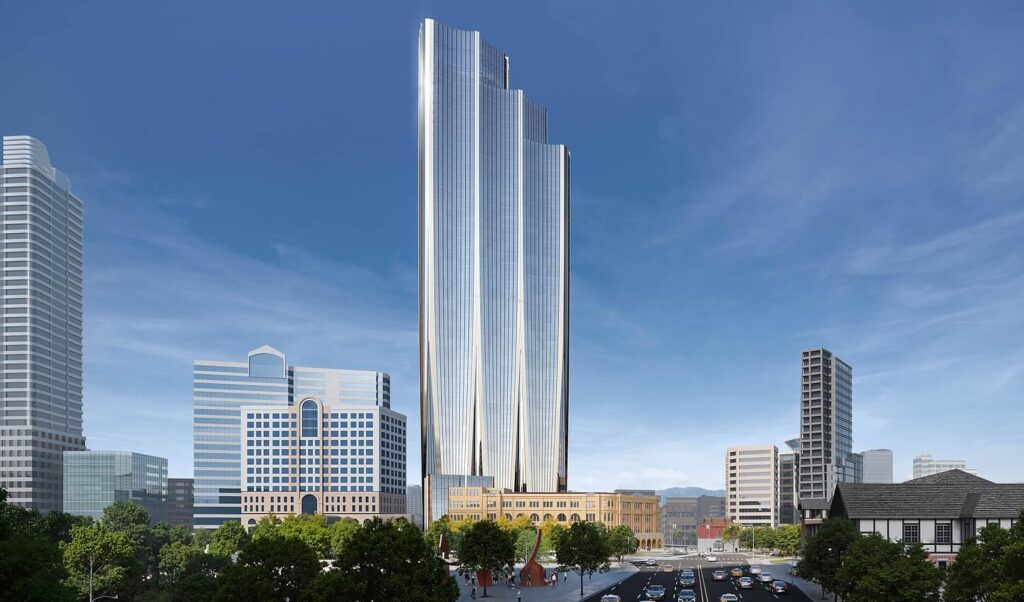
What impact do you think this new tower will have on Taipei’s identity?
A Quick Architectural Snapshot
The 175,000 sq.m project features a 47-story tower in Taipei’s Beimen district. Its design, inspired by an orchid, includes a responsive pleated façade for environmental control. The development integrates a restored 1930s heritage building, creating new public plazas and walkways to enhance urban connectivity.
✦ ArchUp Editorial Insight
The project is the result of competing urban mandates: the need for high-density financial centralization and legislated heritage preservation. The requirement to house critical financial institutions on high-value land dictates a vertical solution. Simultaneously, municipal-level urban renewal policies and historic preservation codes force the integration of public space and the adaptive reuse of a 1930s structure. This prevents a purely monolithic tower-and-podium model.
The resulting architectural form is a direct negotiation between these forces. A tall, sculpted tower satisfies the economic and institutional need for density, while extensive ground-level plazas and walkways satisfy the civic and cultural mandates. The building’s responsive façade system is the technical solution applied to meet climate-specific energy performance targets. The project is the logical output of maximizing financial-sector consolidation within a strict regulatory framework of public-realm and heritage obligations.