Architecture Against Time: From the Sacred Cave to the Cryogenic Vault


In the early months of 2026, the global conversation surrounding human longevity has undergone a radical spatial shift. High net worth investors are no longer merely funding biological interventions; they are commissioning the development of massive, climate stabilized architectural complexes designed to suspend the biological clock itself. Cryogenic preservation, once relegated to the fringes of science fiction, has now solidified into a specialized sector of real estate and engineering. Yet, the true significance of these facilities lies not in the liquid nitrogen or the automated medical arrays but in the fundamental nature of the spaces they provide. These chambers represent a refined, clinical evolution of a primal human instinct. They are the latest chapter in a long history of using the built environment to negotiate with the inevitability of decay. From the earliest hollowed stones to the most advanced laboratories, we have always used the enclosure as a weapon against the erosion of time.
To understand this contemporary obsession, we must look back to the first architectural intervention in human history. Long before the first wall was raised or the first dome was cast, there was the cave. The cave was not a creation of man, but it was the first volume over which he exerted a degree of control. Inside this geological shell, humanity experienced the first separation from the chaotic external world. The interior offered a stabilized temperature, protection from the shifting winds, and a darkness that could be curated. This was not merely a shelter from the rain; it was the first architectural envelope. It marked the moment where humanity realized that a contained space could offer a different rhythm of existence. In various cultural and religious narratives, the cave appears as a vessel for suspended animation. The story of the People of the Cave, as documented in sacred texts, presents the cavern as a space that successfully decoupled the body from the passage of external time. While theological interpretations vary, the architectural observation remains consistent. The enclosed void acts as a mediator between the human form and the entropic forces of the universe.
As civilizations matured, this instinct for preservation evolved into complex systems of monumental masonry. The Pyramids of Giza were not merely tombs but highly engineered machines designed to protect the physical vessel and the metaphysical memory for eternity. In the modern era, our museums and archives fulfill a similar function. They are temporal regulators that isolate artifacts from the moisture and light that would otherwise reclaim them. Every museum is a concentrated effort to freeze a specific historical moment. This realization is currently fueling a surge in Architectural Research regarding how we might design for extreme longevity. Whether we are discussing an ancient reliquary or a contemporary data center, the underlying logic remains identical. We build to delay the inevitable process of loss.
The year 2026 has brought a new economic weight to this discussion. With global debt reaching a staggering 348 trillion dollars, the pressure to preserve existing assets has never been higher. We are witnessing a transition from a culture of disposable construction to one of deep preservation. The discourse surrounding Sustainability is often framed as an environmental obligation, yet at its heart, it is a temporal strategy. We are attempting to build structures that outlast the financial cycles that created them. This economic reality has turned the focus toward materials and methods that can withstand the centuries. In this context, the cryogenic vault is merely the most extreme expression of a global desire for stability. It is an architecture that seeks to achieve through engineering what the bear achieves through hibernation. Since humans lack the biological capacity for long term stasis, we have externalized that function into our buildings.
The modern cryogenic facility is the contemporary descendant of the sacred cave. These structures utilize liquid nitrogen to maintain a constant temperature of minus 196 degrees Celsius, creating an environment that is entirely artificial. Unlike the cave, which relies on the thermal mass of the earth, the cryogenic chamber is a product of total mechanical control. Yet, both environments share a quiet ambition to buy time from the inevitable. If we analyze these spaces through the lens of modern Construction, we see that they are the most isolated interiors ever created. They represent the ultimate boundary between the inside and the outside. In the external world, time flows through the movement of air, the shifting of light, and the fluctuation of heat. In the interior of the vault, all these variables are neutralized. The interior is organized time, while the exterior is natural time.
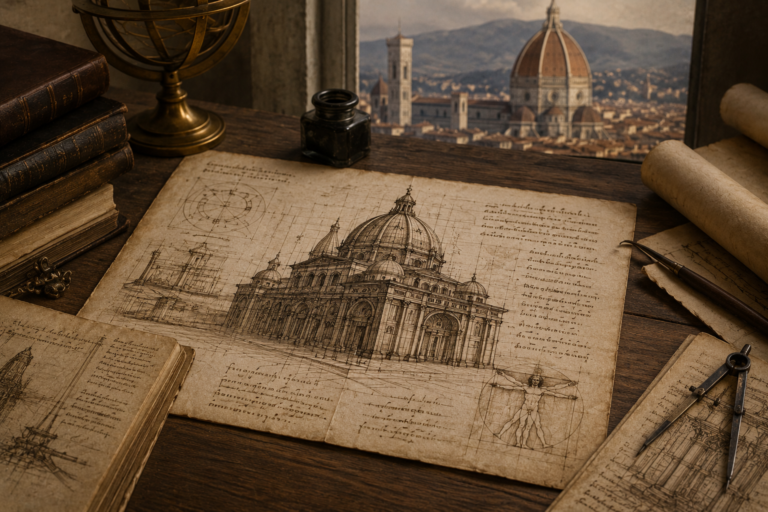
This architectural negotiation with entropy is not limited to the preservation of the body. It extends to how we design our Cities and public spaces. We are seeing a renewed interest in monumentalism, not for the sake of vanity, but for the sake of continuity. In an era of rapid digital liquidation, the physical landmark serves as a necessary anchor for collective memory. This is evident in the recent wave of Competitions for heritage revitalization, where the goal is to breathe new life into structures that have already survived the centuries. The architect is no longer just a producer of the new; the architect is becoming a curator of the enduring. This shift is reshaping the very definition of Design in the twenty first century. We are moving away from the “event” of the building and toward the “lifecycle” of the building.
The technical complexity of these preservation projects is immense. Data from sources like Saudipedia indicates that in the major urban expansions of the Middle East, the focus has shifted toward high durability systems and advanced climate control. The Grand Mosque expansion, for instance, is a testament to an architecture designed to handle massive human densities while maintaining a sense of eternal order. This level of operational complexity requires a total integration of management and masonry. Furthermore, academic inquiries on ResearchGate suggest that the next frontier in Architecture is the development of “self healing” materials and energy harvesting systems that can maintain a building’s integrity without human intervention. The goal is to create a structure that can self regulate its own temporal decay.
One must ask what exactly we are trying to save when we build these vaults against time. In some cases, it is the physical body. In others, it is the digital memory or the cultural artifact. But in every case, it is the “Meaning” that we seek to protect. Architecture has never been neutral toward time. It has always occupied a position of negotiation. It builds a wall against erosion. It creates a stable environment within a changing world. Even the simplest home is a modest attempt to fix a family’s life within a set of controllable boundaries. As we track the latest News in the field, we see that the most significant Projects are those that provide a sense of permanence in an increasingly transient world.
The final thesis of this inquiry is that architecture does not stop time, but it certainly reorganizes its impact. We cannot defeat the fourth dimension, but we can negotiate the terms of our surrender. From the hallowed silence of the monastery to the clinical hum of the cryogenic laboratory, the ambition remains the same. We build to buy a few more seconds, a few more years, or a few more centuries from the inevitable. The cave, the tomb, and the vault all prove that the enclosure is our most effective tool for temporal resistance. While the tools of the trade have evolved from the stone chisel to the AI algorithm, the human desire for stasis remains the most powerful driver of the built environment.
Architecture is the art of delaying disappearance. It is a spatial prayer for continuity in a universe that favors entropy. As we look toward the future, the successful architect will be the one who understands that the most valuable material in the studio is not the marble or the steel, but the second. We are not just building for people; we are building for history. The nest of the future is not just a place to live; it is a place to remain. In the end, we do not build to change the world; we build to ensure that a small piece of it stays exactly as it is.
✦ ArchUp Editorial Insight
The emergence of cryogenic preservation facilities as a recognized sector of real estate and engineering is not primarily a scientific development — it is the spatial consequence of extreme wealth concentration and its particular anxiety about mortality. When capital accumulates beyond the scale of meaningful expenditure, it turns toward the one problem money has historically failed to solve, and it commissions architecture to externalize that ambition. The cryogenic vault is therefore the logical built outcome of a specific economic condition: a post-scarcity elite that has exhausted conventional status signaling — the tower, the island, the private orbital flight — and now requires infrastructure that performs permanence at the biological level. What the article frames as a philosophical continuum from cave to vault is more precisely a story about who, in each historical period, possessed sufficient surplus to institutionalize their fear of disappearance into stone, marble, and now liquid nitrogen — while the majority of the population has always built for shelter rather than eternity, a distinction that carries significant implications for how we assess what architecture is actually produced for, and by whose anxiety it is ultimately shaped.