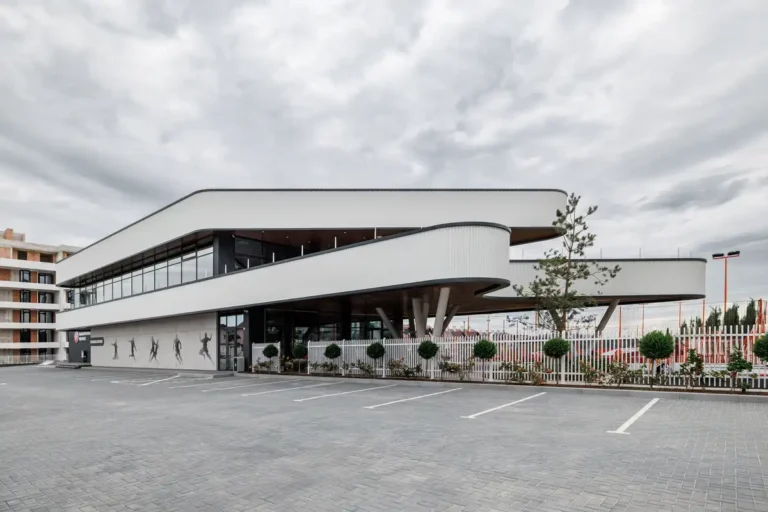
The Davis Center at Harlem Meer in Central Park explores integration of landscape and architecture

The recreation facility constructed at the northernmost part of Central Park is a beautiful combination of built form and natural landscape. The project, which has been designed as an all-year-round attraction, features a swimming pool, an ice rink, and a public park along with other amenities for the public use and it is located in a way that the park’s natural slope is taken advantage of so that the landscape goes over the building’s roof. The design of the building places the existing ecology and community access rather than the isolation of facilities at the forefront.
Project Overview
The facility covered a significant part of the northern park area, and the earth was cut away in such a way that only a small part of its volume was seen above the ground, and thus, the visual impact on the park landscape was greatly reduced. The roof shows the natural land that the building occupies and allows walking and planting there as well. The architecture consists of locker rooms, and restrooms for skaters and swimmers, as well as the public circulation that opens up to the landscape. The design shows that architecture can be in such a large scale, at the same time, responding to both terrain and urban life.

Design Logic
The idea of the design places the shapes of the building underground so that the landscape can continue without interruption. A big glass wall not only makes the interior of the building visible to and accessible from the outdoors but also links the movement of the visitors inside the building with that on the boardwalk and marsh outside. The use of shadows, overhangs, and natural ventilation are some of the ways the building conserves energy passively while at the same time; there is still a feeling of openness and visual continuity between the building and the nature around it.
Table: Key Programmatic Elements
| Element | Function | Design Role |
|---|---|---|
| Green Roof & Terrain | Public circulation and planting | Extends the park surface over the building |
| Pool / Rink Hall | Swimming in summer, skating in winter, green lawn in shoulder seasons | Flexible program embedded within landscape |
| Boardwalk & Marsh | Ecological corridor and visitor path | Re‑connects park topography and water systems |
Materiality and Environmental Strategy
The material palette takes advantage of the local stone, wood from responsible sources and high quality glass to bring down both embodied and operational carbon footprints. The glass windows allow the interior to see and be ventilated by nature but still keep glare and bird collisions at bay. The planting on the roof and the reduction of the area covered with impervious surfaces are ways of managing stormwater and restoring nature. The use of materials in the project gives a fresh view of how they can be both narrative and sustainability performers.

Urban and Social Context
The building, which is extremely close to one of the most popular parks in the world, puts recreation model more into the city and landscape integration than stand-alone equipment. The design, by ways of paths, gardens and water, holds up public access, urban ecosystem and park life. This layering of program, landscape and city life is what the new design for public space is all about.

Architectural Insights
For both architects and students alike the project is a demonstration of how large-scale public buildings can be in harmony with, rather than in contrast to, the landscape. It is stressed that shape, use and place must be brought into line at the very beginning of the process. The combination of program flexibility, ecological strategy and material clarity makes the project a relevant study in sustainable research and practice.

✦ ArchUp Editorial Insight
The Davis Center, situated at Harlem Meer, within the Central Park area, is a perfect example of the architecturally and the landscape blended perfectly. The design, by burying the building on the slope of the park, allows for a continuous flow of the green roof and the topography, thus the public pathway, the seasonal pool, and the ice rink are all connected to nature. Glazing and open layouts all together furnish visual and physical connections, while also using sustainable materials and adopting passive methods that bring about a lesser environmental impact. The project is a living example of how recreation infrastructure can not only integrate but also coexist with urban biodiversity, thus granting both ecological and community access. It poses a challenge for the architects to provide a different concept of embedding program in the landscape which has the win-win combination of balancing flexibility, public interaction, and environmental sensitivity in large-scale civic projects.

Conclusion
The Davis Center at Harlem Meer is a conscious example of the union of the two realms, architecture, and landscape. The facilities are dug into the ground, the ecological flows are supported, and the public access is provided, thus the project transcends the common recreation typologies. It provokes thinking about the future public architecture that may serve the environment, community, and urban context simultaneously.

The photography is by Richard Barnes.
Explore the Latest Architecture Exhibitions & Conferences
ArchUp offers daily updates on top global architectural exhibitions, design conferences, and professional art and design forums.
Follow key architecture competitions, check official results, and stay informed through the latest architectural news worldwide.
ArchUp is your encyclopedic hub for discovering events and design-driven opportunities across the globe.
Brought to you by the ArchUp Editorial Team
Inspiration starts here. Dive deeper into Architecture, Interior Design, Research, Cities, Design, and cutting-edge projects on ArchUp.