The inspiration behind the colors of traditional African architecture,
The cultures of African societies are intrinsically linked to color.
From fabrics to clothing, products, sculptures, and architecture,
different societies explore rich, vibrant colors that are bright, expressive, and joyful.
Through different shades, shapes, contrasts, motifs, and motifs,
color is embraced as a non-verbal language, a palette for storytelling, and a sense of cultural identity.
Although the use of color in African societies may appear decorative on the surface,
it is highly symbolic, with a deep sense of history behind it.
Traditional African architecture Ethnic communities endowed their homes with color through ornamentation,
and expressed it with religious and cultural patterns,
She used them on façades to tell family stories,
creating labyrinths of community architecture that not only celebrate color but also explore its ethnic meaning.
A look at the exploration of color in the architecture of some selected ethnic communities within the continent;
Their creation began with natural pigments, the history behind their common uses,
and the symbolic meanings they convey.
In harmonizing ideals that inspire the use of color in traditional African architecture.
Ndebele homes The Ndebele are an ethnic group that originated in the southern parts of Zimbabwe and the northern part of South Africa in the eighteenth century.
They are known for their territorial dispute with the neighboring Boer tribe,
which led to the loss of their homelands. As a result,
their people were forced to work as indentured labourers.
During this period of subjugation, the Ndebele people discovered their own art form of colour.
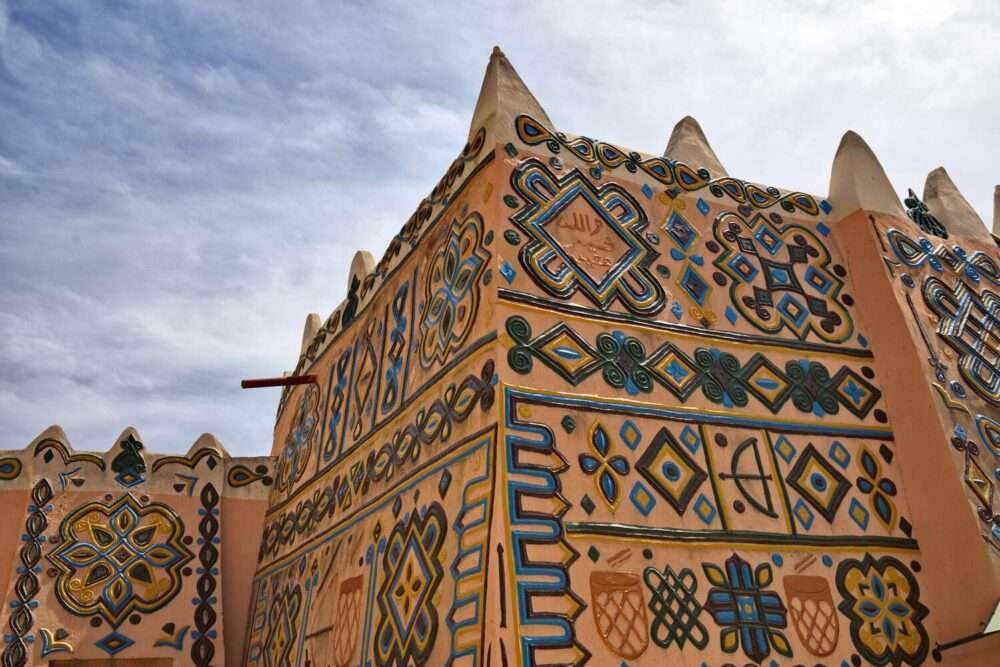
The women in the community painted their homes with patterns and colors
as a discreet way of expressing grief and cultural resistance under the control of the Boer planters.
They started with natural earth tones of black and white and crafted them with extreme precision to express geometric patterns.
Over the generations, this color pattern has grown into a 5-color system:
Black represents people in the spiritual realm, white symbolizes purity,
and red represents passion and strength.
Yellow represents fertility and hope, and green represents land and agriculture.
Weaving these colors and their symbolic meanings through geometry is a form of language for the Ndebele people.
With their homes as a canvas,
they express colorful patterns that can convey the status of the homeowner,
Or announcing marriage, or praying, or protesting.
Although Ndebele Color Patterns are now popular all over the world and have been applied in the design of products such as cars and aircraft,
Her inspiration, however, reminds us of how color can be used in architecture beyond an element of decoration and also as a language.
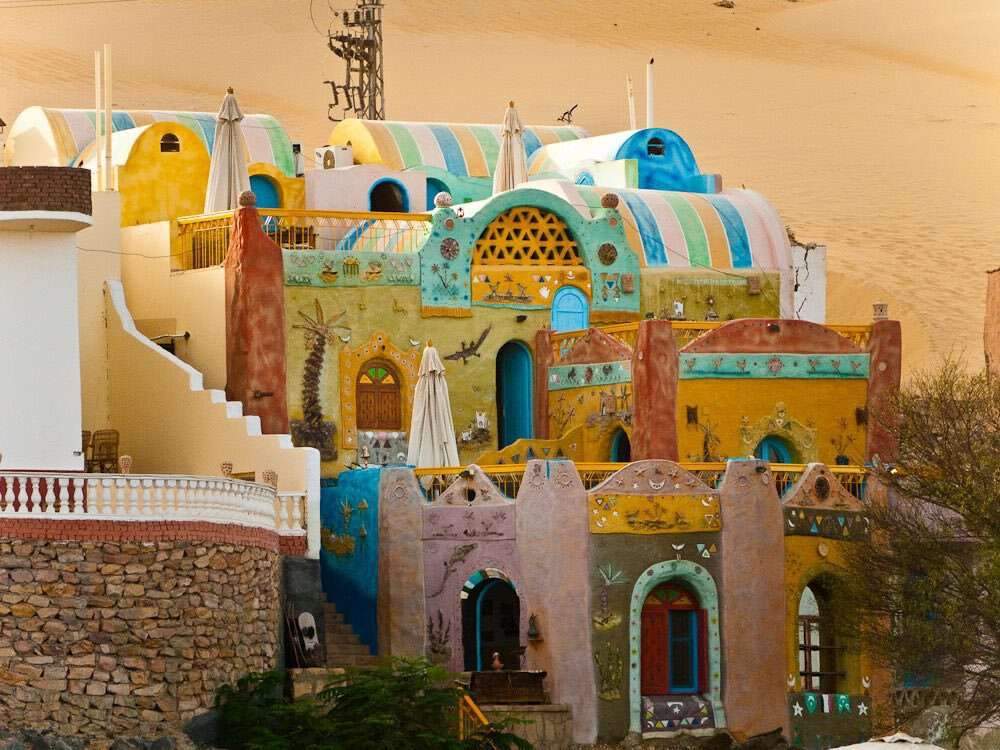
Nuba houses Nubia is one of the oldest civilizations of the Nile Valley, located in what is now northern Sudan and southern Egypt.
With a history that can be traced back to at least 2000 BC through antiquities,
artifacts, and written records, it has linked history with ancient Egypt,
Because of territorial disputes and disagreement over control of trade routes and competition for leadership.
The tribe’s exploration of color in architecture is a product of recent history.
As a result of the flooding from the High Dam,
the Nubians had to move to new areas between Aswan (Egypt) and the second cataract on the Nile (Sudan),
Where they built 35,000 homes.
The inspiration behind the colors of traditional African architecture
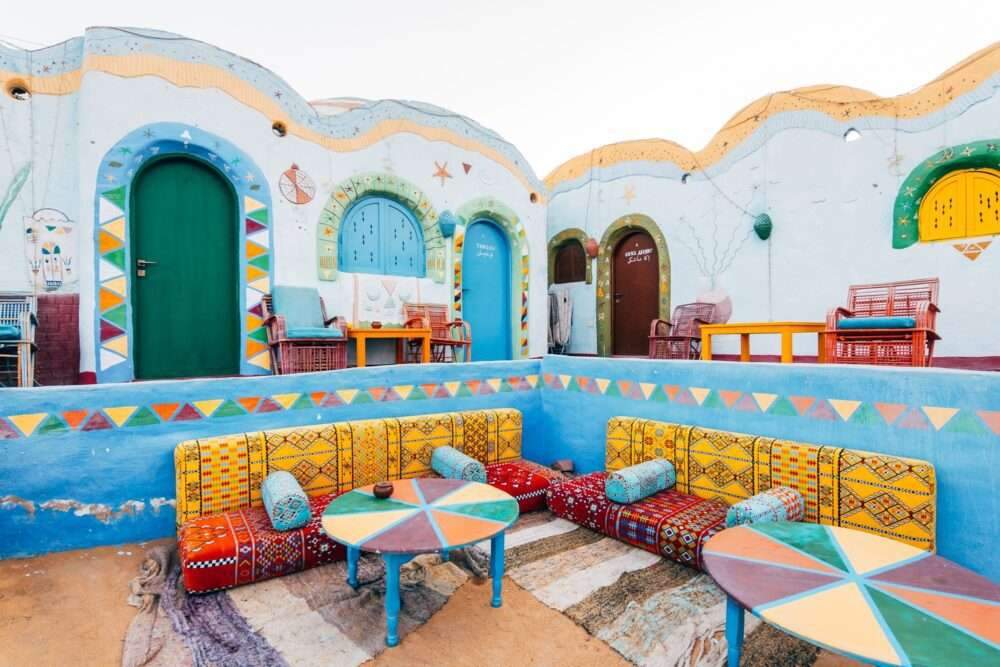
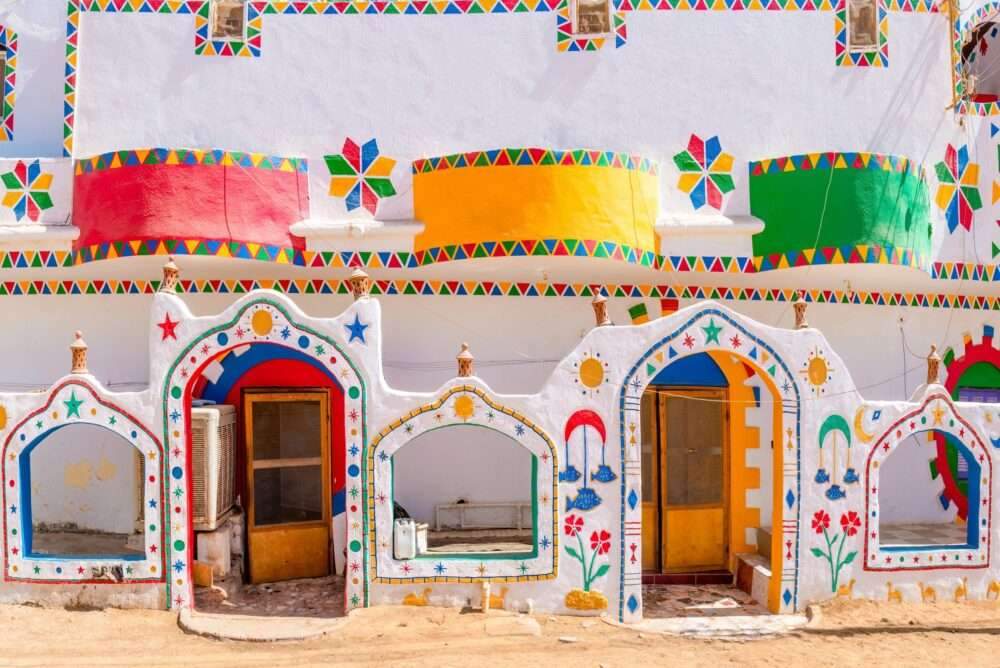
They have preserved the traditional Nubian architectural character represented by the use of dried mud bricks and vaulted ceilings,
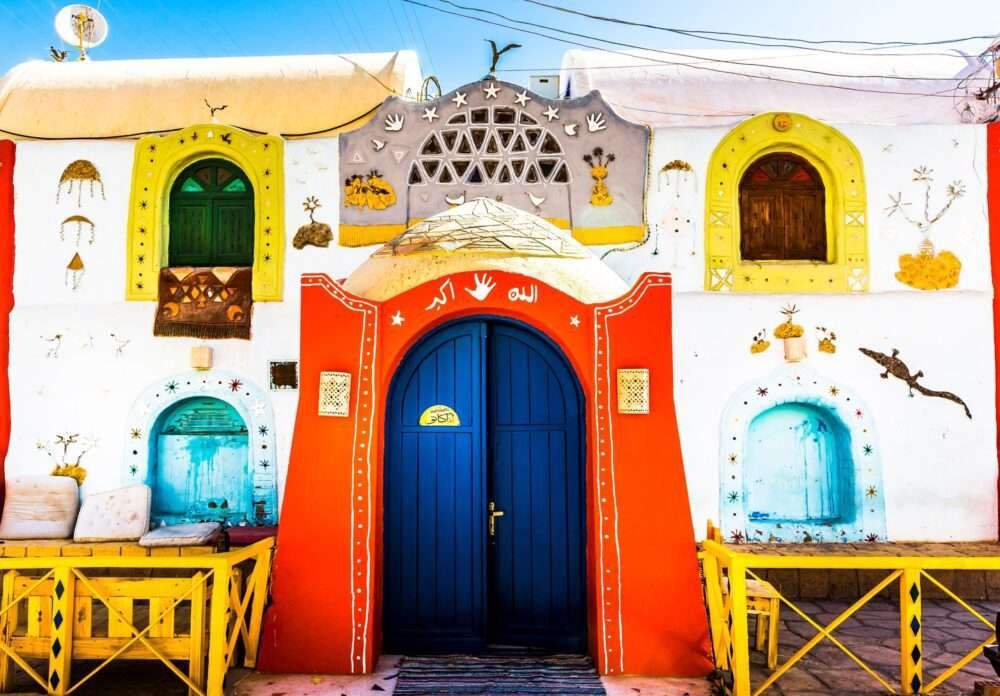
But they added a large number of bright colors, symbols,
and geometric patterns to the exterior facades of their homes.
Most of the paintings and decorations on the houses were based on religious connotations,
such as an eye painted with wall paintings depicting the hand of Fatima or the eye of the Prophet of Islam.
Nubians believe these symbols provide protection against evil forces and use the colors to create envelopes that they believe protect them.
They also use floral motifs on the facades, and some of them contain contemporary elements such as trains, planes, cars, and ships.
Which brings a colorful and cheerful feel to their architecture.