

The Passion Project: A Modern Home in Austin Designed for Vintage Car Aficionados

In Austin, Texas, two former race car drivers have found a way to merge their passion for automobiles with the comforts of home. The “Autohaus,” designed by Matt Fajkus Architecture, is a residence that treats cars not merely as vehicles, but as an integral part of daily life and aesthetic expression.
An Architectural Statement: The Bold Cantilever
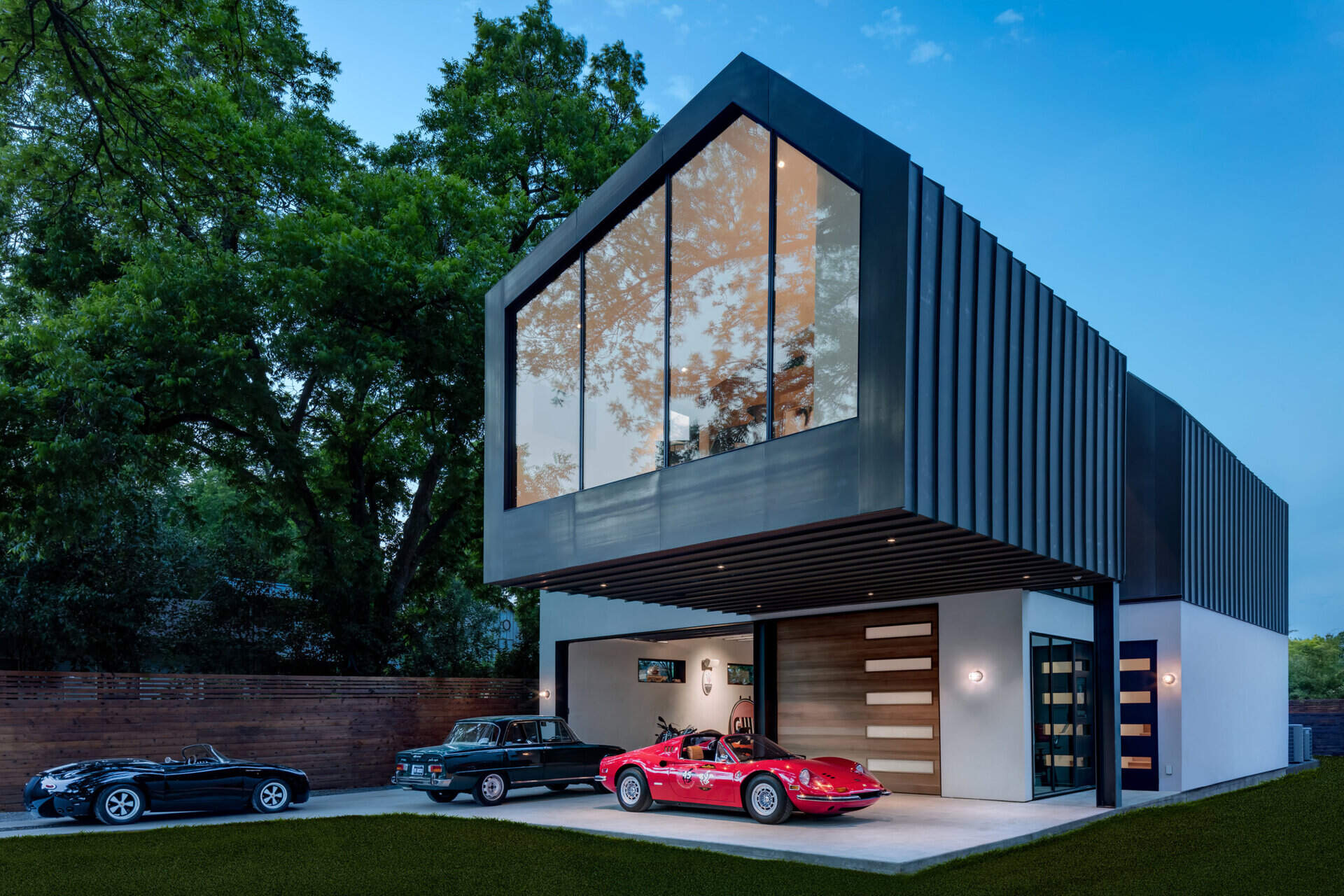
The most striking feature upon arrival is the twenty-foot-high cantilever that appears to float above the driveway. Supported by massive steel beams, it creates a covered carport and gives the building a bold, industrial character. This architectural gesture serves as a powerful visual statement, hinting at the unique experience within—a home where engineering and art converge.
Custom Craftsmanship: Purpose-Built Details
Every detail of the Autohaus was purpose-built. The architects worked closely with contractors to design and fabricate the steel doors and windows on-site, ensuring precise detailing and a perfect fit. This high level of collaboration resulted in a finish worthy of the classic cars it houses, reflecting values of optimization, strength, and longevity.
More Than a Garage: A Multi-Functional Hub
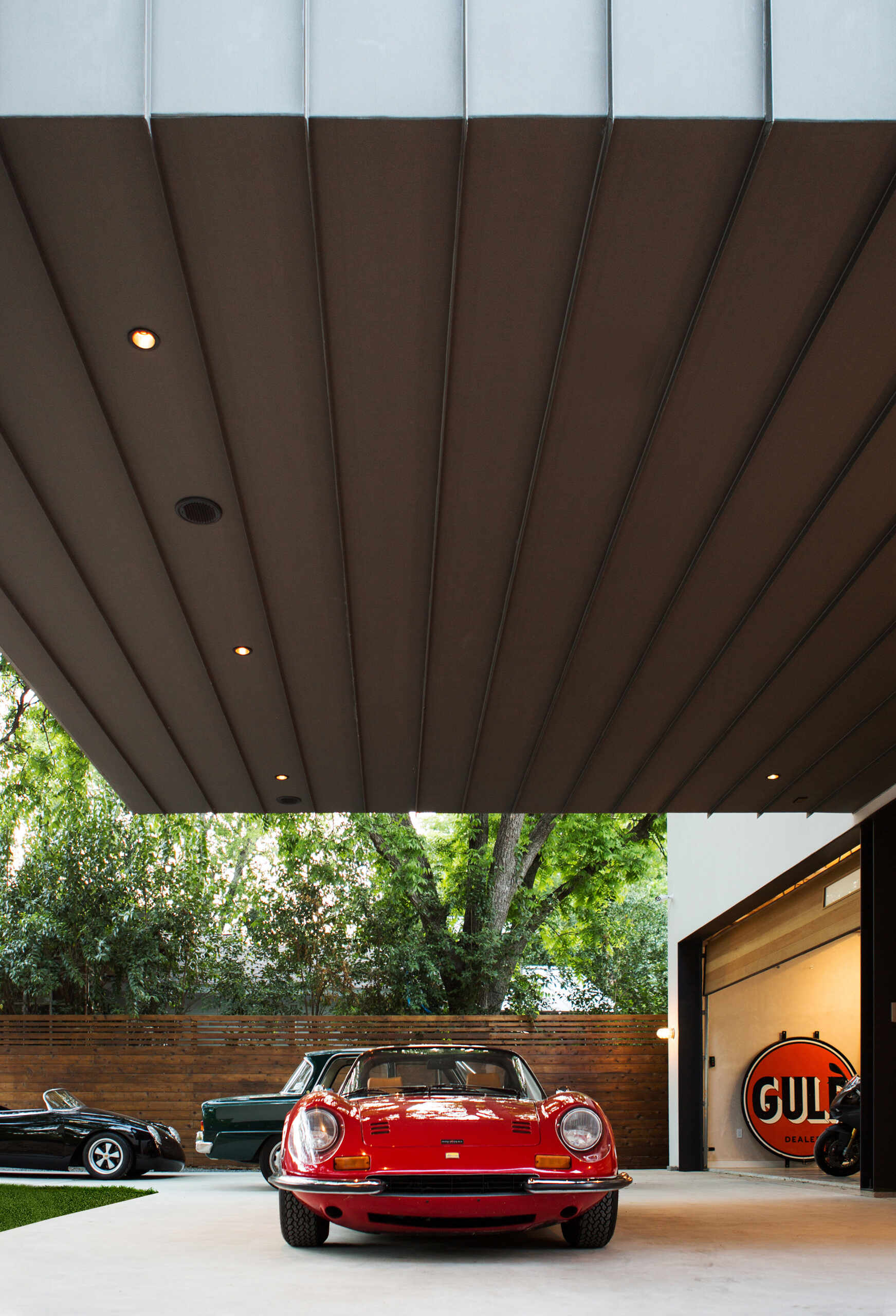
The ground floor is dedicated to the owners’ greatest passion: their cars. The spacious garage functions as a workshop, a showroom, and a social space, filled with natural light and room to move freely. It is equipped with a car lift, a mechanical area, and garage doors at both ends to facilitate easy vehicle movement. The open-plan design allows the couple to work, teach, host gatherings, and display their collection as if in a living museum.
The structure is built with lightweight, insulated composite concrete blocks, exceeding modern performance standards. The highly insulated, airtight building envelope maintains a comfortable temperature in the garage and ensures energy efficiency, proving that functional spaces can be both elegant and sustainable.
From Showroom to Living Space: A Change in Atmosphere
A light-filled staircase connects the garage to the living quarters above. The simple wooden stairs and slender black railing lead to the second floor, where the mood shifts from industrial to warm and refined.
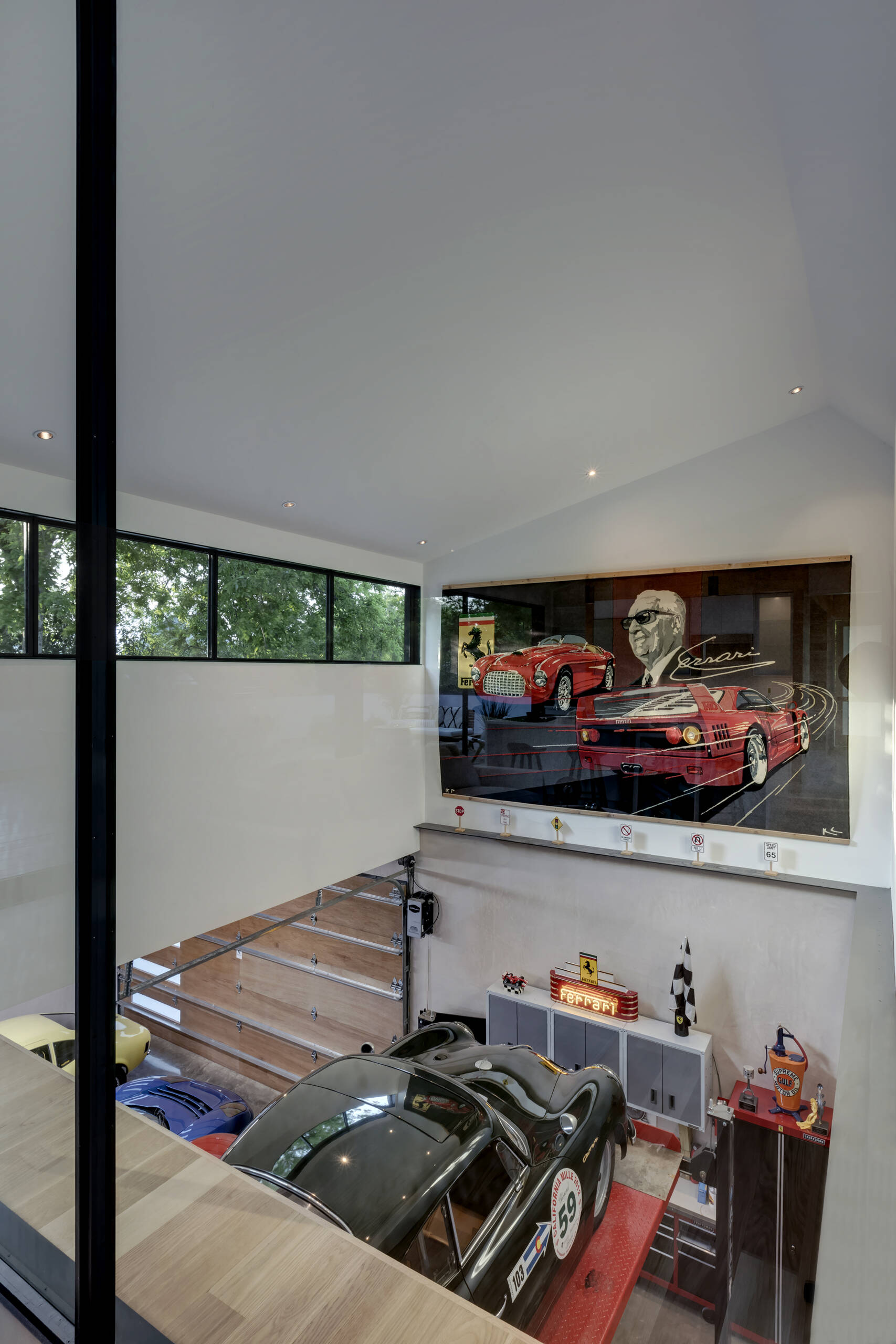
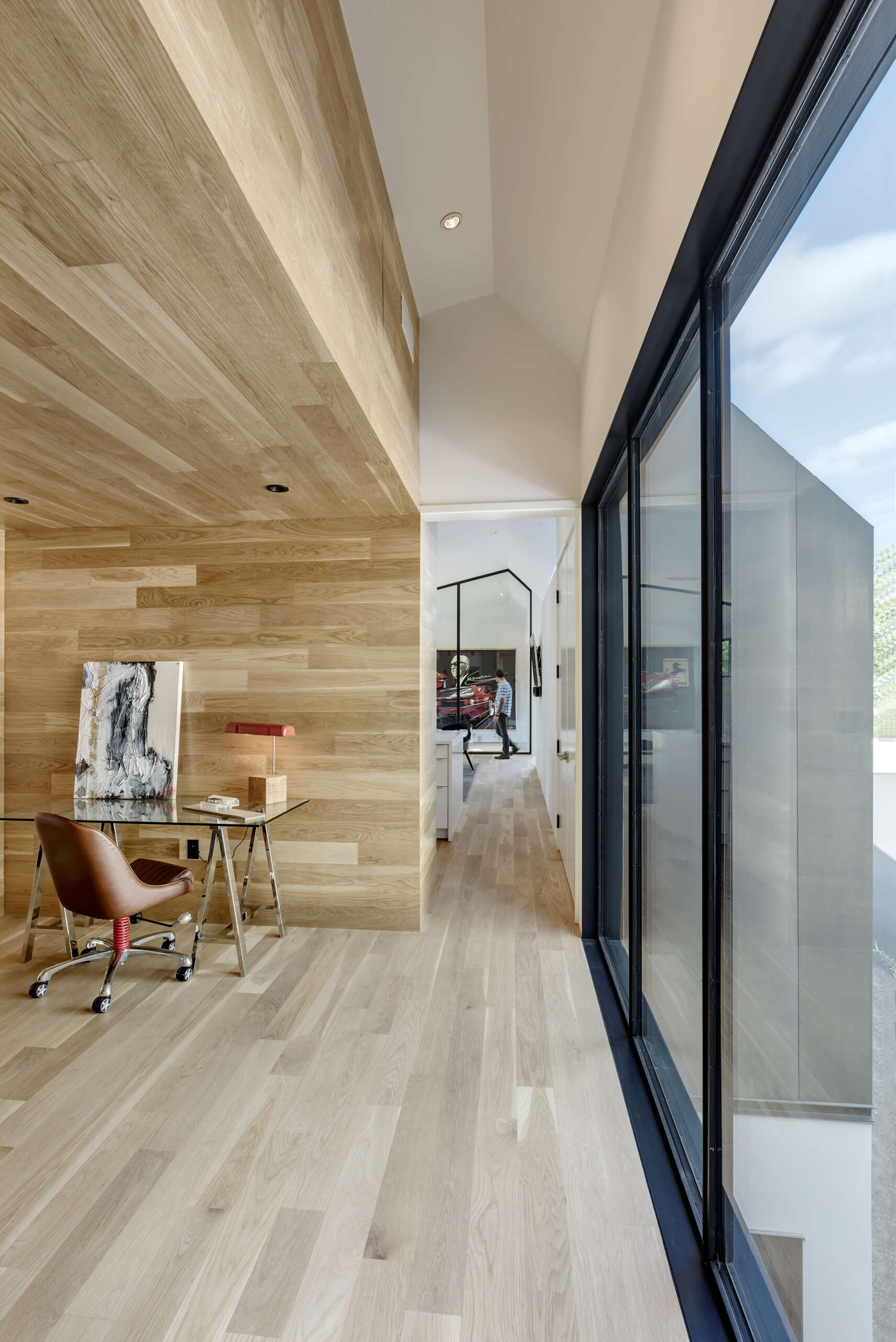
The upper floor seems to float above the garage, with its black-framed glass wall providing a direct view of the cars below. The architects used this visual connection to blur the lines between hobby and home, a perfect reflection of the couple’s intertwined lifestyle.
Integrated Living: Maximizing Light and Space
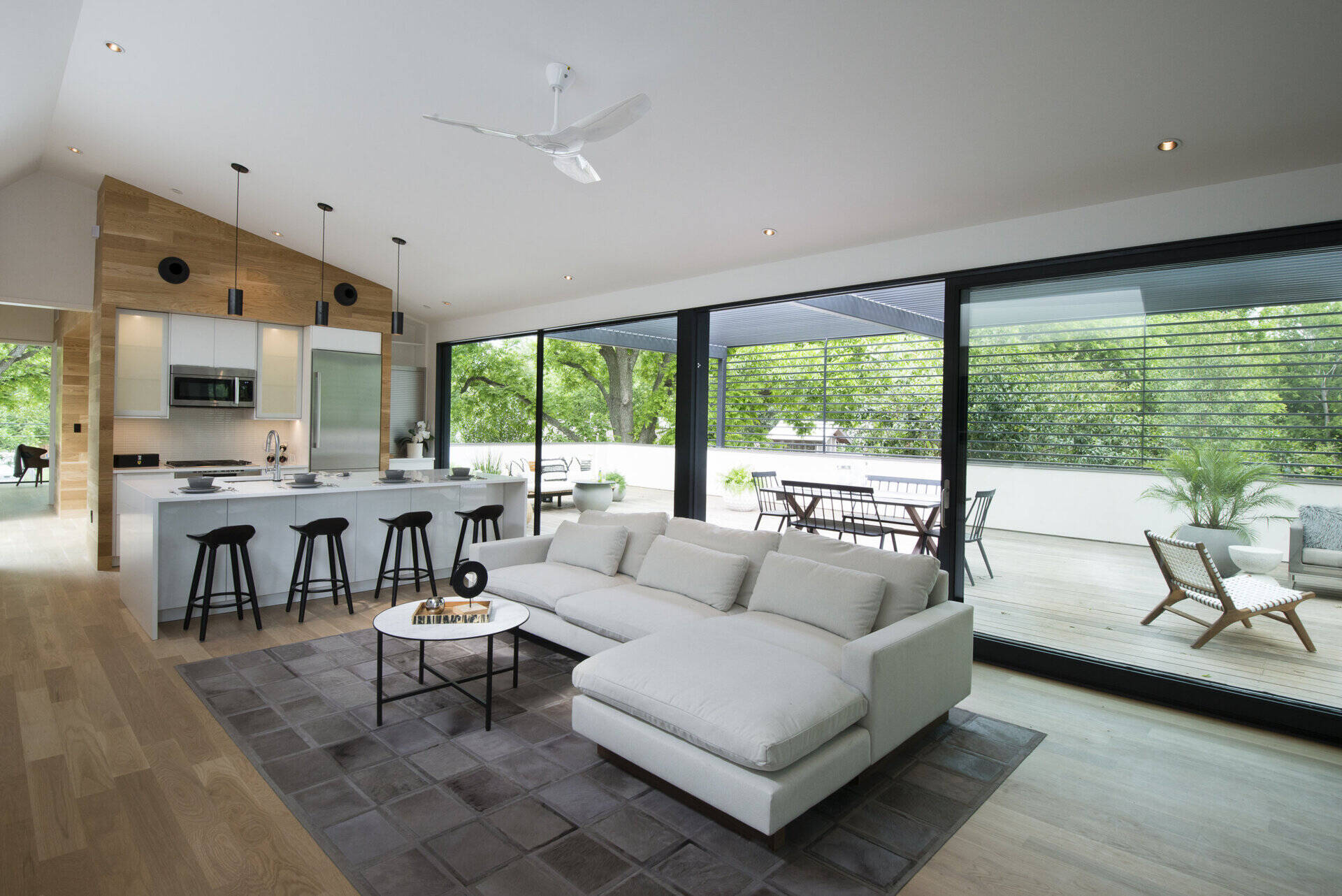
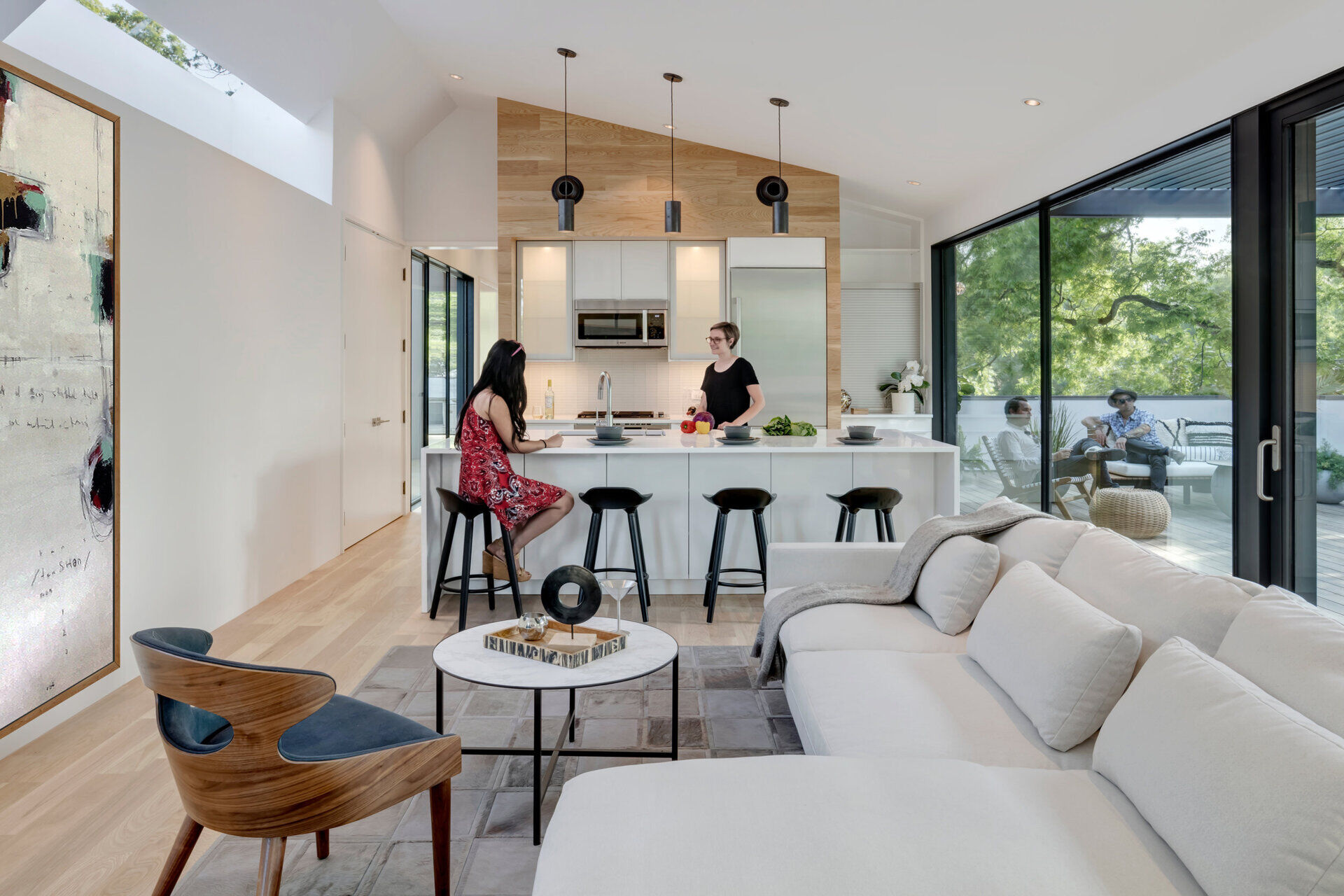
The second floor is a compact yet open living space, designed around light, warmth, and flexibility. The living room and kitchen share a single, well-ventilated area, blessed with wooden floors and a warm feature wall that balances the clean white surfaces.
Large sliding doors made of steel and glass open onto a rooftop terrace, effectively extending the living space outdoors. This provides a quiet retreat above the hum of the garage below, surrounded by treetops and sunlight.
A Thoughtful Sequence of Private Spaces
Off the kitchen, a small passage leads to a home office nook, wrapped in natural wood for warmth and focus. Further along is the bathroom, a blend of gray floor tiles and white wall tiles, illuminated by a skylight that brings daylight directly into the shower.
At the end of the hall lies the bedroom, which projects cantilevered from the front of the house. Through its floor-to-ceiling windows, the couple can overlook the trees and the street below—a serene sanctuary floating above their mechanical world.
The Autohaus is a celebration of passion, skill, and the beauty of design that reflects its owners’ journey from the racetrack to architectural innovation.
✦ Archup Editorial Insight
This project explores the integration of a specialized automotive program within a domestic space, positioning the garage as the central volume. The design’s primary reliance on a vertical separation between the industrial garage and the residential upper floor creates a strict functional segregation that may limit fluid horizontal interaction between living and hobby domains. The pronounced cantilever, while structurally expressive, introduces a significant scale element that demands careful consideration of its relationship with the human scale and the surrounding neighborhood context. Furthermore, the extensive glazing intended for visual connection between the car gallery and living areas may not fully mitigate the potential for acoustic transmission or the transfer of fumes, posing a challenge to environmental quality. A conclusive architectural strength is the implementation of the insulated composite concrete block system, which provides a high-performance, airtight building envelope that ensures superior thermal efficiency and effective insulation for the interior spaces.
Brought to you by the ArchUp Editorial Team
Inspiration starts here. Dive deeper into Architecture, Interior Design, Research, Cities, Design, and cutting-edge Projectson ArchUp.


