
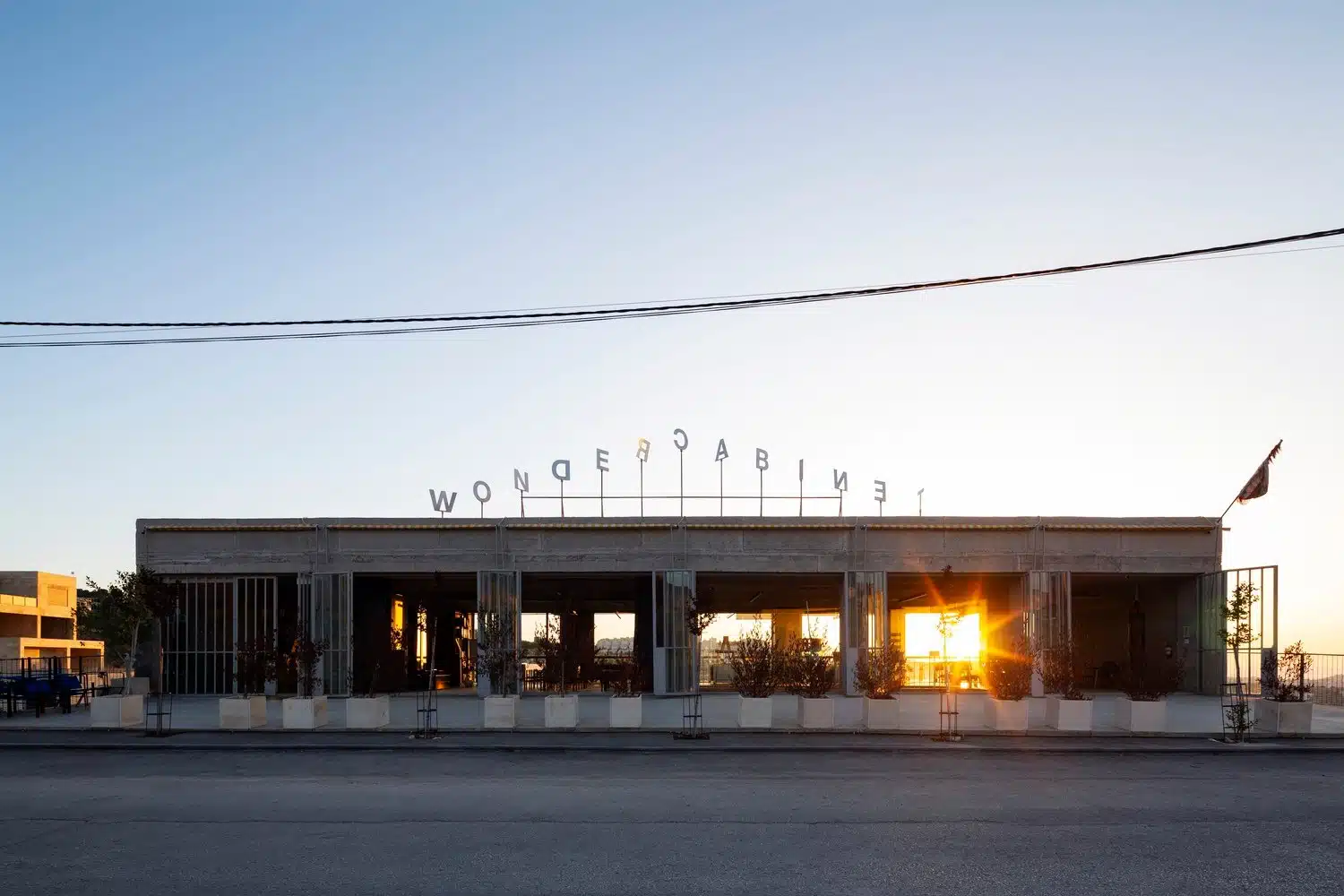
The Wonder Cabinet in Bethlehem: AAU ANASTAS’s Masterpiece Redefining Cultural Architecture

Architecture That Produces, Not Just Displays
In a cultural landscape often lacking experimental spaces, The Wonder Cabinet in Bethlehem emerges as a bold response. Designed by the architectural firm AAU ANASTAS, this 950-square-meter edifice is not merely a place for exhibition but an active infrastructure dedicated to production, creativity, and the exchange of knowledge. It serves as a rare platform for experimental production in Palestine, bringing together artists, architects, artisans, chefs, and researchers under one roof for a dynamic, cross-disciplinary dialogue, forming a nucleus for a local creative economy.

Design Philosophy: Transparency and Dialogue as a Foundation
The core concept of the project challenges the traditional notion of cultural institutions as closed “white cubes.” Instead, the designers adopt a philosophy that views architecture as a dynamic framework that facilitates interaction and encounter.
The dramatic diagonal void that cuts through all three floors is not merely a bold formal gesture; it is the backbone that visually and functionally connects all the building’s programs. This design fosters a sense of openness and transparency, encouraging serendipitous encounters between its residents—from a sculptor working in the lower level to an innovative chef in the adjacent kitchen—creating a fertile environment for cross-disciplinary collaboration.

A Look Inside: A Comprehensive Architectural Program
The Ground Floor: The Gateway to the Community
The ground floor is designed to be the building’s community face. It houses:
- The Design Studio: The primary workspace for AAU ANASTAS architects.
- Shared Offices: Designed to host emerging creative initiatives.
- A Multipurpose Hall: Convertible to host lectures, film screenings, and discussions.
- A Café and Store: Selling locally designed products, with full-height glass doors that open onto a public piazza, breaking the barrier between inside and outside and creating a continuous flow between the building and its urban context in Bethlehem.
The Lower Floors: The Heart of Artisanal Production
The lower levels, built into the hillside, are where the concept becomes tangible reality. They include:
- Studios for Artists-in-Residence: Spaces for creativity and isolation when needed.
- A Radio Station: A platform for a local radio station to narrate the story of the place.
- An Experimental Kitchen: Dedicated to chefs’ residency programs exploring contemporary Palestinian cuisine.
- Specialized Workshops: Equipped with state-of-the-art tools for woodworking, metalworking, textiles, printing, and photography. These workshops provide a bridge between traditional crafts and contemporary technological tools, allowing for material innovation and craftsmanship.

Materials and Details: A Dialogue Between Heritage and Modernity
The material palette of the building is a narrative in itself. Raw concrete gives the project a contemporary honesty and strength, while transparent glass partitions filter light and create visual connections.
But the details tell the true story. The handcrafted conical steel porthole windows, shaped by local artisans, are more than just light openings; they are sculptures that offer moments of visual surprise and precise control of light and privacy along the staircase. These details are not merely decorative; they are an affirmation of place identity, connecting the building to Bethlehem’s manufacturing traditions while placing these traditions in a dialogue with a global architectural language.

Community and Cultural Impact: More Than Just a Building
The Wonder Cabinet transcends being an architectural object to become an ambitious social project. Its philosophy is based on:
- Supporting the Creative Economy: By providing production spaces and training opportunities for younger generations.
- Preserving Craftsmanship: By integrating it into contemporary creative processes and giving it a global platform.
- Fostering International Exchange: Attracting researchers and creators from around the world to work and collaborate in Bethlehem.
The building is a celebration of Palestinian material heritage and an incubator for future creativity simultaneously, offering a model that can be replicated in similar cultural contexts worldwide.

Conclusion: A Model for the Future
The Wonder Cabinet provides a compelling answer to the question: How can architecture support and launch a cultural movement? By placing the creative process at the heart of its conception, the building becomes not an end in itself but a dynamic means for generating ideas, products, and community connections. It is a project that proves ambitious architecture can simultaneously be a catalyst for the economy, a preserver of heritage, and a platform for innovation.
✦ ArchUp Editorial Insight
The “Wonder Cabinet” project attempts to present an ambitious architectural model that redefines architecture’s social role by transforming it from a display space into an active framework for production and craftsmanship. the design raises questions about the effectiveness and functional efficiency of its central diagonal void; while creating a strong visual dialogue, it potentially compromises flexible space partitioning and consumes valuable horizontal area that could have accommodated additional programs. Furthermore, the dominance of raw concrete language and exposed structural elements may create a sense of harshness or rigidity unsuitable for the intimate nature of the creative activities it aims to host. Nevertheless, the project’s fundamental strength lies in its programmatic success, offering a rare integrated and innovative functional composition within its context that relocates cultural and artisanal production means to the city’s heart, providing vital and crucial infrastructure for local creativity.
Brought to you by the ArchUp Editorial Team
Inspiration starts here. Dive deeper into Architecture, Interior Design, Research, Cities, Design, and cutting-edge Projectson ArchUp.


