Timeless Architecture Rooted in Nature: Expansion of Dwór Sanna in Eastern Poland

In the softly undulating hills of the Roztocze region in eastern Poland, a quiet form of architecture is taking shape. The development of Dwór Sanna, a historic manor estate transformed into a boutique destination, continues with the addition of discreet holiday cottages that settle gently into their natural surroundings. Situated within a seven-hectare park, framed by vineyards and mature trees, these new structures are not conceived as mere accommodations. Instead, they are envisioned as architectural expressions of balance, reflecting a deep interconnection between human life, nature, and built form.
Each addition to the estate is carefully woven into the existing landscape. The cottages are not about grandeur or spectacle; they are about creating spaces that honor both heritage and contemporary needs. Their placement and form are informed by the rural context, the estate’s legacy, and the desire to create meaningful encounters with nature. This project emphasizes time, slowness, and respect for place, offering a vision of how architecture can evolve in dialogue with its environment rather than in opposition to it.

Context and Site
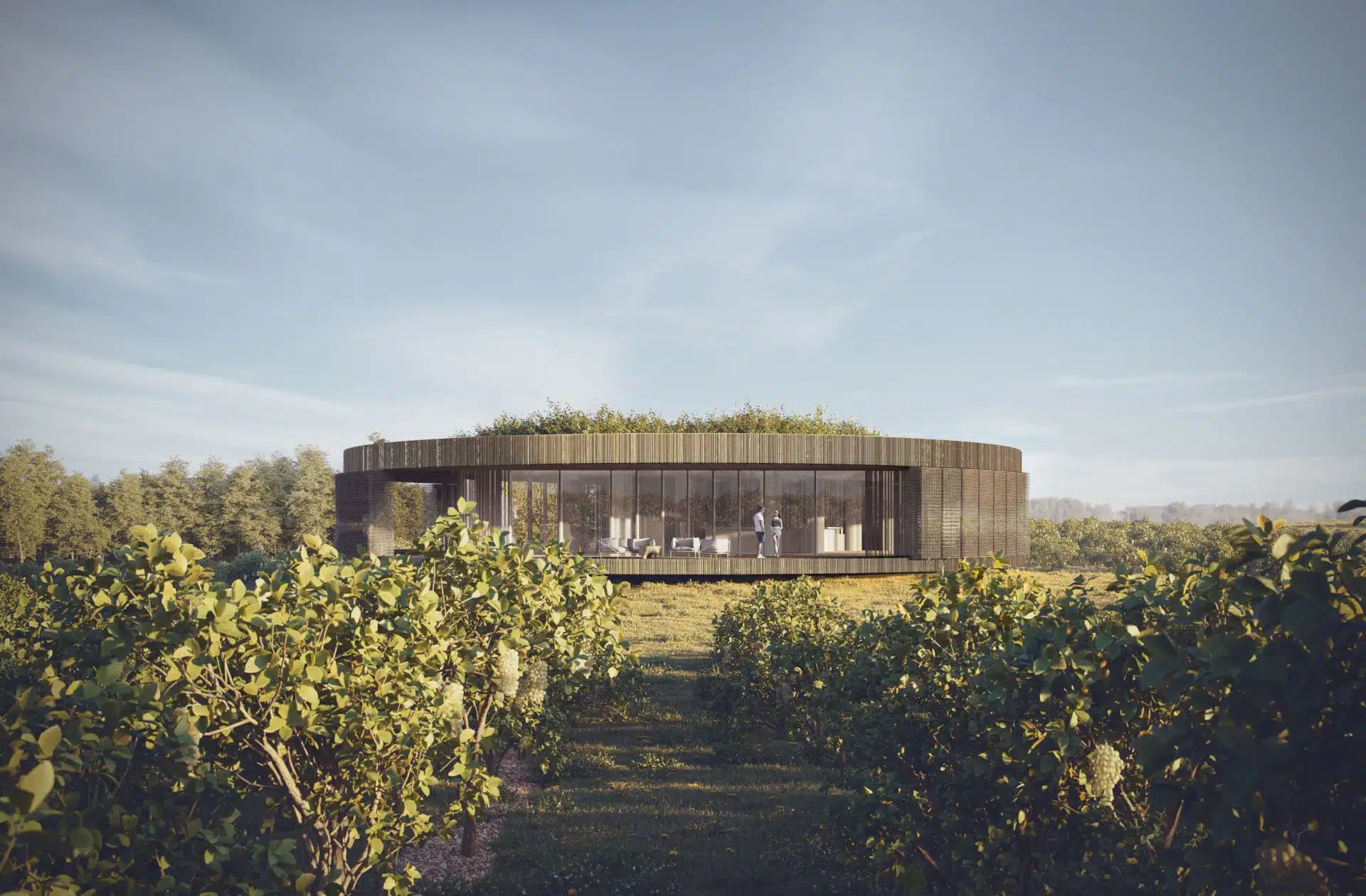
Dwór Sanna occupies a historic estate surrounded by vineyards, fields, and a 200-year-old park. The Roztocze landscape is known for its rolling topography, light-filled meadows, and ecological richness. The cottages introduced here are integrated into this setting rather than imposed upon it. Their roofs are planted to mirror the vineyard rows, while their footprints remain modest, ensuring that the estate’s character and ecological integrity are preserved.
Design Approach
The architectural language combines traditional references with contemporary gestures. Forms emerge from the ground with soft curves, blurring the line between landscape and building. Large windows provide sweeping views across the park and vineyards, dissolving the barrier between interior and exterior. Green roofs further strengthen the continuity between nature and architecture, giving the sense that the buildings are part of the land itself.

Spatial Experience
Each cottage measures approximately 80 square meters, designed as year-round retreats rather than seasonal shelters. Interiors are informed by natural materials, filtered daylight, and tactile elements. The experience is sensory and cyclical, shifting with the seasons. In summer, windows open wide to the vineyard breezes; in winter, timber textures and layered light create intimacy and warmth. The design encourages visitors to adopt a slower pace, reconnecting with the rhythms of the surrounding landscape.
Sustainability and Local Integration
The expansion forms part of a long-term vision for Dwór Sanna as a hub for ecotourism and sustainable rural development. The estate produces wine and cheeses on-site, aligning with principles of biodynamic agriculture. Architecture plays a crucial role in reinforcing this sustainable identity, ensuring that hospitality and ecology are not separate but intertwined. Rather than building large-scale complexes, the approach relies on small, thoughtful insertions that preserve scale, character, and environmental sensitivity.

Project Data Overview
| Aspect | Details |
|---|---|
| Location | Roztocze region, Eastern Poland |
| Site Area | 7 hectares including vineyards and historic park |
| Building Type | Holiday cottages integrated into estate |
| Size of Each Unit | Approx. 80 sqm, designed for year-round use |
| Material Palette | Timber, glazing, green roofs, natural finishes |
| Program Focus | Hospitality, ecotourism, connection to nature |
Project Architects: Nizio Design International
Architectural Character
The cottages embody restraint. Their architecture is about subtlety rather than dominance, defined by sensitivity to the environment and a focus on lived experience. Green roofs and soft geometries recall the continuity of vineyard landscapes, while panoramic glazing reinforces visual contact with nature. Timber brings warmth and tactility, anchoring the interiors in a sensory relationship with the site.
Connection to Global Trends
Across the world, vineyards are emerging as spaces where design and terroir converge. Architecture in these contexts is increasingly tasked with shaping identity, offering both functionality and experiential depth. The development at Dwór Sanna reflects this global trend, though not through bold gestures, but through calmness, restraint, and contextual respect. It suggests that architecture in rural hospitality can become a driver of sustainable development and cultural renewal.

Architectural Analysis
The design strategy relies on three principles: embedding buildings into the ground, opening interiors to expansive views, and aligning material choices with natural cycles. The cottages rise gently from the terrain, giving the impression that they are extensions of the earth. The transparency of glazing allows the park and vineyards to frame the living spaces, reinforcing an immersive spatial dialogue. Materials such as timber and planted roofs echo the agricultural surroundings while minimizing visual impact.
Critical reflection arises in the balance between visibility and discretion. While panoramic glazing connects residents to the outside, it also raises questions of privacy and energy performance. Nevertheless, the strategy of embedding and insulating structures with natural layers points toward resilience. The project demonstrates how hospitality architecture can engage with context both visually and ecologically, moving beyond decorative gestures toward grounded integration.


Project Importance
This expansion teaches architects and designers the value of restraint and contextual sensitivity. It shows how heritage estates can evolve through small-scale, thoughtful insertions rather than large-scale transformations. The project contributes to architectural thinking by highlighting integration with ecological cycles and by framing hospitality as an immersive relationship with the land. It underscores the importance of designing for slowness, patience, and continuity, offering a counterpoint to short-lived architectural spectacles.
Its relevance today lies in the global search for sustainable models of rural development. As regions worldwide grapple with ecological pressures, tourism shifts, and heritage preservation, projects like Dwór Sanna demonstrate how architecture can support regeneration while remaining rooted in place. It contributes to typologies of vineyard architecture, rural hospitality, and ecotourism, setting an example for future practices that seek balance between human use and ecological stewardship.

✦ ArchUp Editorial Insight
The cottages at Dwór Sanna are shaped by restraint, soft geometries, and the layering of natural textures. Their green roofs and panoramic glazing echo the surrounding vineyards and mature parkland, offering a carefully composed spatial rhythm. At the same time, the reliance on expansive glazing invites a critical question about long-term sustainability and energy balance, even as it enriches the immersive qualities of the interior. The project’s strength lies in its quietness and contextual respect, suggesting that architecture in rural hospitality can mature with time while maintaining ecological responsibility.
Conclusion
The expansion of Dwór Sanna illustrates how architecture can grow from a landscape rather than be imposed upon it. Through cottages that are embedded, modest in scale, and sensitive in materiality, the estate evolves without losing its character. The project demonstrates that building with patience and contextual respect can generate experiences that are timeless, grounded, and deeply connected to place.
In a moment when rural areas are facing both ecological and cultural challenges, this project provides a relevant model. It proves that heritage estates can become laboratories for sustainable development when architecture is harnessed as a tool for integration, not domination. By foregrounding connection with nature, it proposes a design direction that prioritizes long-term resilience over temporary spectacle, contributing meaningfully to the ongoing discourse on projects that shape the future of rural hospitality and ecological living.

Explore the Latest Architecture Exhibitions & Conferences
ArchUp offers daily updates on top global architectural exhibitions, design conferences, and professional art and design forums.
Follow key architecture competitions, check official results, and stay informed through the latest architectural news worldwide.
ArchUp is your encyclopedic hub for discovering events and design-driven opportunities across the globe.
Brought to you by the ArchUp Editorial Team
Inspiration starts here. Dive deeper into Architecture, Interior Design, Research, Cities, Design, and cutting-edge Projects on ArchUp.