Topology in architecture

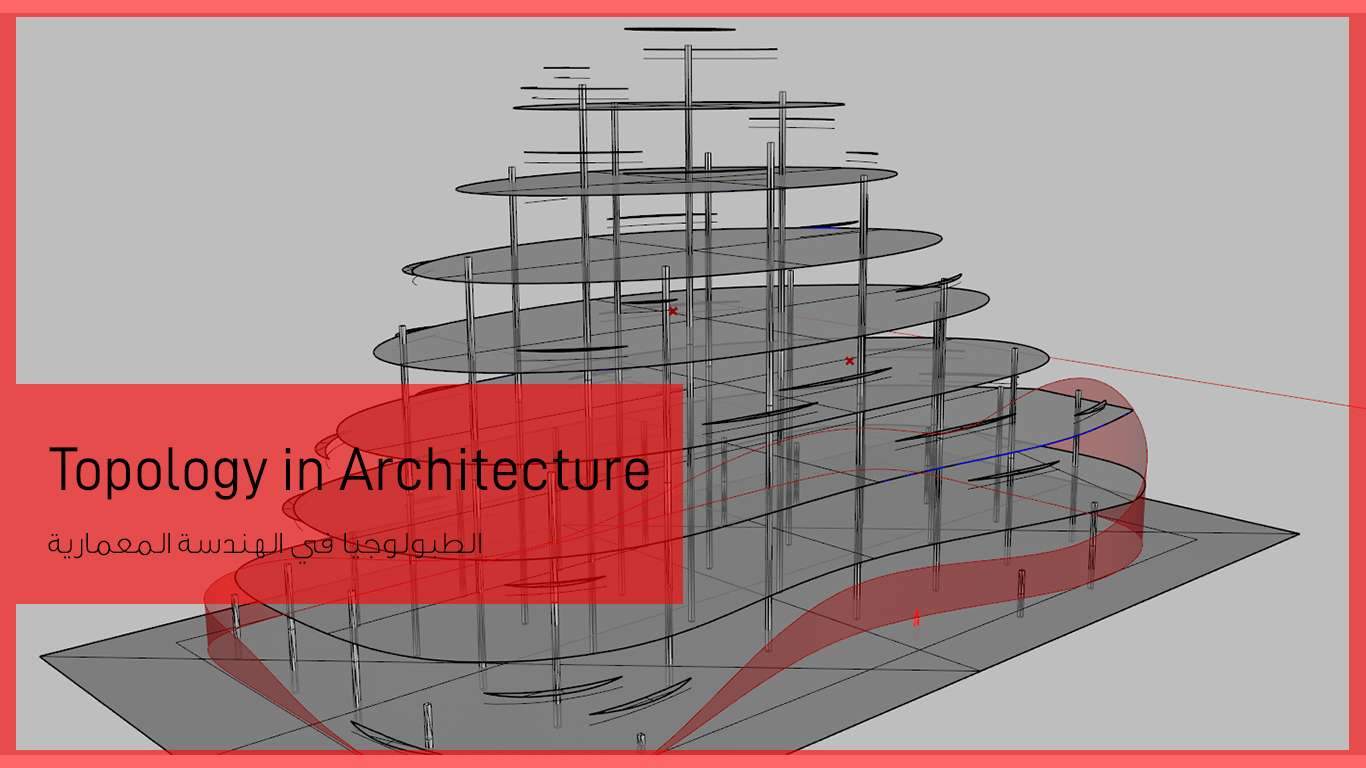
Topology in Architecture
Topology has influenced architectural and interior design by introducing new ways of understanding form, continuity, space, and transformation. Its architectural relevance has grown alongside digital design and computational technologies, which allow designers to generate and manipulate complex geometries that would have been difficult to develop using conventional methods.
Rather than treating architecture as a collection of fixed geometric objects, topological thinking focuses on relationships, continuity, deformation, and the connections between spaces. This approach has contributed to architectural forms in which interior and exterior surfaces can become increasingly interconnected.
What Is Topology?
The term topology derives from the Greek words topos, meaning place, and logos, meaning study. In mathematics, topology examines properties of spaces and forms that remain consistent through continuous transformations such as stretching, bending, or deformation.
For architecture, this provides a conceptual and computational framework for exploring continuous surfaces, curved geometries, spatial transitions, and forms that respond to different design parameters.

Topology and Digital Architecture
The development of computational design has made topological concepts particularly relevant to architecture. Digital models allow designers to manipulate points, surfaces, relationships, and parameters while maintaining continuity within a geometric system.
This differs from simply producing unusual curved buildings. Topology is concerned with the underlying relationships within a spatial or geometric system rather than with a particular visual style.
Computational methods can therefore use site conditions, program, circulation, environmental parameters, and other inputs as interconnected data capable of influencing the generation and transformation of architectural form.
Topological Space
In architectural applications, topological space can describe spatial systems capable of continuous transformation while preserving relationships between their components. Pressure, movement, environmental conditions, programmatic requirements, or computational parameters may influence how these geometries develop.
The resulting architecture may contain continuous surfaces, changing curvature, interconnected spaces, and transitions that challenge conventional distinctions between wall, floor, ceiling, interior, and exterior.

From Mathematics to Architectural Form
The significance of topology in architecture lies less in producing a recognizable aesthetic than in providing another way to think about spatial relationships. Mathematics becomes a tool through which geometry, structure, environment, program, and digital fabrication can interact within a continuous design process.
As computational tools continue to develop, topological thinking remains relevant to parametric design, complex geometry, digital fabrication, and other methods through which architects investigate relationships between form, space, and performance.
Related architectural applications and computational design approaches can also be explored through INJ Architects.