Tsuki no Mori Library: A Forest-Like Reading Space Emerges from Wooden Lattice Design in Fukuoka


A new public library opened in Chikugo Town, Fukuoka, Japan, last November. The project transformed an aging civic hall into a forest-inspired reading space. Wooden lattice structures define the building’s character both inside and out.
From Civic Hall to Community Library
The original structure served as a public hall for many years. Designers chose to wrap the existing building rather than demolish it completely. This approach preserved community memory while creating something entirely new.
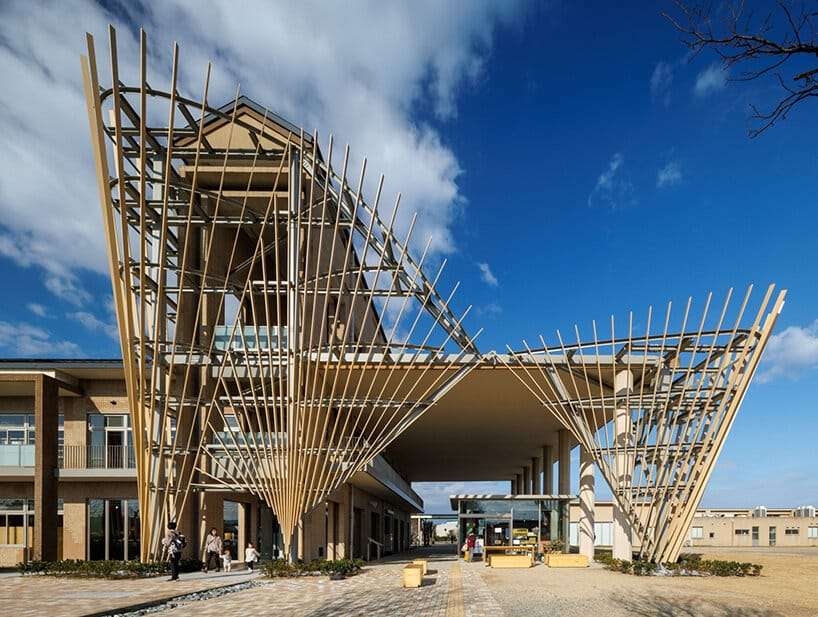
Vertical wooden grids now soften the heavy concrete mass. Moreover, these lattice elements extend outward at the entrance. They branch like tree limbs swaying in wind. The effect creates a welcoming gesture for visitors approaching the architecture.
Wooden Structures Guide Movement and Light
The exterior lattice system filters natural light effectively. It also allows visual permeability between inside and outside. Therefore, the building feels more open despite its substantial size. The design reduces the imposing presence of the original construction.
Inside, a high-ceilinged atrium anchors the renovated space. Local Chikugo cypress wood forms diagonal structural elements. These building materials extend from floor to ceiling throughout the interior. The branches create a sensation of forest growth within the building. Meanwhile, light filters through gaps between wooden members. Layers of shadow shift throughout the day.

Play and Learning Coexist Across Two Floors
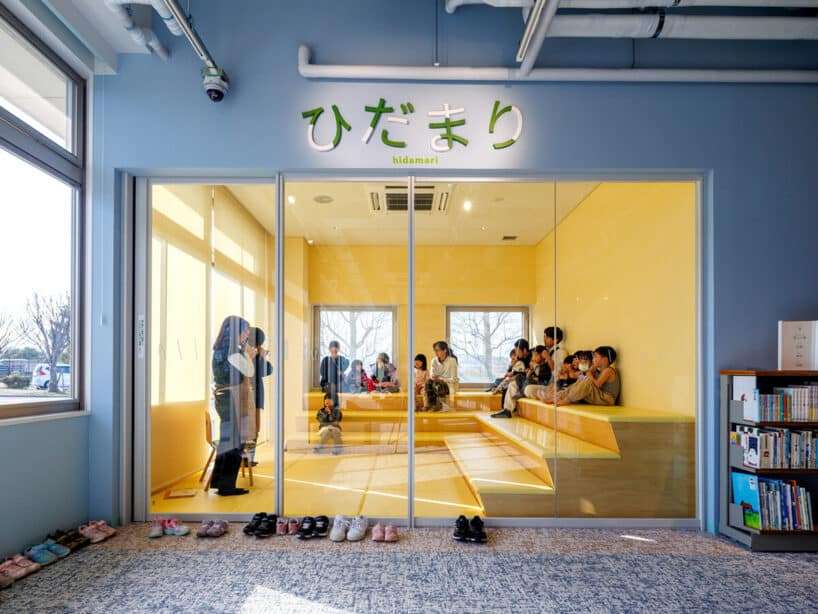
The ground floor features relatively open spaces for active use. A design element called Asobu Rohondana combines playground equipment with bookshelves. Children move freely between reading and play activities. This arrangement makes reading feel natural rather than restricted.
The second floor offers a quieter atmosphere for extended study. Open shelving and thoughtful seating arrangements support focused reading. However, both floors serve different generations and lifestyles equally. The interior design accommodates diverse community needs within one structure.
Adaptive Reuse Preserves Local Character
Chikugo Town remains a quiet rural community surrounded by farmland. The library transformation respects this existing character completely. The project provides new spaces for gathering and learning. It maintains the original pace of life in this urban setting.
The name Tsuki no Mori carries layered meaning in Japanese. It references both a constructed forest and the process of discovery. This sustainable approach to adaptive reuse demonstrates thoughtful community development. The library now serves educational and social needs effectively.
A Quick Architectural Snapshot
This Fukuoka library project wraps an existing civic hall in wooden lattice screens. The design creates forest-like atmospheres through local cypress wood structures. Ground floor spaces encourage active child engagement with books. Upper levels provide quiet reading environments for focused study and contemplation.
✦ ArchUp Editorial Insight
Rural Japanese municipalities face a persistent challenge. Aging infrastructure demands attention while shrinking populations limit budgets. Demolition and new construction often exceed available resources. Adaptive reuse becomes the pragmatic response to fiscal reality.
The decision to wrap rather than replace reflects broader behavioral shifts. Communities now prioritize continuity over novelty. Familiar structures carry social value that new buildings cannot replicate. Preserving the original hall maintained decades of accumulated community attachment.
The dual-floor programming addresses demographic pressures directly. Japanese libraries increasingly serve as childcare supplements for working families. Active ground floors accommodate this function. Quiet upper levels serve aging populations seeking daytime refuge. Both groups require public space as household sizes shrink.
Local timber sourcing responds to regional forestry economics. Japanese cedar and cypress plantations need commercial outlets. Public projects provide reliable demand.
This project is the logical outcome of municipal budget constraints, demographic bifurcation, and regional timber surplus.