

Twin Towers Redefine Riyadh’s Urban Silhouette

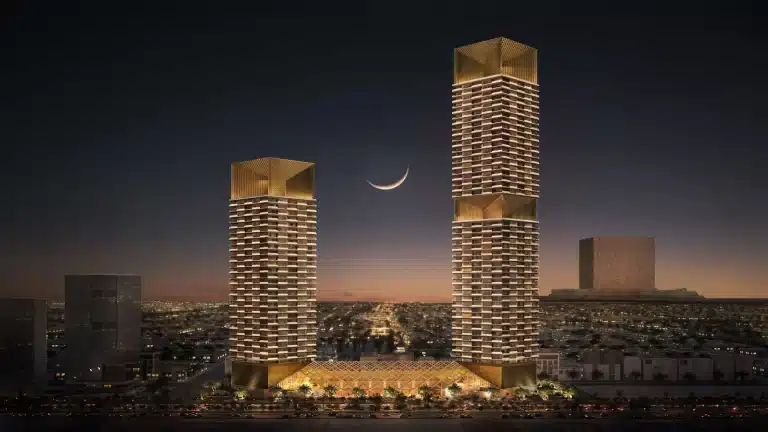
Twin towers proposed for Retal Heights in Riyadh address climate, culture, and density. They use a shared podium layout. The design follows the King Salman Charter’s six principles. These include continuity, people centered design, and sustainability. It supports Saudi Arabia’s Vision 2030 urban goals.

Design Concept
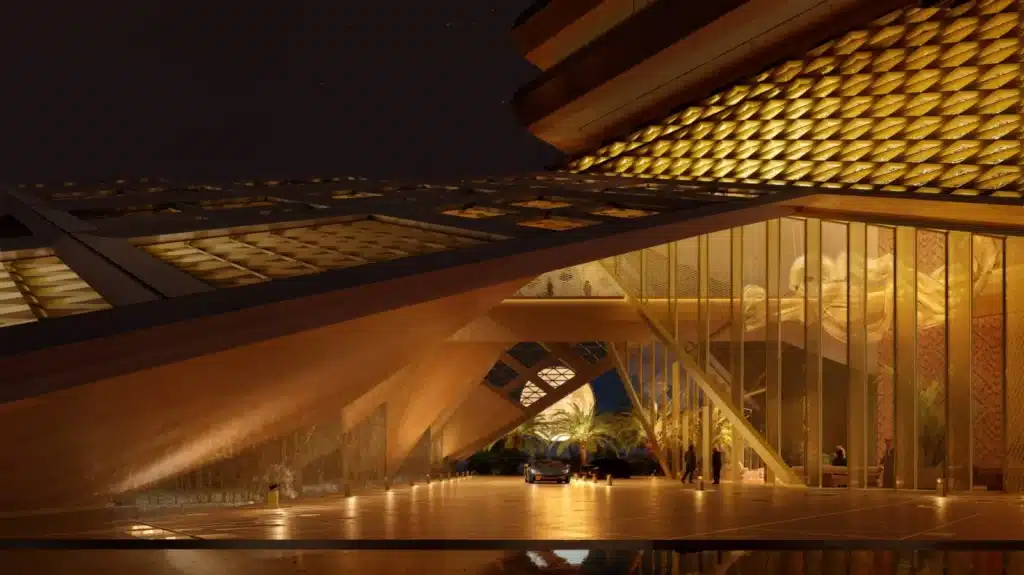
The project features two high-rises on a unified base. It debuted at Cityscape Global, a major events forum for real estate innovation. One tower holds a hotel and branded residences. The other contains private apartments with varied layouts. The podium includes event spaces, gardens, and a water feature. This forms a civic hub. The approach reflects current thinking in architectural design. It favors context over spectacle.
Materials & Construction
Exact materials are not disclosed. Yet climate-responsive façades suggest advanced building materials. These may include insulated glazing and thermal barriers. A two meter timber model was displayed. It highlights environmental and tactile concerns. Such buildings in arid zones often use reinforced concrete cores. Modular methods align with local construction practices.

Sustainability
The project uses passive strategies, not certification systems. Shaded zones and smart orientation reduce heat gain. These methods fit regional sustainability frameworks. Unlike global models, it ties ecology to cultural identity. Social function shapes environmental choices.
Urban Impact
The twin towers rise in a fast-growing part of Riyadh. They join the city’s vertical expansion. Their mix of uses residential, retail, hospitality follows Gulf cities trends. The public podium aims to encourage interaction. Similar strategies appear in the project archive.
Architectural Snapshot: will this model enrich urban life? Or deepen patterns of separation?
Twin towers with a shared podium propose a climate adapted, socially integrated prototype for high density urban living in Riyadh.
ArchUp Editorial Insight
The announcement of Retal Heights frames twin towers as a climate and culture responsive solution, yet relies heavily on abstract charter principles rather than measurable urban strategies. While the shared podium offers a plausible social interface, the project’s narrative leans on Vision 2030 alignment as a proxy for architectural substance. Still, the timber model’s tactile emphasis stands out in an era of digital render dominance. Whether this typology will age as urban infrastructure or branded spectacle remains unresolved but its success may depend less on form and more on who ultimately occupies, manages, and accesses its spaces.


🚨 Final Editorial Warning:
The ✦ symbol is a core and non-negotiable part of the ArchUp Editorial Insight. Any analytical section published without the ✦ icon will not be accepted under any circumstances. This is a fundamental element of ArchUp’s editorial identity.