

Philadelphia Embraces an Architectural Vision: The Fishtown Urby Masterpiece

Silent Fusion with the Industrial Context
This innovative residential structure stands in the heart of the bustling Fishtown neighborhood. The building undertakes the mission of redefining Urban Housing in Philadelphia. The viewer sees it as a unified brick mass, resembling the historic industrial warehouses that characterize the area. The structure comprises five stories, drawing its strength from the traditional brick that fully envelops it. This ensures a quiet integration with the surrounding built environment.
The scene changes upon closer approach. Precise architectural techniques emerge, segmenting the facade. Strategic cut outs slice the brick mass. These openings reveal inner layers with contrasting materials and colors. This technique works to visually break down the building’s bulk. It also gives it a contemporary rhythm. This approach served not just for aesthetics; it was a functional solution that introduced warmth and texture contrast to the solid shell.
The Path of Light and Air: The Daily Arrival Experience
The resident or visitor’s journey begins along North Front Street. The entrance is located directly below the elevated train line. The city noise separates as the scene opens into a welcoming courtyard. This courtyard represents the main residential entrance. Here, the design deliberately breaks away from the harshness of the exterior scene.
The visitor feels a transition into a protected space. The careful coordination of the landscape achieves this. Plants work to absorb noise and mitigate construction density. Warm green stucco wraps around this courtyard. It reinforces the relationship between architecture and nature to create an intimate atmosphere. This courtyard connects directly to a street-facing café. This supports continuous interaction with the surrounding urban fabric.
Key Construction Techniques and Materials:
- Brick: Covers 75% of the exterior facade. Designers used traditional dark red color to link it to the industrial context.
- Windows: High performance double-glazed glass. It provides 50% extra sound insulation, especially against the elevated train.
- Recycled Steel: The builders used 30% of this material for the internal structures to reduce the carbon footprint. This contributes to sustainability.
- Colored Stucco: Applicators applied this in two color compositions (green on Front St and blue on Hope St). This defines the communal interaction spaces.

Changing Windows: The Equation of Privacy and Views
Windows constitute a crucial architectural element in this project. They clearly reflect the philosophy of balanced Urban Housing in Philadelphia. The large windows feature dark gray colors. These colors harmonize with the brick. But the real ingenuity lies in their sill heights. The sill height design changes based on the internal room function:
- Bedrooms: Designers used relatively low sills. This ensures light flow while maintaining a high level of privacy from street level.
- Living Rooms: Sills rise significantly. This provides residents with wide, panoramic views of the city. This makes the apartments feel larger than their actual footprint.
This deliberate contrast ensures that every residential unit serves its purpose with maximum functional and aesthetic efficiency.
Interior Spaces and the Second Communal Courtyard
On the opposite side of the building, a second courtyard opens onto the narrower Hope Street. Designers created this open-air courtyard to be a calm gathering point. It features dedicated BBQ stations and a dog park. A dense concentration of planting supports the space. Here, the designers used blue stucco. This color recalls the shades of the nearby elevated train’s steel structure.
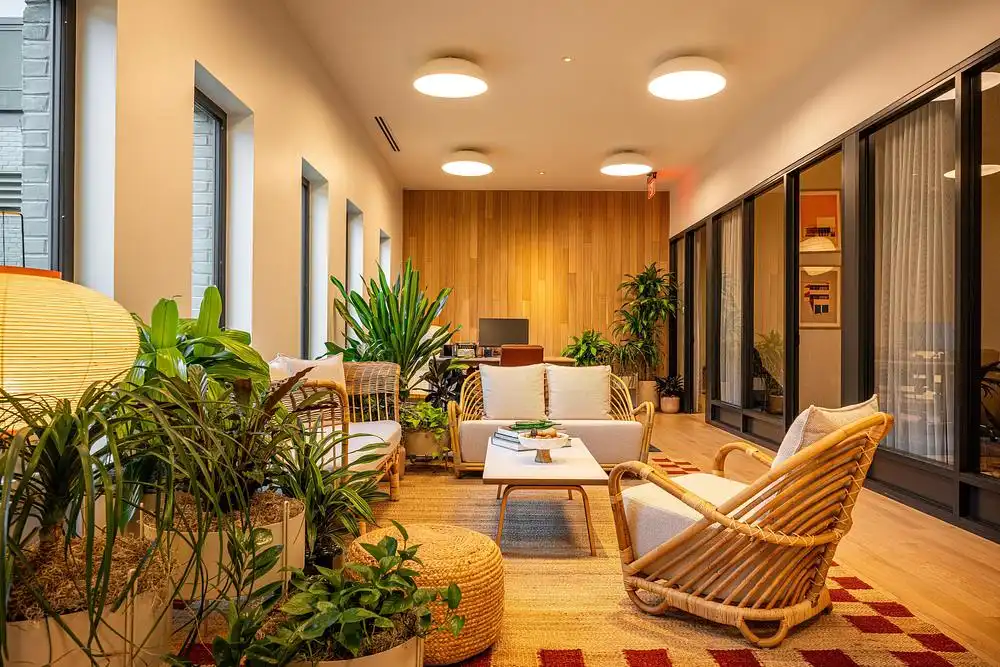
Internally, the apartments feature smart and efficiently divided layouts. This offers an unexpectedly modern and spacious living experience. Shared spaces complete the experience of Urban Housing in Philadelphia. A communal terrace on the fifth floor offers comprehensive city views. There is also a quiet evening area (Speakeasy). This area acts as an unexpected refuge within the building. The units feature interior design focused on comfort and practicality.

The Facade as an Artistic Statement: A Tribute to the Neighborhood’s Soul
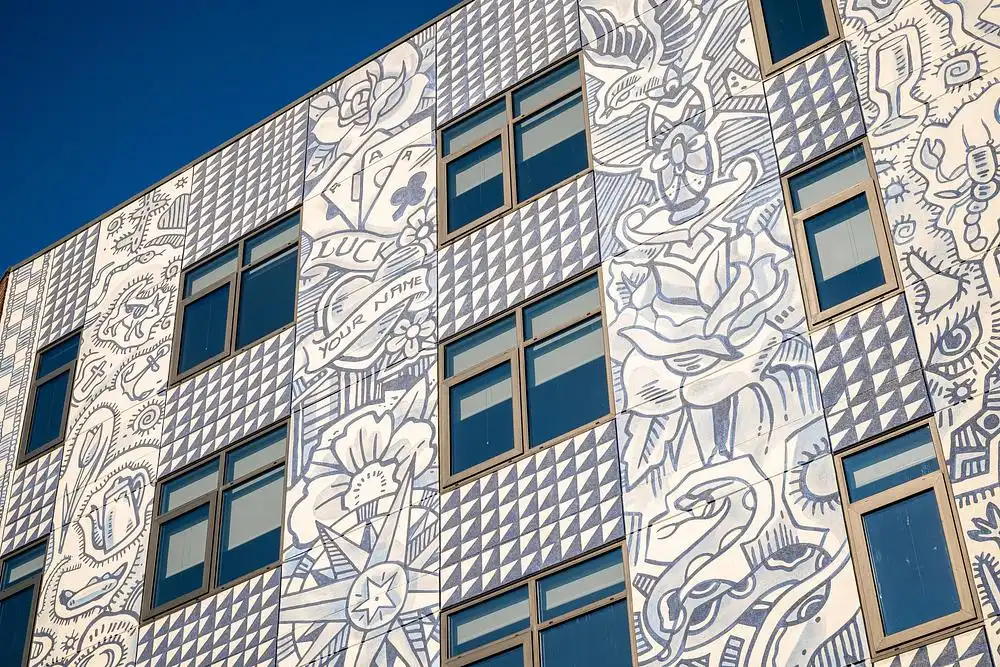
In the area facing Cecil B. Moore Avenue, the project takes a bold turn. The builders cut away the building’s upper layers to create a vast, empty facade. This architectural decision transforms the building into a giant artistic canvas. It is an explicit acknowledgment of street art’s pivotal role in the culture of the Fishtown neighborhood. This artwork, executed by specialized artists, integrates the art seamlessly with the structure. It adds a striking touch of blue to the gray landscape of the area. Readers can find further details on the construction and installation of this facade.
✦ Editorial View from ArchUp
The Fishtown Urby project, signed by Concrete Amsterdam, represents an attempt to integrate the industrial brick mass with the urban context of Philadelphia through striking visual tools, transcending traditional housing functionality with a focus on street art and interactive spaces. However, the architectural experience raises fundamental questions about using measured aesthetic interventions, such as variable height windows and studio colors , to mask broader real estate development motives under the guise of urban redefinition. The project is characterized by contextual awareness in its adaptation to the noise of the elevated train and the artistic facades, emphasizing the transparency of the relationship between form and function. A decade from now, the quality of community interaction within this architectural product will reveal whether this is a sustainable model for urban enrichment or merely a clever and innovative exploitation of the artistic heritage of the Fishtown neighborhood.


