

A New Architectural Vision for Vegan Dining in Birmingham Celebrating World Vegan Day

November 1 marks World Vegan Day, a time to reflect on humanity’s bond with nature and the role of awareness in shaping our lifestyle. In Birmingham, UK, a new restaurant stands as a meeting point between vegan philosophy and architecture. The space transforms into a form of vegan architecture, becoming more than a dining place. It offers a sensory and intellectual experience that redefines balance and sustainability.

A Space Rooted in Nature
From the first step, visitors sense that the place aims for harmony, not spectacle. The entrance is framed by climbing plants that extend the street’s natural rhythm, while tall glass façades let daylight flow unhindered. Here, architecture does not divide inside from outside it dissolves the boundary between them. The design seeks to restore the lost bond between humans and the environment, giving rise to a living expression of vegan architecture.
Architecture as a Living Being
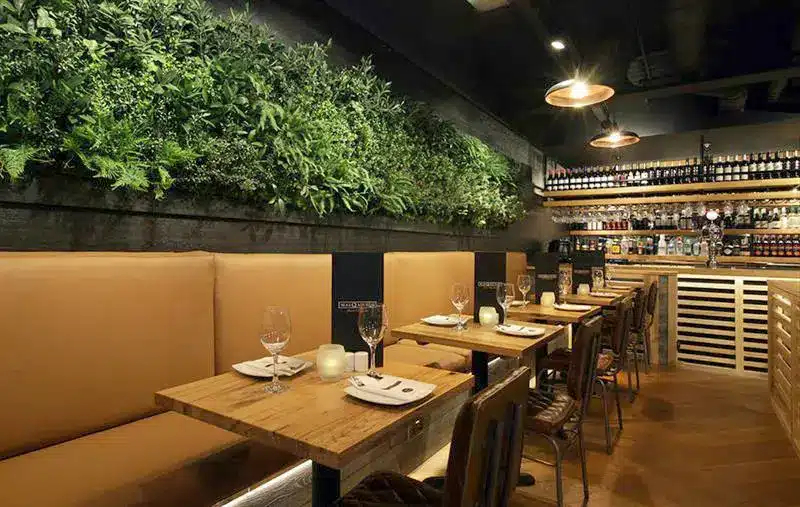
The interior design embodies the principles of vegan architecture, viewing space as a living organism that breathes and responds. Vertical gardens lining the walls serve not as decoration but as active systems that regulate humidity and purify the air. Natural wood and organic stone are left uncoated and unpolished, preserving their raw texture and honest presence. Each material becomes a quiet reminder of origin, grounding the visitor in an atmosphere of authenticity and respect for nature.
A Visual Rhythm Balancing Motion and Stillness
The dining area unfolds through curved zones that guide movement naturally without dictating direction. Moving inside feels like walking through a garden where light and shadow shift with every angle. This soft visual rhythm reinforces the restaurant’s central idea: that calmness is the new urban luxury, and that beauty lies in harmony rather than excess.
Light that Reflects Time
Lighting is distributed in warm tones reminiscent of sunset. There are no strong beams or harsh reflections only a soft glow that mirrors the natural rhythm of the day. Light is not just an aesthetic element here but a tool to restore balance to the body and mind after the chaos of the city. Every lighting element is placed to promote mindfulness and inner calm.

A Green Roof Renewing Life’s Cycle
Atop the building lies a green roof covered with vegetation that helps insulate against heat and collects rainwater to irrigate the interior greenery. The roof becomes a miniature ecosystem symbolizing the completion of life’s cycle within the city. No element is superfluous; every detail serves an environmental or symbolic purpose.
A Vision Beyond Walls
The project’s deeper idea is that architecture is not merely a frame for dining but a partner in the experience. The walls, plants, and lighting act as part of a dialogue between human and nature. In this space, vegan dining becomes an act of harmony with the Earth, and architecture becomes a medium of awareness, reminding us that sustainability begins with how we think about the smallest things.
| Element | Description |
|---|---|
| Location | Birmingham, United Kingdom |
| Design Concept | Inspired by natural forms and plant life |
| Main Materials | Wood, stone, bamboo, recycled elements |
| Architectural Focus | Sustainability, openness, and sensory experience |
| Philosophical Goal | Reflecting vegan values through spatial harmony and ecological awareness |

✦ ArchUp Editorial Insight
The vegan restaurant in Birmingham offers an architectural experience defined by natural serenity, where wooden textures and warm lighting form a visual dialogue between nature and material. The flowing spatial organization allows light and air to move freely, integrating visitors into the surrounding environment. Beyond its aesthetic appeal, the project offers a critical reflection on contemporary hospitality design, often detached from ecological context. Here, architecture becomes a medium for environmental awareness and ethical values, presenting a positive model for how design can transform philosophy into a sensory and spatial experience.
ArchUp provides an updated reference featuring key global architectural exhibitions and design forums, along with a dedicated space for competitions and results in a daily analytical context.


