Exploring the Relationship Between Art and Identity in the Venice Biennale

Every year, the city of Venice becomes a global stage for contemporary art through the Venice Biennale, one of the most significant artistic events worldwide. From April to November , the focus will shift to the 60th edition under the title “Stranieri Ovunque – Foreigners Everywhere” , curated by Adriano Pedrosa, current artistic director of MASP in São Paulo.
This year’s edition breaks from traditional formats, shifting the spotlight from individual artists or schools to a deeper human question: How do artists reshape their identities in the context of cultural and geographical mobility?


What Does “Foreigners Everywhere” Mean?
Clairefontaine’s artwork inspired the Biennale’s title, which is also linked to an anti-racism movement from early 2000s Turin. However, it goes beyond political commentary to raise philosophical questions about belonging:
- Who is considered a foreigner?
- Can anyone ever truly belong anywhere?
- How does being “the other” shape creative vision?
This theme forms the backbone of the main exhibition, which will feature works by creators who have experienced displacement—whether as migrants, refugees, expatriates, or those living between cultures.

Focus on the Global South
One of the most notable shifts in the Biennale is its emphasis on artists from the Global South . Greater representation will be given to creators from Latin America, Africa, Asia, and the Middle East—regions often underrepresented in international art platforms.
This reflects a broader change in how the art world approaches diversity and inclusion. Yet, it raises critical questions: Is this shift genuine and long-term, or merely a temporary response to global discourse?
| Region | Number of Participating Countries |
|---|---|
| Europe | 19 countries |
| North America | 3 countries |
| Latin America | 7 countries |
| Africa | 5 countries |
| Asia | 6 countries |
| Middle East | 4 countries |
Source: Official website of the Venice Biennale


How Is the Theme Presented Through the Artworks?
Participating artists will use a variety of mediums including digital painting, video, installation, and live interaction. Some key themes explored in the artworks include:
- The loss of native language through migration.
- Reconstructing identity within new cultural contexts.
- Everyday experiences of foreigners in host societies.
Unlike past editions, this Biennale aims not just to depict or narrate, but to create shared experiences between visitor and artist, blurring the lines between “us” and “them.”

Frequently Asked Questions (FAQ)
1. When is the Venice Biennale 2024 held?
It runs from April 20 to November 24, , with preview days on April 17–19 .
2. Who is curating the main exhibition?
The exhibition is curated by Adriano Pedrosa , currently the artistic director of MASP in São Paulo.
3. Is there a specific art form emphasized in this edition?
There is no single dominant medium, but the focus is on contemporary visual arts that engage with identity, movement, and hybrid cultures.
4. Is the exhibition limited to the Giardini venue?
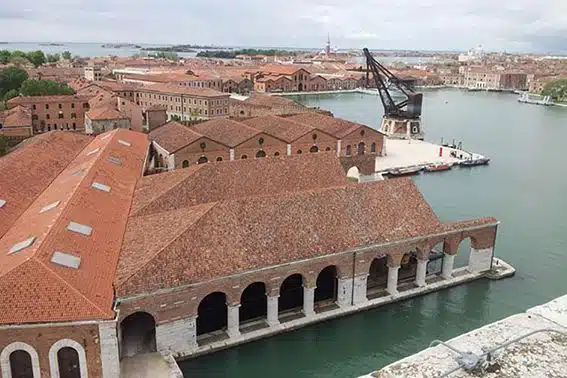
No, the event spans across multiple locations including the Giardini, Arsenale, and other sites throughout Venice .


Summary Table
| Aspect | Details |
|---|---|
| Title | Stranieri Ovunque – Foreigners Everywhere |
| Core Idea | Exploring how cultural and geographic movement shapes artistic identity |
| Geographic Focus | Global South (Africa, Latin America, Asia) |
| Techniques Used | Painting, video, installation, interactive media |
| Exhibition Locations | Giardini, Arsenale, and various venues in Venice |
| Duration | April 20 – November 24, |

ArchUp Opinion
The 2024 Venice Biennale marks an important step toward expanding the art dialogue to include voices previously marginalized. By centering the concept of “foreignness,” it opens space for deep reflection on identity and belonging in a rapidly changing world.
However, several critical concerns remain:
- Risk of superficial treatment : There is a danger that the theme could be used as a symbolic slogan rather than deeply explored.
- Sustainability of inclusion : Will this expanded representation continue in future editions, or is it a temporary gesture?
- Support for artists from the Global South : Are these artists receiving meaningful institutional backing, or is their inclusion still tokenistic?
Ultimately, the Venice Biennale presents a golden opportunity—not only to experience new art, but also to see the world through new perspectives.