ViliaSprint²: 3D-Printed Housing in Bézannes

Project Context in Bézannes, France
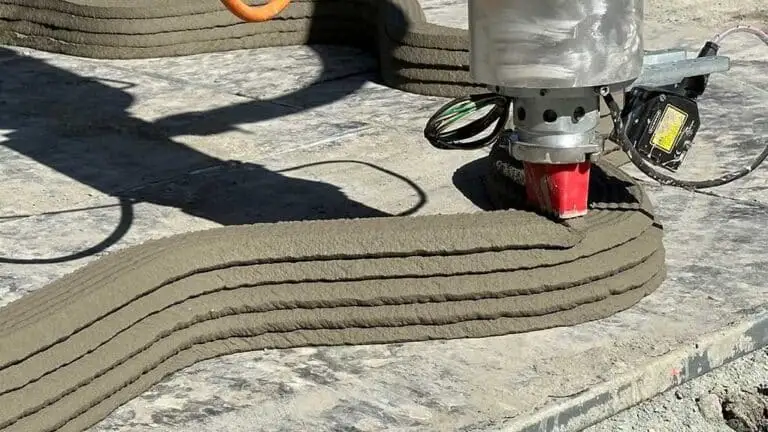
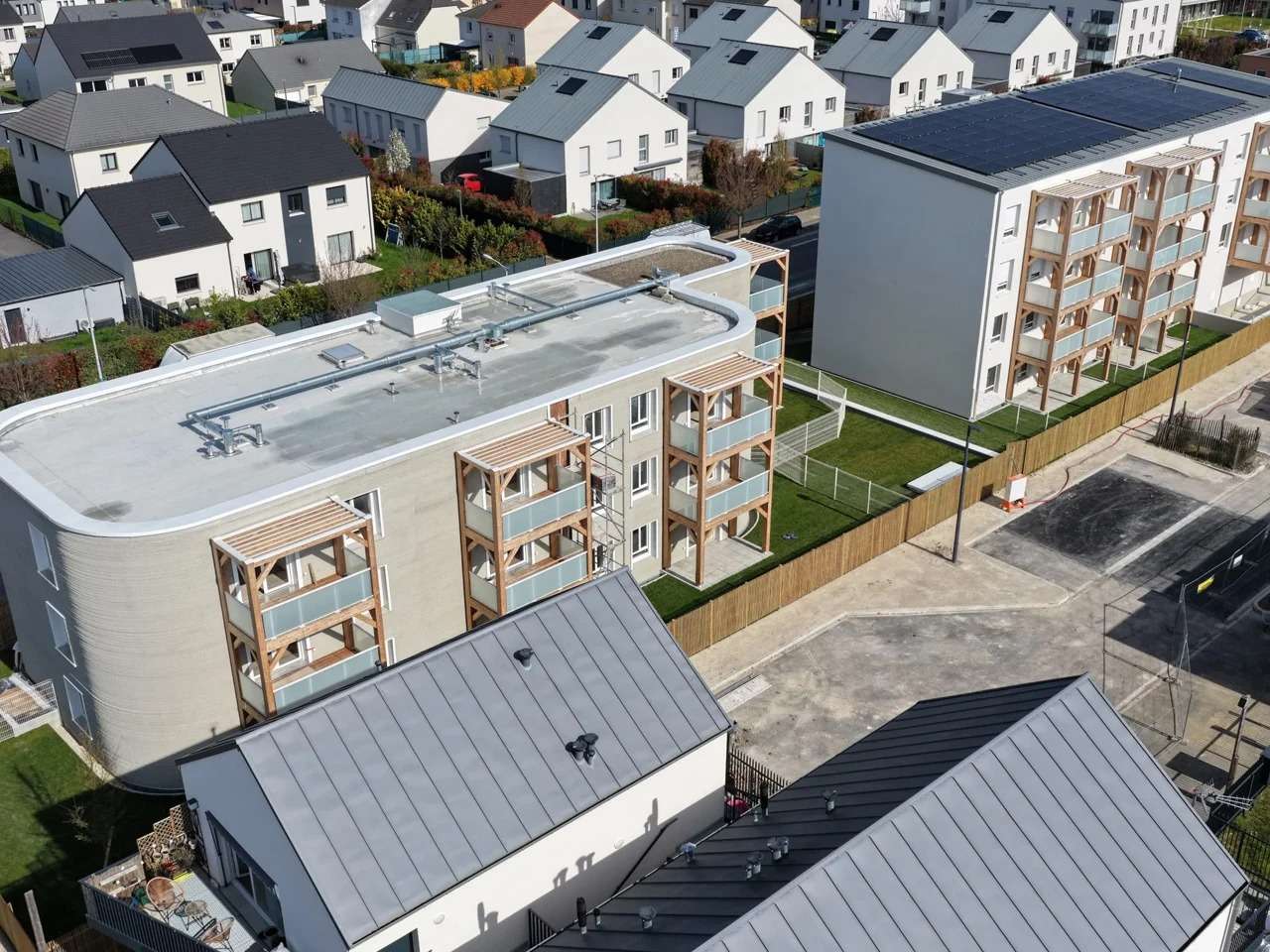
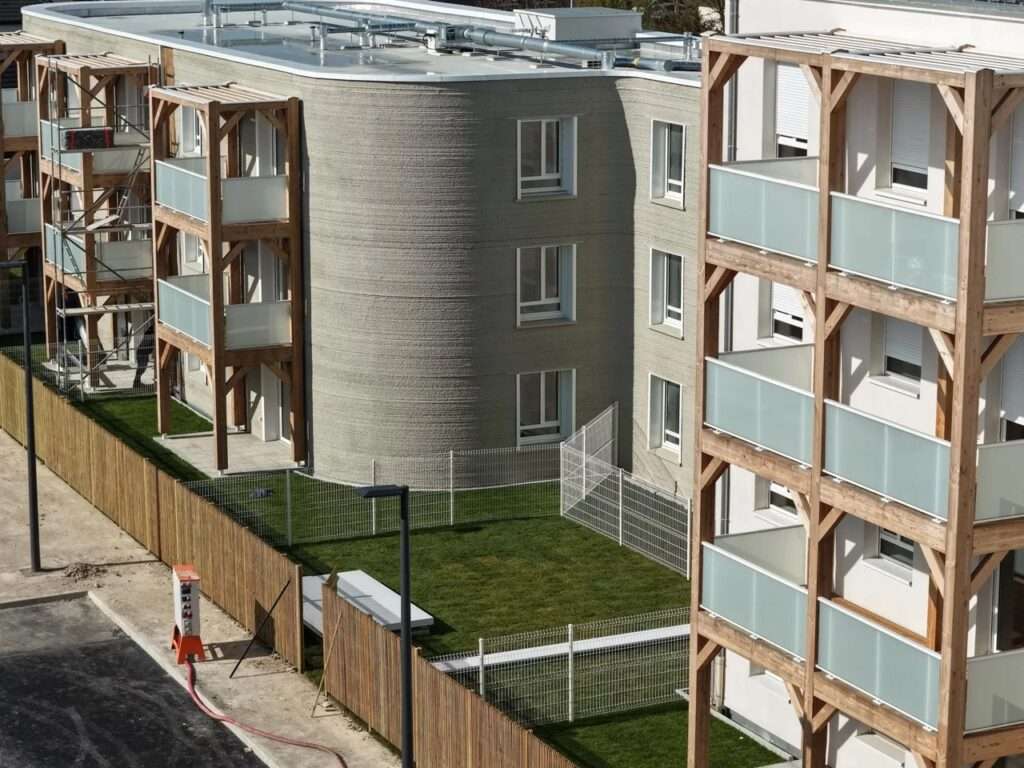
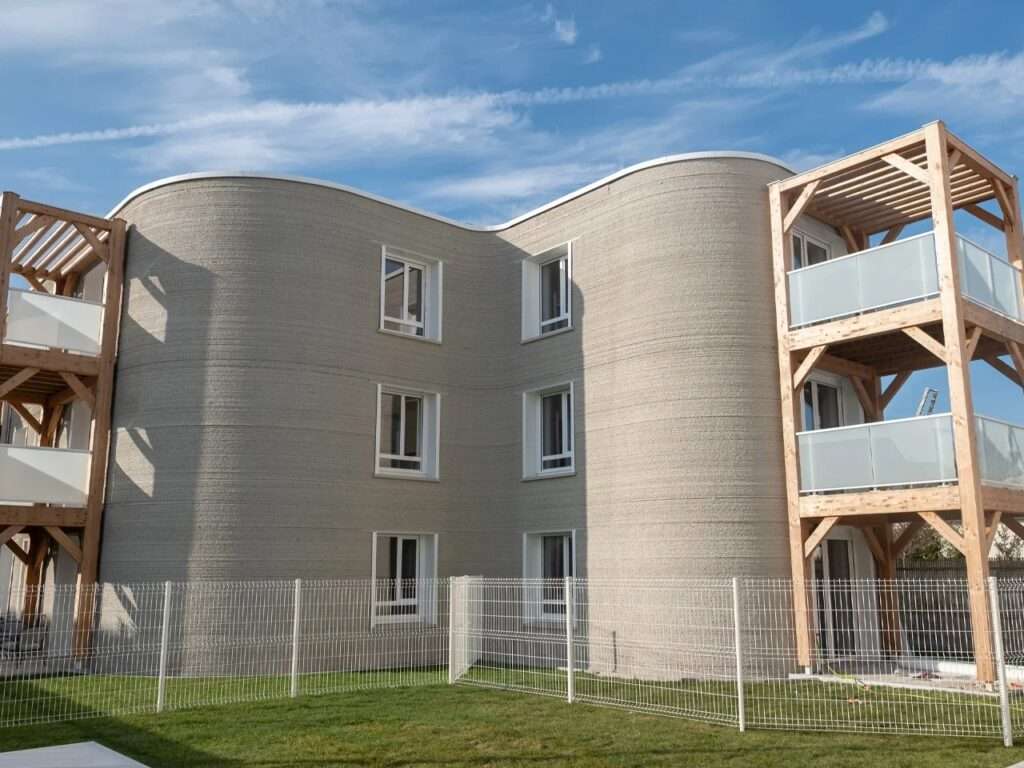
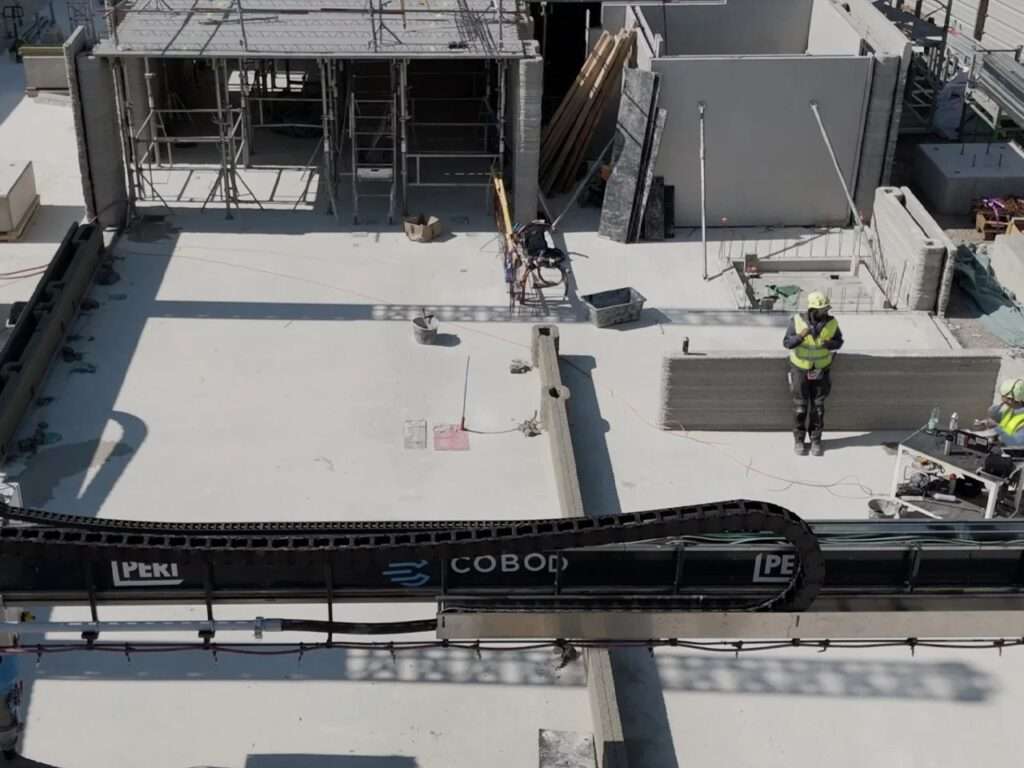
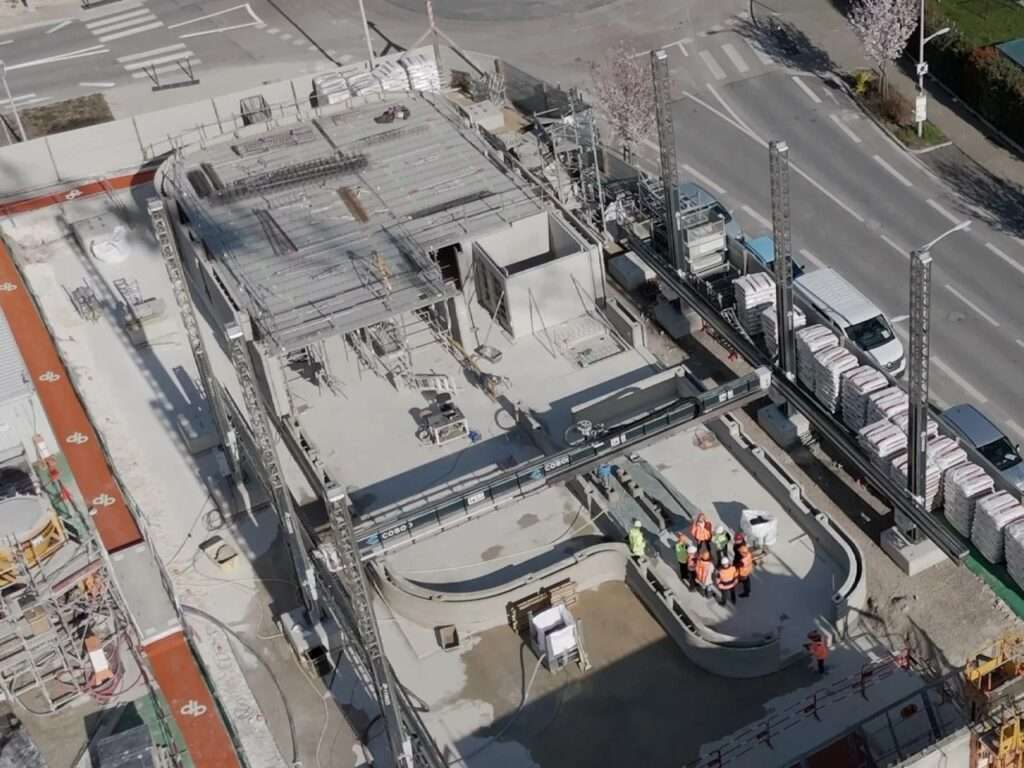
The 3D-printed residential project known as ViliaSprint² has been completed in the city of Bézannes, France. The project emerges within an experimental framework for developing construction methods and was executed by Plurial Novilia, designed by HOBO Architecture, and built using 3D printing technology by PERI 3D Construction, relying on the COBOD BOD2 printer.
Construction Duration and Site Organization
The project consists of 12 social housing apartments distributed across three floors, with a total area of approximately 800 square meters. The on-site printing process was completed in 34 days, which is shorter than the originally planned 50 days. This difference in duration reflects the impact of 3D printing technology in accelerating the execution of residential structural systems.
Structural System and Load-Bearing Walls
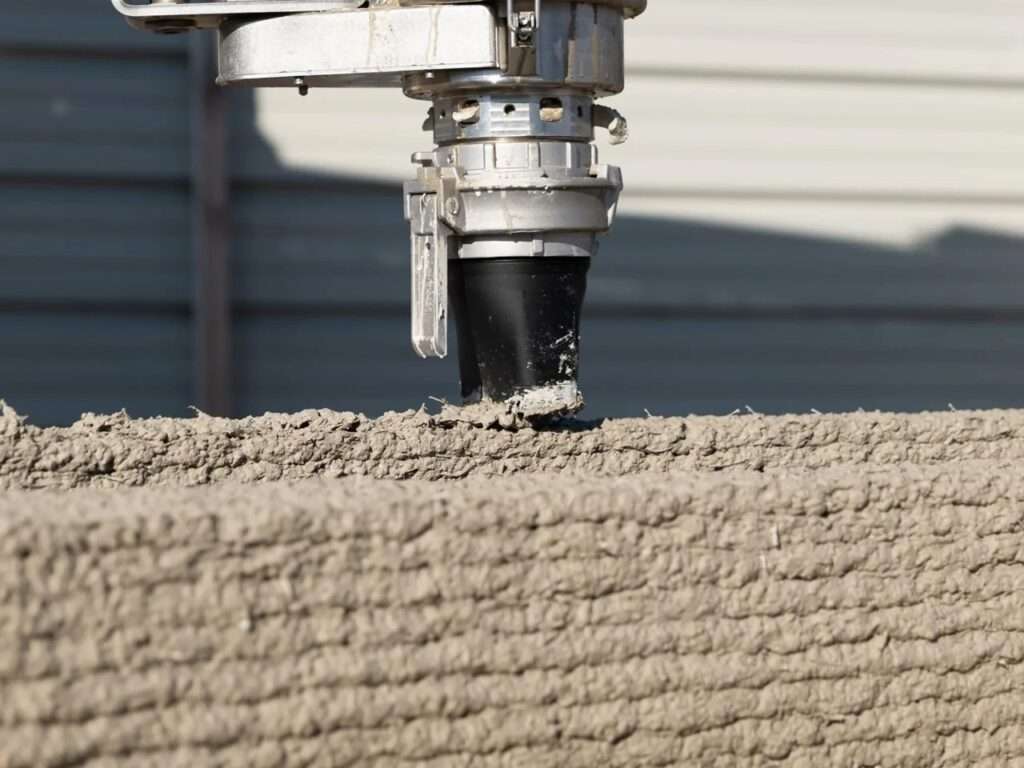
The project represents a practical case in which full reliance is placed on 3D-printed walls for load transfer. Both the structural frame and walls were executed entirely on-site without incorporating a hidden conventional structure. In this configuration, the structural system depends directly on printed elements alone, without hybrid solutions or additional traditional structural support. The use of Building Materials such as printable concrete demonstrates the viability of this approach.
Architectural Form and Its Relationship to Execution Technology
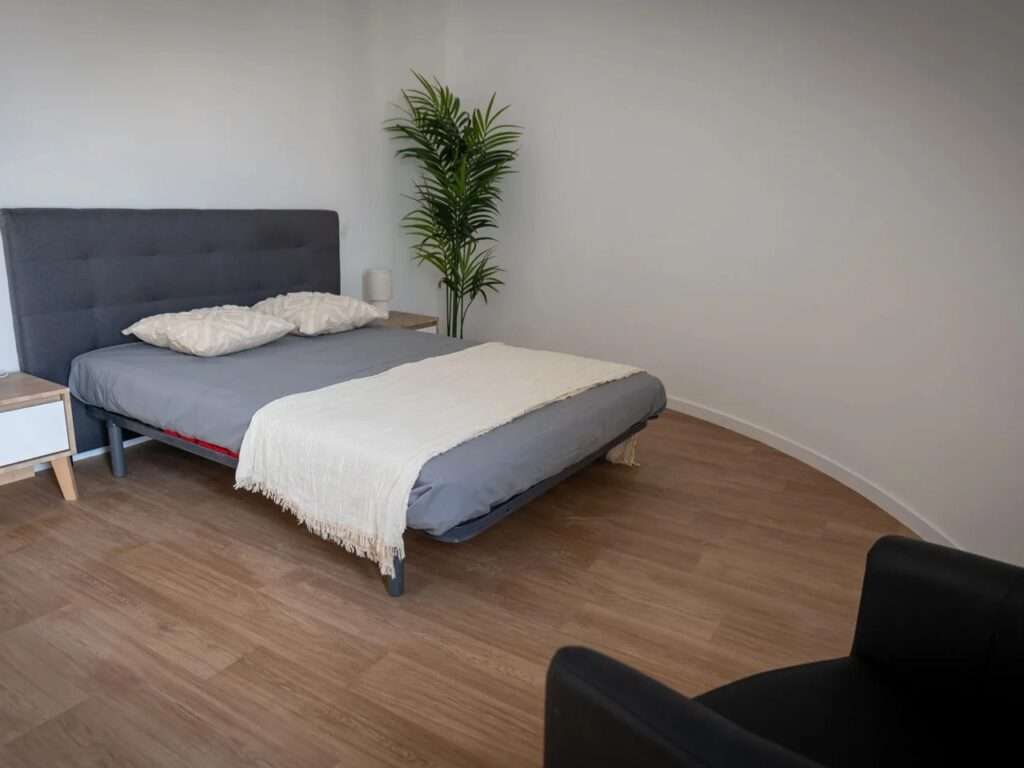
HOBO Architecture’s Design approach emphasizes a clear relationship between form and means of execution. The building’s rounded, curvilinear massing is enabled by the direct shaping capabilities of 3D printing, making such fluid geometries more feasible compared to traditional formwork methods. As a result, the architectural form becomes directly tied to the capabilities of the technology used, rather than existing as an independent design decision.
Materials, Building Envelope, and Integration of Components
A visual and structural balance is achieved between timber balconies and the printed concrete mass, softening the overall industrial character of the envelope. At the same time, printable concrete from Holcim was used within the ECOPact low-carbon system, reinforced with synthetic fibers through TectorPrint technology. Detailed Material Datasheets provide further insight into the performance of these innovative components. The structural system further demonstrates reliance on these materials to form the load-bearing envelope without the need for conventional formwork.
Environmental Performance and Operational Efficiency
Environmental considerations were integrated into the structural design rather than added afterward. Optimized curvature contributed to reducing concrete consumption by approximately 10%. In addition, perlite insulation and a photovoltaic system covering nearly 500 square meters enhance energy performance. A hybrid heating system from Atlantic Systèmes, combining gas and a heat pump, raises energy self-sufficiency to approximately 60%, aligning with low-emission Buildings requirements.
Direct Comparison with Conventional Construction
The 3D-printed building is located directly next to a conventionally constructed counterpart, built by the same developer during the same period, making it a direct operational comparison case. The printed building was completed roughly three months earlier than its conventional counterpart, highlighting the difference in execution time between the two systems. Similar Competition Results from architectural competitions have shown growing interest in such time-saving methods.
Labor Requirements and Construction Timeframe
Wall construction in the printed building required only three workers, compared to six workers in conventional construction. This difference is particularly significant in the context of the growing shortage of skilled labor in the construction sector, reflecting a shift from manual labor dependence toward digitally assisted automated processes. Current Architectural Jobs increasingly value expertise in digital fabrication and robotics.
Future Expansion of the Execution Model
Plurial Novilia is moving toward the next phase of development, which includes the construction of approximately 40 housing units with two printers operating simultaneously. This strategy aims to reduce printing time to one quarter. In this context, ViliaSprint² is not viewed as a final model, but rather as a test case demonstrating the scalability of this construction approach. Updates on such pioneering efforts can be found in Top News and Discussion forums.
✦ ArchUp Editorial Insight
The ViliaSprint² residential project in Bézannes operates as a direct outcome of institutional pressure linked to the acceleration of social housing delivery under financing policies focused on reducing delivery time and optimizing labor costs. The primary driver emerges from a government–developer demand model that enforces higher execution efficiency, alongside an industrial partnership between Plurial Novilia and PERI 3D Construction. Structural safety regulations and low-emission standards establish a regulatory framework that guides the selection of printable concrete, while reliance on on-site automation reduces risks associated with skilled labor shortages and redistributes the execution chain. The result is a fully printed load-bearing structural system placed directly next to a comparable conventional model, turning the site into an operational comparison between two production pathways. The form does not emerge as a design exercise but rather reflects a temporal compromise within the logic of standardized housing production. For more innovative examples, you can explore the Archive of architectural projects and Projects on ArchUp.