Egret Paradise in Guangdong: A Building That Hides to Observe Nature

The Forest Edge: Where Architectural Disappearance Begins
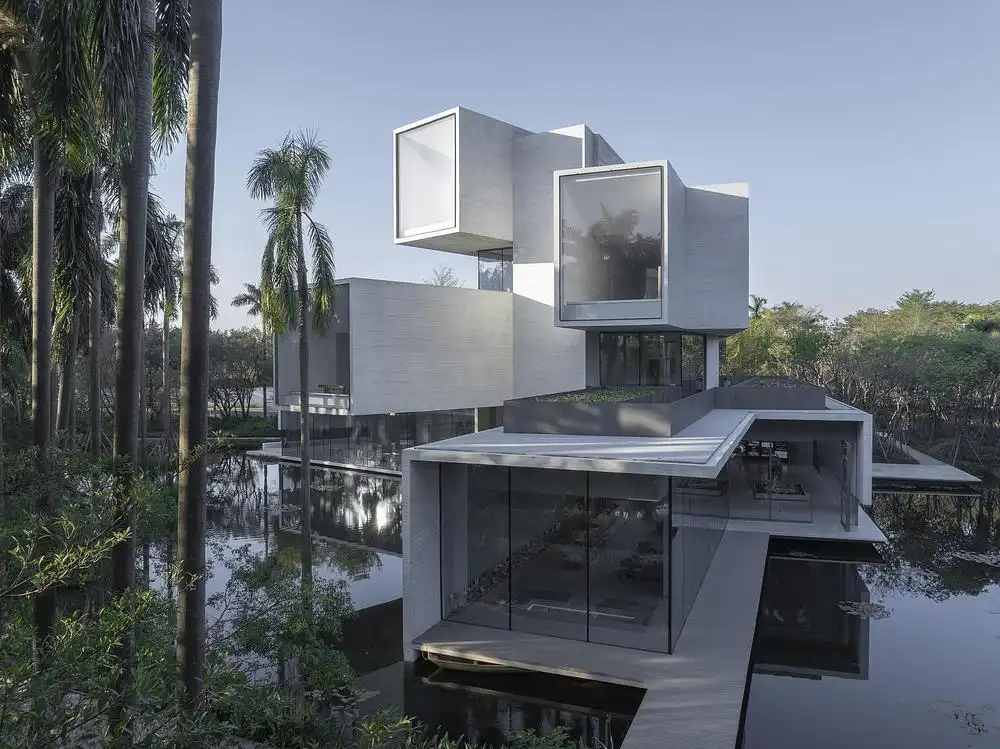
The visitor’s journey starts where the forest thickens. Instead of a grand façade, one finds the building cleverly concealed behind a dense line of existing cedar trees. This concealment is not accidental. It is a fundamental expression of Wetland Architecture that rejects visual dominance. The goal was to create a structure that merges seamlessly with the adjacent Egret Island. This island is home to approximately 25,000 egrets.
This project culminates decades of effort. It began as an individual initiative by a local man who planted a bamboo grove. Over the years, it transformed into a protected oasis. Subsequently, recognizing the site’s importance, the Shunde government expanded the protected area to 13 times its original size. This underscores the shared role in environmental protection. The harmony between the human touch and natural life forms the spiritual backdrop of the location.
The Ascent of the Fragmented Perspective: Lenses that Rotate Around the Environment
Entering the structure gives the sensation of stepping into a giant optical device. The framework consists of four stacked concrete tubes. Each tube is slightly rotated relative to the next. This calculated rotation is a precise response to the site conditions, capturing optimal views for bird watching.
Moving through the ascending levels from 1 to 4, the visitor realizes the traditional architectural perspective has been deconstructed. Each floor offers a distinct, directed frame towards a different level of the ecosystem:
- Level 1: Focuses on tree roots and water level.
- Level 2: Highlights the tree trunks.
- Level 3: Showcases the active tree crowns.
- Level 4: Rises to the level of treetops and bird movement.
This experience is a gradual immersion into the layers of nature. It is designed to raise awareness of the importance of Wetland Architecture and its conservation.
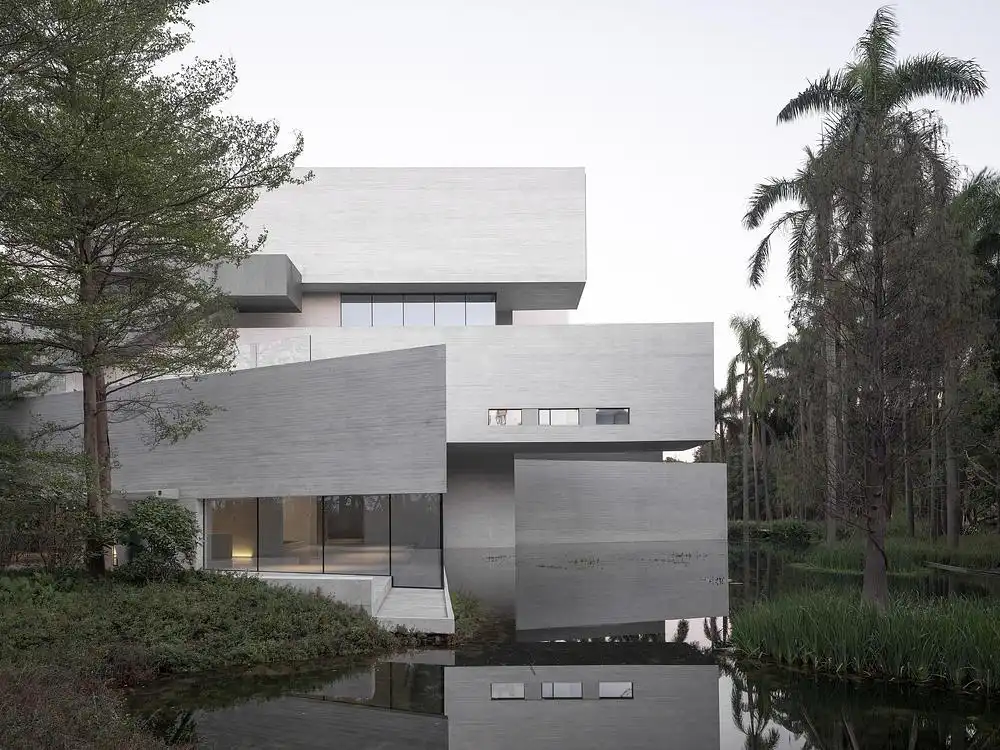
The Triangular Atrium: The Heart of Encounter and Light
In the center of the four tubes, the visitor finds an exciting vertical space: the Triangular Atrium.The designers created this pivotal void through an engineering process to link the different volumes. It is more than a mere passage. It is a visual convergence point. Standing here, the eye can simultaneously look out at various scenes captured by the rotating tubes. The windows at the end of each tube feel like natural paintings suspended in the interior.
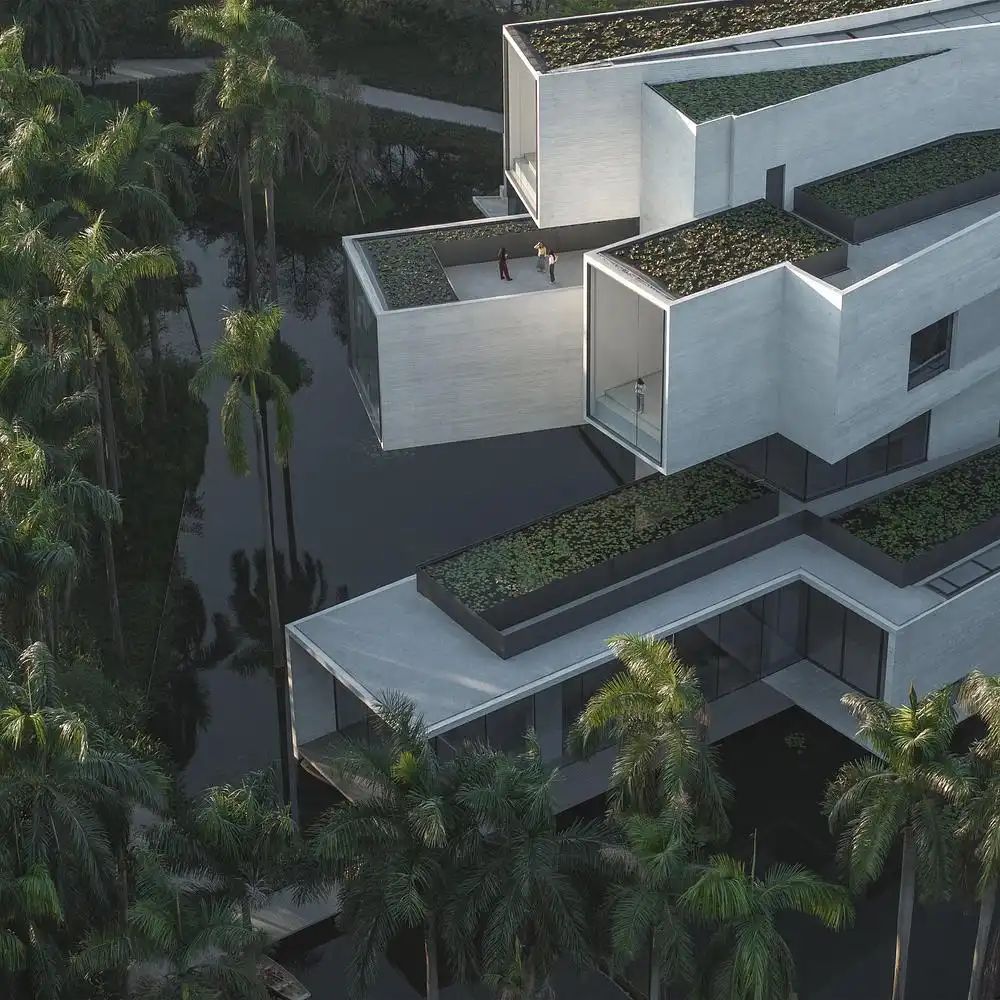
The design approach to Wetland Architecture here relies on a robust box-type concrete structure. This system supports the unconventional load distribution. Deep beams further filter the sunlight. This light enters from the upper skylights, introducing a physical sense of seasonal change indoors.
A Testament to Environmental Respect and Reliable Materials
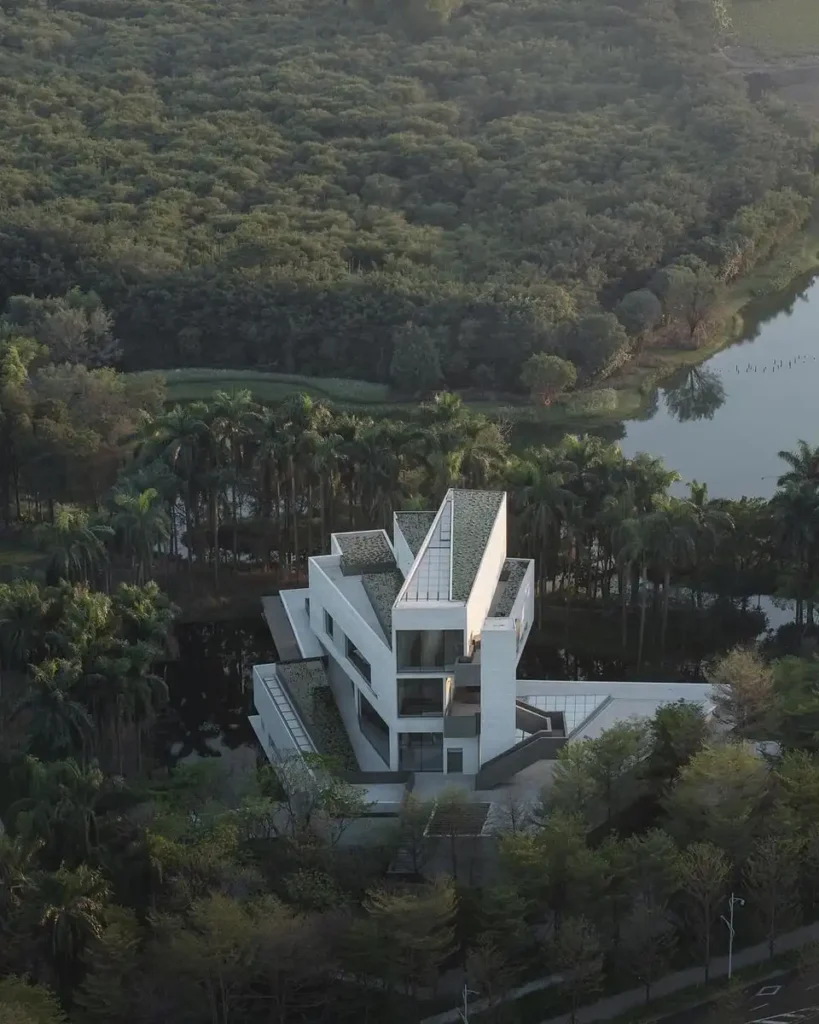
Environmental responsibility was the cornerstone of this structure. Before site selection, the designers conducted detailed research on 560 existing trees. The building’s footprint was minimized. This ensured that no native trees were cut. Even the roof contributes to this synergy. It is covered by lotus ponds. These ponds mitigate the visual impact of the mass when viewed from the fifth elevation.
For the construction, the project utilized high-quality, documented techniques and materials. These elements underscore the principles of Wetland Architecture and sustainability:
- The exterior façade utilizes Cast-in-Place Pine-Molded Concrete. Workers made the exterior façade from site-poured concrete. They used pine wood molds. This process gives the surface a natural, granular texture matching the surrounding forest.
- Box-Type Concrete Structural System: Provides the overall support and structural reliability for the vertically stacked tubes.
- Surface Lotus Ponds: An ecological water cover that reduces the building’s visual impact from the fifth elevation.
- Central Atrium: A functional internal space that connects four different viewing perspectives.
This project is more than a museum. It is a global architectural statement. It asserts that human intervention can be subtle, responsible, and directed toward serving and protecting the environment.
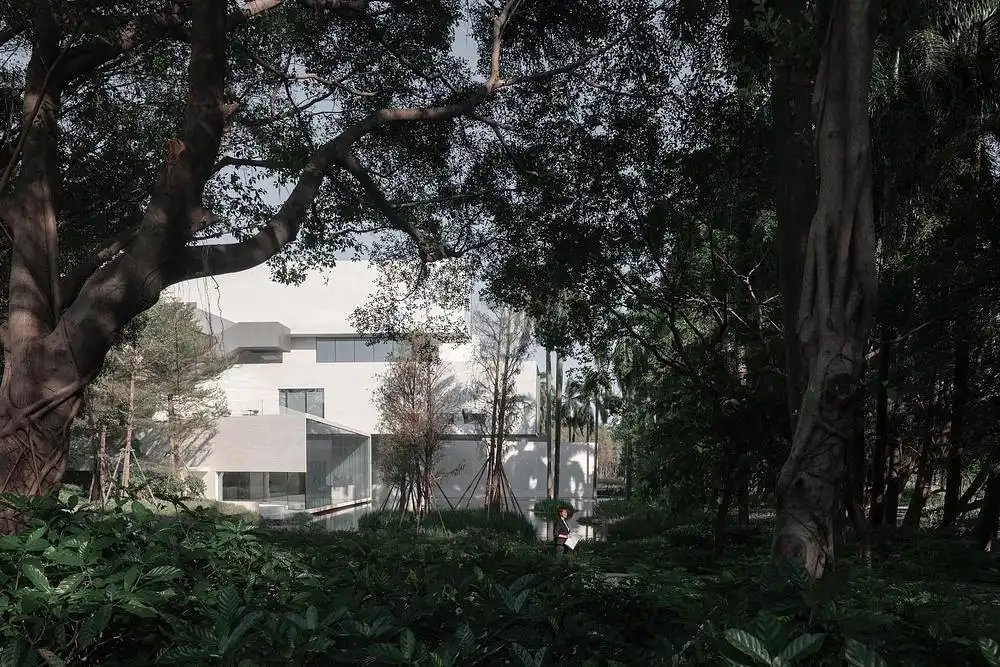
✦ ArchUp Editorial Insight
The Shunde Wetland Museum offers a visual merger of engineered architecture and nature through its four stacked concrete tubes. This mass adopts an “intentional disappearance” approach to function as an ecological observatory, with each tube rotated to frame specific views of the foliage and egrets. While the design successfully establishes a stratified ecological vision across the four levels, the commitment to a heavy, box-type concrete structure within a sensitive wetland environment raises questions regarding the core design approach. The true achievement lies in institutionalizing the site’s value, transforming local conservation efforts into a lasting, permanent structure.